Falkenstein Castle (Harz)
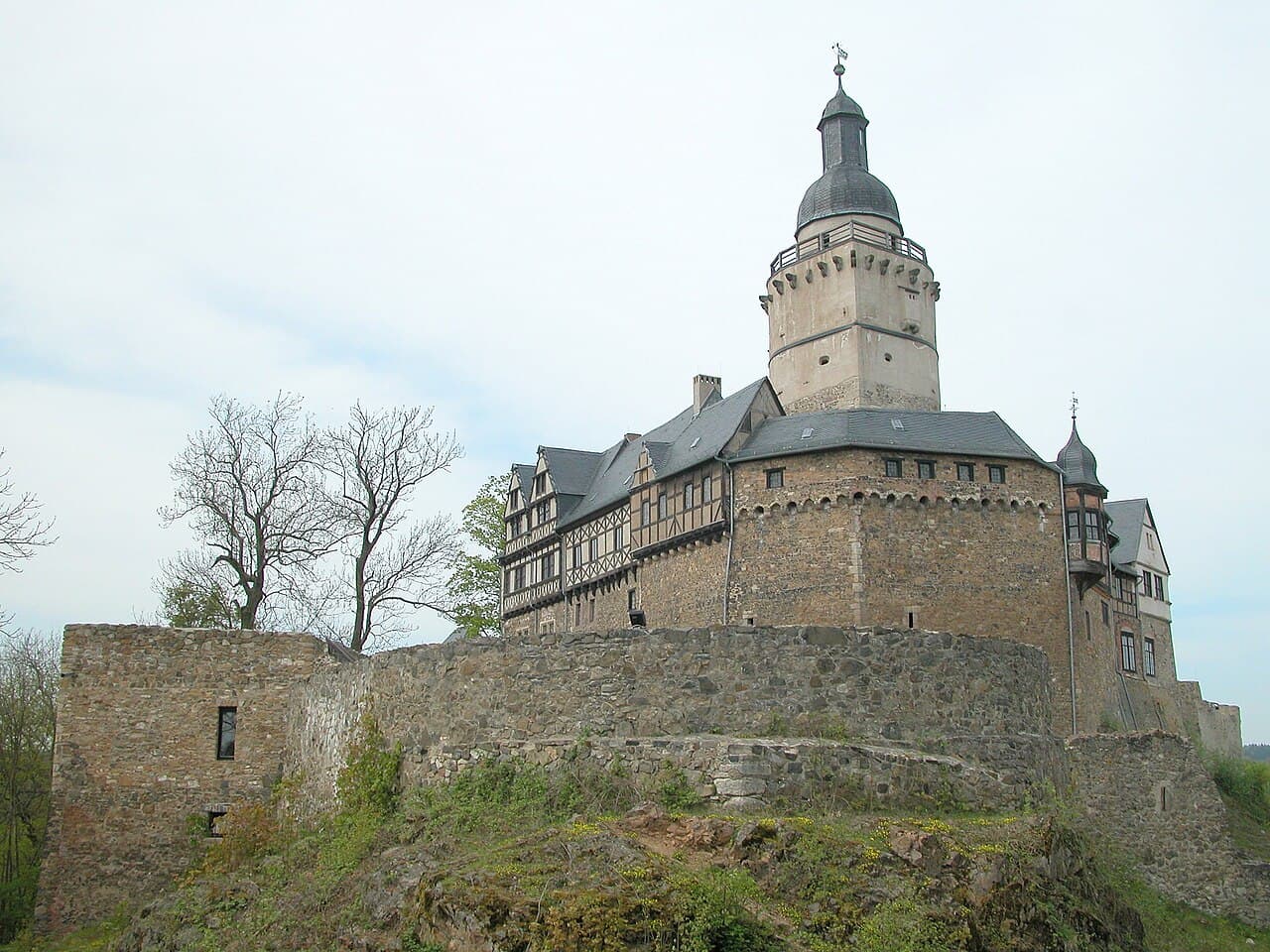
Falkenstein Castle (German: Burg Falkenstein), historically known as New Falkenstein Castle (Burg Neuer Falkenstein) to differentiate it from the nearby Old Falkenstein Castle, is a prominent hill castle situated in the Harz Mittelgebirge mountain range in Germany. This High Medieval fortress dates back to the 12th century and is located in the town of Falkenstein, positioned between the towns of Aschersleben and Harzgerode. It stands as a significant example of medieval military architecture adapted to a mountainous terrain.
Historical background and significance
The castle was constructed during the High Middle Ages, a period marked by the consolidation of territorial control through fortified structures. Falkenstein Castle was strategically placed on a hilltop to command views over the surrounding valleys and trade routes, serving both defensive and administrative functions. It was part of a network of castles in the Harz region that played roles in regional power struggles and protection of local settlements.
Throughout its history, Falkenstein Castle was owned and managed by various noble families, who expanded and reinforced its fortifications to meet evolving military needs. The castle's position in the Harz mountains also made it a critical point for controlling access to mining areas, which were economically important in the medieval period.
Architectural features and layout
Falkenstein Castle exemplifies typical High Medieval hill castle architecture with a focus on natural topography for defense. The castle is built on a rocky outcrop, which provides natural protection on several sides. Its layout includes a keep (donjon), which served as the last line of defense and the lord's residence. Surrounding the keep are curtain walls with battlements and defensive towers positioned to cover all approaches.
The entrance is fortified with a gatehouse and possibly a drawbridge spanning a defensive ditch or natural ravine. The castle complex contains a courtyard that would have housed essential service buildings such as stables, workshops, and storage facilities. The presence of a chapel within the castle grounds reflects the integration of religious functions into the daily life of the castle's inhabitants.
Defensive elements
The castle's defensive design incorporates thick stone walls built to withstand siege engines and attacks. Arrow slits and later gunports allowed defenders to repel attackers effectively. The elevated position and steep slopes surrounding the castle made direct assaults difficult, enhancing its defensive capabilities.
Later history and preservation
Over the centuries, Falkenstein Castle experienced periods of occupation, neglect, and partial ruin. Its strategic importance declined with changes in military technology and political boundaries. Today, the castle is in a partially preserved state, with significant ruins visible that provide insight into its original structure and scale.
Efforts have been made to stabilize and conserve the remaining structures to allow visitors to explore the site safely. The castle is accessible to the public and serves as a cultural heritage site that illustrates the medieval history of the Harz region.
Visiting Falkenstein Castle
Visitors to Falkenstein Castle can explore the ruins and enjoy panoramic views of the Harz mountains. The site offers walking trails that connect to nearby historical landmarks and natural attractions. Interpretive signage helps visitors understand the castle's historical context and architectural features.
The castle's location in the Harz region makes it a popular destination for tourists interested in medieval history, hiking, and nature. Seasonal events and guided tours may be available, providing deeper insights into the castle's past and its role in regional history.
Frequently asked questions (FAQ)
- When was Falkenstein Castle built?
- Falkenstein Castle was constructed in the 12th century during the High Medieval period, reflecting typical medieval fortification styles.
- What type of castle is Falkenstein Castle?
- It is a hill castle, built on a rocky outcrop in the Harz mountains to maximize natural defenses.
- Can visitors explore Falkenstein Castle?
- Yes, the castle is partially preserved and open to the public, allowing visitors to explore the ruins and enjoy scenic views.
- Where is Falkenstein Castle located?
- The castle is located in the town of Falkenstein in the Harz region of Germany, between Aschersleben and Harzgerode.
- What are the main architectural features of Falkenstein Castle?
- Key features include a keep, curtain walls with battlements, defensive towers, a gatehouse, and a courtyard with service buildings.
Photo gallery

Information
Loading map...
Visitor reviews
No reviews yet. Been here? Write the first review and help other travelers!
Write the first reviewVisited this castle? Share your experience
Your review helps other travelers and adds first-hand knowledge to our encyclopedia.