Haman Seongsansanseong Fortress
Haman Seongsansanseong Fortress, also known historically as Hamansansŏng, is a significant early medieval Korean fortress located on Jonamsan mountain in present-day Haman County, South Gyeongsang Province, South Korea. This fortress stands as a remarkable example of ancient Korean military architecture from the 6th century, reflecting the defensive strategies of the Gaya confederacy (42–562 CE), a prominent federation of city-states in the southern Korean peninsula during the Three Kingdoms period.
Designated a Historic Site of South Korea on January 21, 1963, the fortress occupies a strategic mountain position, utilizing the natural topography of Jonamsan to enhance its defensive capabilities. The fortress is characterized by its two sets of stone walls, a distinctive feature that provided layered protection against invaders. These walls follow the contours of the mountain, enclosing a sizeable area that would have housed military personnel and served as a refuge for local populations during times of conflict.
Historical context and significance
The Gaya confederacy, under whose auspices the fortress was likely constructed, played a crucial role in the cultural and political landscape of early Korean history. Although less dominant than the neighboring kingdoms of Silla and Baekje, Gaya was known for its advanced ironworking and maritime trade. Fortresses like Seongsansanseong were vital in protecting these economic interests and maintaining territorial control.
While direct historical records about the fortress are limited, archaeological studies suggest that Seongsansanseong was part of a network of mountain fortresses that dotted the region, serving both military and administrative functions. Its preservation as a historic site underscores its importance in understanding Korea's early medieval period and the defensive architecture of the Gaya confederacy.
Architectural features and construction
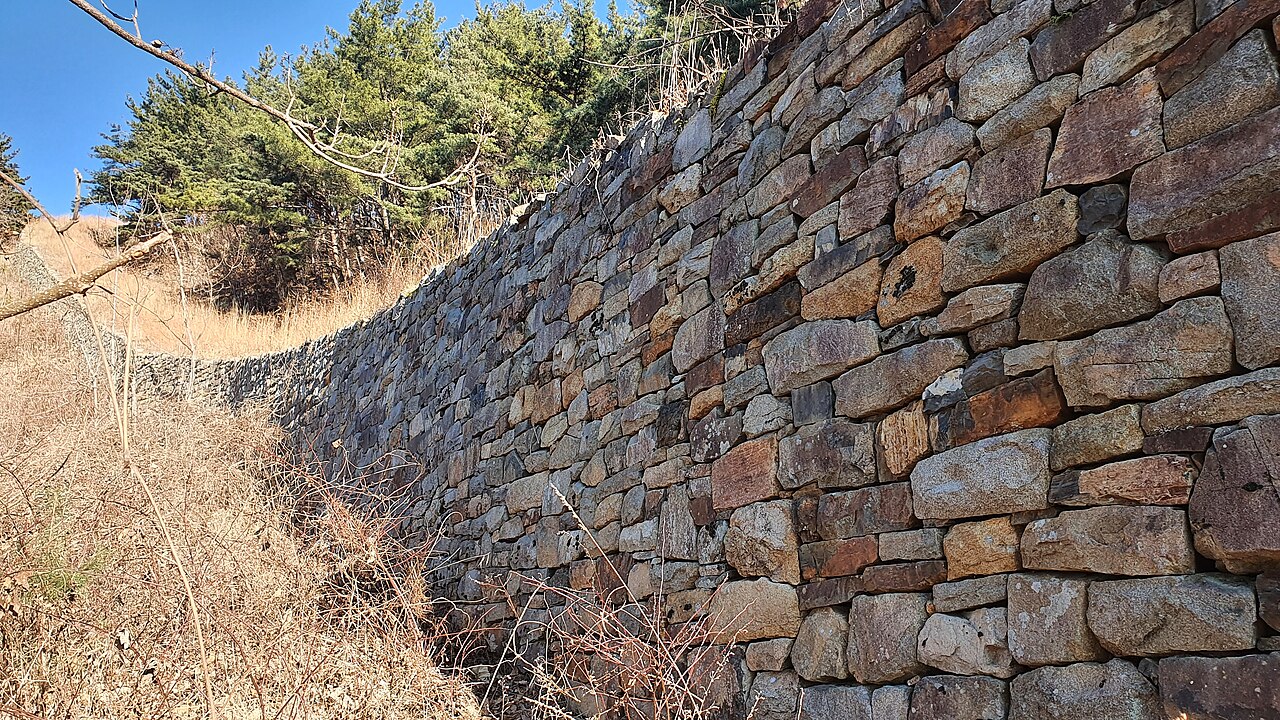
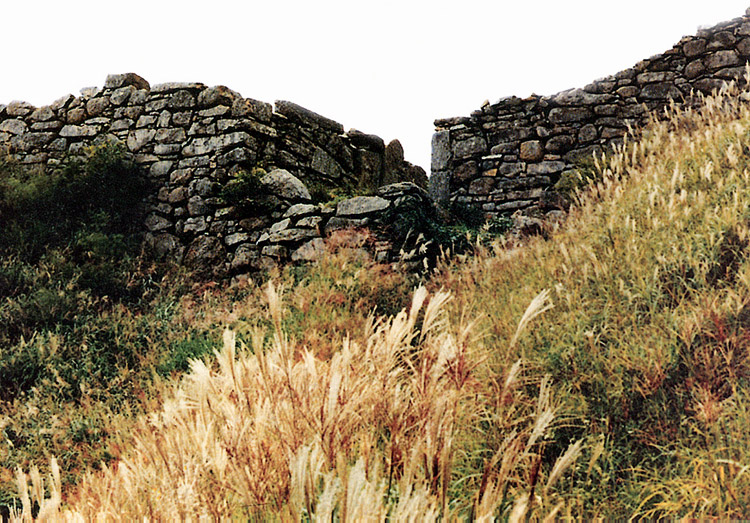
The fortress's dual stone walls are its most notable architectural elements. These walls were constructed using locally sourced stone, carefully fitted without mortar in a technique typical of Korean mountain fortresses. The inner and outer walls created a formidable barrier, with the outer wall providing the first line of defense and the inner wall securing the core area.
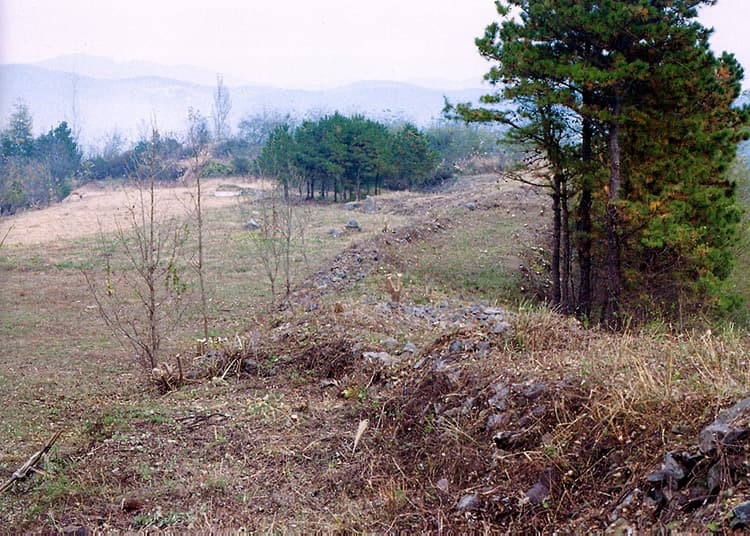
The walls encompass an irregular shape that follows the mountain's natural ridges, maximizing defensive advantage and minimizing construction effort. The fortress likely included gatehouses, watchtowers, and battlements, although much of these structures have not survived intact. The elevated location would have offered extensive views over the surrounding landscape, enabling early detection of approaching enemies.
Strategic mountain location
Positioned on Jonamsan mountain, the fortress exploited the natural elevation to control important routes and oversee the surrounding valleys. This location was crucial for monitoring movements and protecting the Gaya confederacy's territories from incursions by rival states or nomadic groups.
Preservation and current status
Today, Haman Seongsansanseong Fortress remains a site of archaeological interest and cultural heritage. Although much of the original structures are in ruins, the stone walls are still partially preserved, allowing visitors to appreciate the scale and layout of the fortress. The site is accessible to the public and is valued for its historical significance and scenic mountain setting.
Conservation efforts have focused on stabilizing the remaining walls and preventing further deterioration, ensuring that this early medieval bastioned fortress continues to be a tangible link to Korea's ancient past.
Cultural importance and tourism
The fortress is an important cultural asset for South Korea, attracting historians, archaeologists, and tourists interested in Korea's early history and fortress architecture. Its designation as a Historic Site highlights the government's commitment to preserving such landmarks.
Visitors to the site can explore the rugged mountain terrain, observe the stone walls, and gain insights into the military strategies of the Gaya confederacy. The fortress's location in South Gyeongsang Province also places it near other historical sites, making it a valuable destination for cultural tourism.
Frequently asked questions (FAQ)
- When was Haman Seongsansanseong Fortress built?
- Haman Seongsansanseong Fortress was likely constructed in the 6th century during the period of the Gaya confederacy, which lasted from 42 to 562 CE.
- What is the architectural style of the fortress?
- The fortress features typical early medieval Korean mountain fortress architecture, characterized by dual stone walls built without mortar, following the natural contours of the mountain.
- Is Haman Seongsansanseong Fortress open to visitors?
- Yes, the fortress is accessible to the public. Visitors can explore the remains of the stone walls and enjoy the scenic views from Jonamsan mountain.
- Why is the fortress historically important?
- It represents the defensive strategies and military architecture of the Gaya confederacy, providing insights into early medieval Korean history and regional power dynamics.
- What can visitors expect to see at the site?
- Visitors can see the partially preserved stone walls, the mountain terrain, and the strategic layout of the fortress, which includes remnants of defensive structures and panoramic views of the surrounding area.
Photo gallery

Information
Loading map...
Visitor reviews
No reviews yet. Been here? Write the first review and help other travelers!
Write the first reviewVisited this castle? Share your experience
Your review helps other travelers and adds first-hand knowledge to our encyclopedia.