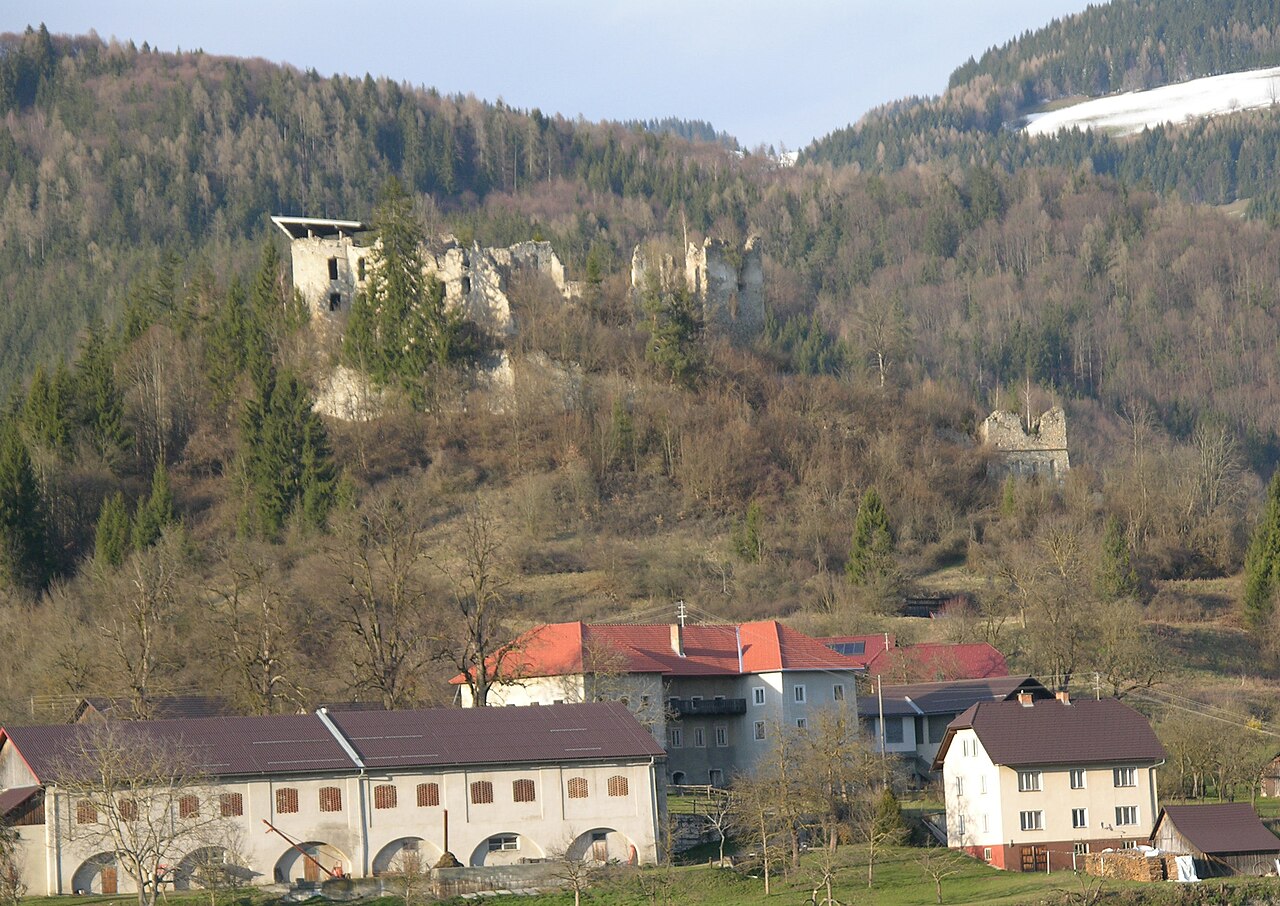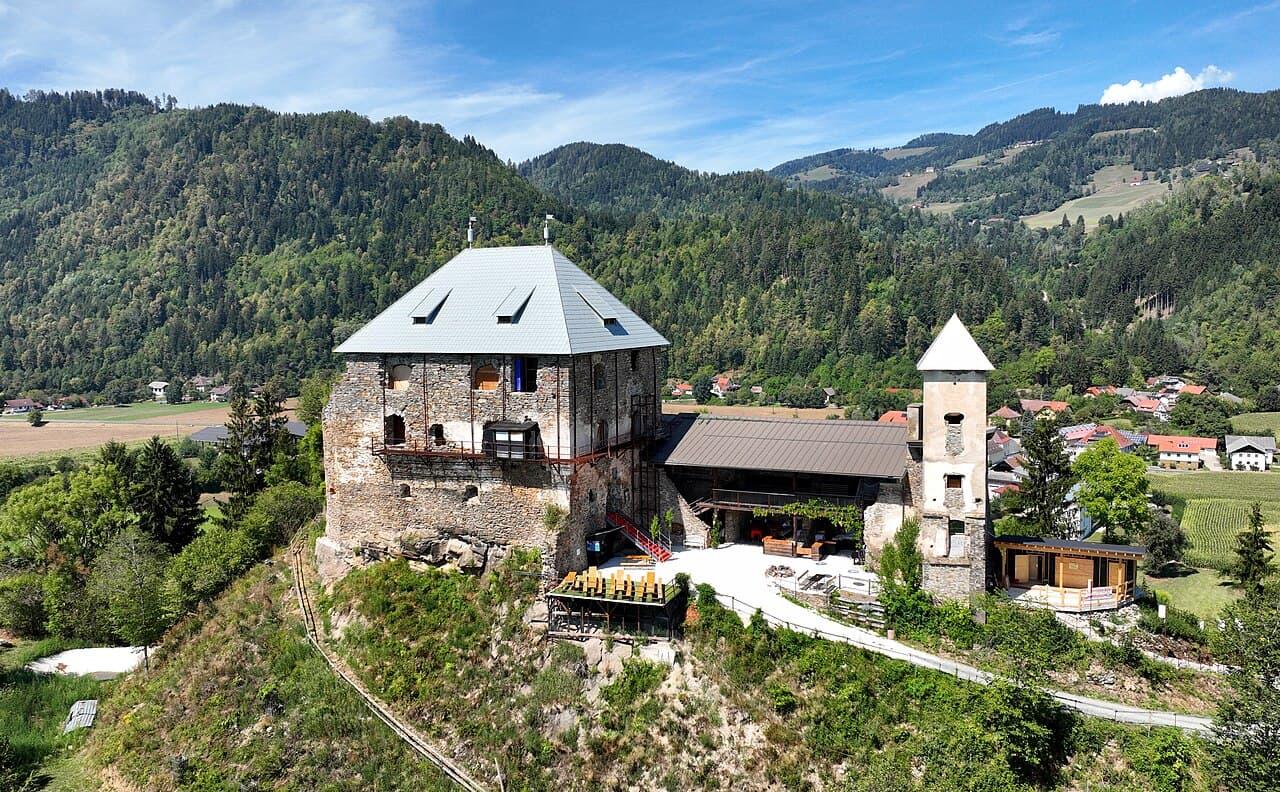
Haimburg Castle — Austria castle

Haimburg Castle

Haimburg Castle: medieval rock castle ruins in Carinthia, Austria
Völkermarkt, Austria
High Medieval (11th–13th c.)
Ruins

Haimburg Castle, also known as Heunburg, is a significant high medieval rock castle ruin located in the village of Haimburg near the town of Völkermarkt in the Austrian state of Carinthia. Constructed in the 12th century, it served as a strategic fortification during the medieval period, commanding views over the surrounding landscape and controlling important regional routes.

Historical background and significance

The castle's origins date back to the high medieval period, a time when the region was marked by frequent territorial disputes and the consolidation of noble power. Haimburg Castle was likely built by local nobility to assert control over the area and protect trade routes. Throughout its history, it played a role in regional defense and administration, reflecting the feudal structure of medieval Carinthia.

While detailed records of its ownership and events are limited, the castle's strategic location near Völkermarkt made it an important military and administrative center in the region during the Middle Ages.

Architectural features and layout

Haimburg Castle is classified as a rock castle due to its construction on a rocky outcrop, utilizing natural terrain for defense. This type of castle typically integrates the rock formations into the fortification walls and foundations, enhancing its defensive capabilities.

The remains of the castle include portions of the outer walls and fragments of the inner keep or donjon. The castle's layout was adapted to the irregular rock surface, with terraced courtyards and defensive walls following the natural contours of the site.

Although much of the structure is now in ruins, archaeological studies have revealed the castle's multi-level design, including living quarters, storage areas, and defensive towers that once stood guard over the surrounding valleys.

Decline and current condition

Like many medieval castles, Haimburg Castle fell into decline as military technology and political circumstances evolved. The castle was eventually abandoned and fell into ruin. Today, it remains an archaeological site with visible ruins that attract visitors interested in medieval history and architecture.

The site offers insight into high medieval fortification techniques and the adaptation of castles to challenging natural landscapes. Preservation efforts focus on stabilizing the remaining structures to prevent further decay.

Visiting Haimburg Castle

The castle ruins are accessible to the public and provide a glimpse into Austria's medieval past. Visitors can explore the rocky terrain and remnants of the fortifications while enjoying panoramic views of the Carinthian countryside.

Due to the site's rugged nature, visitors should wear appropriate footwear and exercise caution while navigating the uneven paths. Interpretive signage at the site helps explain the castle's historical context and architectural features.

Frequently asked questions (FAQ)

How do I get to Haimburg Castle?
Haimburg Castle is located in Völkermarkt, Austria, and can be accessed by car or public transport. If you're driving, there's ample parking available nearby. The nearest train station is in Völkermarkt, from which you can take a short taxi ride to the castle.
What is the historical significance of Haimburg Castle?
Haimburg Castle dates back to the 12th century and played a crucial role in the defense of the region during various historical conflicts. The castle's unique architecture and well-preserved structures provide insight into medieval life and the strategic importance of this location. It stands as a testament to the rich history of the Carinthia region.
When was Haimburg Castle built?
Construction of Haimburg Castle began in the 12th century, around 1150, and it underwent various modifications over the centuries. The castle has retained much of its original charm while incorporating elements from later architectural styles. This gives visitors a fascinating glimpse into the evolution of castle design over time.
Can I visit Haimburg Castle year-round?
Yes, Haimburg Castle is open to visitors year-round, although the opening hours may vary seasonally. It’s advisable to check the official website for the most current visiting hours and any special events that may be occurring. Visiting during the warmer months offers the added benefit of enjoying the beautiful surrounding landscapes.
Why is Haimburg Castle a popular tourist attraction?
Haimburg Castle is popular among tourists for its stunning architecture, breathtaking views, and rich history. The castle offers guided tours that provide insights into its historical significance and architectural features. Additionally, the scenic surroundings make it an ideal spot for photography and leisurely walks.
Is it possible to hold events at Haimburg Castle?
Yes, Haimburg Castle can be rented for various events, including weddings, corporate meetings, and cultural events. The castle's unique ambiance and historical backdrop make it a memorable venue for any occasion. For more information on booking and available services, it's best to contact the castle administration directly.
What are the ticket prices for visiting Haimburg Castle?
Ticket prices for Haimburg Castle vary depending on age and the type of tour selected. Generally, adults can expect to pay a modest entrance fee, while discounts are often available for children and seniors. It's advisable to check the official website for the latest pricing information before your visit.
What are the best times to visit Haimburg Castle?
The best times to visit Haimburg Castle are during the spring and early autumn months when the weather is pleasant, and the gardens are in full bloom. These seasons also tend to attract fewer tourists, allowing for a more enjoyable experience. Early mornings or late afternoons can provide the most picturesque lighting for photography enthusiasts.
Are there nearby attractions to visit after Haimburg Castle?
Yes, there are several nearby attractions worth exploring after your visit to Haimburg Castle. The charming town of Völkermarkt offers local shops and eateries, while the beautiful Lake Klopein is just a short drive away, perfect for a relaxing day by the water. Additionally, hiking trails in the surrounding countryside provide opportunities for outdoor adventure.

Photo gallery

Haimburg Castle
Click to view

Photo by C.Stadler/Bwag•CC BY-SA 4.0

1 photo • Click any image to view in full screen

Information

Rock / Cliff Castle

Loading map...

Visitor reviews

No reviews yet. Been here? Write the first review and help other travelers!

Write the first review

Visited this castle? Share your experience

Your review helps other travelers and adds first-hand knowledge to our encyclopedia.
Write a review

(5/5)

0/2000 characters

Your review will be visible after admin approval

Nearby castles

4.6 km
Griffen Castle Ruins — Austria castle

Griffen Castle Ruins

Griffen, Austria

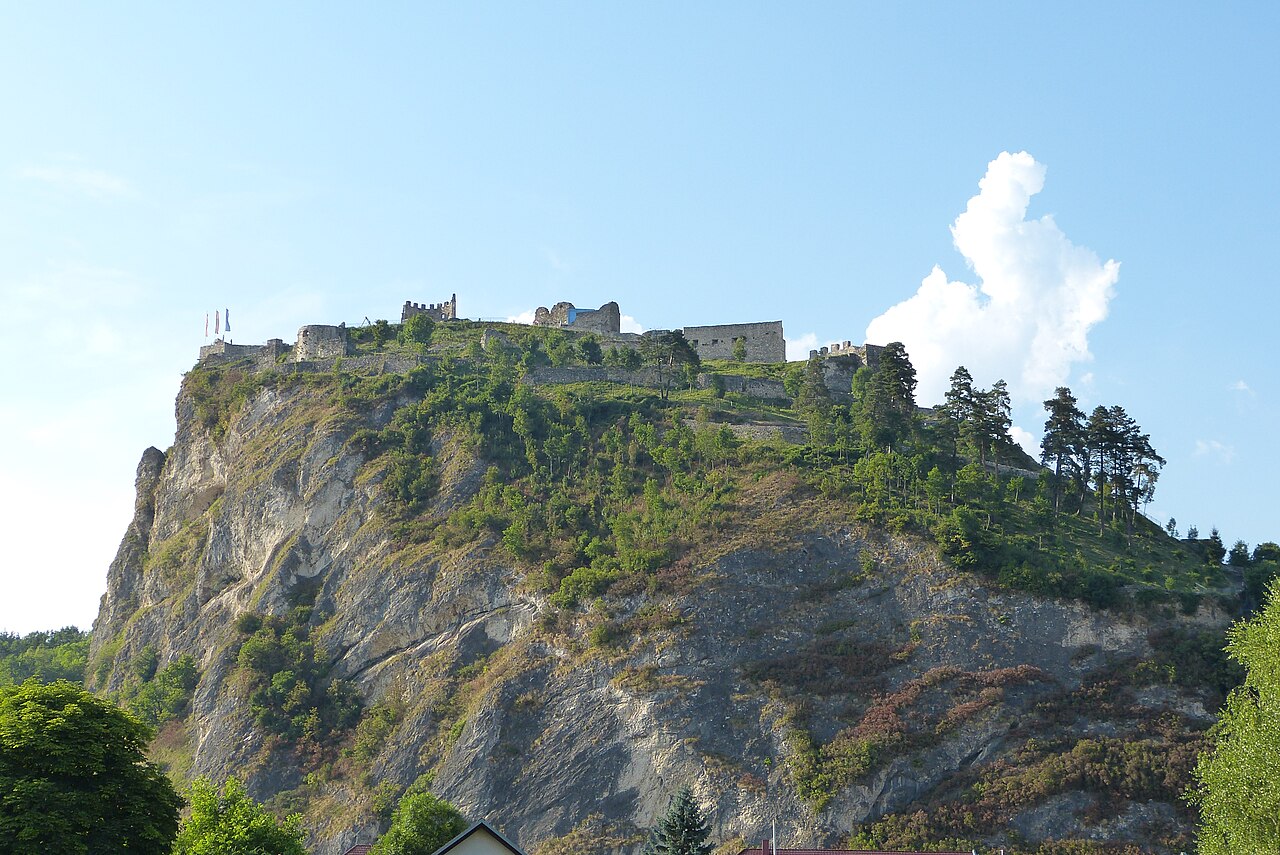
Griffen castle ruins stand prominently on a 130-meter-high limestone mountain overlooking the town of Griffen in the Austrian state of Carinthia. Constructed between 1124 and 1146 by order of Bishop Otto of Bamberg, this fortress was a key medieval stronghold with a history deeply intertwined with the regional power struggles of the High Middle Ages. The castle is first documented in a 1160 deed where Emperor Friedrich I acknowledged "Grivena" as a property under the control of the Bishopric of Bamberg. This affiliation highlights the castle's strategic and ecclesiastical importance during the period. Griffen castle's location atop a steep mountain provided natural defensive advantages, complemented by its substantial fortifications. Historical significance and medieval conflicts During the late 13th century, Griffen castle became a focal point in local power disputes. In 1292, the Carinthian nobleman Count Ulrich von Heunburg, supported by Archbishop Konrad IV of Salzburg, seized the fortress amid an uprising against Albert of Habsburg, son of King Rudolph I of Germany and Duke Meinhard II. This event underscores the castle's role as a military and political asset in the region. However, Ulrich's rebellion failed when his allies deserted him, forcing him to abandon Griffen a year later. By the mid-18th century, the castle's ownership shifted when Bishop Adam Friedrich sold the Bamberg estates in Carinthia to Maria Theresa of Austria in 1759. Subsequently, Griffen castle was integrated into the Duchy of Carinthia, marking the end of its ecclesiastical governance. Architectural evolution and defensive features Around 1520, Griffen castle underwent a significant reconstruction to bolster its defenses against the expanding threat of the Ottoman Empire. The renovation expanded the castle's base to approximately 4000 square meters, enhancing its capacity to withstand sieges. Despite these preparations, the Ottomans never launched an assault on Griffen. The castle's layout included towers, curtain walls, and a steep footpath providing access to the summit, all typical of high medieval fortifications designed to maximize natural terrain advantages. The extensive fortifications reflect the military architectural trends of the late medieval period, emphasizing strongholds capable of resisting artillery and prolonged sieges. Decline and preservation efforts The castle's decline began in 1659 when a lightning strike destroyed one of its towers, accelerating its deterioration. By 1768, the last recorded religious service was held within its walls, indicating a gradual abandonment. Around 1840, the removal of the roofs marked a further step towards ruin. Modern preservation efforts commenced in 2000 to stabilize and protect the ruins, allowing visitors to explore the site via the steep footpath leading to the mountaintop remains. These efforts have focused on maintaining the structural integrity of the surviving walls and towers while preserving the site's historical character. Griffener tropfsteinhöhle: the dripstone cave Within the mountain beneath Griffen castle lies the Griffener Tropfsteinhöhle, a dripstone cave extending approximately 485 meters. Discovered only in the late days of World War II, this natural feature has been a protected landmark since 1957. The cave is accessible to the public and adds a unique geological dimension to the castle site, attracting visitors interested in both natural history and medieval architecture. Visitor experience and access Visitors to Griffen castle ruins can ascend the steep footpath to reach the mountaintop, where they can explore the remains of the fortress and enjoy panoramic views of the Carinthian landscape. The combination of natural beauty and historical significance makes Griffen a notable destination for those interested in medieval castles and Austrian heritage. Overall, Griffen castle ruins offer insight into the military, political, and religious history of Carinthia during the High Medieval period. Its architectural remains and the surrounding natural features provide a compelling narrative of medieval fortification strategies and regional power dynamics.

High Medieval (11th–13th c.)
Details
4.8 km

Burg Griffen

Griffen, Austria

Burg Griffen is a prominent hill castle located on a 130-meter-high limestone mountain overlooking the town of Griffen in the Austrian state of Carinthia. Constructed between 1124 and 1146 by order of Bishop Otto of Bamberg, the castle was originally part of the extensive Bamberg estates. Its first recorded mention appears in a 1160 deed by Emperor Friedrich I Barbarossa, who referred to it as Grivena, confirming the castle's status as Bamberg property. Medieval origins and early history The castle's strategic location atop a limestone mountain provided a commanding view of the surrounding region, making it a valuable defensive stronghold during the high medieval period. Its initial construction reflects typical medieval fortification techniques of the 12th century, utilizing local stone materials to create robust defensive walls and towers suited to the rugged terrain. In 1292, Burg Griffen became a significant site during regional power struggles when Count Ulrich von Heunburg, a Carinthian noble, seized the fortress amid a rebellion against Albert of Habsburg. Ulrich's occupation was supported by Archbishop Konrad IV of Salzburg, but after losing his allies, he abandoned the castle about a year later. This episode highlights the castle's role in the political conflicts of the late 13th century and its importance as a symbol of territorial control. 16th-century reconstruction and military significance By the early 16th century, the threat of Ottoman incursions into Central Europe prompted significant military upgrades to Burg Griffen. Around 1520, the castle underwent extensive reconstruction to enhance its defensive capabilities. The footprint of the fortress was expanded to approximately 4000 square meters, with reinforced walls and additional fortifications designed to withstand artillery and siege warfare typical of the period. Despite these substantial improvements, the castle never faced a direct Ottoman siege. Nevertheless, the reconstruction illustrates the broader regional efforts to fortify Carinthia against external threats during the late medieval to early modern transition. Later history and decline In 1759, the Bamberg estates in Carinthia, including Burg Griffen, were sold by Bishop Adam Friedrich to Maria Theresa of Austria, integrating the castle into the Duchy of Carinthia. This transfer marked a shift in the castle's administrative affiliation and reflected the consolidation of Habsburg power in the region. The castle chapel was used for religious services until 1768, after which ecclesiastical functions ceased. By around 1840, the roofs had collapsed, and the castle fell into ruin. A notable incident contributing to its deterioration was a lightning strike in 1659 that caused a fire in one of the towers, accelerating the decline of the structure. Architectural features and remains Burg Griffen's architecture is characteristic of a high medieval hill castle, adapted to the steep limestone outcrop on which it sits. The castle's layout after the 16th-century renovations included extensive defensive walls, towers, and a large courtyard within the expanded 4000 square meter base. The use of local stone and the integration with the natural rock formations are notable features of its construction. Today, the castle remains largely in ruins, with fragmentary walls and towers preserved through ongoing conservation efforts that began in 2000. Visitors can access the site via a steep paved footpath leading from the town to the castle ruins, offering panoramic views of the surrounding Carinthian landscape. Natural surroundings and additional attractions Near the castle, within the mountain, lies the Griffener Tropfsteinhöhle, a dripstone cave measuring approximately 485 meters in length. Discovered near the end of World War II, this geological feature has been open to the public since 1957. While not directly related to the castle's historical use, the cave adds to the site's appeal as a destination combining natural and cultural heritage. Preservation and visitor experience Preservation efforts initiated in the early 21st century have focused on stabilizing the remaining structures and making the site accessible to visitors. Interpretive signage and pathways help visitors understand the castle's historical significance and architectural evolution. The castle offers a compelling glimpse into the medieval history of Carinthia, showcasing the region's strategic importance and the architectural responses to changing military threats over several centuries. Overall, Burg Griffen stands as a testament to medieval fortification architecture and the complex history of Carinthia, reflecting centuries of political, military, and religious developments in this part of Austria.

High Medieval (11th–13th c.)
Details
8.3 km
Burgruine Waisenberg — Austria castle

Burgruine Waisenberg

, Austria

Burgruine Waisenberg is a medieval castle ruin situated in the scenic region of Carinthia, Austria. Perched on a hilltop, this castle stands as a significant example of the numerous fortifications that once dotted the Carinthian landscape, serving both defensive and administrative roles during the High Medieval period. Historical background and strategic importance The castle was originally constructed during the 12th or 13th century, a period marked by the proliferation of hill castles across the region. Its location atop a prominent elevation provided commanding views over the surrounding valleys, allowing for early detection of approaching enemies and control over important trade routes. Burgruine Waisenberg was part of a network of fortifications that helped secure the territories of local noble families and protect the region from external threats. Architectural features and layout The remains of Burgruine Waisenberg reveal typical characteristics of a hill castle from the medieval era. Although much of the structure lies in ruins today, archaeological studies have identified foundational walls, remnants of defensive towers, and sections of curtain walls that once enclosed the inner courtyard. The castle's design emphasized defense, with thick stone walls and limited access points to deter attackers. Key features likely included a keep or donjon, serving as the last line of defense and residence for the lord, as well as a gatehouse controlling entry to the complex. The castle's elevated position and rugged terrain enhanced its defensibility, a common trait among hill castles constructed during this period. Decline and current condition Like many medieval castles, Burgruine Waisenberg fell into disuse and decay over the centuries, particularly following changes in military technology and political shifts that rendered such fortifications less relevant. Today, the site is classified as ruins and an archaeological site, with only partial walls and foundations visible. The ruins offer valuable insights into medieval fortification architecture and the historical landscape of Carinthia. Visiting Burgruine Waisenberg The castle ruins are accessible to visitors interested in history, archaeology, and hiking. The hilltop location provides panoramic views of the surrounding countryside, making it a rewarding destination for those exploring Carinthia's medieval heritage. While there are no extensive visitor facilities on-site, the area is appreciated for its natural beauty and historical significance. Burgruine Waisenberg in the context of Carinthian castles Carinthia is home to numerous castles and fortifications, each reflecting different periods and architectural styles. Burgruine Waisenberg contributes to this rich tapestry as an example of a High Medieval hill castle that played a role in regional defense and governance. Its ruins complement other nearby sites, offering a glimpse into the feudal past and the strategic importance of the region during medieval times.

High Medieval (11th–13th c.)
Details