Burg Griffen
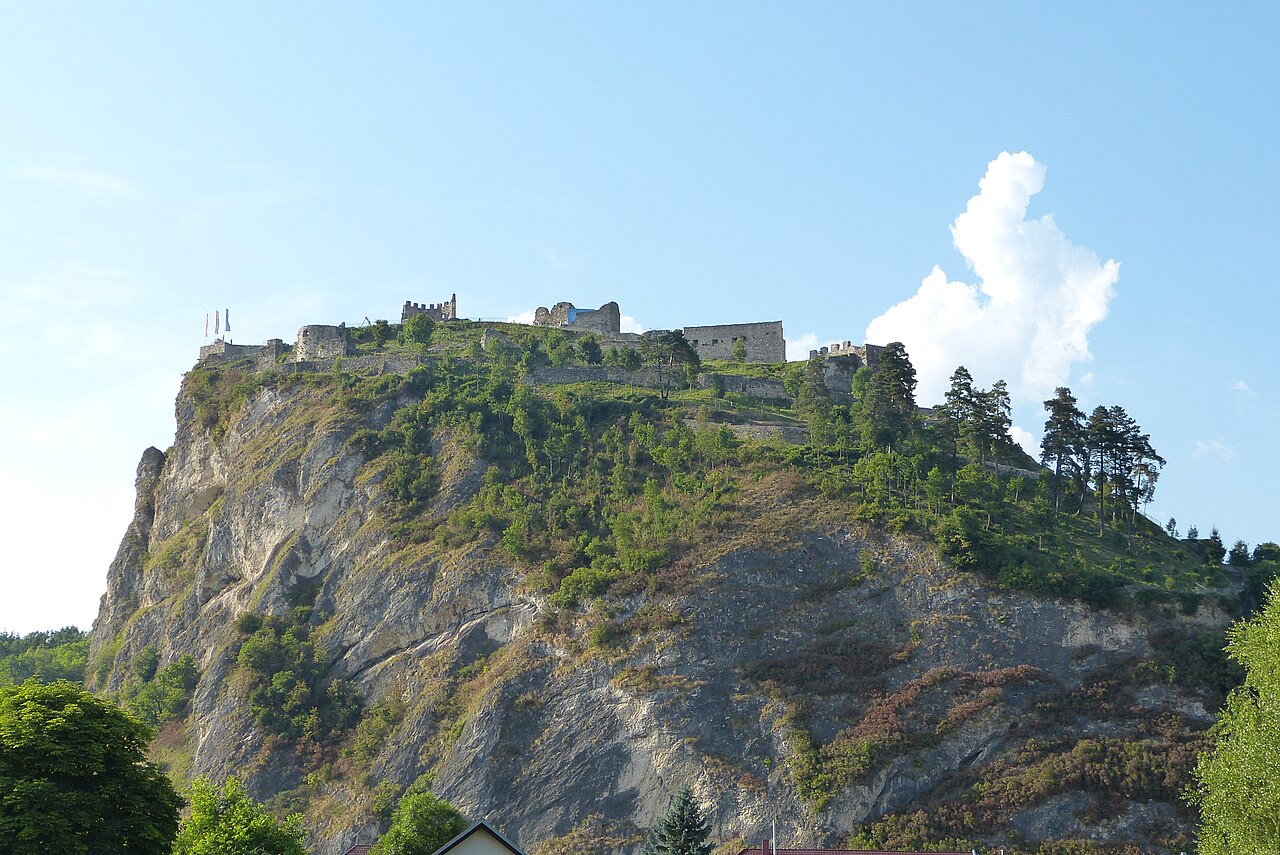
Burg Griffen is a prominent hill castle located on a 130-meter-high limestone mountain overlooking the town of Griffen in the Austrian state of Carinthia. Constructed between 1124 and 1146 by order of Bishop Otto of Bamberg, the castle was originally part of the extensive Bamberg estates. Its first recorded mention appears in a 1160 deed by Emperor Friedrich I Barbarossa, who referred to it as Grivena, confirming the castle's status as Bamberg property.
Medieval origins and early history
The castle's strategic location atop a limestone mountain provided a commanding view of the surrounding region, making it a valuable defensive stronghold during the high medieval period. Its initial construction reflects typical medieval fortification techniques of the 12th century, utilizing local stone materials to create robust defensive walls and towers suited to the rugged terrain.
In 1292, Burg Griffen became a significant site during regional power struggles when Count Ulrich von Heunburg, a Carinthian noble, seized the fortress amid a rebellion against Albert of Habsburg. Ulrich's occupation was supported by Archbishop Konrad IV of Salzburg, but after losing his allies, he abandoned the castle about a year later. This episode highlights the castle's role in the political conflicts of the late 13th century and its importance as a symbol of territorial control.
16th-century reconstruction and military significance
By the early 16th century, the threat of Ottoman incursions into Central Europe prompted significant military upgrades to Burg Griffen. Around 1520, the castle underwent extensive reconstruction to enhance its defensive capabilities. The footprint of the fortress was expanded to approximately 4000 square meters, with reinforced walls and additional fortifications designed to withstand artillery and siege warfare typical of the period.
Despite these substantial improvements, the castle never faced a direct Ottoman siege. Nevertheless, the reconstruction illustrates the broader regional efforts to fortify Carinthia against external threats during the late medieval to early modern transition.
Later history and decline
In 1759, the Bamberg estates in Carinthia, including Burg Griffen, were sold by Bishop Adam Friedrich to Maria Theresa of Austria, integrating the castle into the Duchy of Carinthia. This transfer marked a shift in the castle's administrative affiliation and reflected the consolidation of Habsburg power in the region.
The castle chapel was used for religious services until 1768, after which ecclesiastical functions ceased. By around 1840, the roofs had collapsed, and the castle fell into ruin. A notable incident contributing to its deterioration was a lightning strike in 1659 that caused a fire in one of the towers, accelerating the decline of the structure.
Architectural features and remains
Burg Griffen's architecture is characteristic of a high medieval hill castle, adapted to the steep limestone outcrop on which it sits. The castle's layout after the 16th-century renovations included extensive defensive walls, towers, and a large courtyard within the expanded 4000 square meter base. The use of local stone and the integration with the natural rock formations are notable features of its construction.
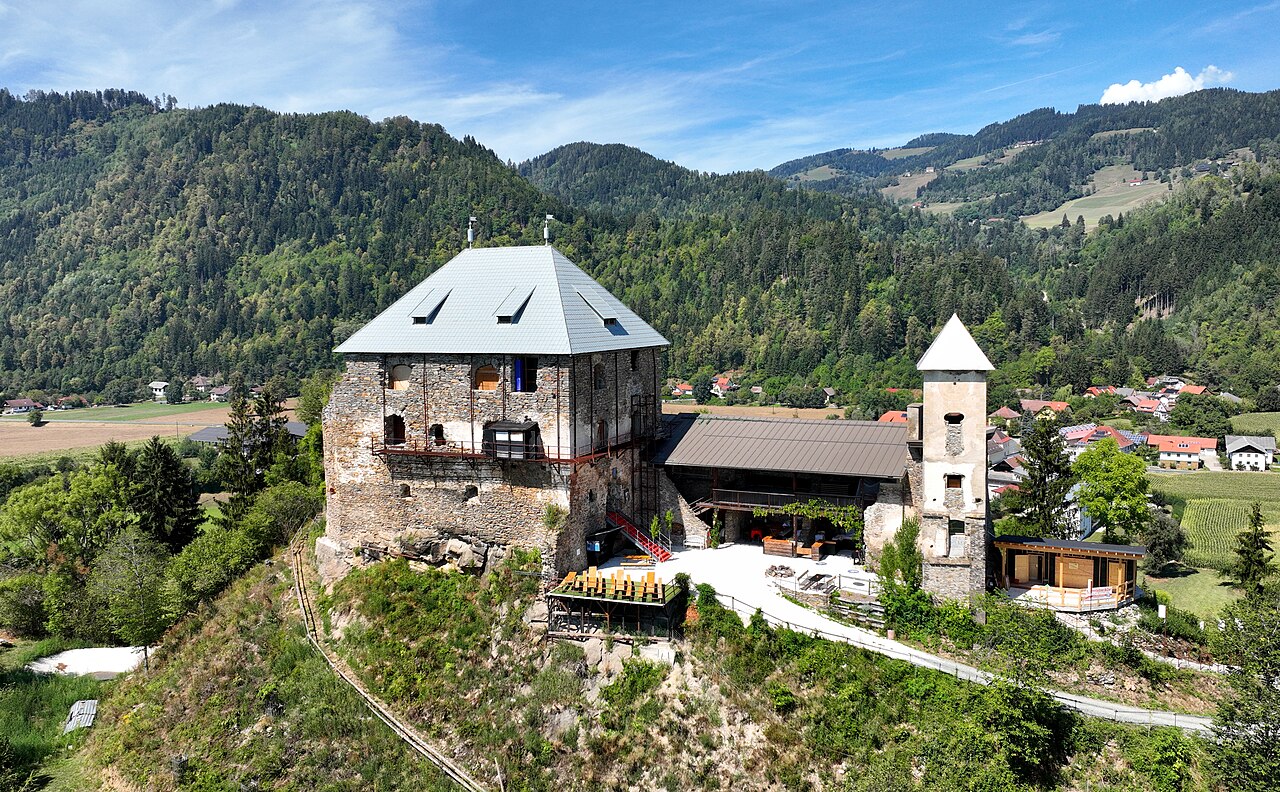
Today, the castle remains largely in ruins, with fragmentary walls and towers preserved through ongoing conservation efforts that began in 2000. Visitors can access the site via a steep paved footpath leading from the town to the castle ruins, offering panoramic views of the surrounding Carinthian landscape.
Natural surroundings and additional attractions
Near the castle, within the mountain, lies the Griffener Tropfsteinhöhle, a dripstone cave measuring approximately 485 meters in length. Discovered near the end of World War II, this geological feature has been open to the public since 1957. While not directly related to the castle's historical use, the cave adds to the site's appeal as a destination combining natural and cultural heritage.
Preservation and visitor experience
Preservation efforts initiated in the early 21st century have focused on stabilizing the remaining structures and making the site accessible to visitors. Interpretive signage and pathways help visitors understand the castle's historical significance and architectural evolution. The castle offers a compelling glimpse into the medieval history of Carinthia, showcasing the region's strategic importance and the architectural responses to changing military threats over several centuries.
Overall, Burg Griffen stands as a testament to medieval fortification architecture and the complex history of Carinthia, reflecting centuries of political, military, and religious developments in this part of Austria.
Frequently asked questions (FAQ)
- How do I get to Burg Griffen?
- Burg Griffen is accessible via a steep paved footpath from the town of Griffen in Carinthia, Austria. The path leads visitors up the limestone mountain to the castle ruins, offering scenic views along the way.
- What is the historical significance of Burg Griffen?
- Burg Griffen played a strategic role in Carinthian history as a high medieval hill castle. It was involved in regional power struggles in the 13th century and was later fortified against Ottoman threats in the 16th century.
- When was Burg Griffen built?
- The castle was constructed between 1124 and 1146 by order of Bishop Otto of Bamberg, making it a significant example of 12th-century medieval fortification.
- Is Burg Griffen open to visitors year-round?
- While exact opening hours may vary, the castle ruins are generally accessible year-round via the footpath. Visitors should check local information for any seasonal restrictions or guided tours.
- Can I visit the Griffener Tropfsteinhöhle cave near Burg Griffen?
- Yes, the Griffener Tropfsteinhöhle cave is located within the mountain near Burg Griffen. It is approximately 485 meters long and has been open to the public since 1957, offering a unique natural attraction alongside the castle ruins.
Information
Website
Visit websiteSources & official resources
Verify the information above using these authoritative references.
Loading map...
Visitor reviews
No reviews yet. Been here? Write the first review and help other travelers!
Write the first reviewVisited this castle? Share your experience
Your review helps other travelers and adds first-hand knowledge to our encyclopedia.