Hadleigh Castle
Hadleigh Castle stands as a significant medieval fortress located in Hadleigh, England, with a rich history dating back to the early 13th century. Constructed by Hubert de Burgh, 1st Earl of Kent, a key figure during the reign of King Henry III, the castle was strategically positioned on a London clay ridge to command views over the Thames Estuary. This location was chosen deliberately to establish a new stronghold separate from the older Rayleigh Castle, marking Hadleigh as a distinct defensive and residential site.
The castle’s establishment began shortly after de Burgh acquired the Honour of Rayleigh from King John in 1215. By 1230, the fortress had received a licence to crenellate, allowing it to be fortified with battlements, a key feature of medieval military architecture. The surrounding estate included a substantial park with woodland, a fishpond, stables, and a hunting lodge by 1235, integrating both defensive and leisure functions typical of noble residences of the period.
Medieval origins and early development
The castle’s initial construction utilized local Kentish ragstone, a durable limestone, bonded with a distinctive mortar containing seashells from nearby Canvey Island, highlighting the use of regional materials. The roughly octagonal layout of the castle followed the ridge line, with curtain walls and towers designed to maximize defense and visibility. The main entrance was secured by an eastern barbican, a fortified gatehouse structure that controlled access.
By 1249, a tidal watermill had been established on a wharf extending into the estuary, an innovative feature that harnessed tidal movements to grind grain, supporting the castle’s household and estate. The castle’s south side featured terraced gardens, which archaeological evidence suggests may have included vineyards, indicating a degree of luxury and self-sufficiency uncommon in many medieval fortifications.
Architectural challenges and royal ownership
The castle faced significant challenges due to the unstable London clay beneath its foundations, causing subsidence that led to the collapse of key structures such as the great hall and solar built around 1290. Despite these difficulties, the castle remained an important royal property after reverting to crown ownership following Hubert de Burgh’s fall from favor in 1239.
Royal attention to Hadleigh Castle continued through the 13th and 14th centuries. Queen Margaret demanded repairs in 1299, and King Edward I used the castle as a hunting base during his visits. Under Edward II, the castle was substantially renewed with new royal chambers, a garrison of 24 soldiers, and facilities including a kitchen, larder, cellar, and armory, reflecting its dual role as a defensive stronghold and royal residence.
Enhancements under edward iii and william of wykeham
The most significant phase of development came under King Edward III from the 1360s, who invested heavily in the castle’s renovation. Spending over £2200, Edward III refurbished internal buildings and constructed new royal lodgings along the south curtain wall. The east curtain wall was rebuilt with two large round towers by 1365, enhancing both the castle’s defense and its impressive appearance from the estuary.
Between 1365 and 1370, the castle’s northern defenses were strengthened with a portcullis, drawbridge, barbican, and a large round tower known as the High Tower. These enhancements are attributed to William of Wykeham, a renowned medieval architect and bishop, whose work combined functionality with aesthetic refinement. While earlier historians viewed these improvements as purely military, modern research suggests Edward III aimed to create a prestigious private retreat near London, impressing visitors arriving by boat.
Later history and decline
During the 15th century, Hadleigh Castle’s royal importance waned, and it passed through various noble hands including the Dukes of York and Edmund Tudor. It also served as part of the dower estates for prominent queens such as Elizabeth Woodville and three of Henry VIII’s wives. The surrounding parklands were valuable for timber, supporting naval needs during this period.
Following 1544, the estate was gradually dismantled. The castle was sold in 1551 to Lord Richard Rich, who systematically dismantled much of the fortress by 1575, salvaging stone and reducing it to ruin. The ruins remained in the hands of Rich’s descendants, marking the start of the castle’s long decline.
Artistic legacy and modern preservation
Hadleigh Castle’s evocative ruins attracted the attention of artists such as John Constable, who sketched the site in 1814 and later painted it in 1829, capturing the romantic imagery of decay and nature reclaiming the fortress. In 1891, William Booth of the Salvation Army purchased the castle and surrounding land, establishing a farm to train impoverished individuals for colonial service.
Throughout the 20th century, the castle continued to suffer from ground subsidence, causing further collapses including the southern curtain wall between 1898 and 1923. Ownership transferred to the Ministry of Works in 1948, and today the site is managed by English Heritage as a Grade I listed building and scheduled monument. The ruins lie within Hadleigh Country Park, a designated Site of Special Scientific Interest, surrounded by 19th-century Salvation Army farm buildings.
Architectural remains and landscape setting
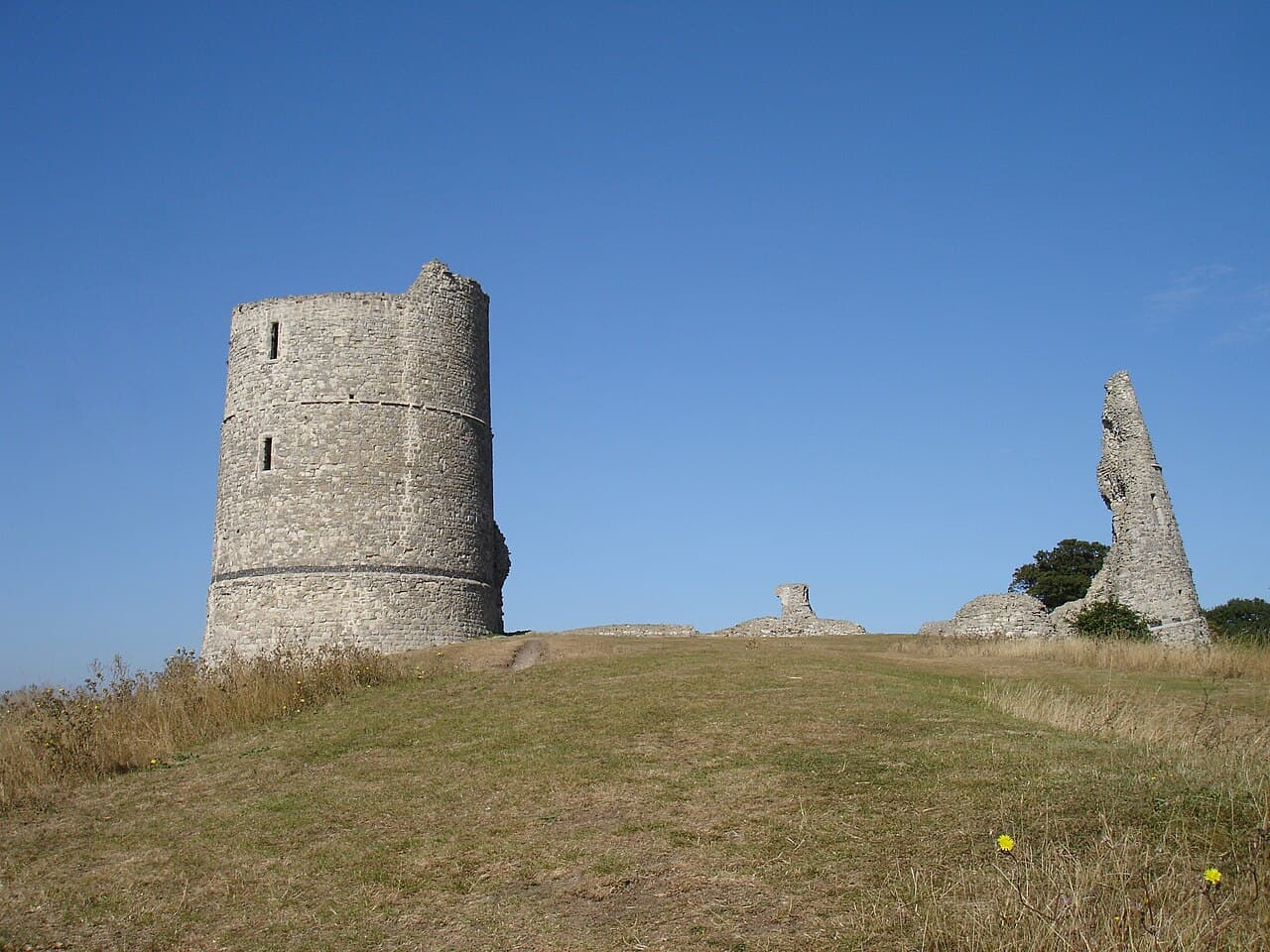
Today, visitors to Hadleigh Castle can explore the remains of its curtain walls, towers, and foundations of key domestic buildings such as the great hall, solar, and kitchen. The surviving eastern towers include one nearly intact tower with narrow rectangular windows that likely served defensive and observational purposes. Other towers stand in varying states of ruin.
The castle’s location on unstable London clay has been a persistent challenge, causing structural damage over centuries. Despite this, the site offers a compelling glimpse into medieval castle architecture, combining military, residential, and leisure elements. The terraced gardens overlooking the estuary hint at a sophisticated medieval landscape design, possibly including vineyards, which would have been a symbol of status and refinement.
Hadleigh Castle remains an important cultural and heritage site, reflecting the complex history of medieval fortifications in England and their evolution through royal patronage, decline, and modern conservation efforts. Its commanding views and evocative ruins continue to attract historians, archaeologists, and visitors interested in England’s medieval past.
Frequently asked questions (FAQ)
- What is Hadleigh Castle known for?
- Hadleigh Castle is renowned for its stunning ruins and its historical significance as a fortification dating back to the 13th century. It played a crucial role in defending the region during various conflicts and showcases the architectural style of its time. Visitors can enjoy breathtaking views of the surrounding countryside and the estuary.
- When was Hadleigh Castle built?
- Hadleigh Castle was constructed in the early 13th century, specifically around 1230, under the order of Hubert de Burgh. The castle was built to protect the region from potential invasions and has a rich history that reflects the tumultuous times of medieval England.
- Can I visit Hadleigh Castle year-round?
- Yes, Hadleigh Castle is open to visitors throughout the year, though it's advisable to check for any special events or maintenance closures. The site offers a unique experience at any time, but visitors should dress appropriately for the weather, as the castle grounds are mostly outdoors.
- What are the opening hours for Hadleigh Castle?
- Hadleigh Castle typically opens at 10 AM and closes at 4 PM during the winter months. In the summer, hours may extend, so it's best to check the official website for the most current opening times before your visit.
- Is there an entry fee to visit Hadleigh Castle?
- Access to Hadleigh Castle is free, allowing visitors to explore the ruins without any charge. However, donations to support the preservation of the site are always appreciated and help maintain its historical significance.
- What is the best time to visit Hadleigh Castle?
- The best time to visit Hadleigh Castle is during the spring and autumn months when the weather is mild and the surrounding landscapes are particularly beautiful. These seasons also tend to be less crowded, allowing for a more enjoyable experience while exploring the ruins.
- Are there any nearby attractions to visit?
- Yes, visitors to Hadleigh Castle can explore several nearby attractions, including the picturesque Hadleigh Country Park and the historic village of Hadleigh. Additionally, the nearby Southend-on-Sea offers a variety of seaside activities and entertainment options for a complete day out.
- How accessible is Hadleigh Castle for visitors with disabilities?
- Hadleigh Castle has limited accessibility due to its historical nature and uneven terrain. While some areas may be challenging for those with mobility issues, efforts are made to ensure that all visitors can enjoy the site as much as possible; it's recommended to contact the castle’s management for specific accessibility inquiries.
Photo gallery

Photo by JohnArmagh•Public domain
Information
Website
Visit websiteSources & official resources
Verify the information above using these authoritative references.
Loading map...
Visitor reviews
No reviews yet. Been here? Write the first review and help other travelers!
Write the first reviewVisited this castle? Share your experience
Your review helps other travelers and adds first-hand knowledge to our encyclopedia.