Upnor Castle
Upnor Castle is a remarkable Elizabethan artillery fort strategically positioned on the west bank of the River Medway in Kent, England. Constructed in the mid-16th century, this historic fortress was built to defend the vital Chatham Dockyard and the Royal Navy ships anchored nearby. Its location in the village of Upnor places it opposite and slightly downriver from the dockyard, underscoring its defensive purpose during a period of intense maritime rivalry in Europe.
The castle was commissioned by Queen Elizabeth I during the years 1559 to 1567, a time marked by escalating tensions with Spain and other European powers. Designed by the military engineer Sir Richard Lee and overseen by Humphrey Locke and Richard Watts, Upnor Castle was constructed as a robust artillery fortification featuring a distinctive two-storey main building with a prominent triangular gun platform projecting into the river. The fortification was garrisoned by approximately 80 men and armed with around 20 cannons of varying calibres, reflecting its role as a frontline defense for one of England's most important naval facilities.
Architectural design and features
The castle's layout is rectangular, aligned northeast to southwest along the riverbank, and constructed primarily from locally sourced Kentish ragstone, ashlar stone blocks, red brick, and timber. The main building measures roughly 41 by 21 meters and originally combined living quarters with gun platforms. Its most striking feature is the water-facing bastion, a low triangular projection housing nine embrasures for cannon fire, designed to cover both upstream and downstream approaches. This bastion's rounded parapet was engineered to deflect enemy artillery, enhancing the fort's defensive capabilities.
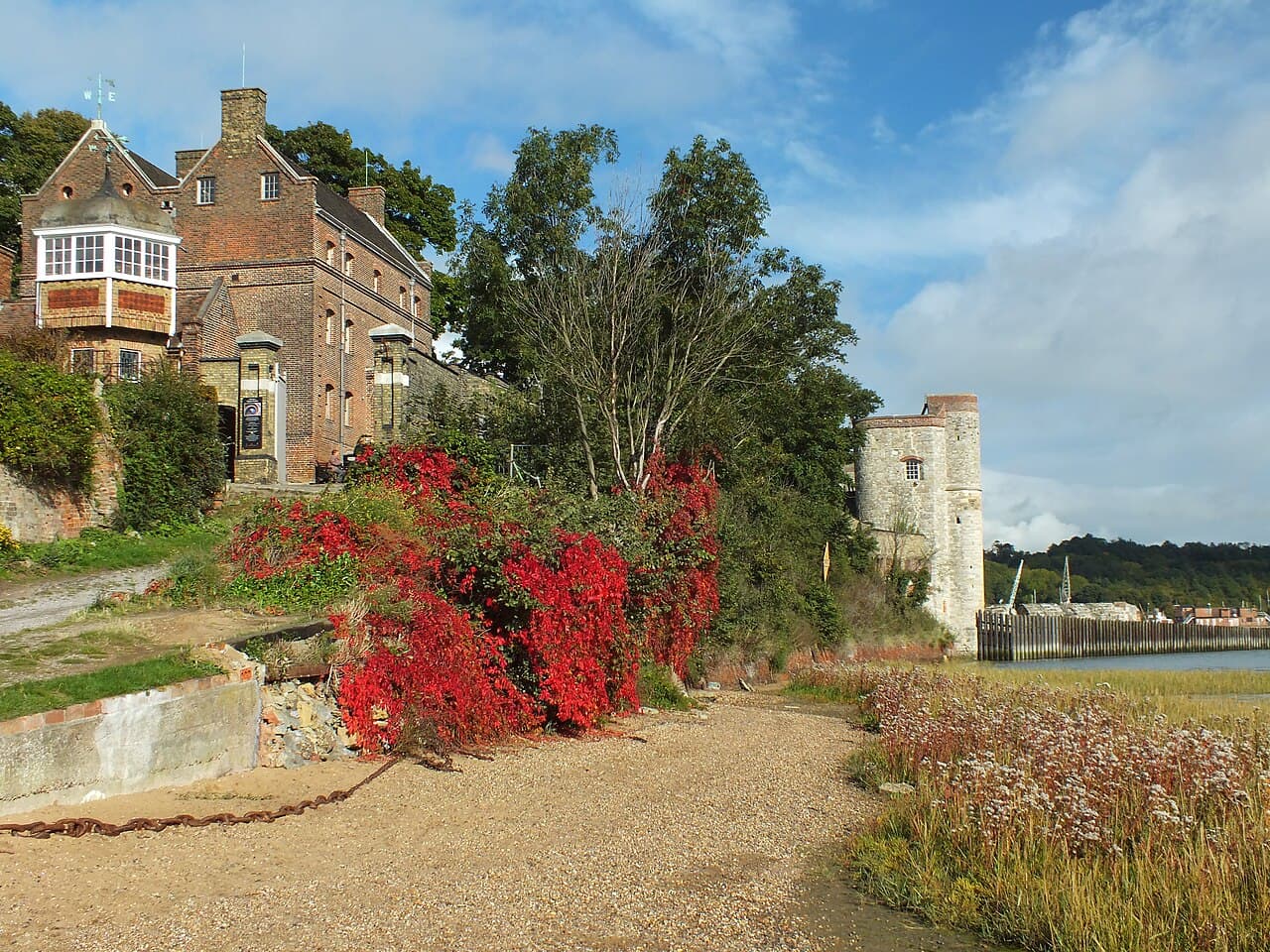
Flanking the main block are two towers situated on the riverbank, initially open-backed two-storey gun platforms providing flanking fire along the castle's protective ditch. These towers were later enclosed and expanded to three stories to serve as troop accommodations. The South Tower notably served as the governor's residence, though its discomfort led some governors to refuse residence there in later years.
Connecting these towers and the main building is a crenellated curtain wall featuring gun embrasures, adding additional layers of defense. The castle's interior is organized around a spacious rectangular courtyard, enclosed by a stone curtain wall approximately one meter thick and four meters high, topped with brickwork for added protection. The courtyard is distinguished by two large Turkey oak trees, believed to have grown from acorns brought from Crimea after the Crimean War, adding a unique botanical element to the historic site.
Access to the castle is through a four-storey gatehouse at the northwest corner of the curtain wall. This gatehouse, rebuilt in the 1650s after a fire, retains scorch marks on its walls and features a late 18th-century clock above the arched gateway, topped by a wooden bellcote from the early 19th century. A modern flagpole completes the ensemble. A deep dry ditch once surrounded the curtain wall, originally spanned by a drawbridge, though it has since partially filled in.
Historical significance and military role
Upnor Castle was constructed during a critical period in English history when naval power was essential to national security. Its primary mission was to protect the Chatham Dockyard and Royal Navy ships from naval attacks, particularly from Spain and other European adversaries. The fort's artillery and strategic position made it a key component of England's coastal defenses in the late 16th and early 17th centuries.
Despite its importance, the castle and surrounding river defenses suffered neglect in the 17th century. This vulnerability was dramatically exposed during the Dutch Raid on the Medway in June 1667, part of the Second Anglo-Dutch War. The Dutch fleet launched a surprise attack, breaking through defensive lines, capturing English warships, and setting others ablaze at Chatham. While many defenses failed, Upnor Castle's garrison, though limited in supplies, mounted a staunch defense using its artillery and nearby gun platforms. They forced the Dutch to retreat after a few days, preventing the complete destruction of the dockyard.
The raid highlighted the obsolescence of Upnor Castle as a frontline fortification. In response, the castle was repurposed in 1668 as a naval ammunition depot, storing gunpowder, cannonballs, and other munitions to support the Royal Navy. Over the centuries, it adapted to various military functions, including serving as an ordnance laboratory and a proofyard for testing weapons and explosives. The castle endured damage during the Second World War, notably from bombing in 1941.
Later use and preservation
Military use of Upnor Castle ceased in 1945 after World War II. Recognizing its historical and architectural significance, the castle was preserved and opened to the public as a museum. It was designated a Scheduled Ancient Monument in 1960, securing its protection as a heritage site.
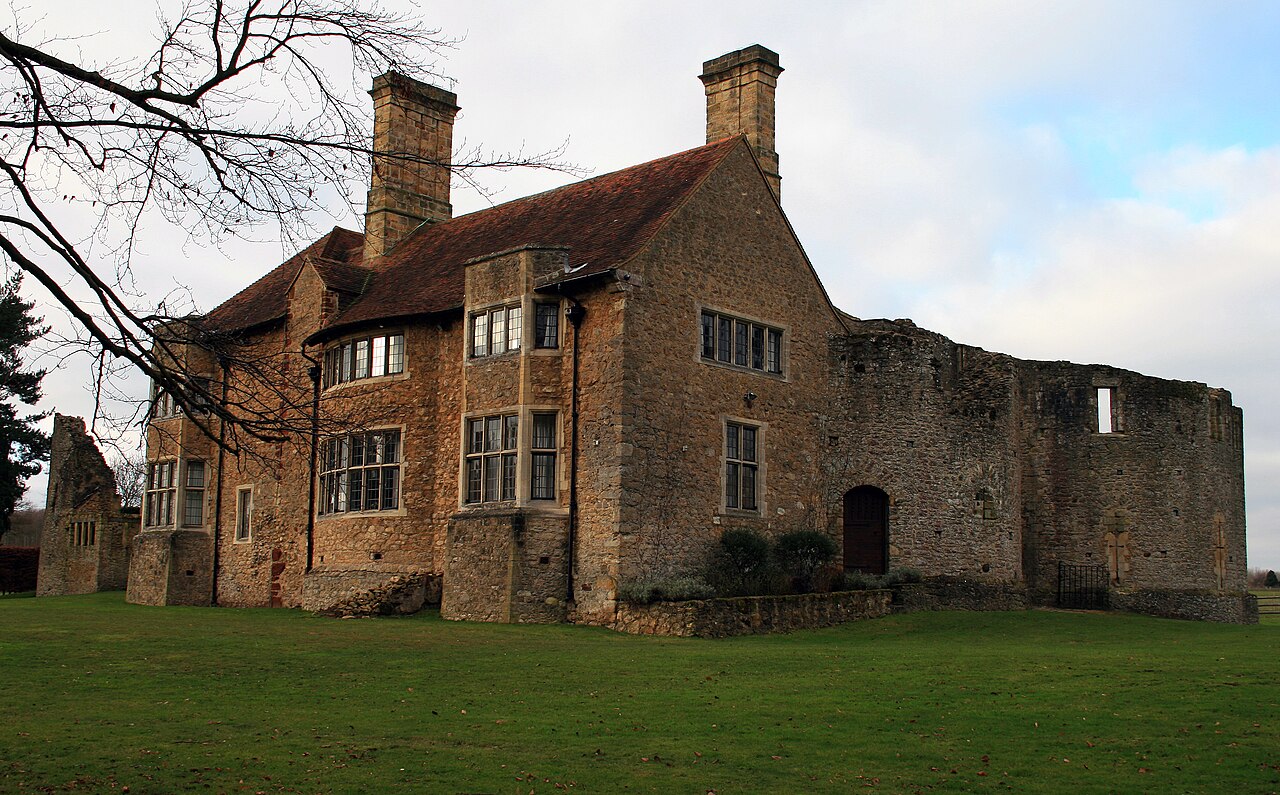
Today, Upnor Castle is managed by English Heritage and forms part of the Crown Estate. Visitors can explore the well-preserved artillery fort, including its bastion, towers, curtain walls, and gatehouse. The site also includes ancillary buildings such as Upnor Castle House, originally built for the ammunition depot's storekeeper, and early 18th-century barracks representing some of England's earliest purpose-built military accommodation.
The castle's surroundings contain remnants of 19th-century depot buildings, including a gunpowder magazine constructed in 1857. Although many military structures have been repurposed or demolished, the castle itself remains a significant monument to England's naval and military history, offering insight into Elizabethan fortifications and the evolution of coastal defense over several centuries.
Unique features and visitor experience
Visitors to Upnor Castle can appreciate its distinctive Elizabethan military architecture, characterized by its combination of residential and artillery functions within a compact footprint. The castle's triangular gun platform projecting into the river, the curtain walls with embrasures, and the surviving mid-19th-century cannons mounted on original carriages provide tangible connections to its defensive past.
The presence of the Turkey oak trees in the courtyard adds a botanical curiosity linked to 19th-century history, while the castle's gatehouse offers a glimpse into 17th-century military architecture and the challenges of maintaining such fortifications through centuries of conflict and change.
Upnor Castle's riverside location affords scenic views of the Medway and the historic naval dockyard opposite, enriching the visitor experience with a sense of place tied to England's maritime heritage. The site's accessibility and well-preserved condition make it an important destination for those interested in military history, architecture, and the Elizabethan era.
Frequently asked questions (FAQ)
- What is the historical significance of Upnor Castle?
- Upnor Castle was built in the 16th century to protect the naval dockyard at Chatham from potential attacks by foreign powers. It played a crucial role during the Anglo-Dutch Wars and has a rich history tied to maritime defense, making it an important site for understanding England's naval heritage.
- When was Upnor Castle built?
- Upnor Castle was constructed between 1559 and 1567 under the orders of Queen Elizabeth I. The castle was designed to defend the river Medway and has been well-preserved, allowing visitors to step back in time and appreciate its historical context.
- What are the opening hours for Upnor Castle?
- Upnor Castle typically opens to visitors from April to October, with specific hours varying depending on the season. It is advisable to check the official website for the most up-to-date information on opening times and any special events that may affect access.
- Can I visit Upnor Castle with children?
- Yes, Upnor Castle is family-friendly and offers a range of activities that children will enjoy, including exploring the castle grounds and engaging with historical exhibitions. There are also picnic areas nearby where families can relax and enjoy their visit.
- Is it possible to access Upnor Castle for those with mobility issues?
- Upnor Castle has some accessibility options, but due to its historical structure, certain areas may be challenging for visitors with mobility impairments. It's recommended to contact the castle management beforehand to inquire about specific accessibility features and any assistance that may be available.
- What are the ticket prices for visiting Upnor Castle?
- Ticket prices for Upnor Castle vary based on age and whether you are a student or a senior. Generally, there are discounts for families and group bookings, so checking the official website for current rates and offers is a good idea before your visit.
- When is the best time to visit Upnor Castle?
- The best time to visit Upnor Castle is during the spring and summer months, from April to September, when the weather is typically mild and the gardens are in full bloom. Additionally, this period often features special events and activities that enhance the visitor experience.
- Are there any nearby attractions to visit when I go to Upnor Castle?
- Yes, there are several nearby attractions, including the historic town of Rochester, the Royal Engineers Museum, and the picturesque Medway towns. These locations offer a great opportunity to explore more of the rich history and culture of the area in addition to your visit to Upnor Castle.
Photo gallery

Information
Website
Visit websiteSources & official resources
Verify the information above using these authoritative references.
Loading map...
Visitor reviews
No reviews yet. Been here? Write the first review and help other travelers!
Write the first reviewVisited this castle? Share your experience
Your review helps other travelers and adds first-hand knowledge to our encyclopedia.