Cooling Castle
Cooling Castle stands as a remarkable example of late medieval military architecture in the county of Kent, England. Constructed in the 1380s by John de Cobham, 3rd Baron Cobham, this fortress was strategically positioned on the south bank of the River Thames to defend against French raids during the Hundred Years' War. Originally commanding the river's edge, the castle now lies several kilometers inland due to extensive land reclamation over the centuries. Its historical significance is underscored by its pioneering design as one of the earliest English castles adapted for gunpowder weaponry, reflecting the evolving nature of medieval warfare.
Historical context and construction
Permission to build Cooling Castle was granted by the crown around 1380, and construction was completed by 1385. The Cobham family, local lords of the manor, commissioned the fortress to serve as a bulwark against the threat of French incursions into the Thames Estuary. This was a response to earlier devastating raids, particularly the 1379 French attack that ravaged the surrounding area. Cooling Castle's location on the Hoo Peninsula, approximately 6 miles north of Rochester, allowed it to control access along the river and protect the valuable hinterland.
Design for gunpowder defense
Cooling Castle's layout is unusual and innovative for its time. It features a distinctive figure-of-eight plan composed of two adjacent walled wards of unequal size, each surrounded by moats and ditches. The inner ward is elevated on a raised earth mound, measuring about 60 by 52 meters, while the larger outer ward spans approximately 134 by 88 meters. This dual-ward design allowed for layered defense, with the inner ward serving as a final stronghold.
The castle was among the first English fortifications designed with the use of gunpowder artillery in mind, incorporating thick curtain walls and horseshoe-shaped towers that projected beyond the walls to provide overlapping fields of fire. The outer ward's stone walls feature three such towers, each about 12 meters tall and projecting 5 meters from the curtain wall, enhancing defensive coverage.
Architectural features and layout
Gatehouses and towers
The main entrance to the outer ward is through a formidable gatehouse flanked by two semi-circular towers, each rising to 12 meters. The arched gateway measures approximately 3 meters in height and 5 meters wide, providing a controlled access point. The rear of these towers is open but was likely enclosed with timber originally. Notably, one tower bears a copper plate with an enamelled inscription reassuring the local populace that the castle was constructed for defense rather than oppression.
The inner ward is accessed via a gatehouse with a drawbridge crossing the moat, allowing it to be defended independently from the outer ward. The inner ward's curtain walls remain between 3 and 6 meters high, with two surviving towers approximately 7 meters tall. Traces of domestic buildings line the interior walls, including a vaulted undercroft beneath the former great chamber, indicating the castle's residential as well as military functions.
Moats and ditches
The castle's defensive perimeter includes a substantial water-filled moat around the inner ward, possibly up to 20 meters wide, and a dry ditch up to 6 meters deep surrounding the outer ward. These two moats are separated by a causeway on the northern side, creating a formidable layered defense system that would have hindered attackers and protected the castle from siege engines and infantry assaults.
Later history and decline
Following the death of the male Cobham line in the early 15th century, the castle passed through various families via female inheritance, though the Cobham title persisted. Cooling Castle's most dramatic moment came in 1554 during Wyatt's Rebellion, when it was held by George Brooke, 9th Baron Cobham. The castle was besieged by a force of around 4,000 men led by Thomas Wyatt the Younger, a nephew of the Baron and rebel leader.
Despite its advanced design for the period, the castle fell after just eight hours of bombardment by two cannons. The siege inflicted significant damage, and the defending force surrendered quickly. Wyatt then marched on to London in an ultimately unsuccessful attempt to depose Queen Mary I. The aftermath saw the Baron and his son briefly imprisoned in the Tower of London on suspicion of deliberately failing to defend the castle. Damaged and politically compromised, Cooling Castle was abandoned by the Cobham family and allowed to fall into ruin.
Post-medieval use and landscaping
In the 17th century, a mansion was constructed within the outer ward near the inner ward, and a timber-framed barn with outbuildings was added later that century. It is believed that landscaping efforts during the 18th or 19th centuries altered part of the inner ward, possibly creating a garden that incorporated the castle ruins. These adaptations reflect the transition from a military fortress to a domestic and agricultural estate.
Present condition and ownership
Today, Cooling Castle remains largely in a ruined state but retains significant structural elements that illustrate its original defensive purpose. The site covers about eight acres and is divided into three ownerships: the inner ward, the mansion within the outer ward, and the barn with outbuildings. The mansion is privately owned by Jools Holland, a musician and television presenter, while the barn serves as a wedding venue.
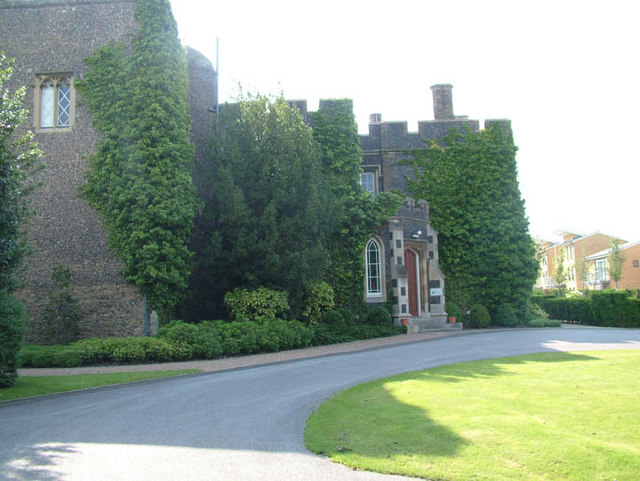
Access to the castle is currently restricted as it is private property. The most visible feature is the outer ward gatehouse, which now serves as the entrance to the mansion. Ruined corner towers of the outer ward flank this gatehouse, while the inner ward lies to the left, visible but inaccessible to visitors. The castle's gatehouse is noted for its architectural beauty and historical significance.
Heritage status and conservation challenges
Cooling Castle has been a Scheduled monument since 1946, recognizing its national importance as a historic site. However, it is currently listed as Heritage at Risk due to ongoing deterioration and the challenges of preserving a largely ruined structure in private hands. Conservation efforts are complicated by the site's division among multiple owners and its partial adaptive reuse.
Frequently asked questions (FAQ)
- What is the historical significance of Cooling Castle?
- Cooling Castle, built in the late 13th century, is a remarkable example of medieval military architecture. It played a crucial role in defending the region during the conflicts of the time, showcasing the strategic importance of the area in English history.
- When was Cooling Castle constructed?
- Cooling Castle was constructed around 1280 by the de Vere family, who were prominent landowners in the region. Its architecture reflects the transition from traditional motte-and-bailey designs to more fortified stone structures.
- Can I visit Cooling Castle?
- Yes, Cooling Castle is open to the public for visits. Visitors can explore the grounds and learn about the castle's history through informative displays and guided tours.
- What are the opening hours for Cooling Castle?
- Cooling Castle typically opens from 10 AM to 5 PM, but it's advisable to check the official website for seasonal changes in hours. Special events may also affect the standard opening times.
- Is it possible to access Cooling Castle with mobility aids?
- Cooling Castle has made efforts to improve accessibility; however, due to its historical nature, some areas may pose challenges for visitors with mobility aids. It is recommended to contact the castle prior to your visit for detailed accessibility information.
- What is the best time to visit Cooling Castle?
- The best time to visit Cooling Castle is during the spring and summer months when the weather is pleasant, and the gardens are in full bloom. This allows for a more enjoyable experience while exploring the castle grounds.
- Are there any nearby attractions to Cooling Castle?
- Yes, nearby attractions include the picturesque village of Cooling and the historic town of Rochester, home to Rochester Castle and the stunning Rochester Cathedral. These sites provide a rich historical context to your visit.
- What are the ticket prices for Cooling Castle?
- Ticket prices for Cooling Castle are generally affordable, with discounts available for children, seniors, and families. It's best to check the official website for the most current pricing and any special promotions that may be available.
Information
Website
Visit websiteSources & official resources
Verify the information above using these authoritative references.
Loading map...
Visitor reviews
No reviews yet. Been here? Write the first review and help other travelers!
Write the first reviewVisited this castle? Share your experience
Your review helps other travelers and adds first-hand knowledge to our encyclopedia.