Dunollie Castle Ruins
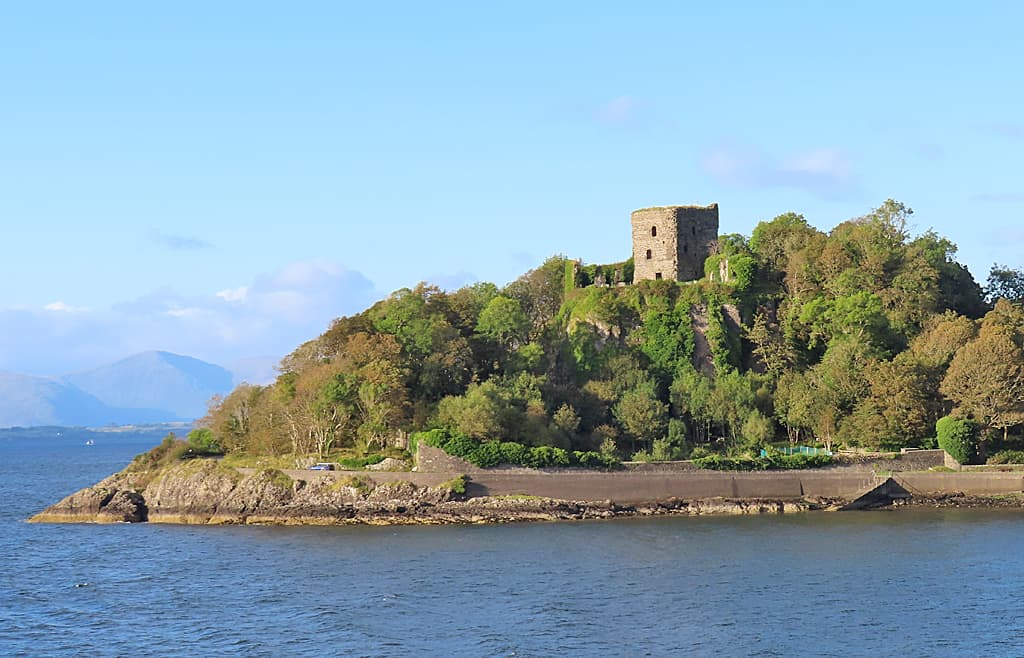
Dunollie Castle is a historic ruined fortress perched on a rocky hill north of the town of Oban in Argyll and Bute, Scotland. This hill castle has a complex history stretching back to the early medieval period, serving as a royal center for the Cenél Loairn within the kingdom of Dál Riata. The site, originally known as "Dun Ollaigh," was a strategic fortification repeatedly attacked and rebuilt during the 7th and 8th centuries, reflecting the turbulent era of early Scottish and Gaelic kingdoms.
Early medieval origins and dál riata significance
Archaeological and historical records reveal that Dunollie Castle's location was fortified as early as the 7th century. The Irish annals document that "Dun Ollaigh" suffered attacks or was burned down in 686, 698, and 701. The fortification was rebuilt in 714 by Selbach mac Ferchair, a king of Dál Riata, who paradoxically had been involved in the destruction of the site in 701. Excavations from the 1970s indicate that this early fortification was abandoned by the 10th century, marking the end of its role as a royal stronghold within Dál Riata. This early phase underscores the site's importance as a political and military center during the formation of early Scottish kingdoms.
Transition to the kingdom of the isles and macdougall lordship
By the 12th century, the region encompassing Dunollie became part of the semi-independent Kingdom of the Isles, governed by the Norse-Gaelic leader Somerled. His descendants, the MacDougalls, emerged as powerful lords of the area known as Lorne, controlling extensive territories including much of Argyll and several nearby islands such as Mull, Lismore, Jura, Tiree, and Coll. The castle's earthwork fortifications were replaced or significantly enhanced during the late 12th or early 13th century, likely under the direction of either Dougall or his son Duncan MacDougall.
Political allegiances and conflicts
The MacDougalls' political stance shifted during the 13th century. Initially allied with Haakon IV of Norway, Ewan MacDougall, the clan chief and great-grandson of Somerled, realigned the clan's loyalty to the Scottish crown from the 1250s onward. This change reflected the broader political realignments occurring in Scotland and the Isles during this period.
In the early 14th century, John MacDougall, Ewan's grandson, played a significant role in the Scottish Wars of Independence. He allied with the Comyns and supported the Balliol claim to the Scottish throne against Robert the Bruce. John's forces defeated Bruce at the Battle of Dalrigh in 1306, but Bruce's return in 1308 led to the decisive Battle of the Pass of Brander, where the MacDougalls were defeated. As a consequence, the MacDougall lands, including Dunollie, were forfeited to the Campbells, although the family later regained possession of the castle in the 14th century.
Architecture and castle remains
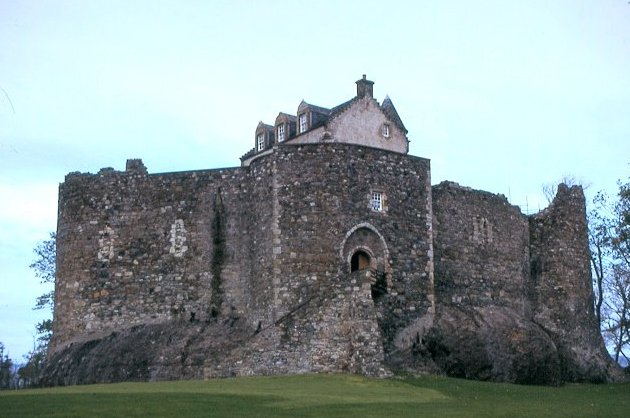
The existing ruins of Dunollie Castle primarily date from the 15th century, showcasing the architectural style and defensive features typical of Scottish medieval hill castles. The core structure is a four-story rectangular tower located at the northeast corner of a large walled courtyard approximately 24.4 meters square. The curtain walls enclosing the courtyard stand up to 4.6 meters high on the northern and eastern sides, constructed mainly of rubble stone bonded with clay mortar. Wall thickness varies, being thickest at the northeast corner, indicating a focus on defense in that sector.
Tower and interior features
The main tower's entrance is on the ground floor of its southwest wall. Internally, the tower is organized over several levels: a vaulted cellar serves as storage with a strong arched ceiling, a small hall occupies the first floor, and a larger hall is situated on the second floor, accessible by two straight staircases. Upper chambers were reached via a spiral staircase, a common medieval design element facilitating efficient vertical movement and defense. The tower once featured battlemented parapets along the roofline, although these crenellations have mostly collapsed.
Courtyard and gates
The courtyard walls include significant gateway features. The eastern curtain wall contains a restored main gate designed to be secured by a heavy wooden beam acting as a barricade. To the north, a smaller gate was later blocked with masonry, reflecting changing defensive needs or access control. Within the courtyard, multiple buildings once stood but now survive only as ruins overgrown with vegetation.
Later history and clan legacy
In the 17th century, Dunollie Castle experienced further conflict. It was captured by the Marquis of Argyll in 1644 during the turbulent times of the Wars of the Three Kingdoms. The castle was later besieged and plundered by Covenanter forces in 1647. Despite these upheavals, the MacDougall family regained possession in 1661 and maintained the castle until they abandoned it in 1746 in favor of the newly built Dunollie House, located downhill from the ruins.
Modern significance and conservation
Today, Dunollie Castle is a Scheduled Monument recognized for its archaeological and historical importance. Excavations have revealed layers of occupation from the 7th through the 13th centuries, illuminating its long-standing role in Scottish history. The ruins, while fragile and deteriorating, are open to the public as part of the Dunollie Museum, Castle and Grounds. Efforts by clan descendants and local heritage organizations aim to promote tourism and preserve the site as a cultural landmark. Notably, remains of a historical herb garden have been discovered within the castle grounds, adding to the understanding of medieval life at Dunollie.
Visitor information and cultural heritage
Dunollie Castle offers visitors a glimpse into Scotland's medieval past through its evocative ruins and museum exhibits. The site provides educational opportunities about the history of the MacDougall clan, the Kingdom of Dál Riata, and the complex political shifts in medieval Scotland. The castle's dramatic hilltop location affords scenic views of the surrounding landscape and waterways, enhancing its appeal as a heritage destination.
Visitors can explore the remaining structures, including the tower, curtain walls, and gatehouses, while learning about the architectural techniques and defensive strategies employed in castle construction. The nearby Dunollie House and museum further enrich the experience by showcasing clan artifacts and historical narratives.
Frequently asked questions (FAQ)
- What is the historical significance of Dunollie Castle Ruins?
- Dunollie Castle Ruins are a fascinating remnant of Scotland's medieval past, serving as the ancestral home of the MacDougall clan. The castle's strategic location offers insights into the historical conflicts and power struggles that shaped the region, particularly during the 13th and 14th centuries.
- When was Dunollie Castle built?
- Dunollie Castle is believed to have been established in the 12th century, with various modifications made over the centuries. Its architecture showcases the evolution of Scottish defensive structures, reflecting the changing needs of its inhabitants.
- Can I visit Dunollie Castle Ruins?
- Yes, Dunollie Castle Ruins are open to visitors, allowing you to explore the remnants of this historic site. While the castle is in a state of ruin, the site provides a picturesque view and a glimpse into Scotland's rich heritage.
- What are the opening hours for Dunollie Castle?
- Dunollie Castle Ruins typically have seasonal opening hours, so it's best to check their official website for the most current information. Generally, it is open from late spring to early autumn, allowing visitors to enjoy the site during the warmer months.
- Is it possible to access Dunollie Castle with limited mobility?
- The terrain around Dunollie Castle can be uneven and may pose challenges for visitors with limited mobility. However, staff are often available to assist, and it's advisable to contact them in advance to discuss accessibility options.
- What is the best time to visit Dunollie Castle?
- The best time to visit Dunollie Castle is during the late spring and summer months when the weather is generally milder and the days are longer. This period allows for a more enjoyable experience while exploring the ruins and the surrounding landscape.
- Are there any nearby attractions to visit?
- Yes, nearby attractions include the picturesque town of Oban, known for its seafood and stunning coastal views, as well as the Oban Distillery, where you can learn about whisky production. Additionally, the beautiful islands of Mull and Iona are easily accessible from Oban for a day trip.
- What are the ticket prices for visiting Dunollie Castle?
- Ticket prices for Dunollie Castle Ruins are generally affordable, with discounts often available for students and seniors. It's advisable to check their official website for the latest pricing information and any special events that may be taking place.
Photo gallery

Information
Website
Visit websiteSources & official resources
Verify the information above using these authoritative references.
Loading map...
Visitor reviews
No reviews yet. Been here? Write the first review and help other travelers!
Write the first reviewVisited this castle? Share your experience
Your review helps other travelers and adds first-hand knowledge to our encyclopedia.