Gwalior Fort
Gwalior Fort stands as one of the most significant and ancient hill forts in India, with origins tracing back to the 6th century or possibly earlier. Located in the city of Gwalior, this imposing bastioned fortress has been a witness to centuries of Indian history, reflecting the architectural and cultural evolution across numerous dynasties and empires. Its strategic location atop a steep hill provides commanding views of the surrounding plains, contributing to its reputation as the "Gibraltar of India" for its formidable defenses and impregnable nature.
Historical origins and early significance
The earliest references to the fort, historically known as Gopgiri, appear in ancient Sanskrit inscriptions, indicating its existence as early as the 5th or 6th century CE. The fort's elevated position made it a prized military and administrative center for successive rulers. Archaeological evidence and inscriptions suggest continuous occupation and fortification from the early medieval period onward.
Throughout its long history, Gwalior Fort has been under the control of various influential powers, including the Kushanas, Nagas, Guptas, Hunas, Pratiharas, Kachchhapaghatas, and the Tomaras. Each dynasty contributed to the fort's architectural and cultural fabric, enhancing its defensive structures and palatial complexes.
Architectural features and palatial complexes
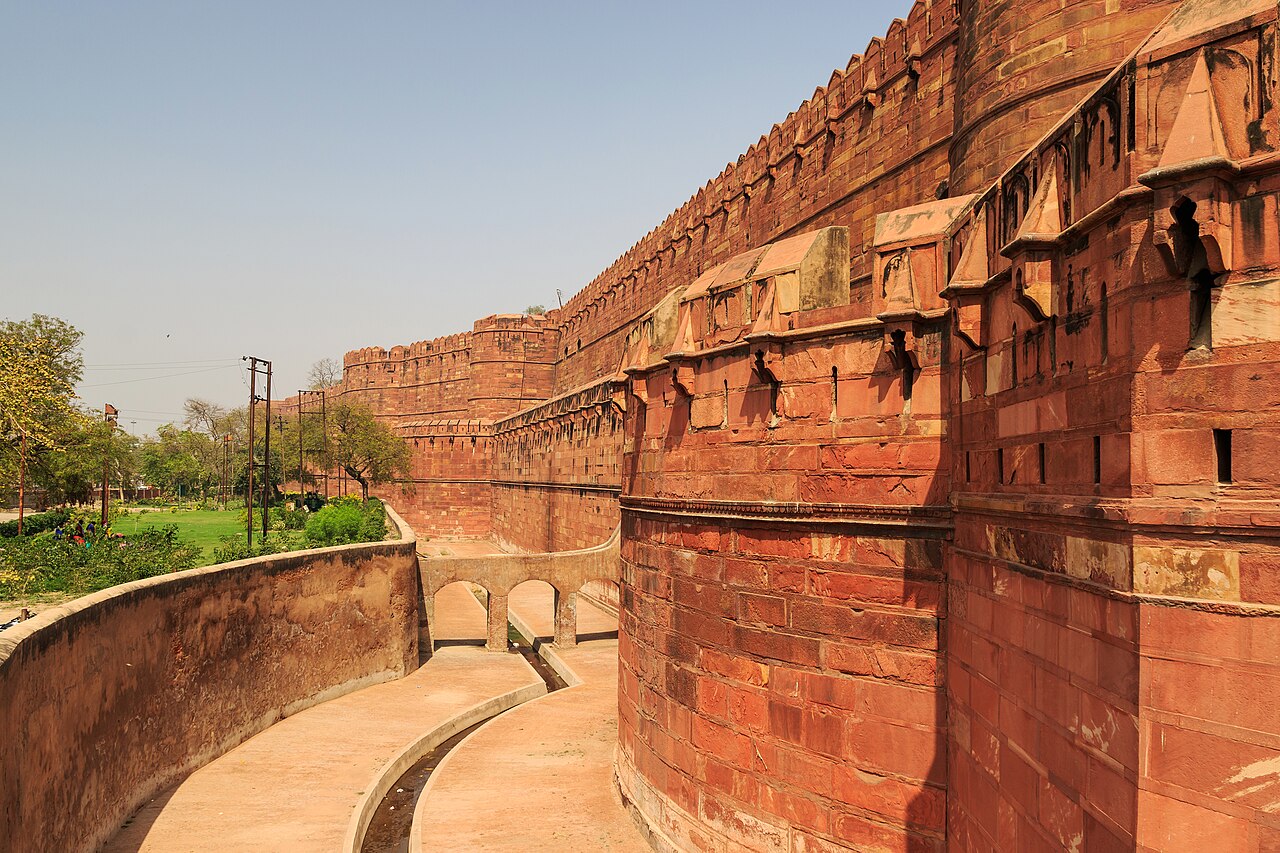
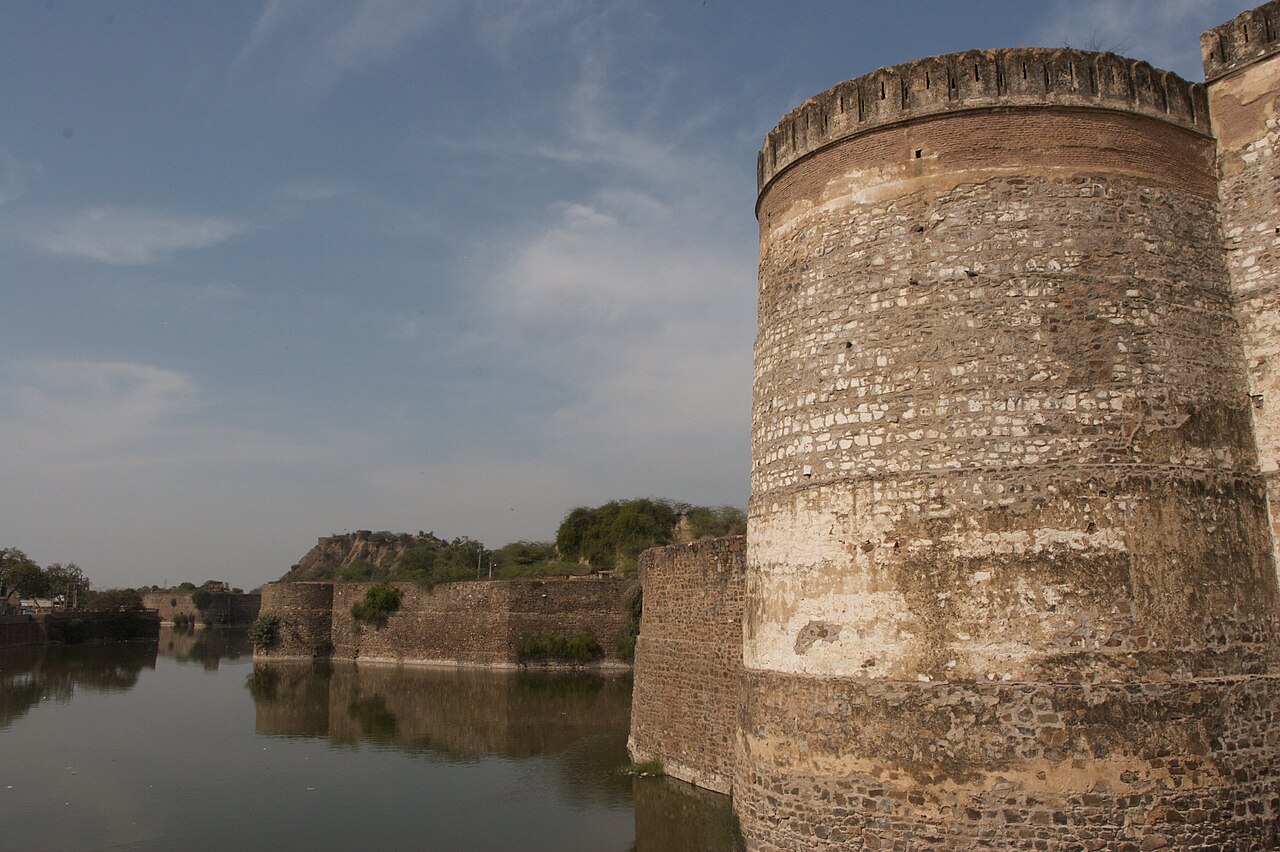
The fort complex is renowned for its extensive defensive walls, bastions, and gates that exemplify the military architecture of the late medieval period. The fortification includes massive stone walls stretching over 3 kilometers, incorporating numerous bastions designed to withstand sieges and artillery attacks.
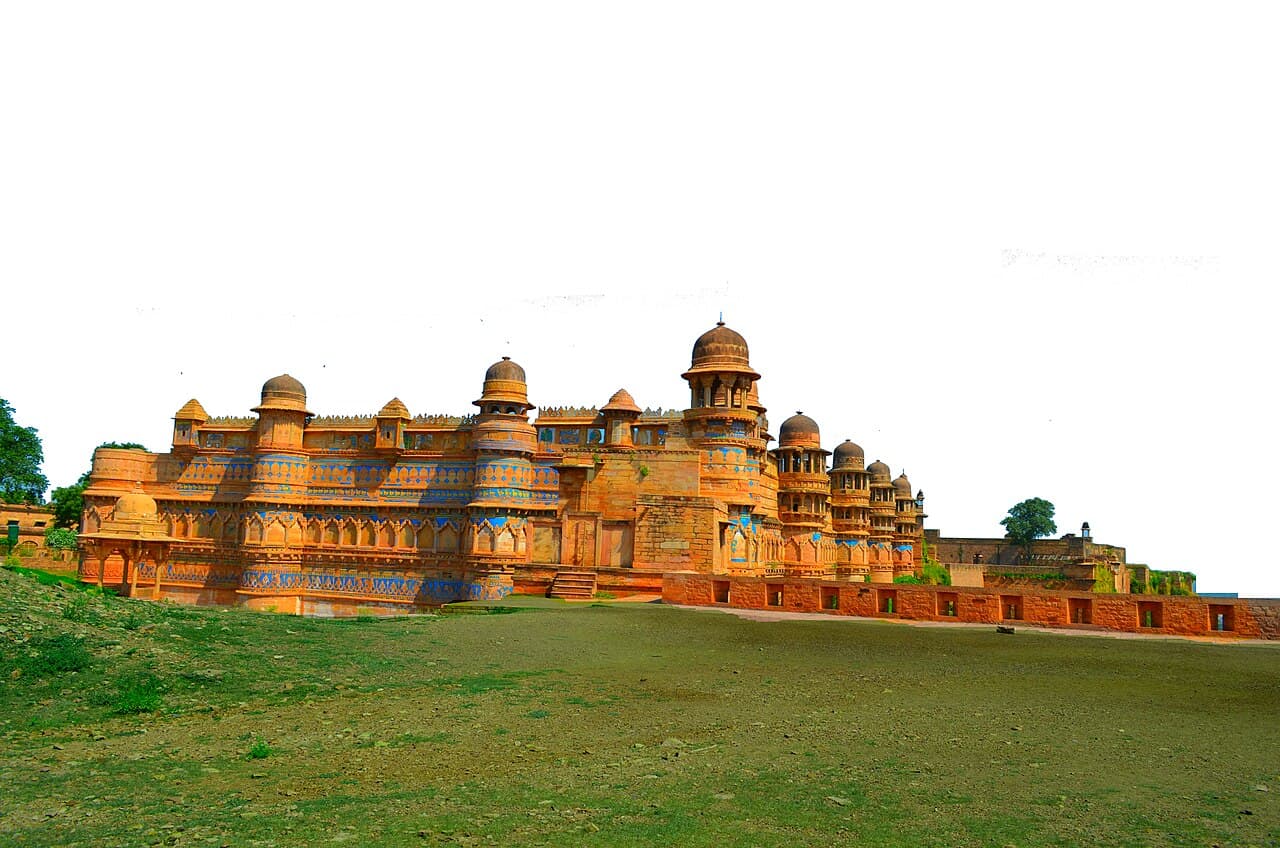
Within the fort, visitors find six prominent palaces, including the Man Mandir Palace, Vikram Mandir, Karn Palace, Shah Jahan Palace, Jehangir Palace, and the Gurjari Mahal. The Man Mandir Palace, constructed by the Tomar ruler Man Singh Tomar during his reign from 1486 to 1516 CE, is noted for its intricate carvings, lattice windows, and a blend of Hindu and Islamic architectural styles. The Gurjari Mahal was built by Man Singh Tomar for his queen, Mrignayani, who was from the Gurjar community, reflecting the cultural diversity of the period.
Defensive structures and gates
The fort's defense system includes multiple gates such as the Hathi Pol (Elephant Gate), Suraj Pol (Sun Gate), and Amar Singh Gate. These gates are fortified with thick walls, arrow slits, and machicolations designed to repel invaders. The fort's walls are punctuated by bastions that allowed defenders to mount cannons and archers, providing a comprehensive defense against attacks.
Cultural and historical significance
Babur, the first Mughal emperor, famously described Gwalior Fort as the "pearl amongst the fortresses of Hind," praising its grandeur and strategic importance. The fort's history is marked by numerous battles and sieges, reflecting the turbulent political landscape of medieval India.
One of the fort's remarkable features is the Chaturbhuj Temple, also known as the Zero Temple, located near the summit. This temple houses a stone inscription dating back approximately 1,500 years, which contains the second-oldest known record of the numeral "zero" used in decimal place value notation. This inscription is a critical piece of mathematical history, highlighting the advanced knowledge of ancient Indian scholars.
Later periods and preservation
During the Mughal period, the fort saw additions such as the Shah Jahan Palace and the Jehangir Palace, which exhibit the refined architectural styles of the time, including the use of red sandstone and intricate inlay work. The fort later came under British control and was involved in various conflicts during the colonial period.
Today, Gwalior Fort is well preserved and maintained as a historic monument. It attracts scholars, historians, and tourists interested in exploring its architectural grandeur and rich historical legacy. The fort remains a symbol of India's medieval military architecture and cultural heritage.
Visitor experience and accessibility
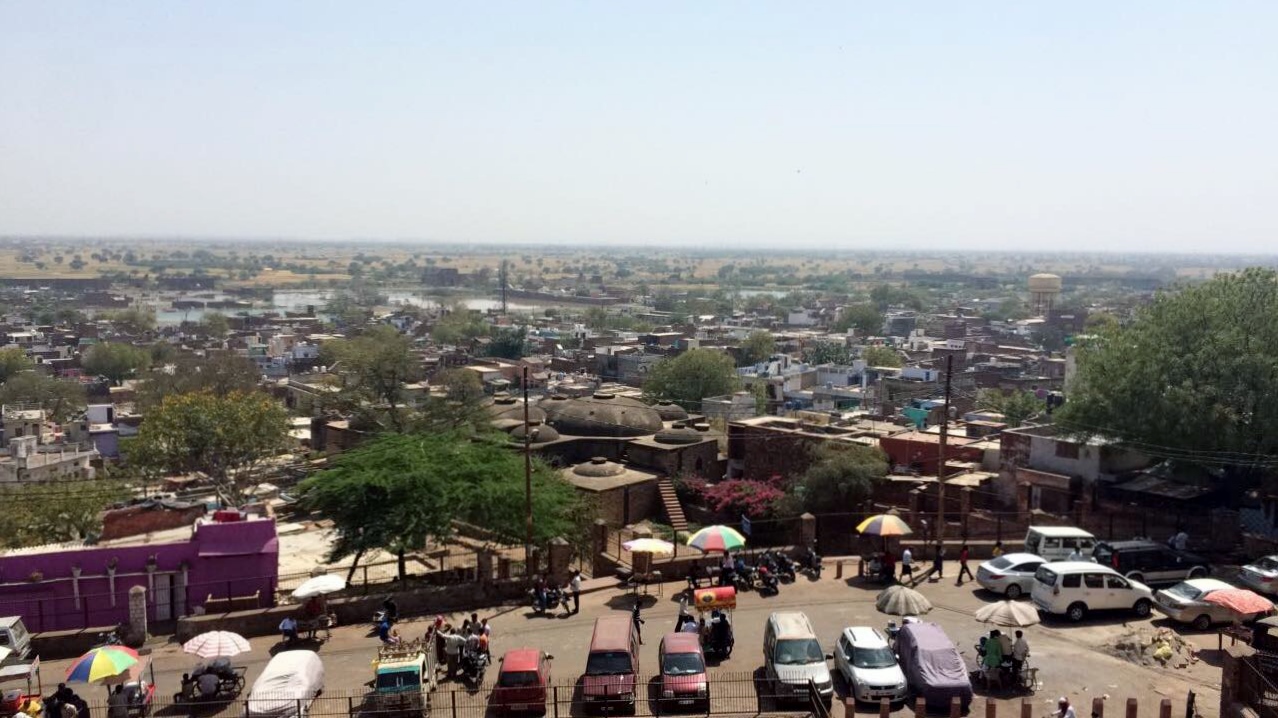
The fort is accessible via a steep climb or by a road leading up to the main entrance. Visitors can explore the extensive grounds, including the palaces, temples, and defensive walls. The site offers panoramic views of the city of Gwalior and the surrounding landscape. Guided tours provide detailed insights into the fort's history and architecture.
Architectural style and classification
Gwalior Fort is classified as a bastioned fortress, characterized by its robust defensive walls and bastions designed to withstand artillery fire. The architectural style is a blend of late medieval Indian fortification techniques with influences from Hindu and Islamic design elements, reflecting the diverse rulers who controlled the fort over centuries.
Frequently asked questions (FAQ)
- What is the historical significance of Gwalior Fort?
- Gwalior Fort is one of the most important forts in India, known for its rich history and architectural grandeur. It has been a strategic military fortification and has witnessed many battles and dynasties, including the Tomars and the Mughals. The fort's historical significance is also highlighted by its stunning palaces, temples, and the famous Saas Bahu ka Mandir.
- When was Gwalior Fort built?
- Gwalior Fort was constructed in the 8th century and has undergone several renovations and expansions over the centuries. It was originally built by the Tomara dynasty, and later, significant contributions were made by various rulers, including the Mughals. Its long history makes it a fascinating site for those interested in Indian heritage.
- What are the opening hours for Gwalior Fort?
- Gwalior Fort is open to visitors from 6:00 AM to 6:00 PM daily. It’s advisable to visit in the early morning or late afternoon to avoid the midday heat and enjoy the spectacular views. Make sure to plan your visit accordingly to fully explore the fort's many attractions.
- Can I visit Gwalior Fort year-round?
- Yes, Gwalior Fort can be visited throughout the year, but the best time to go is from October to March when the weather is pleasant. During these months, you can enjoy exploring the fort without the discomfort of extreme heat. However, be prepared for a larger number of tourists during peak season.
- Is it possible to access Gwalior Fort with public transport?
- Yes, Gwalior Fort is accessible by public transport, including buses and auto-rickshaws from the city center. Local taxis are also available for convenience. Additionally, the fort is located close to the Gwalior Railway Station, making it easy for travelers to reach.
- What are the ticket prices for Gwalior Fort?
- The ticket prices for Gwalior Fort are quite affordable, with a nominal fee for Indian citizens and a slightly higher fee for foreign tourists. Tickets can be purchased at the entrance, and it’s advisable to carry cash for the transaction. The fee contributes to the maintenance and preservation of this historic site.
- What nearby attractions should I visit while at Gwalior Fort?
- While visiting Gwalior Fort, you can also explore nearby attractions such as the Gujari Mahal, which houses a museum, and the iconic Jai Vilas Palace. The beautiful Sas Bahu ka Mandir and the Teli Ka Mandir are also within close proximity. These sites complement your visit to Gwalior Fort and showcase the region's rich cultural heritage.
- How do I get the best views of Gwalior Fort?
- To get the best views of Gwalior Fort, it is recommended to hike up the fort from the base or to visit the various lookout points within the fort complex. The fort's elevated position provides stunning panoramic views of the surrounding city and landscape. Early morning or late afternoon visits will enhance your experience with beautiful lighting.
Photo gallery

Information
Loading map...
Visitor reviews
No reviews yet. Been here? Write the first review and help other travelers!
Write the first reviewVisited this castle? Share your experience
Your review helps other travelers and adds first-hand knowledge to our encyclopedia.