Guthrie Castle
Guthrie Castle is a notable example of a Scottish hill castle with origins dating back to the 15th century. Located in the village of Guthrie, near Forfar in Angus, Scotland, the castle stands approximately 10 kilometres east of Forfar and 29 kilometres northeast of Dundee. The castle's history is deeply intertwined with the Guthrie family, who played a significant role in Scottish history during the late medieval period.
Origins and early construction
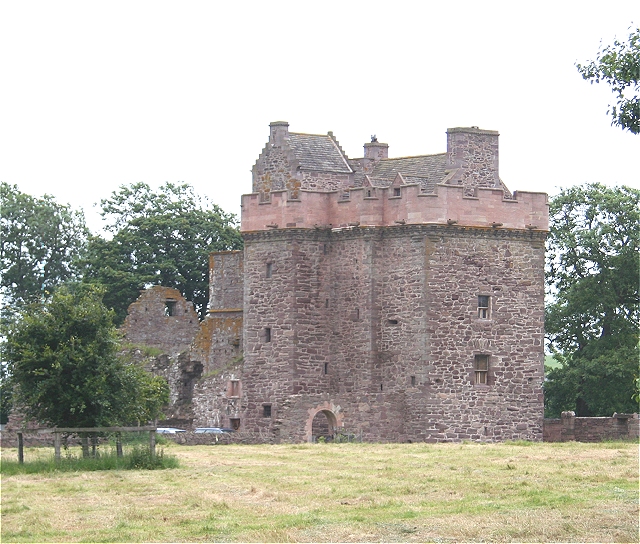
The castle's core structure is a tower house built in 1468 by Sir David Guthrie (1435–1500), who was an influential figure serving as the Treasurer and Lord Justice-General of Scotland. This tower house was typical of late medieval Scottish noble residences, designed both for defense and status. The tower's robust stone construction and strategic hilltop location exemplify the defensive priorities of the period.
Architectural evolution and 19th-century expansion
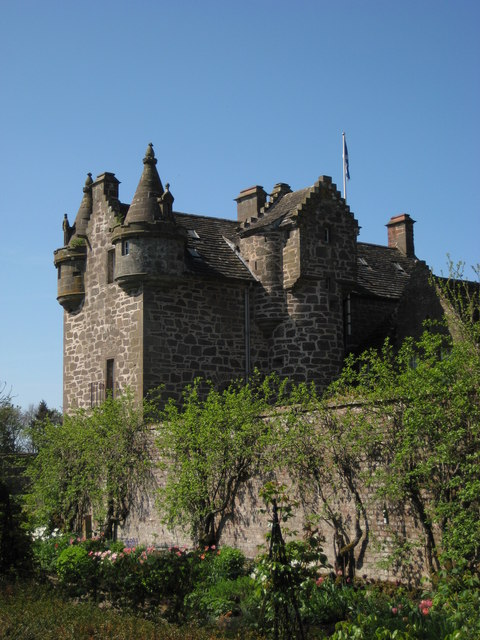
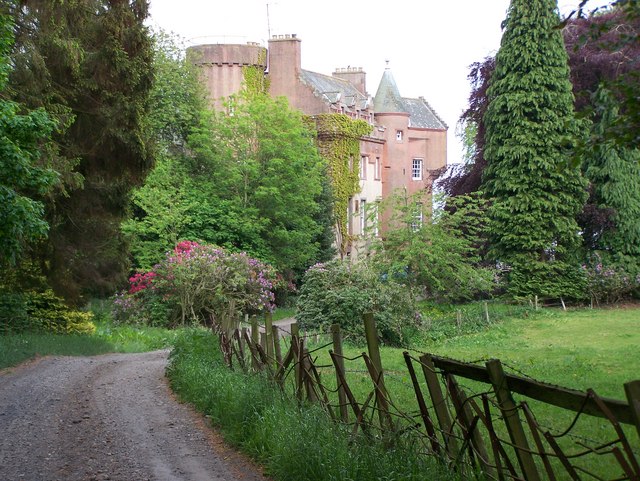
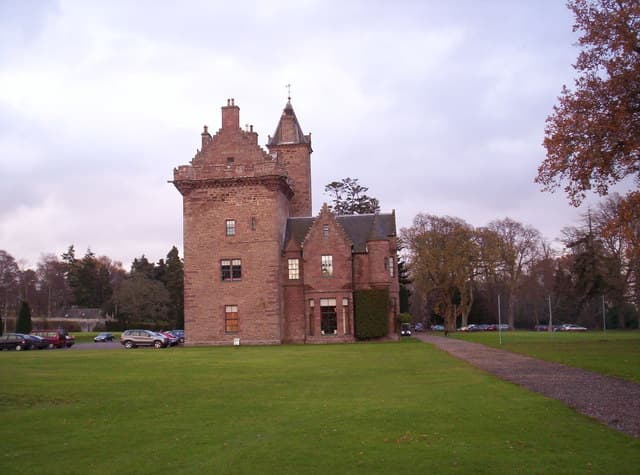
In subsequent centuries, the Guthrie family expanded the castle complex by constructing a house adjacent to the original tower. This reflected changing residential needs and architectural tastes beyond purely military functions. The most significant transformation occurred in 1848, when the tower and the later house were linked by a substantial expansion designed in the Scottish baronial style by the renowned architect David Bryce. Bryce's work introduced characteristic baronial features such as turrets, battlements, and ornamental stonework, blending romantic historicism with Victorian-era sensibilities.
Scottish baronial style features
The baronial expansion included decorative elements that enhanced the castle's picturesque silhouette, such as crow-stepped gables, conical roofed towers, and intricate stone carvings. These additions harmonized with the medieval tower while providing modern comforts and aesthetic appeal typical of 19th-century country houses.
The Guthrie family legacy and 20th-century changes
Guthrie Castle remained in the Guthrie family for over five centuries, until the death of Colonel Ivan Guthrie in 1983. This long tenure highlights the castle's role as a familial seat and symbol of continuity through Scotland's turbulent history. Following this, in 1984, the castle was acquired by Daniel S. Peña, Sr., an American businessman who undertook significant restoration efforts to return the castle to its 19th-century condition, preserving both the medieval and Victorian architectural elements.
Modern restoration and estate development
Peña's restoration included careful preservation of the historic fabric and the revival of the castle's grandeur. Additionally, he developed a golf course within the estate grounds during 1994–95, integrating leisure amenities with the historic setting. This adaptation reflected a trend of repurposing historic estates for contemporary uses while maintaining their heritage value.
Public access and current status
From 2003, Guthrie Castle was opened to the public for weddings, corporate events, and group bookings, allowing visitors to experience its historic ambiance and architectural splendor. However, since 2017, the owners have reverted it to a private residence, closing it to public access. Despite this, Guthrie Castle remains an important cultural landmark within the Angus region.
Architectural significance and heritage
Guthrie Castle exemplifies the evolution of Scottish castle architecture from the late medieval tower house to the 19th-century baronial revival. Its combination of defensive medieval structures with romantic Victorian expansions offers insight into changing architectural styles and social functions of castles over centuries. The castle's preservation and restoration efforts have maintained its historical integrity, making it a valuable example of Scotland's architectural heritage.
Location and landscape
Situated on a hill overlooking the surrounding Angus countryside, Guthrie Castle's location was strategically chosen for defense and visibility. The estate's grounds, including the later-added golf course, complement the castle's historic character and provide a scenic rural setting.
Architectural features
- Tower house: The original 15th-century stone keep with thick walls and narrow windows designed for defense.
- Baronial expansion: 19th-century additions featuring turrets, battlements, and ornamental stonework by David Bryce.
- Connecting structure: The linkage between the tower and house creating a unified residence.
- Estate grounds: Historic gardens and a golf course developed in the late 20th century.
Visiting and cultural importance
While Guthrie Castle is currently a private residence and not open to the public, its history and architecture continue to attract interest from historians, architects, and enthusiasts of Scottish heritage. The castle's story from medieval fortress to Victorian country house reflects broader patterns in Scottish aristocratic life and architectural trends.
Frequently asked questions (FAQ)
- What is the historical significance of Guthrie Castle?
- Guthrie Castle, located in Forfar, has a rich history dating back to the 15th century. Originally built as a fortress, it has evolved over the years into a stunning example of Scottish architecture and has been home to notable families, including the Guthrie family, who have played a significant role in local history.
- When was Guthrie Castle built?
- Guthrie Castle was built in the late 15th century, with its earliest structure dating back to around 1468. The castle has undergone several renovations and expansions since its original construction, showcasing architectural styles from different periods.
- Can I visit Guthrie Castle?
- Yes, visitors are welcome at Guthrie Castle, although access may vary based on events or private functions. It is advisable to check the official website or contact the castle directly for specific visiting information and any scheduled tours.
- What are the opening hours for Guthrie Castle?
- Guthrie Castle typically opens to visitors from April to September, with hours varying by day. It is recommended to verify the current opening hours on the castle's official website before planning your visit.
- Is Guthrie Castle accessible for visitors with disabilities?
- Guthrie Castle strives to accommodate all visitors, including those with disabilities. However, due to its historic architecture, some areas may have limited accessibility, so it's best to inquire in advance about specific access features.
- What is the best time to visit Guthrie Castle?
- The best time to visit Guthrie Castle is during the spring and summer months when the weather is pleasant and the gardens are in full bloom. Additionally, many events and activities are scheduled during this time, enriching the visitor experience.
- Are there any nearby attractions to Guthrie Castle?
- Yes, there are several attractions near Guthrie Castle, including the picturesque town of Forfar and the scenic Angus countryside. Visitors can also explore local parks and nature reserves, making it a great area for outdoor activities.
- How much do tickets cost for visiting Guthrie Castle?
- Ticket prices for Guthrie Castle vary depending on the season and any special events taking place. It is advisable to check the castle's official website for the most current ticket pricing and any available discounts for groups or families.
Photo gallery

Information
Loading map...
Visitor reviews
No reviews yet. Been here? Write the first review and help other travelers!
Write the first reviewVisited this castle? Share your experience
Your review helps other travelers and adds first-hand knowledge to our encyclopedia.