Colliston Castle
Colliston Castle stands as a striking example of a 16th-century Z-plan tower house located near Arbroath, Scotland. This historic structure combines residential comfort with robust defensive features, illustrating the architectural and social trends of the Scottish Renaissance period. Built primarily in 1583, Colliston Castle reflects the evolution of fortified homes in Scotland, blending military practicality with domestic needs.
The castle's origins trace back to lands owned by Arbroath Abbey from its foundation in the 12th century. The estate was granted on 25 July 1544 by David Beaton, the powerful Abbot of Arbroath and Archbishop of St Andrews, to John Guthrie and his wife Isobel Ogilvie. This transfer marked the beginning of the Guthrie family's long association with Colliston, which lasted until the late 17th century. The castle's construction was completed in the late 16th century, with the date 1583 prominently displayed on the original Z-plan section, though some earlier dates have been misread in historical records.
Architectural design and defensive features
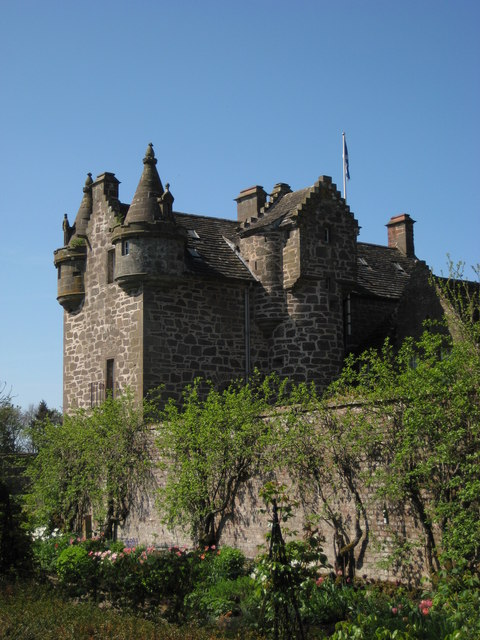
The defining characteristic of Colliston Castle is its Z-plan layout, a popular design among Scottish tower houses of the Renaissance era. This plan consists of a large rectangular main block with two round towers projecting diagonally from opposite corners, providing both strategic defense and additional living space. The castle's stair turret is situated in one of the re-entrant angles between the main block and a tower, serving as the principal entrance. This turret is notable for its corbelled gabled watch chamber at the top, which offered a vantage point for surveillance and defense.
Defensive architecture is a prominent feature throughout the castle. The thick stone walls are pierced by wide splayed gun loops and circular shot-holes, allowing defenders to fire weapons while remaining protected. These elements highlight the practical military considerations of the time, reflecting the turbulent political and social climate of 16th-century Scotland. The castle's design shares similarities with Claypotts Castle, another well-known Z-plan tower house, indicating a regional architectural trend.
Later modifications and expansions
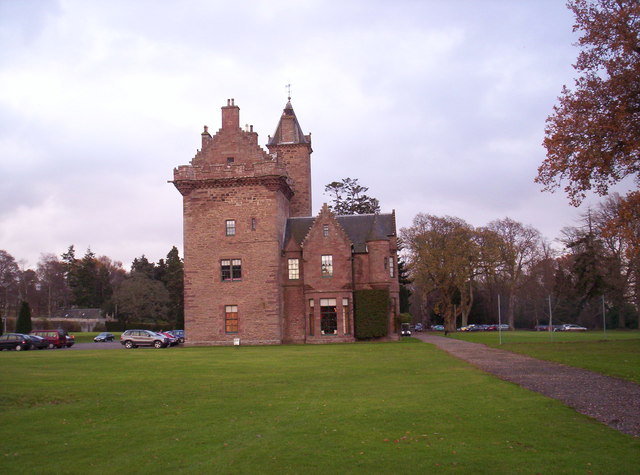
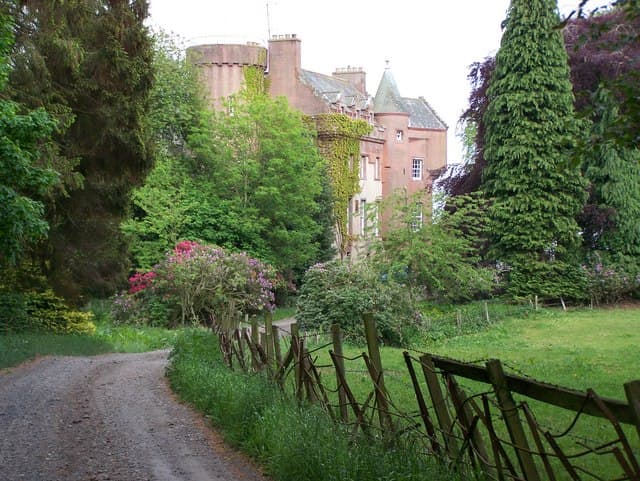
While the original upper storey and wall heads have been remodeled multiple times, the core defensive structure remains intact. A later doorway dated 1621 marks one of the early modifications, signaling the castle's continued use and adaptation over the centuries. During the 18th and 19th centuries, the castle was expanded with the addition of north and east wings, increasing the living space and reflecting changing residential needs.
In the early 20th century, the western tower's original kitchen was converted into an armory, demonstrating the evolving function of the castle's spaces. Despite these alterations, Colliston Castle has retained much of its historical character and remains a well-preserved example of Scottish Renaissance fortified homes.
Historical ownership and significance
The estate's initial connection to Arbroath Abbey situates Colliston within the broader ecclesiastical and feudal landscape of medieval Scotland. The grant by Cardinal David Beaton linked the castle to one of Scotland's most influential religious figures of the 16th century. The Guthrie family, who held the property for over a century, were significant local landowners, and their tenure shaped the castle's early history.
Ownership passed to the Gordon family in the late 17th century and then to the Chaplin family in the 18th century. The Chaplins maintained the estate through the 19th century, with notable owners including George Chaplin and his nephew George Robertson Chaplin of Auchengray. By the late 19th century, the castle had passed to George Chaplin Child Chaplin, M.D., who died in 1883. The property was subsequently owned by Mr. Peebles of London before being acquired in the 20th century by Major R.F.D. Bruce.
Throughout its history, Colliston Castle has witnessed numerous social and political changes, adapting to shifting ownership and architectural fashions. Its survival into the modern era as a category B listed building underscores its cultural and historical importance within Scotland's architectural heritage.
Current status and use
Today, Colliston Castle remains a well-preserved example of a Scottish Renaissance tower house. It has been adapted for modern use and is available for holiday rentals, allowing visitors to experience living history firsthand. The castle's status as a listed building ensures its preservation and protection under heritage conservation laws.
Visitors to Colliston can appreciate its distinctive Z-plan architecture, defensive features, and the layers of history visible in its expansions and renovations. The castle's location near Arbroath places it within reach of Scotland's rich historical and cultural attractions, making it a valuable destination for those interested in Scottish history, architecture, and heritage tourism.
Frequently asked questions (FAQ)
- How do I visit Colliston Castle?
- Colliston Castle is privately owned and available for holiday rentals. Visitors can book accommodations to experience the castle's historic atmosphere. Check rental listings for availability and booking details.
- What is the architectural style of Colliston Castle?
- Colliston Castle is primarily a Renaissance-era Z-plan tower house with later additions reflecting mixed architectural influences from the 18th and 19th centuries.
- When was Colliston Castle built?
- The castle was constructed in 1583, with some earlier land grants dating back to 1544, marking its origins in the mid-16th century.
- Is Colliston Castle accessible to the public?
- While not generally open for public tours, Colliston Castle is accessible to those who rent it for holidays, offering a unique way to explore its historic interiors.
- Why is Colliston Castle historically significant?
- Colliston Castle is significant for its association with Arbroath Abbey and Cardinal David Beaton, as well as its well-preserved Renaissance defensive architecture typical of Scottish tower houses.
Photo gallery

Information
Loading map...
Visitor reviews
No reviews yet. Been here? Write the first review and help other travelers!
Write the first reviewVisited this castle? Share your experience
Your review helps other travelers and adds first-hand knowledge to our encyclopedia.