Gardyne Castle
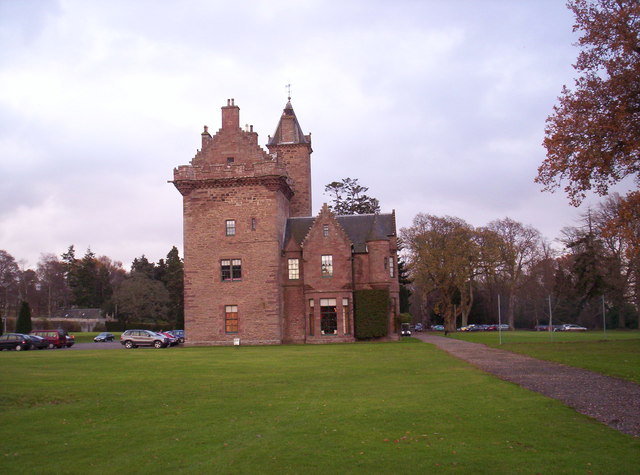
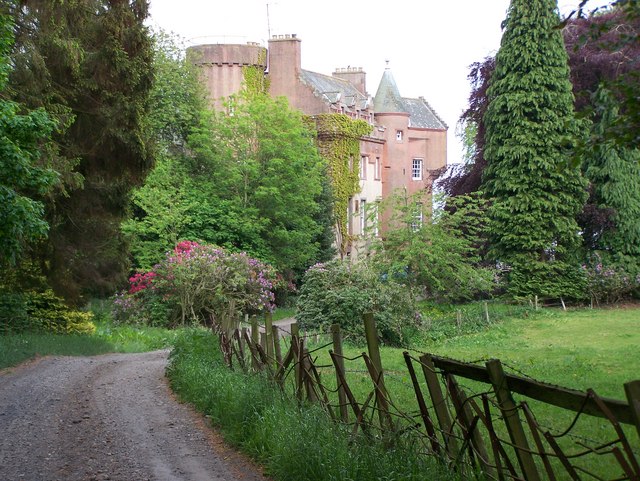
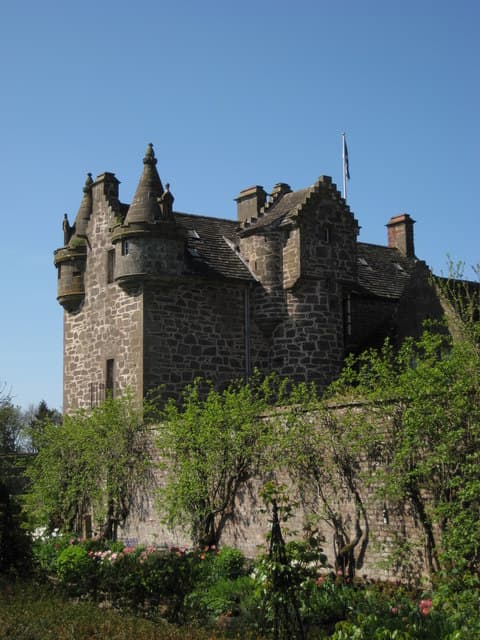
Gardyne Castle is a notable 16th-century Renaissance tower house located near Friockheim in Angus, Scotland. Constructed in 1568 by the Gardyne family, it features architectural elements that reflect the Royal Stewart style, evident in its distinctive conical-roofed bartizans and the inscribed stone bearing the arms of King James VI along with the motto "God save the King." This stone not only marks the date of construction but also symbolizes the Gardyne family's allegiance to the new monarch, distinguishing their loyalty from that of the deposed Mary, Queen of Scots.
Architectural features and style
The castle's original structure is a classic example of a Renaissance tower house built on a hill castle site, combining defensive features with residential comfort. The conical-roofed bartizans are small overhanging turrets that provided vantage points for observation and defense. The tower house design typically includes thick stone walls, narrow windows, and a vertical emphasis in form. Gardyne Castle's architecture reflects the transitional period in Scottish castle building where fortification was balanced with the desire for more elegant and comfortable living spaces.
Later additions and renovations
In 1740, a significant extension was added to the castle, which now forms the central part of the current building. This addition expanded the living space and adapted the castle to the needs of the time, moving further away from purely defensive architecture. In 1910, the castle underwent a substantial remodeling and modernization under the direction of Harold Tarbolton, a prominent Edinburgh architect. This renovation introduced modern amenities such as electricity while respecting the castle's historical character. The early 21st century saw further renovation efforts to preserve the structure and maintain its status as a family residence.
Historical context and ownership
The Gardyne family, original builders and owners of the castle, were involved in a long-standing feud with the nearby Guthrie family of Guthrie Castle. This feud escalated to such an extent that the Crown confiscated lands from both families in 1632. Following this, the Gardynes relocated to a nearby residence, and ownership of Gardyne Castle passed to the Lyell family of Dysart. Despite these changes, the castle has remained a private residence and has been well preserved.
Cultural significance and preservation
Gardyne Castle is recognized as a Category A listed building, highlighting its importance as a heritage structure in Scotland. Its continuous use as a family home has contributed to its preservation, allowing the castle to retain much of its historical fabric and character. The castle's blend of defensive and residential architecture offers valuable insight into the evolution of Scottish tower houses during the Renaissance period.
Location and surroundings
Situated approximately 2 kilometres (1.2 miles) southwest of Friockheim, Gardyne Castle occupies a strategic elevated position typical of hill castles. Its location in Angus places it within a region rich in historical castles and Scottish heritage sites, providing context for its architectural and historical significance.
Visitor information
While Gardyne Castle remains a private family home and is not generally open to the public, its exterior and surrounding landscape can be appreciated from nearby public areas. The castle's status as a protected historic building ensures ongoing conservation efforts to maintain its structural integrity and historical appearance.
Frequently asked questions (FAQ)
- What is the historical significance of Gardyne Castle?
- Gardyne Castle is a fascinating example of Scottish architecture, dating back to the 16th century. It has witnessed significant events in Scottish history, serving as a residence for prominent families and reflecting the tumultuous changes of the time.
- When was Gardyne Castle built?
- Gardyne Castle was constructed in the late 16th century, specifically around 1565. Its design showcases the defensive features typical of the period, including thick stone walls and narrow windows.
- Can I visit Gardyne Castle?
- Yes, Gardyne Castle is open to visitors, allowing you to explore its rich history and stunning architecture. However, it's advisable to check the opening hours and any specific visitor guidelines before planning your trip.
- What are the opening hours for Gardyne Castle?
- Gardyne Castle typically opens to the public from April to September, with varying hours depending on the day of the week. It is recommended to check the official website for the most accurate and up-to-date information regarding specific opening times.
- Is it possible to access Gardyne Castle for individuals with mobility challenges?
- Gardyne Castle has made efforts to improve accessibility for all visitors. However, due to its historical features, some areas may be challenging to navigate for those with mobility issues.
- When is the best time to visit Gardyne Castle?
- The best time to visit Gardyne Castle is during the late spring and summer months, from May to August, when the weather is generally mild and pleasant. This period also coincides with the castle's full opening hours and various events.
- What are the ticket prices for visiting Gardyne Castle?
- Ticket prices for Gardyne Castle vary depending on the season and any special events. Generally, adult tickets are moderately priced, with discounts available for children and seniors; it's best to check the official site for current rates.
- Are there any nearby attractions to visit along with Gardyne Castle?
- Yes, there are several attractions near Gardyne Castle, including beautiful gardens and local heritage sites. The surrounding area offers picturesque walking trails and opportunities to explore the rich culture of Friockheim and its surroundings.
Photo gallery

Information
Loading map...
Visitor reviews
No reviews yet. Been here? Write the first review and help other travelers!
Write the first reviewVisited this castle? Share your experience
Your review helps other travelers and adds first-hand knowledge to our encyclopedia.