Gutenberg Castle
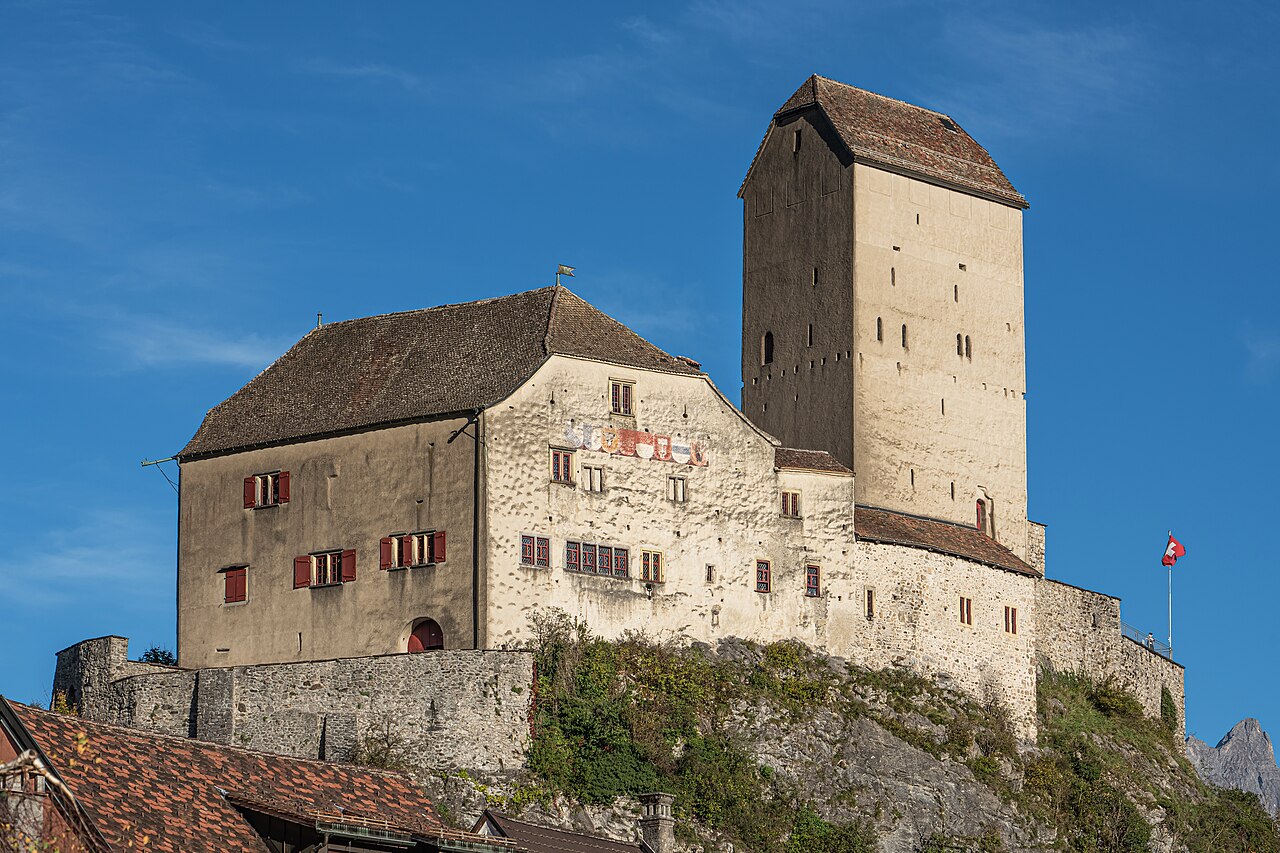
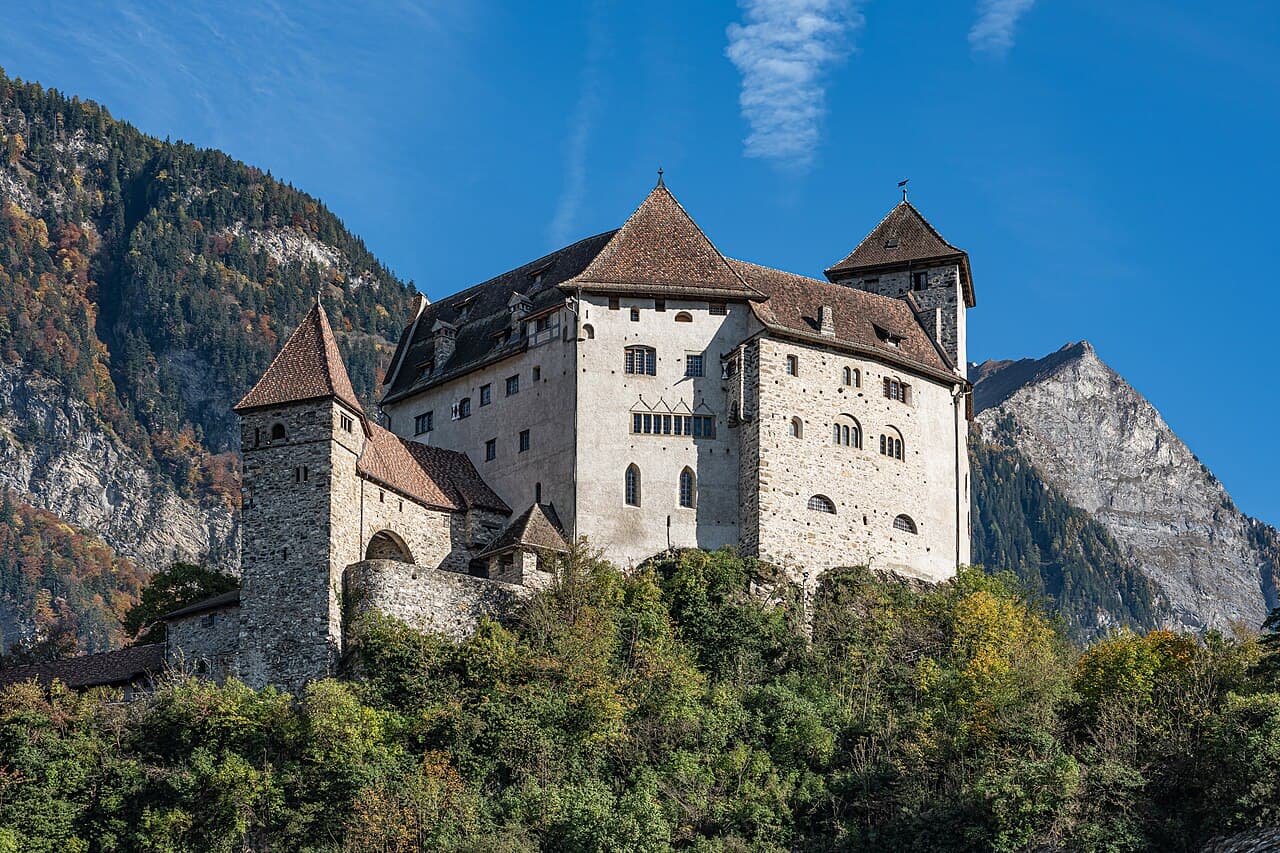
Gutenberg Castle stands majestically on a 70-meter-high isolated rock hill in Balzers, the southernmost municipality of Liechtenstein. This hill castle occupies a strategic vantage point overlooking the Rhine valley, a location that has been significant since prehistoric times. Archaeological evidence reveals continuous human occupation dating back to the Neolithic era, with pottery shards from the Rössener culture around 4400 BCE marking some of the earliest known artifacts on the site. Initially revered as a place of worship, the site later hosted a medieval church and cemetery, emphasizing its spiritual importance before its transformation into a fortified stronghold.
Medieval origins and architectural evolution
During the early 12th century, the original cemetery was replaced by a circular defensive wall, marking the beginning of the site's military significance. This period saw the construction of the castle's main tower, which was developed by raising the keep and adding battlements with distinctive merlons, the upright sections of the defensive parapet designed for protection during combat. The castle's fortifications reflect typical High Medieval military architecture, emphasizing defense and surveillance.
The noble Frauenberg family from Graubünden, Switzerland, owned the castle throughout the 12th and early 13th centuries. Their stewardship coincided with the castle's consolidation as a significant regional stronghold. After the death of Heinrich von Frauenberg in 1314, ownership transferred to the House of Habsburg. The Habsburgs utilized Gutenberg Castle as a vital border watchpost to monitor the nearby Swiss cantons, underscoring its strategic importance in regional politics and defense.
Architectural features and fortifications
The castle's original medieval fortification consisted of a ring wall encircling the former church site, providing a formidable barrier against invaders. The main tower remains a prominent feature, showcasing 12th-century battlements designed for archers and defenders. Archaeological excavations have revealed foundations including a dry stone wall dating to the late Iron Age and masonry from Roman times, indicating the site's long-standing military and strategic use.
Roman coins found on site, dated around 350 CE, suggest a military presence predating the medieval castle. This layered history highlights the hill's enduring significance as a defensive and observation point.
Historically, the castle featured a drawbridge which was destroyed by a storm in 1537 and never rebuilt, marking a shift in its defensive capabilities. The loss of the drawbridge coincided with the gradual decline of the castle's military role.
Historical significance through the centuries
Gutenberg Castle endured damage during the Swabian War of 1499, a conflict that affected many fortresses in the region. Following this, Emperor Maximilian I ordered repairs and enhancements to strengthen its defenses, reflecting the castle’s ongoing military relevance during the late medieval period.
From the 17th century onward, the castle gradually lost its military importance, adapting to changing political and military landscapes. Despite this, it remained inhabited until around 1750, showcasing its transition from a fortress to a residential site.
A major fire in 1795 devastated parts of Balzers and caused significant damage to the castle. Subsequently, stones from the fortress were repurposed for rebuilding the town, illustrating a common fate for many medieval castles that fell out of use.
The ruins were acquired by the municipality in 1824 and later sold to Princess Franziska of Liechtenstein in 1854. This transfer marked the beginning of efforts to preserve and restore the castle as a cultural landmark.
20th-century restoration and modern use
Between 1905 and 1912, architect Egon Rheinberger undertook a significant restoration project. Using the surviving ruins as a guide, Rheinberger reconstructed the main buildings and added new structures including a chapel, a chaplain’s house, and a smithy. These additions were designed to complement the medieval architecture and furnished with period-appropriate interiors, enhancing the castle's historical ambiance.
After Rheinberger's death in 1936, the castle was rented for events and eventually sold in 1951 to private owners, including the actress Medea de Novara. The government of Liechtenstein purchased the castle in 1979 for use as a museum and state venue. The last private resident retained living rights until 2001, after which the castle became fully public.
Current condition and visitor experience
Today, Gutenberg Castle is well preserved, with its main tower, ring wall, and buildings from the 20th-century restoration intact. The chapel and adjoining rose garden are accessible during the summer months, offering visitors a glimpse into the castle’s religious and aesthetic heritage.
The bailey, or outer courtyard, remains open year-round, providing an inviting space for tourists to explore the castle grounds. Numerous archaeological finds such as bronze figurines and Neolithic pottery continue to emphasize the site’s rich cultural and historical significance, attracting scholars and history enthusiasts alike.
Gutenberg Castle stands as a remarkable testament to the layered history of the region, from prehistoric times through Roman occupation, medieval fortification, and modern restoration. Its commanding position and architectural features make it a key heritage site in Liechtenstein, reflecting the complex interplay of military, religious, and residential functions over the centuries.
Frequently asked questions (FAQ)
- How do I get to Gutenberg Castle?
- Gutenberg Castle is located in Balzers, Liechtenstein, easily accessible by car or public transportation. If you're traveling by train, the nearest station is in the nearby town of Balzers, from which you can take a short walk to the castle.
- What is the historical significance of Gutenberg Castle?
- Gutenberg Castle dates back to the 12th century and is one of the most important historical sites in Liechtenstein. It served as a residence for the counts of Werdenberg and has played a pivotal role in the region's history.
- When was Gutenberg Castle built?
- Gutenberg Castle was constructed around the year 1200. Its strategic location and robust architecture have allowed it to withstand various historical events and conflicts over the centuries.
- Can I visit Gutenberg Castle all year round?
- Yes, Gutenberg Castle is open to visitors throughout the year, although specific opening hours may vary by season. It's advisable to check the official website for the most current visiting hours before planning your trip.
- Why is Gutenberg Castle considered an architectural gem?
- Gutenberg Castle showcases a blend of Romanesque and Gothic architectural styles, characterized by its imposing towers and thick stone walls. The castle's design not only reflects its historical significance but also offers stunning views of the surrounding landscape.
- Is it possible to take guided tours of Gutenberg Castle?
- Yes, guided tours are available and provide in-depth insights into the history and architecture of the castle. These tours are a great way to enhance your visit and learn more about the fascinating stories behind the castle's walls.
- What are the ticket prices for visiting Gutenberg Castle?
- Ticket prices for Gutenberg Castle are quite affordable, with discounts available for students and seniors. Children under a certain age may enter for free, making it an excellent family-friendly destination.
- When is the best time to visit Gutenberg Castle?
- The best time to visit Gutenberg Castle is during the spring and early autumn months when the weather is pleasant and the surrounding scenery is beautiful. Additionally, visiting during these times allows you to enjoy various local events and festivals.
- Are there any nearby attractions to visit while in Balzers?
- Yes, while in Balzers, you can also explore the charming village and nearby hiking trails that showcase the picturesque landscape of Liechtenstein. The region is rich in cultural sites, making it a great destination for a day trip.

Information
Website
Visit websiteSources & official resources
Verify the information above using these authoritative references.
Loading map...
Visitor reviews
No reviews yet. Been here? Write the first review and help other travelers!
Write the first reviewVisited this castle? Share your experience
Your review helps other travelers and adds first-hand knowledge to our encyclopedia.