Gulustan Castle
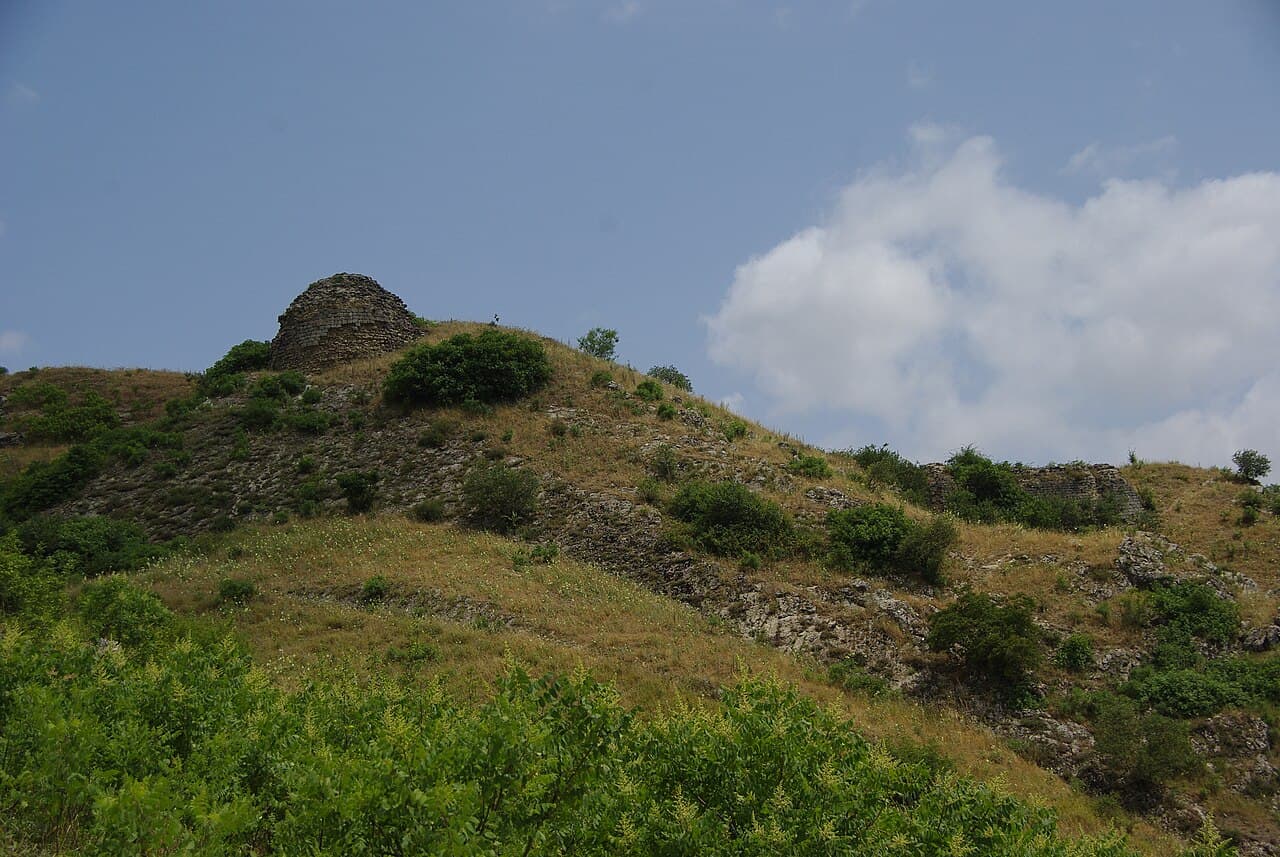
Gulustan Castle, also known as Gulustan Fortress, is a prominent medieval hill castle located in the Shamakhi District of Azerbaijan. Its origins trace back to the 9th century, with archaeological evidence confirming its early medieval foundation. The castle occupies a strategic elevated position, characteristic of hill castles, which provided natural defensive advantages and commanding views over the surrounding terrain.
The historical significance of Gulustan Castle
The castle's earliest construction phases date to the early medieval period, specifically the 9th century. It played a crucial role during the turbulent centuries of the Caucasus region, witnessing various political and military events. The fortress was notably radically rebuilt and strengthened during the 12th century and early 13th century, reflecting the need to adapt to evolving military technologies and threats.
Gulustan Castle served as a defensive stronghold and administrative center during this period, controlling important trade routes and regional communication lines. Its fortifications were enhanced to withstand sieges and invasions, which were frequent in the medieval Caucasus due to competing empires and local powers.
Architectural features and construction
The castle's architecture reveals a complex layering of building techniques from the early medieval through to the high medieval period. The original 9th-century structures were constructed using local stone materials, with thick defensive walls designed to repel attackers. The 12th-century reconstruction introduced more advanced fortification elements, including reinforced curtain walls, towers, and gatehouses.
The fortress layout includes multiple defensive layers, with outer walls enclosing a central citadel. The elevated location on a hill provided natural protection, supplemented by man-made defenses such as battlements and arrow slits. The castle likely contained living quarters, storage rooms, and possibly a chapel, typical of castles from this period.
Defensive structures
Key defensive features include towers positioned at strategic points to allow flanking fire and observation. The walls were constructed to be thick and high, with battlements for archers. The entrance was probably fortified with a gatehouse and possibly a drawbridge or portcullis to control access.
Role in regional history
Throughout its history, Gulustan Castle witnessed numerous conflicts involving local dynasties and invading forces. Its strategic location made it a valuable military asset in controlling the Shamakhi region and the surrounding areas. The fortress also played a role in the administration and governance of the territory during the medieval period.
While detailed records of specific battles or sieges are limited, the castle's continuous use and reconstruction indicate its importance in regional defense and politics. It remained a symbol of power and resilience for the local population.
Current condition and preservation
Today, Gulustan Castle stands as a partially preserved medieval fortress. Some sections of the walls and towers remain intact, offering valuable insights into medieval military architecture in Azerbaijan. The site is of archaeological interest, attracting researchers and visitors interested in the history and heritage of the Caucasus region.
Preservation efforts focus on maintaining the structural remains and preventing further deterioration. The castle's location and partial ruins provide a tangible connection to Azerbaijan's medieval past and its role in regional history.
Visiting Gulustan Castle
Visitors to Gulustan Castle can explore the remains of the fortress and enjoy panoramic views of the Shamakhi District. The site offers an opportunity to study early medieval fortification techniques and appreciate the historical landscape of Azerbaijan.
Frequently asked questions (FAQ)
- When was Gulustan Castle originally built?
- Gulustan Castle was originally constructed in the 9th century during the early medieval period, with significant rebuilding in the 12th century.
- What type of castle is Gulustan Castle?
- Gulustan Castle is classified as a hill castle, built on an elevated location to provide strategic defensive advantages.
- What architectural features does Gulustan Castle have?
- The castle features thick defensive walls, towers for observation and defense, battlements, and a fortified gatehouse typical of medieval fortresses.
- Is Gulustan Castle open to visitors?
- Yes, visitors can explore the partially preserved ruins of Gulustan Castle and enjoy views of the surrounding Shamakhi District.
- What is the current condition of Gulustan Castle?
- Gulustan Castle is partially preserved, with some sections of walls and towers still standing, reflecting its medieval military architecture.
Photo gallery

Information
Loading map...
Visitor reviews
No reviews yet. Been here? Write the first review and help other travelers!
Write the first reviewVisited this castle? Share your experience
Your review helps other travelers and adds first-hand knowledge to our encyclopedia.