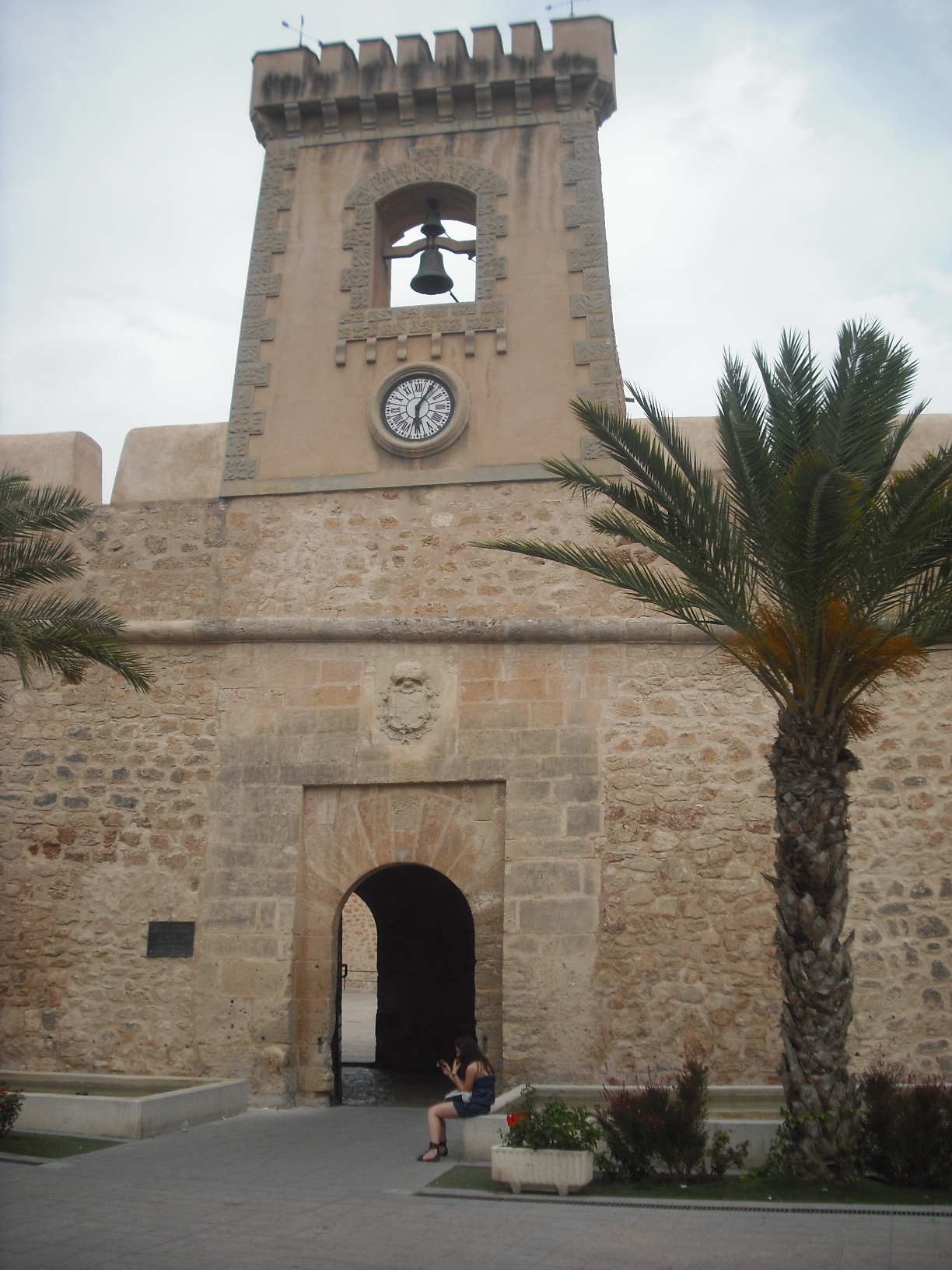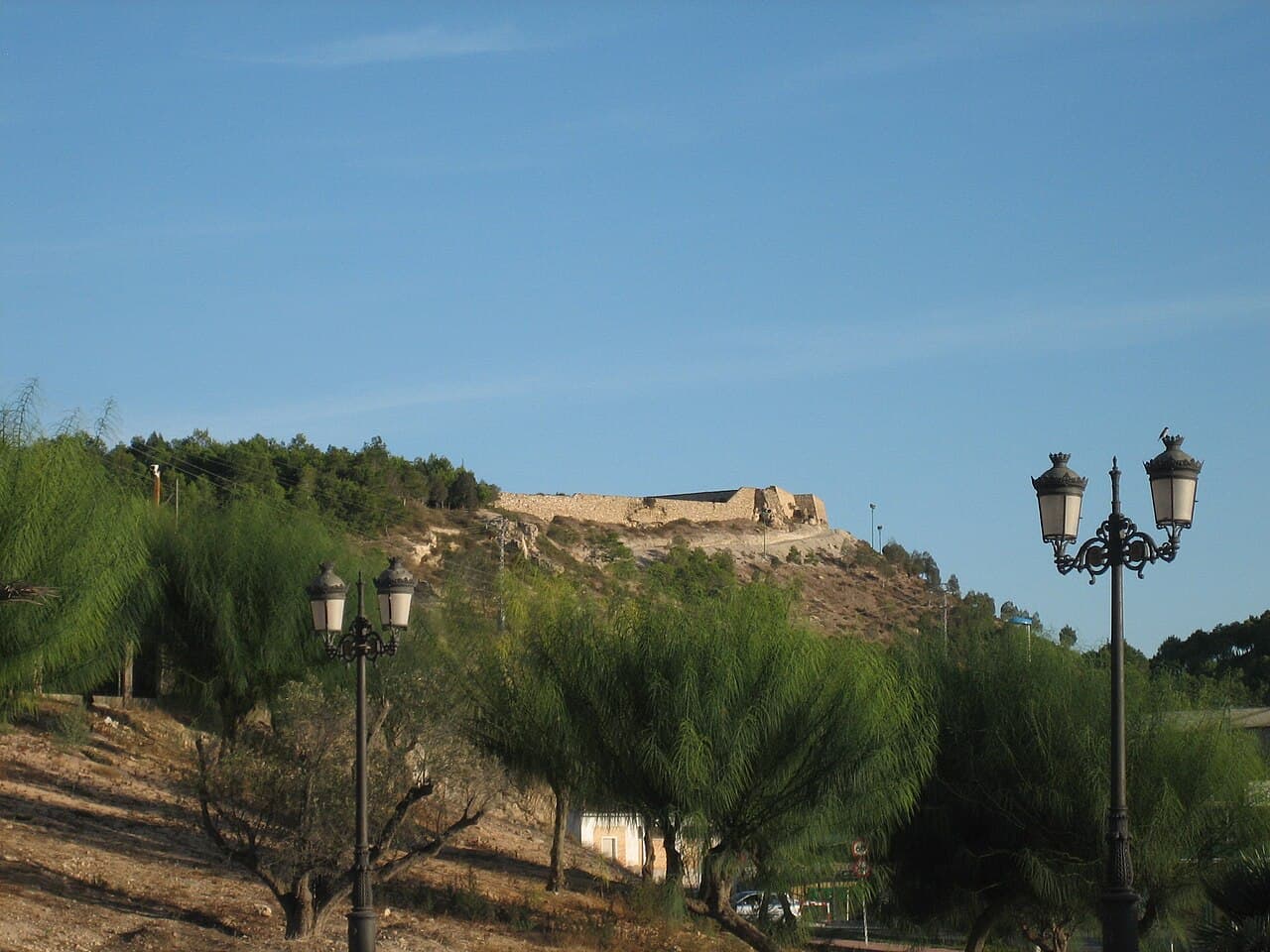
Guardamar Castle
Guardamar Castle, locally known as Castillo de Guardamar, is a historic hilltop fortress situated in the city of Guardamar del Segura, in the province of Alicante, Spain. Perched on a slightly sloping ridge overlooking the mouth of the Segura River and the Mediterranean Sea, this castle commands a strategic coastal position within the Bajo Segura region. The site’s long history spans from its earliest occupation in the Iron Age through its Arabic origins and significant medieval developments, making it a notable landmark in Spanish military and architectural heritage.
Early history and strategic significance
The location of Guardamar Castle has been inhabited since at least the 4th century BCE, initially serving as an Iron Age oppidum or fortified settlement associated with the Iberian peoples. This early fortification set the foundation for later defensive structures. The castle itself was originally constructed by Arabic builders in the first half of the 12th century, reflecting the Islamic influence in the Iberian Peninsula during the period of Al-Andalus.
Its position on a rocky hill provided commanding views of the coastline and the Segura River’s mouth, making it a vital military and administrative center. The castle controlled access to maritime trade routes and served as a coastal defense point against naval incursions and raids.
Medieval reconstruction and royal foundation
In 1271, under the reign of King Alfonso X of Castile, Guardamar was repopulated and formally established as a royal town, with the castle serving as the focal point of the settlement. This period marked a shift in control from Arabic to Castilian authority, with settlers brought in to strengthen the Christian presence in the region. The castle and the walled village surrounding it were integral to asserting Castilian influence along the southeastern coast of Spain.
However, this control was short-lived; in 1296, the fortress was incorporated into the Kingdom of Aragon under James II. By the early 14th century, Guardamar Castle had become the principal coastal fortress and port serving the inland city of Orihuela. It played a key role in regional defense and trade.
Conflict, decline, and adaptations
The castle’s history is marked by conflict and changing fortunes. In 1331, it was sacked and burned during a Moorish raid, demonstrating its vulnerability despite its defensive position. Later, during the War of the Two Peters (1356-1375), the village was placed under the jurisdiction of Orihuela in 1368, reflecting a decline in its political status.
Throughout the 14th century, Guardamar faced further military challenges, including naval sieges involving Castilian and Genoese forces opposing Aragonese rule. The fortress’s defenses were tested repeatedly, and the settlement suffered from attacks by corsairs and bandits during periods of marginalization.
In the 16th century, recognizing the evolution of warfare and the advent of artillery, significant modifications were made to the castle’s defenses. Medieval towers were lowered, and bastions such as the Baluard de la Pólvora (Gunpowder Bastion) were constructed to improve resistance against cannon fire. These adaptations illustrate the castle’s ongoing military importance and efforts to modernize its fortifications.
Destruction and abandonment
The castle and the village suffered a catastrophic blow in 1829 when a severe earthquake struck the region, causing widespread destruction. The damage was so extensive that the hilltop settlement was abandoned, and the inhabitants relocated to the lower lands near the sea, founding the modern town of Guardamar del Segura.
Since then, Guardamar Castle has remained in ruins, with partial restorations and archaeological work focusing on stabilizing the remaining structures, especially the lower defensive walls and bastions.
Architectural features and remains
The castle complex is divided into two main sections: the upper enclosure, which originally housed the polygonal-plan castle built in the early 12th century, and the larger lower enclosure surrounded by Gothic-style defensive walls. The upper castle, situated at the hill’s highest point, provided strategic surveillance over the sea and river mouth but now survives only in fragments due to earthquake damage.
The lower enclosure features medieval walls that were extensively modified in the 16th century to accommodate artillery defense. Portions of these walls remain intact, along with foundations of towers and auxiliary buildings that supported the castle’s military functions.
One of the most significant surviving features is the Baluard de la Pólvora, a large bastion that exemplifies the castle’s adaptation to gunpowder-era warfare. Archaeological investigations have uncovered details about construction techniques and defensive strategies employed during this later phase.
Today, the site is accessible to the public and functions as a town park, offering visitors panoramic views over Guardamar del Segura and the surrounding coastal landscape. Although much of the castle lies in ruins, the preserved elements provide valuable insight into the layered history of this important Mediterranean fortress.
Guardamar Castle in cultural and historical context
Guardamar Castle stands as a testament to the complex history of the southeastern Iberian Peninsula, reflecting periods of Arabic rule, Christian reconquest, and evolving military technology. Its strategic location at the mouth of the Segura River made it a focal point for controlling maritime access and regional trade routes.
The castle’s architectural evolution—from an Iron Age settlement to an Arabic fortress and then a medieval royal castle with Renaissance-era bastions—illustrates the shifting political and military priorities over centuries. Despite the destruction caused by the 1829 earthquake, the site remains an important cultural landmark that connects modern visitors to Guardamar’s rich past.
Frequently asked questions (FAQ)
- How do I get to Guardamar Castle?
- Guardamar Castle is located on Calle del Baluarte in Guardamar del Segura, Alicante. It is accessible by car or local bus services, and there is parking available nearby.
- What is the best time to visit Guardamar Castle?
- The best time to visit Guardamar Castle is during the spring and autumn months when the weather is mild and pleasant. Summer can be hot, while winter is cooler but less crowded.
- Is Guardamar Castle suitable for families?
- Yes, Guardamar Castle is suitable for families. The site is open and spacious, allowing children to explore the ruins safely while enjoying panoramic views of the city and coastline.
- Are there guided tours available at Guardamar Castle?
- Currently, there are no regular guided tours at Guardamar Castle. Visitors can explore the site independently using informational plaques and maps available at the entrance.
- What remains can I see at Guardamar Castle?
- Visitors can see the remains of the polygonal-plan castle, Gothic defensive walls, the Gunpowder Bastion (Baluard de la Pólvora), and foundations of towers and auxiliary buildings. Some sections have been partially restored for safety and preservation.
- Is there an entrance fee to visit Guardamar Castle?
- Guardamar Castle is freely accessible to the public with no entrance fee, making it an attractive destination for both locals and tourists.
- Can I enjoy panoramic views from Guardamar Castle?
- Yes, the castle’s hilltop location offers excellent panoramic views over Guardamar del Segura, the Segura River mouth, and the Mediterranean coastline, making it a popular spot for photography and sightseeing.
Photo gallery

Public domain
Information
Sources & official resources
Verify the information above using these authoritative references.
Loading map...
Visitor reviews
No reviews yet. Been here? Write the first review and help other travelers!
Write the first reviewVisited this castle? Share your experience
Your review helps other travelers and adds first-hand knowledge to our encyclopedia.