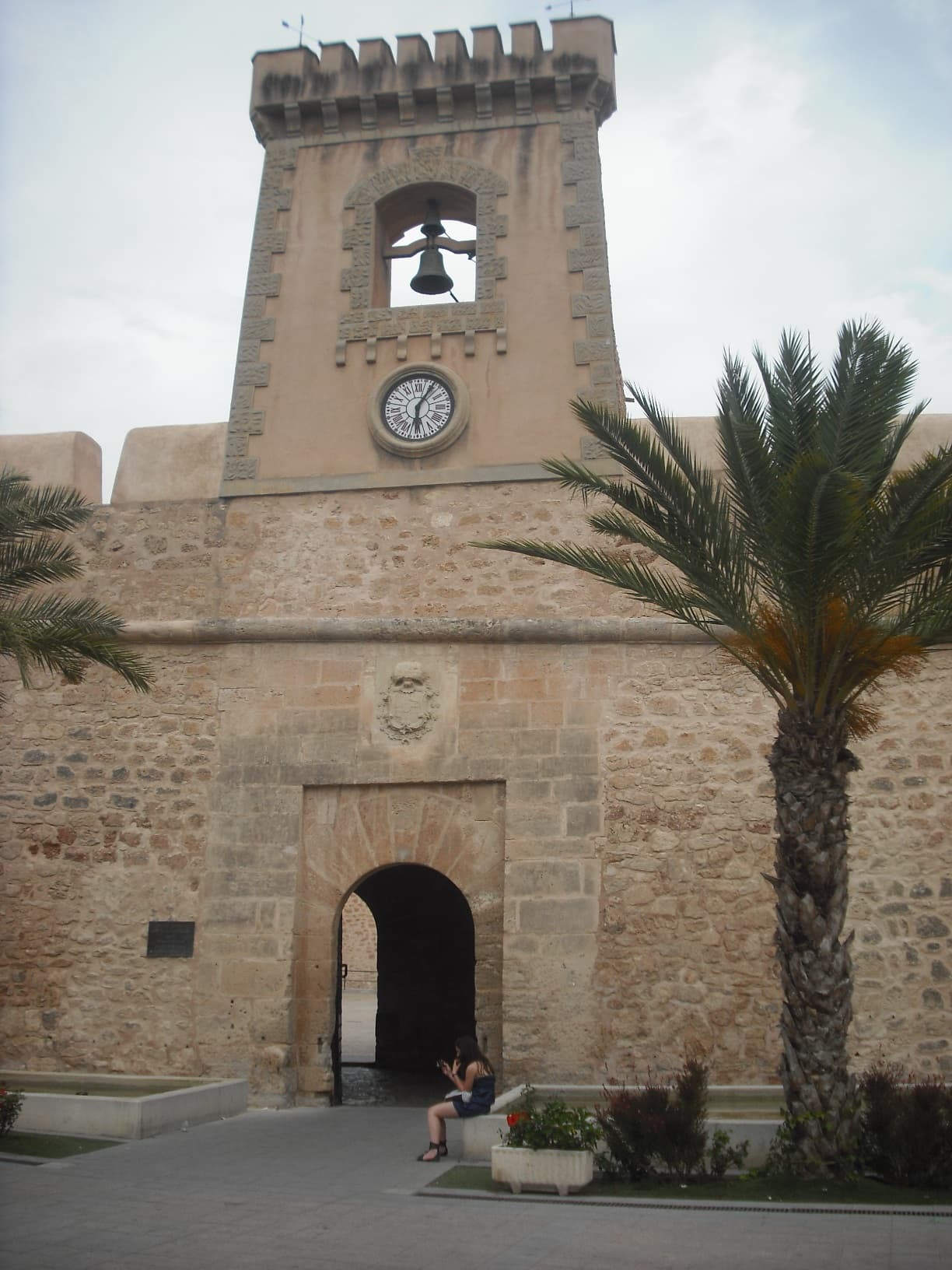
Santa Pola Castle
Santa Pola Castle, known locally as Castillo Fortaleza de Santa Pola, stands prominently in the heart of the city of Santa Pola in the province of Alicante, Spain. This Renaissance military fortress was constructed in 1557 as a strategic defense against the persistent threat posed by Barbary pirates who raided the Spanish Mediterranean coast during the 16th century. Its location at Plaza de la Glorieta places it at the center of the town’s historical and cultural identity, making it a key landmark and symbol of maritime resilience.
The castle was commissioned by Bernardino de Cárdenas y Pacheco, the Viceroy of Valencia, under the reign of King Charles I. Italian military engineers, experts in the emerging Renaissance military architectural style, designed the fortress to protect the local fishermen and inhabitants from frequent pirate incursions. The castle’s construction reflects the period’s advances in fortification design, emphasizing angled bastions and robust stone walls to withstand artillery attacks.
Historical context and strategic importance
During the early 16th century, the Spanish Mediterranean coast was vulnerable to raids from Barbary corsairs operating from bases such as the nearby island of Tabarca and the Turkish-occupied city of Algiers. These pirates launched frequent attacks, looting coastal settlements and enslaving inhabitants. The construction of Santa Pola Castle was part of a broader Spanish effort to fortify the coastline and protect maritime activities vital to the local economy.
The castle was immediately garrisoned by a force of 33 men upon completion. It was integrated into a network of coastal defenses, communicating with nearby watchtowers such as the Tamarit and Escaletes towers using smoke signals during the day and fire signals at night. This early warning system was crucial for coordinating defense against sudden pirate attacks.
Architectural features and design
Santa Pola Castle is a square fortress featuring two bastions and two rectangular towers positioned at opposite corners, enclosing a large central courtyard known as the patio de armas. This courtyard contains a cistern (aljibe) that historically stored water, ensuring the garrison's sustainability during sieges. The fortress walls are constructed primarily of masonry interspersed with large stone blocks, reinforced at the corners by dressed stone quoins for structural stability.
The design incorporates rounded bastion vertices and sloping walls topped with continuous rounded moldings, enhancing the fortress’s defensive capabilities against artillery fire. The main entrance is located on the southwest side, accessed through a semicircular stone arch leading into an "L"-shaped passage. This entrance design follows the principles of Vitruvius, the ancient Roman architect, who advocated angled gateways to slow attackers and increase defensive effectiveness.
Originally, all four corners had defensive towers, but today only one corner tower remains intact. The largest tower near the main entrance features an ancient clock with Roman numerals, a notable historical and architectural element added during the 19th century restoration.
Restorations and adaptations
By the late 18th century, the castle had deteriorated due to frequent attacks and changing military needs. It was restored and became property of the Spanish Crown, marked by the addition of a royal coat of arms above the main gate. In 1855, the Ministry of War ordered its demolition as it had lost its military function, but this was prevented by the local mayor. Subsequently, the castle was transferred to the local council and adapted for civil use, including serving as the town hall. The clock tower above the west entrance dates from this period.
Santa Pola Castle remained the town hall until the 1980s. Today, it houses a chapel dedicated to the Virgin of Loreto, two museums focusing on maritime and fishing heritage, and serves as a venue for cultural events, preserving its historical significance and community role.
Cultural significance and current use
The castle’s transformation from a military fortress to a civic and cultural center reflects the evolution of Santa Pola itself, from a defensive outpost to a thriving coastal town. The Maritime Museum inside the fortress includes eight rooms and a large aquarium showcasing tropical and marine species, while the Fishing Museum highlights the local fishing traditions. Both museums share a thematic library dedicated to maritime heritage, offering educational resources to visitors.
Visitors can freely explore the castle’s exterior and courtyard, while access to the museums requires a small fee. The castle’s well-preserved structure, combined with its rich history and cultural offerings, makes it a compelling destination for those interested in military architecture, maritime history, and Spanish heritage.
Architectural and military significance within the renaissance period
Santa Pola Castle exemplifies the Renaissance military architectural style that emerged in response to the advent of gunpowder and artillery warfare. Its square layout with bastions and angled defenses reflects the shift from medieval fortifications to more modern designs capable of withstanding cannon fire. The use of masonry and dressed stone quoins provided both strength and durability, while the rounded bastions minimized blind spots and improved defensive coverage.
The castle’s design also demonstrates the influence of Italian military engineers, who were at the forefront of fortress design during the Renaissance. Their expertise is evident in the functional yet elegant features such as the angled entrance passage and the integration of living quarters, chapels, and storage facilities within the fortress walls.
Legacy and preservation
Declared a historic monument in 1993, Santa Pola Castle is protected as a significant cultural and architectural heritage site. Its preservation allows for ongoing study and appreciation of Renaissance military architecture and the historical maritime conflicts that shaped the Mediterranean region.
The castle’s role as a museum and cultural venue ensures that it remains an active part of the community, connecting past and present through educational programs, exhibitions, and events that celebrate Santa Pola’s unique coastal heritage.
Frequently asked questions (FAQ)
- How do I get to Santa Pola Castle?
- Santa Pola Castle is located in the city center at Plaza de la Glorieta, easily accessible by local transport and within walking distance from the town's main areas.
- What are the opening hours of Santa Pola Castle?
- The castle is open daily from 10:00 to 18:00, allowing visitors ample time to explore the fortress, museums, and cultural exhibits.
- Is there an admission fee to visit Santa Pola Castle?
- Access to the castle's exterior and courtyard is free, but a small fee is required to enter the Maritime and Fishing Museums housed within the fortress.
- What is the historical significance of Santa Pola Castle?
- Built in 1557 to defend against Barbary pirate attacks, Santa Pola Castle played a crucial role in safeguarding the Spanish Mediterranean coast during the Renaissance period.
- Can I visit the museums inside Santa Pola Castle?
- Yes, the castle houses two museums focused on maritime and fishing heritage, which are open to the public for a small entrance fee.
- Does Santa Pola Castle have any special architectural features?
- The castle features Renaissance military architecture with a square layout, bastions, angled entrance passage, and a large central courtyard with a cistern and chapel.
Photo gallery

Information
Opening hours
10:00-18:00, daily
Ticket prices
Small fee for museums, free courtyard access
Current owner
Municipality
Website
Visit websiteAddress
Plaza de la Glorieta, Santa Pola, Alicante, Spain
Sources & official resources
Verify the information above using these authoritative references.
Loading map...
Visitor reviews
No reviews yet. Been here? Write the first review and help other travelers!
Write the first reviewVisited this castle? Share your experience
Your review helps other travelers and adds first-hand knowledge to our encyclopedia.


