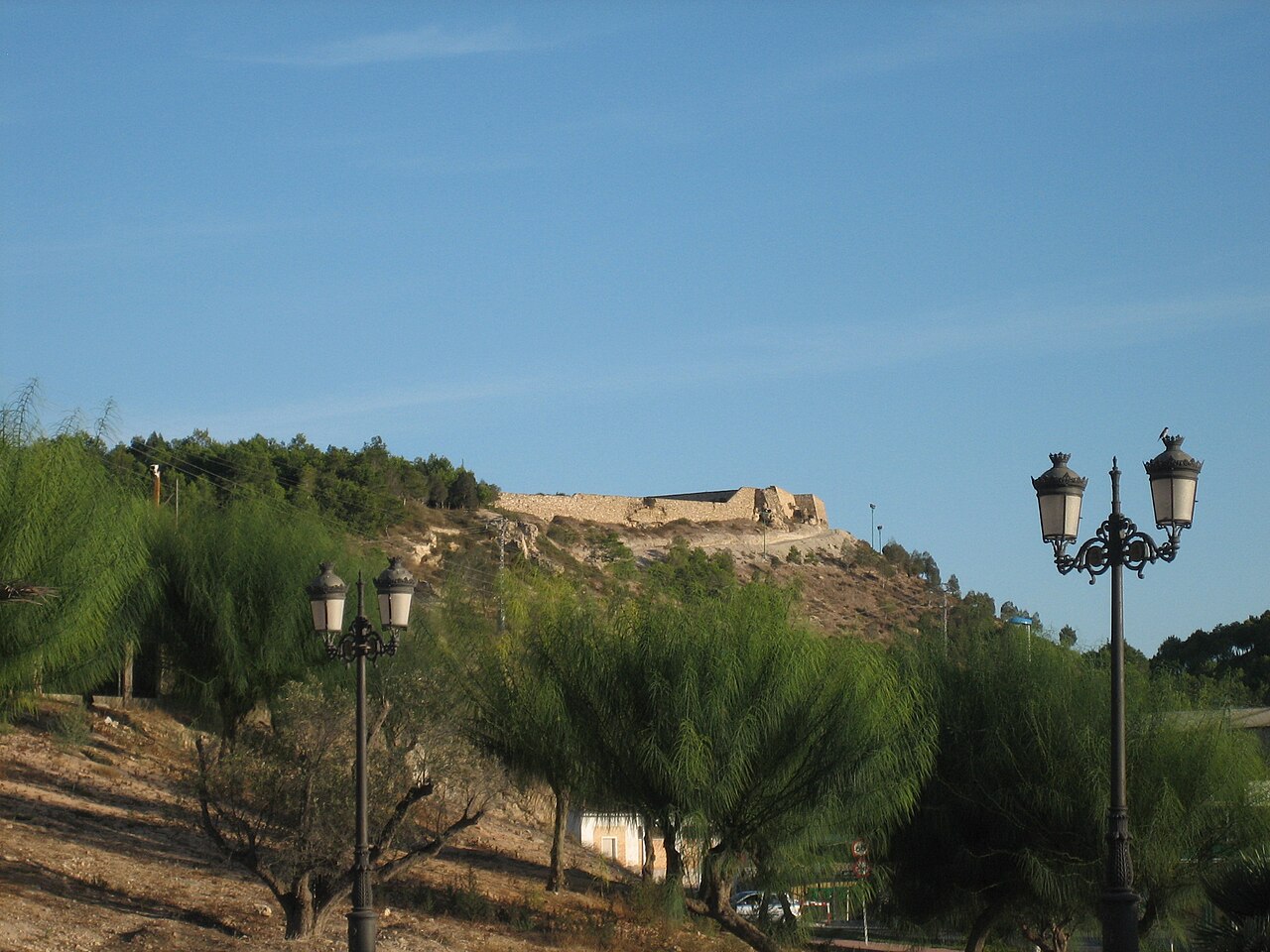
Del Moro Tower
Del Moro Tower, also known locally as Torre del Moro or Torre del Cabo Cervera, is a historic coastal watchtower situated on a hill overlooking the Mediterranean Sea in the town of Torrevieja, within the province of Alicante, Spain. This strategic location provided commanding views over the coastline, essential for early warning against maritime threats.
The tower's origins trace back to the turbulent period of the 16th century, a time when the Spanish Mediterranean coast was under constant threat from Barbary pirate raids. After the establishment of the Turkish Regency of Algiers in 1516, pirate attacks became frequent, involving coastal raids, looting, and the capture of inhabitants for slavery. To counter this menace, the Spanish Crown initiated the construction of a network of defensive watchtowers along the Mediterranean coast, stretching from Alicante to Cádiz.
Del Moro Tower was likely constructed in the second half of the 16th century during the reign of Philip II of Spain, building upon the remains of an earlier tower dating back to the 14th century. These towers were part of a comprehensive coastal defense system designed to provide early visual signals of pirate incursions, allowing nearby settlements to prepare and respond.
Architectural features and reconstruction
The original tower was a typical Renaissance-era watchtower, built primarily of stone, featuring a solid, cylindrical or slightly tapered form designed to withstand attacks and the harsh coastal environment. Unlike many other watchtowers of the period, the original Del Moro Tower did not have crenelations and was accessed via an external spiral staircase leading to the top platform. This design was functional, providing a vantage point for lookouts and a defensible position.
In 1994, the tower underwent a complete reconstruction, which significantly altered its appearance. The current structure, while inspired by the 16th-century tower, incorporates modern materials and design elements that differ from the original. Notably, the reconstruction added crenelations to the parapet, a feature not present in the historic tower, giving it a more castle-like silhouette. The interior was modernized, but it remains closed to the public, limiting visitor access to the tower's exterior.
Historical significance and coastal defense system
Del Moro Tower was part of a broader network of watchtowers commissioned initially under Charles V, Holy Roman Emperor, and completed mainly under his son Philip II. These towers formed a vital communication system along the Spanish Mediterranean coast. Signal fires or smoke during the day were used to alert neighboring towers and towns of approaching pirate ships, enabling rapid defensive measures.
Each tower was staffed by a small garrison, often just a few soldiers or lookouts, responsible for maintaining vigilance and signaling. The towers were spaced so that signals could be relayed quickly along the coast, creating an early warning chain that was crucial for the safety of coastal communities and maritime trade routes.
Location and visitor information
Located on Avenida Alfredo Nobel in Torrevieja, the tower stands within a small park on a hill near the sea, making it accessible for visitors who can enjoy panoramic views of the Mediterranean coastline. The exterior of the tower is freely accessible, allowing visitors to appreciate its coastal defensive role and scenic setting.
However, the interior remains closed to the public, and there is limited information about whether it is ever opened for tours. The modern interior contrasts with the historic exterior, which has been a point of criticism among heritage enthusiasts who lament the loss of the original 16th-century structure's authentic features.
Preservation and cultural value
While the 1994 reconstruction has preserved the tower as a landmark and tourist attraction, it has also sparked debate about historical authenticity and conservation practices. The replacement of the original tower with a modernized version means that much of the original Renaissance architecture and medieval elements have been lost.
Despite these changes, Del Moro Tower remains an important symbol of the region's maritime history and the defensive strategies employed during the Renaissance to protect Spain's Mediterranean coast from piracy. It serves as a reminder of the historical challenges faced by coastal communities and the architectural responses developed to meet those threats.
Frequently asked questions (FAQ)
- What is the historical significance of Del Moro Tower?
- Del Moro Tower was part of a 16th-century network of coastal watchtowers built to defend the Spanish Mediterranean coast from Barbary pirate raids. It served as an early warning system to protect coastal towns and maritime routes.
- Can visitors access the interior of Del Moro Tower?
- Currently, the interior of Del Moro Tower is closed to the public. Visitors can freely explore the exterior and enjoy views from the surrounding park on the hill.
- When was Del Moro Tower originally built?
- The tower was likely constructed in the second half of the 16th century on the remains of an earlier 14th-century structure, during the reign of Philip II of Spain.
- Where is Del Moro Tower located?
- Del Moro Tower is located on Avenida Alfredo Nobel in the town of Torrevieja, Alicante province, Spain, situated on a hill near the sea.
- Why was Del Moro Tower reconstructed in 1994?
- The original tower had deteriorated over time, and the 1994 reconstruction aimed to preserve the tower as a historical landmark, although the modernized appearance differs from the original Renaissance design.
Information
Address
Avenida Alfredo Nobel, Torrevieja, Alicante, Spain
Loading map...
Visitor reviews
No reviews yet. Been here? Write the first review and help other travelers!
Write the first reviewVisited this castle? Share your experience
Your review helps other travelers and adds first-hand knowledge to our encyclopedia.