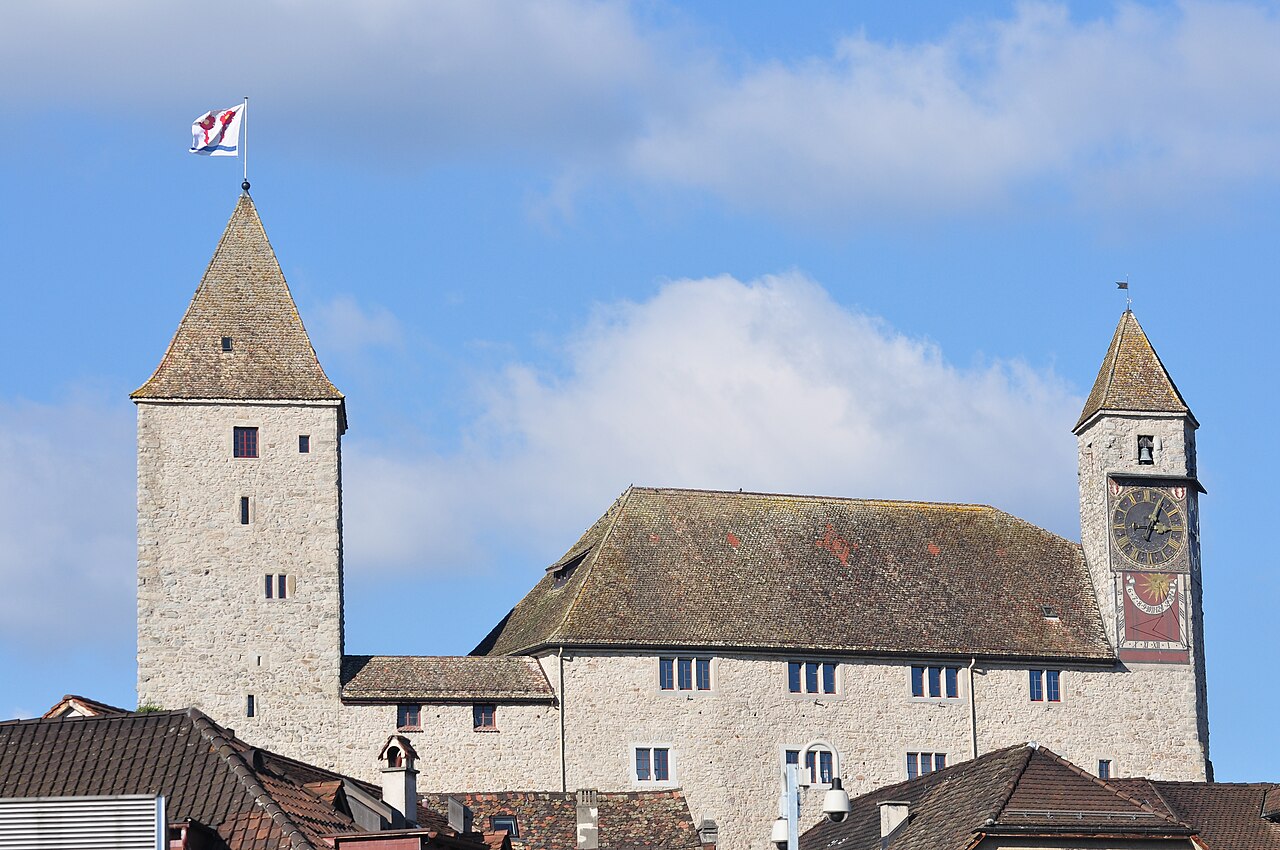
Grynau Castle
Grynau Castle is a remarkable example of a high medieval defensive structure located in Tuggen, Switzerland. Built in the early 13th century by the influential House of Rapperswil, the castle's primary function was to secure the strategically vital crossing of the Linth river. This river crossing was the only bridge in the area during the medieval period, making Grynau Castle a critical military and economic asset in the region between the Grafschaft Rapperswil and the House of Toggenburg.
The castle is dominated by a massive five-story tower, measuring approximately 12.5 by 12.5 metres, with formidable foundation walls 2.2 metres thick. This tower served as both a lookout and a defensive stronghold, overseeing the bridge and surrounding territory. The robust masonry and compact footprint reflect typical high medieval military architecture, designed to withstand sieges and control river traffic.
Architectural features and construction
The tower of Grynau Castle is the central architectural feature, built with thick stone walls that provided excellent protection against attacks. The castle's original design was likely a keep or donjon-style tower, a common form in the 13th century for controlling key strategic points. The tower's height and solid construction would have made it a formidable obstacle to any invading force.
Adjacent to the tower, there were additional buildings serving economic and residential functions, including a barn and accommodation structures. These outbuildings supported the castle's garrison and maintained its operational capabilities. Over time, these ancillary buildings underwent modifications, especially during the 19th century.
Reconstruction and modifications
Between 1807 and 1816, Grynau Castle underwent extensive rebuilding related to the construction of the Linth channel. This engineering project altered the surrounding landscape and infrastructure, necessitating adaptations to the castle complex. The road and bridge were realigned, now crossing between the preserved tower and the former economic buildings, which were largely dismantled.
In 1906, a devastating fire damaged the barn and the interior of the tower, destroying the roof. The following year, restoration efforts included re-roofing and redecorating the tower, as well as rebuilding the barn. These restorations preserved the castle's historical character while adapting it for continued use.
Historical significance and military role
Grynau Castle played a pivotal role in regional conflicts and military history. It first appears in records in 1311, when it was seized by Rudolf von Laufenburg-Rapperswil, likely from the Toggenburg family, underscoring its strategic importance in local power struggles.
During the Second Coalition War in the summer of 1799, the castle and its bridge became a contested site between French and Austrian forces. The bridge was destroyed and rebuilt multiple times throughout the conflict. After the Second Battle of Zurich, French troops occupied the castle, highlighting its continued military relevance even into the modern era.
In the 19th century, Grynau Castle was again a focal point during Swiss internal conflicts. In 1833, federal troops gathered at the castle amid tensions over the division of the canton of Schwyz, though no armed conflict ensued. Later, during the Sonderbundskrieg of 1847, federal troops crossed the castle’s bridge without casualties, marking the castle’s role in peaceful military maneuvers.
Later uses and preservation
By the 19th century, the castle's military function diminished, and it transitioned to civilian use. The remaining buildings, including the tower and adjacent structures, were acquired by Schlossvogt Kälin, who transformed the site into the Landgasthof Schloss Grynau, a country inn that remains under family ownership today. This adaptive reuse has helped preserve the castle’s fabric and maintain its cultural significance.
The castle’s location at the historic river crossing continues to attract visitors interested in medieval architecture and Swiss history. Despite the changes over centuries, the well-preserved tower stands as a testament to the region’s medieval heritage and the strategic importance of controlling river crossings.
Architectural style and classification
Grynau Castle is classified as a hill castle, situated strategically to oversee the river and bridge. Its architectural style is predominantly high medieval, characterized by robust stone construction and functional military design. The castle’s tower exemplifies the keep/donjon typology common in the 13th century, emphasizing defense and control.
While the castle has undergone significant alterations, it retains key elements of its original medieval character, making it an important example of Swiss medieval fortifications.
Visitor information and cultural importance
Today, Grynau Castle serves not only as a historical monument but also as a cultural landmark in the canton of Schwyz. Its transformation into a country inn allows visitors to experience a piece of medieval history firsthand. The castle’s proximity to the Linth river and its scenic surroundings enhance its appeal as a tourist destination.
The castle’s enduring presence at a historically significant river crossing highlights its role in shaping regional history and controlling vital transportation routes. It remains an emblem of medieval military architecture and Swiss heritage.
Frequently asked questions (FAQ)
- How do I get to Grynau Castle?
- Grynau Castle is located in Tuggen, Switzerland, easily accessible by car or public transport. If you're traveling by train, the nearest station is Tuggen, followed by a short walk to the castle.
- What is the historical significance of Grynau Castle?
- Grynau Castle dates back to the late 13th century and is an important historical landmark that reflects the feudal architecture of the era. It has served various roles throughout history, including a noble residence and a defensive structure.
- When was Grynau Castle built?
- Grynau Castle was constructed around 1280, making it one of the oldest castles in the region. Its architecture showcases the transition from Romanesque to Gothic styles, which is significant in Swiss architectural history.
- Can I take guided tours of Grynau Castle?
- Yes, guided tours are available for visitors who wish to learn more about the castle's rich history and architectural details. It is recommended to check the castle's official website for tour schedules and availability.
- Why is Grynau Castle a popular tourist destination?
- Grynau Castle attracts visitors due to its stunning architecture, scenic location, and historical importance. The surrounding landscape also offers beautiful views of Lake Zurich and the Alps, making it a great spot for photography and exploration.
- Is it possible to hold events at Grynau Castle?
- Yes, Grynau Castle offers facilities for hosting private events, weddings, and corporate gatherings. Interested parties should contact the castle administration for more details regarding reservations and arrangements.
- What are the opening hours of Grynau Castle?
- Grynau Castle is typically open to the public from April to October, with specific opening hours varying by season. It's best to consult the official website or contact the castle directly for the most current information on visiting hours.
- Are there any ticket prices for visiting Grynau Castle?
- Entry to Grynau Castle may require a small admission fee, which helps support the maintenance of the site. Ticket prices can vary based on age, student status, and group sizes, so checking the official website for current rates is advisable.
- What is the best time to visit Grynau Castle?
- The best time to visit Grynau Castle is during the spring and summer months when the weather is pleasant for outdoor exploration. Additionally, these seasons often feature special events and guided tours that enhance the visitor experience.
- What other attractions are nearby Grynau Castle?
- Nearby attractions include the beautiful Lake Zurich, where visitors can enjoy water activities and scenic walks. The charming town of Tuggen also offers local shops and restaurants, making it an ideal stop after visiting the castle.
Information
Website
Visit websiteSources & official resources
Verify the information above using these authoritative references.
Loading map...
Visitor reviews
No reviews yet. Been here? Write the first review and help other travelers!
Write the first reviewVisited this castle? Share your experience
Your review helps other travelers and adds first-hand knowledge to our encyclopedia.