Grünwald Castle
Grünwald Castle stands as a remarkable example of a medieval hill castle located in the municipality of Grünwald near Munich, Germany. Its origins likely trace back to a Roman watchtower on the banks of the Isar River, highlighting the site's long-standing strategic importance. Documented first in the 12th century as a possession of the Counts of Andechs, the castle's history spans over eight centuries, reflecting the region's political, military, and cultural evolution.
The castle's significance grew substantially in the high medieval period, notably when it passed into the hands of the House of Wittelsbach in 1293. Duke Louis II of Bavaria acquired it from Ulrich Vellenberg, a ministerialis of the Counts of Andechs. The fortress served not only as a defensive stronghold but also as a residence for Louis II's consort, Matilda of Habsburg, linking the castle to prominent European dynasties. Over the centuries, Grünwald Castle was a ducal residence, hunting lodge, prison, and powder magazine, illustrating its multifunctional role in Bavarian history.
The architectural evolution of Grünwald Castle
The present form of Grünwald Castle primarily reflects extensive renovations undertaken in the late 15th century, particularly between 1486 and 1487. This reconstruction was commissioned to celebrate the wedding of Albert IV, Duke of Bavaria, and Kunigunde of Austria, daughter of Emperor Frederick III. The work was directed by the master builder Jörg Weikertshausen, whose detailed records survive in the Bavarian State Archives, providing valuable insight into late medieval castle construction practices.
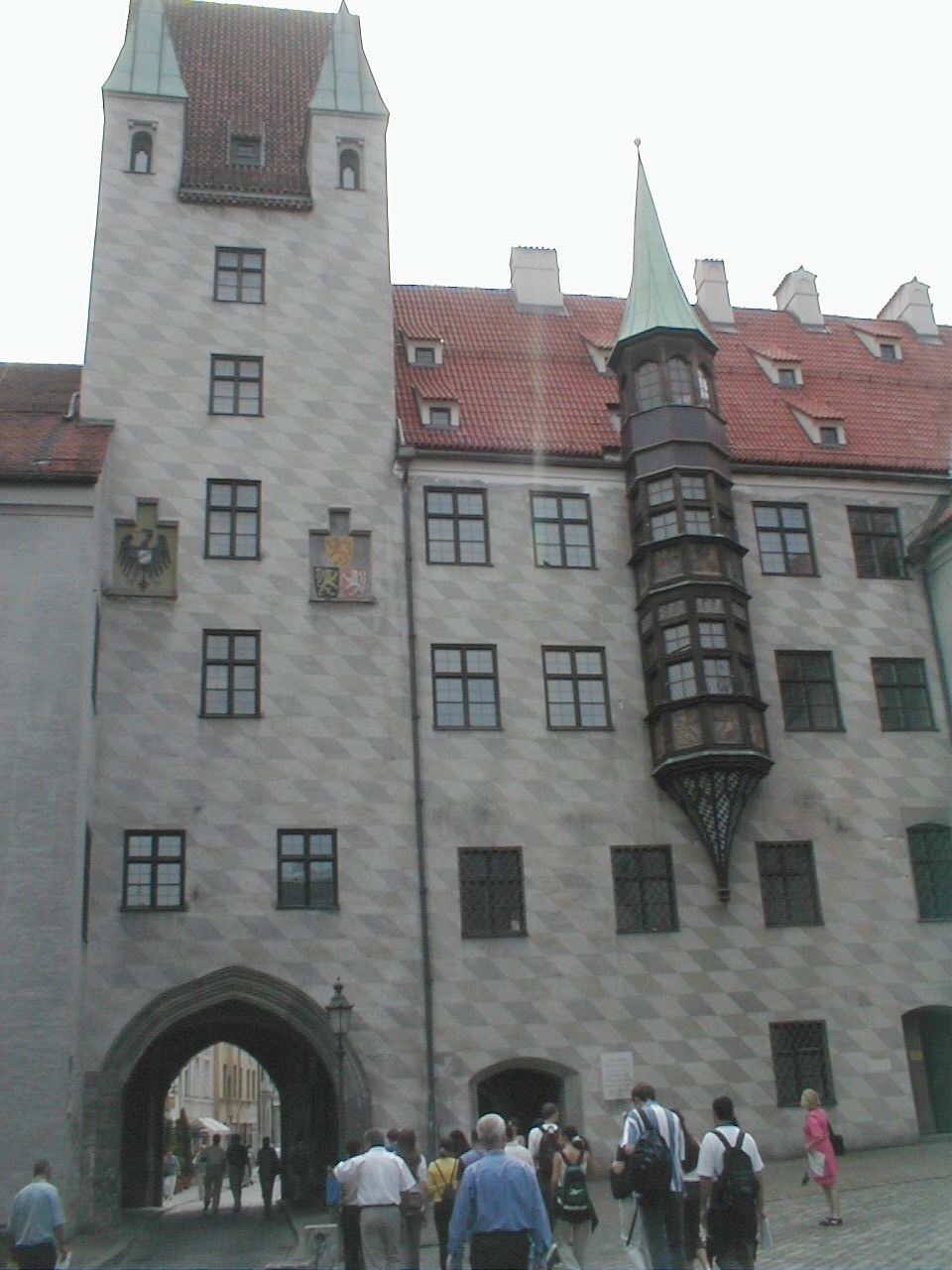
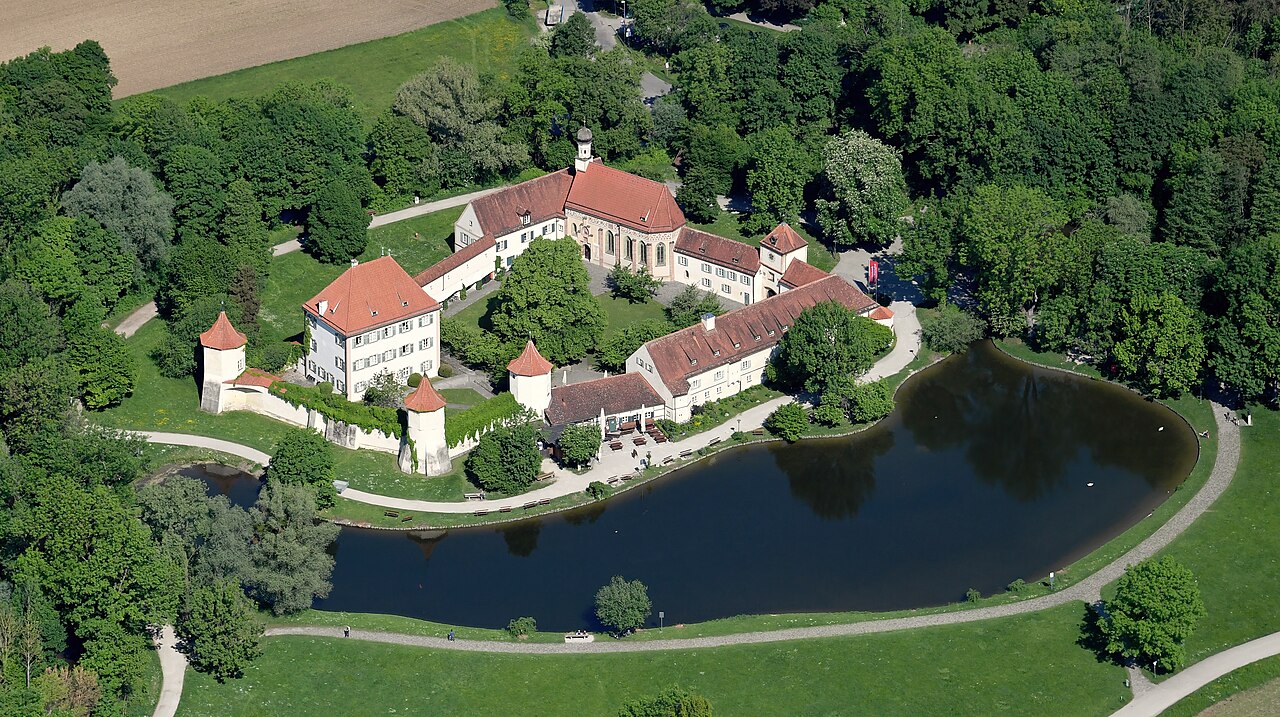
The castle's layout is an irregular rectangular plan enclosed by defensive walls, a deep moat, and a kennel with a prominent round tower. The gate tower on the southeast side features a renewed cycle of coats of arms representing the Bavarian-Palatinate arms alongside heraldic symbols of allied noble families, signifying the political alliances of the time.
Key structural elements
- The northeast corner is dominated by a high, square donjon, a fortified keep typical of medieval military architecture.
- The east wing is an elongated, three-storey structure that includes two former residential towers topped with gabled roofs; one served historically as a bell tower.
- The northwest corner features the embattled little tower, adjoining the west wing, which consists of three buildings at varying heights.
- A deep courtyard well lined with tufa stone dates back to the late Middle Ages and remains a distinctive feature of the castle grounds.
Unfortunately, significant portions of the castle were demolished in the 17th and 18th centuries due to erosion caused by the Isar River undermining the castle hill. This included the destruction of the late-Gothic residential quarters and the chapel of St. George, which were once richly decorated and integral parts of the complex.
Historical significance and notable events
Grünwald Castle played a pivotal role in Bavarian history beyond its architectural prominence. It was the birthplace of Louis X, Duke of Bavaria in 1495 and served as a refuge during the plague outbreak in Munich between 1439 and 1440, sheltering Duke Albrecht III.
One of the castle's historically significant moments was the Grünwald Conference in February 1522, where Dukes Wilhelm IV and Ludwig X decided that Bavaria would remain Catholic while supporting church reforms. This event marked the beginning of the Counter-Reformation in the Holy Roman Empire and Habsburg territories.
From the late 17th century onward, the castle's importance declined as other residences gained favor. It was repurposed as a ducal hunting lodge, prison, and powder magazine. The castle's prison history is notable for housing the Italian alchemist and impostor Count Domenico Manuel Caetano de Ruggiero from 1698 to 1704. Remarkably, wall paintings attributed to him survive in the former prison area, including a depiction of Jesus carrying the cross, offering a rare glimpse into the personal expressions of a detainee.
Preservation, museum use, and cultural importance
By the 19th century, Grünwald Castle had fallen into private ownership and experienced periods of neglect and decay. In 1872, it was sold into private hands, and plans emerged in the 1970s to demolish much of the ruins for luxury condominium development. However, local citizens' initiatives successfully prevented this, leading to the purchase by the Free State of Bavaria in 1976.
Since 1979, the castle has housed the Museum Grünwald, a branch of the Bavarian State Archaeological Collection. The museum showcases the castle's rich history and the broader archaeological heritage of Bavaria. The former bergfried (main tower) has been converted into a viewing tower, offering visitors panoramic views of the Isar valley and surrounding landscapes.
Museum exhibitions and facilities
The castle's east wing contains a café, museum shop, and the Munich Museum Education Center. It also features a large hall used for special exhibitions and cultural events. The west wing hosts a permanent exhibition that traces the castle's history up to 1500 and presents information about other Bavarian castles. This exhibition includes educational displays on castle construction techniques, their defensive and residential functions, and insights into medieval daily life.
The museum also preserves a lapidarium displaying Roman artifacts such as milestones, funerary monuments, and votive stones, illustrating the site's continuous occupation since antiquity. Reconstructions of Roman technologies like underfloor heating and kitchen installations further enrich the visitor experience.
Architectural and historical research
Extensive historical research and archaeological investigations have contributed to understanding Grünwald Castle's layered history. The detailed records from the 15th-century renovations provide a rare window into medieval building practices. The survival of wall paintings from the prison era adds a unique cultural dimension to the castle's story.
Restoration efforts have carefully balanced preserving the castle's medieval fabric with adapting it for modern museum use. Interactive exhibits and educational programs engage visitors of all ages, fostering appreciation for Bavaria's medieval heritage.
Visiting Grünwald Castle today
Visitors to Grünwald Castle can explore its well-preserved sections, including the donjon, gate tower, and historic wings. The panoramic views from the main tower provide a compelling perspective on the castle's strategic location overlooking the Isar River.
The museum offers a comprehensive journey through the castle's history, from its Roman origins to its medieval prominence and later uses. Special exhibitions and cultural events enhance the visitor experience, making Grünwald Castle a vital cultural landmark in Bavaria.
Frequently asked questions (FAQ)
- How do I get to Grünwald Castle?
- Grünwald Castle is easily accessible by public transport, with nearby train stations providing connections from Munich. If you prefer driving, ample parking is available at designated areas close to the castle.
- What is the historical significance of Grünwald Castle?
- Grünwald Castle dates back to the 13th century and has a rich history tied to the Bavarian nobility. It served as a royal residence and a strategic defense point, showcasing the region's medieval heritage.
- When was Grünwald Castle built?
- The construction of Grünwald Castle began in the early 13th century, with various modifications made over the centuries. Its architectural evolution reflects the changing styles and needs of its occupants.
- Can I take guided tours of the castle?
- Yes, guided tours are available at Grünwald Castle, providing visitors with in-depth insights into its history and architecture. These tours are offered in multiple languages, making it accessible for international guests.
- Why is Grünwald Castle a popular tourist destination?
- Grünwald Castle is popular for its stunning architecture, scenic views, and rich history. Visitors are drawn to its picturesque setting and the opportunity to explore the preserved medieval structures.
- Is it possible to rent the castle for events?
- Yes, Grünwald Castle can be rented for private events, including weddings and corporate gatherings. It offers a unique backdrop, but interested parties should contact the management for availability and pricing.
- What are the opening hours of Grünwald Castle?
- Grünwald Castle is open to visitors year-round, with varying hours depending on the season. It is advisable to check the official website for the most current opening times before planning your visit.
- What are the ticket prices for entering Grünwald Castle?
- Ticket prices for Grünwald Castle are reasonable and vary for adults, children, and seniors. Discounts may be available for groups and families, so be sure to inquire when purchasing tickets.
- When is the best time to visit Grünwald Castle?
- The best time to visit Grünwald Castle is during the spring and autumn months when the weather is pleasant, and the surrounding landscape is vibrant. Summer can be busy, while winter offers a magical, serene atmosphere.
- Are there any nearby attractions to explore after visiting the castle?
- Yes, there are several nearby attractions, including the beautiful Isar River and charming Grünwald village. Additionally, the city of Munich is just a short drive away, offering a wealth of cultural and historical sites to explore.
Information
Website
Visit websiteSources & official resources
Verify the information above using these authoritative references.
Loading map...
Visitor reviews
No reviews yet. Been here? Write the first review and help other travelers!
Write the first reviewVisited this castle? Share your experience
Your review helps other travelers and adds first-hand knowledge to our encyclopedia.