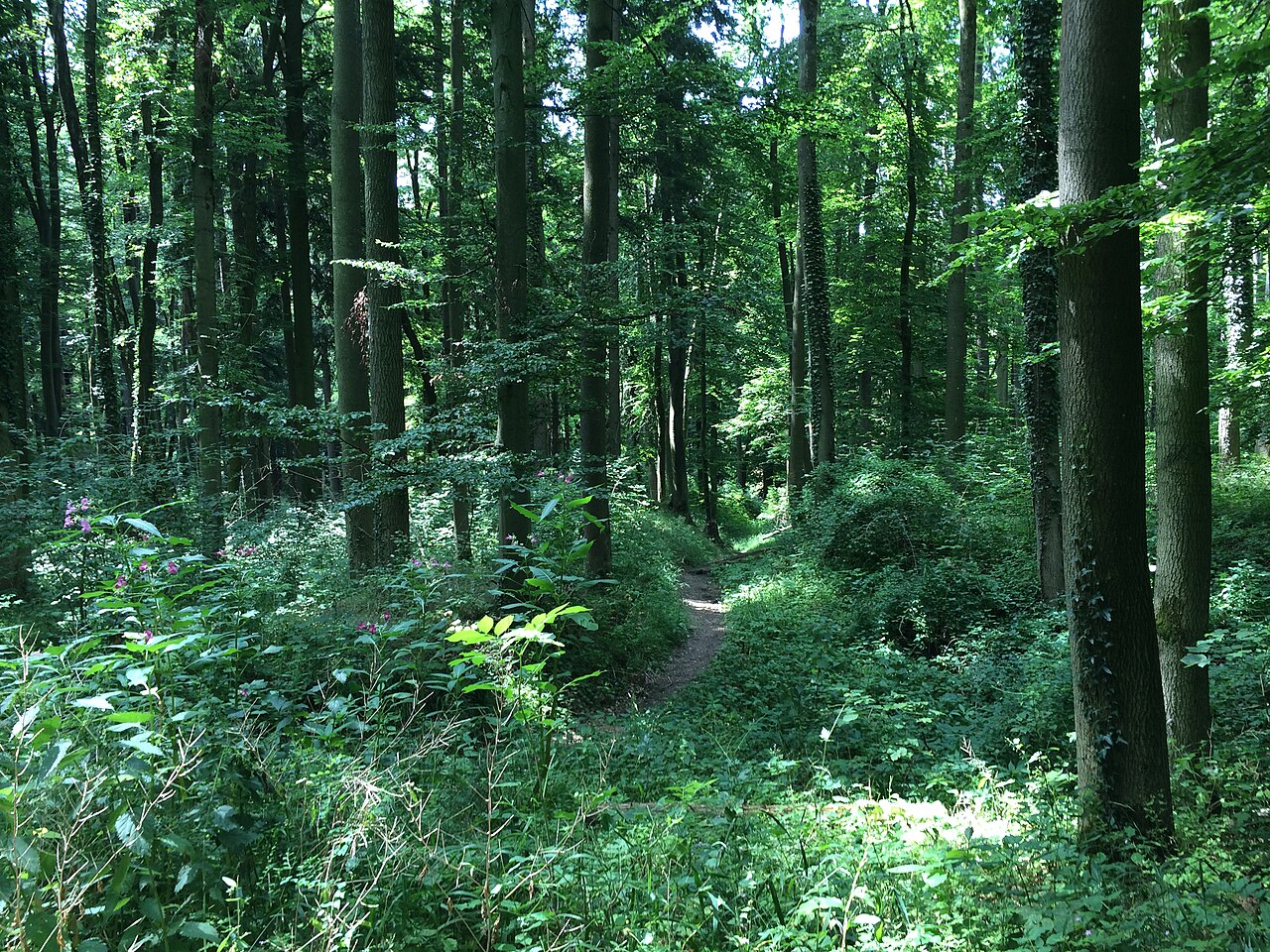
Burgstall Schlossberg
Burgstall Schlossberg is a notable medieval castle site situated in the municipality of Gauting in Bavaria, Germany. This hill castle was constructed during the high medieval period, most likely between the 11th and 13th centuries, by local nobility or ministerials who served as knightly vassals managing lands for feudal lords. The castle's strategic location on a southwest-pointing spur overlooking a bend in the Würm river valley underscores its role in regional defense and control of transport routes.
Historically, Burgstall Schlossberg served as a small fortification typical of ministerial castles of the era, playing a supportive role within the local power hierarchy. It is believed to have connections to the counts or ecclesiastical authorities of the nearby Ebersberg monastery, reflecting the intertwined nature of secular and religious power in medieval Bavaria. The castle likely functioned as a satellite site to the larger nearby Karlsburg castle, documented from the early 12th century, specifically between 1114 and 1123.
Architectural layout and defensive features
The castle's remains reveal a layout characteristic of small medieval hill castles, consisting of two main parts: a central main castle plateau and an outer forecourt or Vorburg. The main plateau is trapezoidal, approximately 40 meters long and 10 to 25 meters wide, enclosed by deep rock-cut ditches that descend 6 to 7 meters below the interior level. These ditches extend forward into a neck ditch reaching depths of up to 10 meters, effectively isolating the core enclosure from the forecourt.
The forecourt measures roughly 25 by 75 meters and covers about 750 square meters. It is protected by a low earthen rampart up to one meter high, backed by an external ditch of similar dimensions. This outer area likely served as the first line of defense and a controlled access zone to the main castle. Additional defensive features include a shorter ditch about four meters deep near the southwest boundary of the castle plateau and spoil heaps from ditch excavations along the northwest entrance, which resemble shield walls constructed from rubble and earth to absorb or deflect attacks.
Although the outer ramparts have eroded over time, they survive to a modest height of around one meter, indicating their original defensive purpose. Across the Würm river lies a separate earthwork on a raised ridge approximately eight meters above the valley floor. This enclosure, about 600 square meters in size, is surrounded on three sides by a parapet-like earthen rampart standing roughly one meter tall. The eastern side facing the river lacks similar fortifications.
Relationship between main castle and adjacent earthwork
The nearby earthwork is accessible from the west via a berm or former ditch, which lowers the approach and enhances defensibility. It may have functioned as a fortified bridgehead, forework, or refuge area for local inhabitants during times of unrest, potentially housing 200 to 300 people. Despite its proximity, no direct structural connections such as walls or gates link this earthwork to the main castle, leaving its exact relationship open to interpretation.
Historical context and significance
Burgstall Schlossberg exemplifies the strategic use of natural terrain combined with earth and stone defenses typical of small noble residences and military outposts in southern Germany during the high medieval period. Its probable role in overseeing the Würm valley and controlling communication or transport routes highlights its regional importance despite its modest size.
The castle's connection to ecclesiastical authorities, such as the Ebersberg monastery, and its function as a satellite to Karlsburg indicate the complex feudal and religious power dynamics of the time. The absence of surviving buildings and economic structures on site suggests that supporting agricultural or milling activities, possibly including a nearby mill in the Würm valley, sustained its occupants.
Archaeological research and preservation
Archaeological investigations and topographic surveys, notably those conducted in 1983 by the Bavarian State Office for Monument Preservation, have been instrumental in documenting Burgstall Schlossberg's historical footprint. The site is officially recognized and protected as a medieval castle ruin within Bavaria's cultural heritage registry, preserving its earthworks, ditches, and defensive structures for study and public interest.
Today, visitors can observe the castle's surviving earthworks that vividly illustrate medieval defensive design principles focused on maximizing natural topography. The site offers valuable insight into the modest yet strategically significant fortifications that dotted the Bavarian landscape during the high Middle Ages.
Frequently asked questions (FAQ)
- When was Burgstall Schlossberg built?
- Burgstall Schlossberg was constructed during the high medieval period, most likely between the 11th and 13th centuries.
- What type of castle is Burgstall Schlossberg?
- Burgstall Schlossberg is classified as a hill castle, built on a natural spur overlooking the Würm river valley to maximize defense.
- What remains can be seen at the site today?
- Today, visitors can see the castle's earthworks, including deep rock-cut ditches, ramparts, and a trapezoidal main castle plateau, although no standing buildings remain.
- What was the strategic purpose of Burgstall Schlossberg?
- The castle likely served to oversee the Würm valley, control transport routes, and act as a satellite fortification to the nearby larger Karlsburg castle.
- Is Burgstall Schlossberg accessible to the public?
- The site is an archaeological ruin open to visitors, but there are no specific facilities or ticket requirements; checking local tourism information is recommended before visiting.
Information
Loading map...
Visitor reviews
No reviews yet. Been here? Write the first review and help other travelers!
Write the first reviewVisited this castle? Share your experience
Your review helps other travelers and adds first-hand knowledge to our encyclopedia.