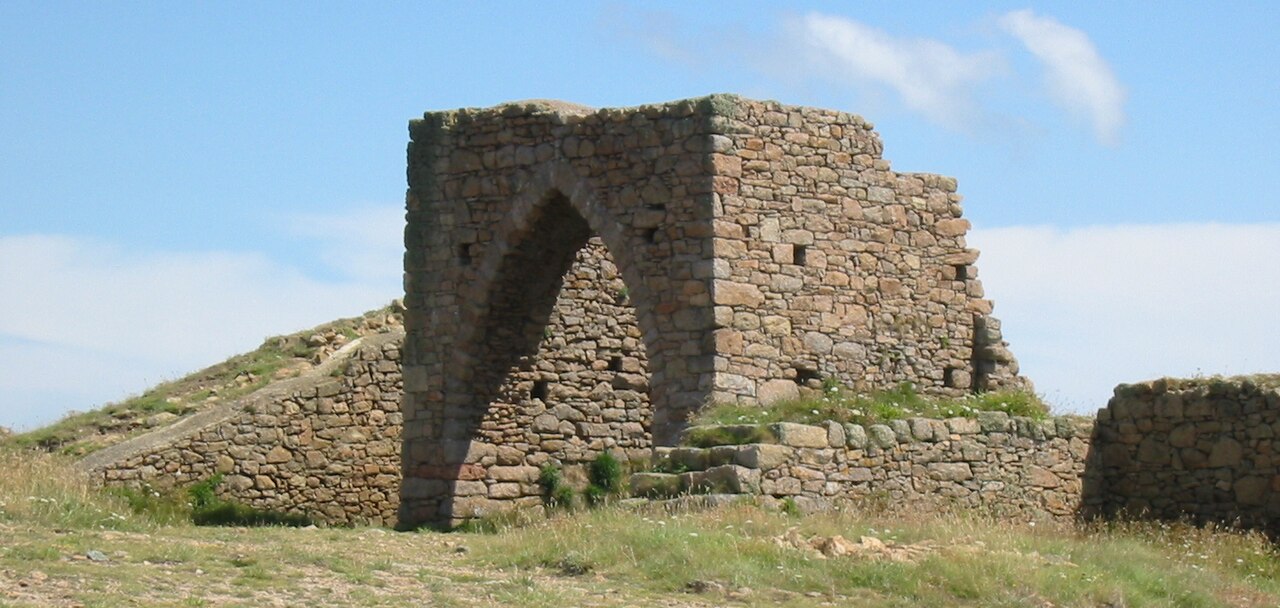
Grosnez Castle Ruins
Grosnez Castle is a late medieval ruined fortress located on the northwestern tip of Jersey, one of the Channel Islands. Constructed around 1330 by Sir John des Roches, the castle was strategically positioned on a clifftop 60 meters above the sea to serve as a refuge for local farmers and inhabitants during frequent French raids in the 14th century. Its location on a rocky headland provided natural defense on three sides, while a man-made ditch carved into the rock protected the vulnerable landward side, illustrating the medieval military engineering adapted to the island's geography.
Historical context and military significance
During the turbulent period of the Hundred Years' War, Jersey was a frontline between English and French forces. Grosnez Castle was part of a network of fortifications built to protect the island's population from French attacks. Despite its defenses, the castle was captured by the French in 1373 and again in 1381, reflecting the ongoing conflict and strategic importance of the site.
The castle likely fell into disuse and was partially demolished around the time of the French occupation of Jersey from 1461 to 1468. Following this period, the Seigneur of St Ouen was granted permission in 1483 to fortify his manor house, indicating that Grosnez Castle was no longer a primary defensive structure on the island.
Architectural features and layout
The castle's design took full advantage of its natural cliff defenses, with sheer drops on three sides making it difficult for attackers to approach. The fourth side was protected by a deep rock-cut ditch, a common defensive feature in medieval fortifications to impede siege engines and infantry assaults.
The remains of Grosnez Castle today include the footings of walls and the substantial ruins of the gatehouse, which originally featured a drawbridge and portcullis. These defensive elements would have made the entrance highly secure and challenging to breach. The gatehouse is the most prominent surviving structure, offering insights into the castle's defensive capabilities.
Within the castle's enclosure, traces of six simple buildings have been identified, likely serving as living quarters, storage, and other functional spaces for the garrison and refugees. The overall plan suggests a modest-sized fortress primarily intended for temporary refuge rather than a large permanent garrison.
Later uses and cultural significance
In 1806, long after the castle's military role had ended, a naval signal station was established at Grosnez. This station was used to communicate messages between Jersey and Guernsey, demonstrating the site's continued strategic value due to its elevated coastal position.
The name "Grosnez" derives from the Old Norse words grar nes, meaning "grey headland," a descriptive term reflecting the appearance of the site from the sea. This contrasts with a nearby headland to the west called "Rouge Nez," meaning "red nose," highlighting the local tradition of naming coastal features based on their visual characteristics.
Visiting Grosnez Castle ruins today
Today, Grosnez Castle is a partially preserved ruin accessible to visitors interested in medieval history and coastal fortifications. The site offers dramatic views of the English Channel and the rugged coastline of Jersey. While much of the castle remains in ruins, the surviving gatehouse and the outline of the defensive ditch provide a tangible connection to the island's medieval past.
Visitors can explore the site to appreciate the medieval military architecture adapted to natural terrain and gain insight into the challenges faced by island defenders during the 14th century. The castle's remote location and historical significance make it a notable landmark in Jersey's cultural heritage.
Frequently asked questions (FAQ)
- When was Grosnez Castle built and by whom?
- Grosnez Castle was built around 1330 by Sir John des Roches to provide refuge during French attacks on Jersey.
- What defensive features does Grosnez Castle have?
- The castle is naturally protected by cliffs on three sides and a deep rock-cut ditch on the fourth side, with a gatehouse featuring a drawbridge and portcullis.
- Is Grosnez Castle accessible to visitors today?
- Yes, Grosnez Castle is a partially preserved ruin open to visitors, offering views of the English Channel and insights into medieval fortifications.
- Why was Grosnez Castle demolished?
- The castle was likely demolished around the time of the French occupation of Jersey (1461–1468) and fell out of use when the Seigneur of St Ouen fortified his manor house in 1483.
- What is the origin of the name Grosnez?
- The name Grosnez comes from Old Norse 'grar nes,' meaning 'grey headland,' describing the site's appearance from the sea.
Information
Loading map...
Visitor reviews
No reviews yet. Been here? Write the first review and help other travelers!
Write the first reviewVisited this castle? Share your experience
Your review helps other travelers and adds first-hand knowledge to our encyclopedia.