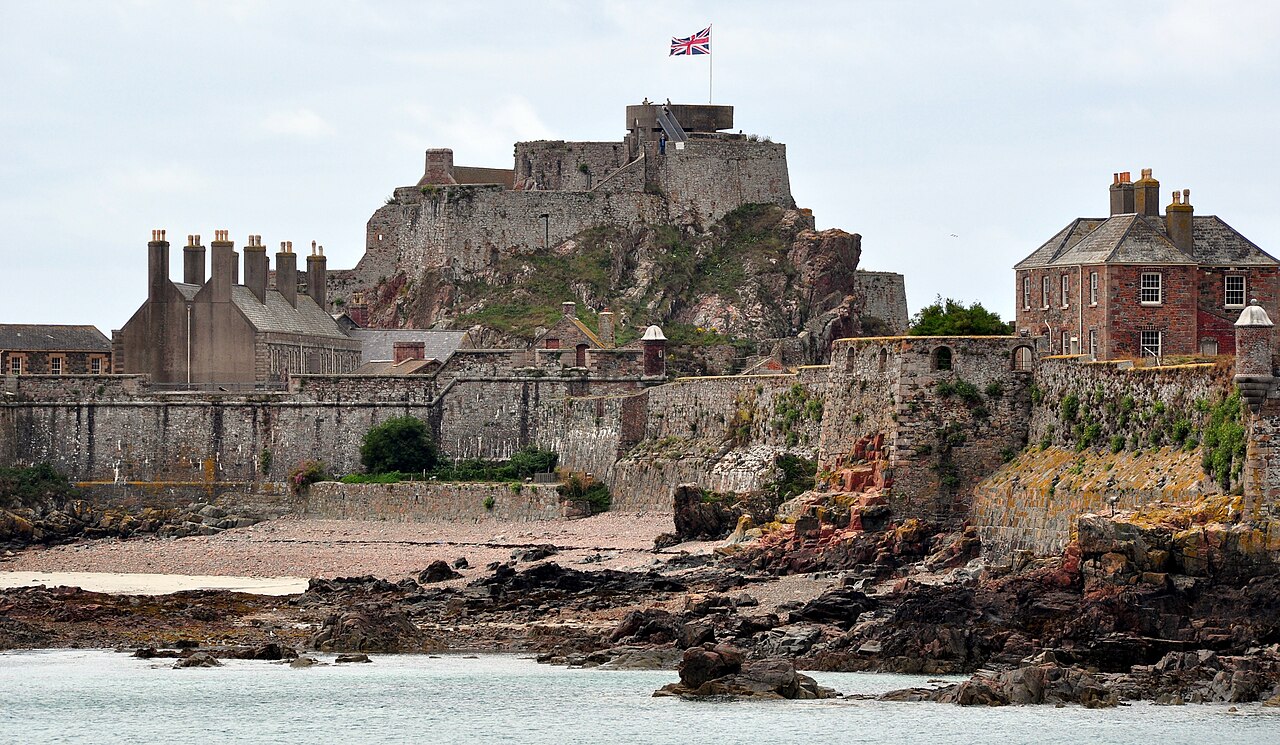
Saint Aubin's Fort
Saint Aubin's Fort is a distinctive Renaissance-era fortress located on a rocky islet at the western end of St Aubin's Bay in Jersey, part of the United Kingdom of Great Britain and Northern Ireland. Constructed in 1542, the fort was strategically positioned to control the entrance to the primary port of St Aubin, a vital maritime hub during the 16th century. Its location on a rocky outcrop provided natural defensive advantages, making it a critical military installation for protecting the island from seaborne threats.
Early construction and strategic importance
The original structure of Saint Aubin's Fort was completed in the 1540s, reflecting the military architectural principles of the Renaissance period. The fort was designed primarily as a coastal defense installation, equipped to monitor and control naval access to the busy port of St Aubin. The fort's placement on an islet allowed for a commanding view of the bay and surrounding waters, essential for early warning and defense against potential invaders.
Modifications during the 17th century civil war
During the English Civil War in the 17th century, the fort's defensive capabilities were significantly enhanced. When the Parliamentarians controlled the fort, they constructed a bulwark to strengthen its defenses. This addition reflected the evolving military tactics of the time, focusing on robust fortifications to withstand artillery assaults.
Later, when the Royalists regained control, they replaced the bulwark with granite ramparts and added an additional storey to the original tower. These improvements not only increased the fort's defensive strength but also expanded its capacity for garrison and artillery placement, adapting the structure to the demands of contemporary warfare.
18th and 19th century renovations and peaceful uses
Throughout the 18th and 19th centuries, Saint Aubin's Fort underwent two significant rebuilds. These renovations were aimed at maintaining the fort's structural integrity and adapting its facilities to the changing military technologies and needs of the time. However, during the relatively peaceful Victorian era, the fort's military importance diminished, and it was repurposed as a summer residence. This change of use reflects the broader trend of coastal fortifications transitioning from active defense roles to more domestic or recreational functions during periods of peace.
World war ii german occupation and fortification
In the Second World War, Saint Aubin's Fort once again assumed a critical military role when it was occupied by German forces. The Germans significantly reinforced the fort's defenses by installing turret guns and constructing concrete casemates, transforming it into a formidable stronghold within the German Atlantic Wall defenses. These modifications were part of the broader German strategy to fortify the Channel Islands against Allied invasion.
A causeway connects the fort to the mainland near the Royal Channel Islands Yacht Club, allowing access at low tide. Although the fort itself is closed to the public, it remains an active site used by Jersey's Sea Scouts. The Scouts utilize a German bunker within the fort for storing sailing equipment and have converted a room in the tower into a classroom, maintaining the fort's legacy as a place of maritime activity.
Architectural features and layout
The fort's architecture reflects its layered history, combining Renaissance military design with later additions from the Civil War period and German occupation. Key features include the central tower with its added storey, robust granite ramparts, and the bulwark foundations. The concrete casemates from the 20th century contrast with the older stonework, illustrating the evolution of coastal defense architecture over nearly five centuries.
The integration of the natural rocky islet into the fort's defenses exemplifies the strategic use of terrain in military architecture. The causeway provides a tidal connection, emphasizing the fort's unique position as both a land and sea fortress.
Cultural significance and current status
Saint Aubin's Fort is a notable heritage site in Jersey, embodying the island's maritime and military history. Its continuous adaptation from a Renaissance coastal defense to a modern wartime fortress and finally to a community resource highlights its enduring importance. While public access to the fort is restricted, its use by the Sea Scouts ensures that it remains a living part of Jersey's coastal culture.
Frequently asked questions (FAQ)
- What is the historical significance of Saint Aubin's Fort?
- Saint Aubin's Fort, built in the late 18th century, played a crucial role in defending the island of Jersey during various conflicts, particularly against French invasions. Its strategic location allowed it to oversee maritime activities, making it an essential part of coastal defense for the region.
- When is the best time to visit Saint Aubin's Fort?
- The best time to visit Saint Aubin's Fort is during the spring and early autumn months when the weather is mild and pleasant. This allows visitors to explore the fort’s outdoor areas comfortably and enjoy stunning views of the surrounding coastline.
- Can I access Saint Aubin's Fort with a wheelchair?
- Yes, efforts have been made to improve accessibility at Saint Aubin's Fort. While some areas may present challenges due to the fort's historic nature, there are accessible routes available, and staff can assist visitors with mobility needs.
- What are the opening hours for Saint Aubin's Fort?
- Saint Aubin's Fort is typically open to visitors from 10 AM to 5 PM, with extended hours during the summer months. It's advisable to check the official website for any seasonal variations or special events that may affect opening times.
- How much do tickets cost for Saint Aubin's Fort?
- Tickets for Saint Aubin's Fort are reasonably priced, with discounts available for children, seniors, and families. It’s a good idea to purchase tickets in advance online to secure your visit and take advantage of any promotional offers.
- Are there any nearby attractions to visit alongside Saint Aubin's Fort?
- Yes, visitors can explore several nearby attractions, including the picturesque St Aubin's Harbour and the renowned Jersey Maritime Museum. These sites offer additional insights into the island's rich maritime heritage and complement a visit to the fort.
- Is there a guided tour available at Saint Aubin's Fort?
- Yes, guided tours are available at Saint Aubin's Fort, providing visitors with in-depth information about its history and architecture. These tours are led by knowledgeable guides and typically last about an hour, enhancing your overall experience of the site.
- How do I get to Saint Aubin's Fort?
- Saint Aubin's Fort is easily accessible by public transport, with regular bus services connecting it to major areas on the island. Additionally, there is ample parking available for those who choose to drive, making it convenient for visitors traveling from different parts of Jersey.
Information
Loading map...
Visitor reviews
No reviews yet. Been here? Write the first review and help other travelers!
Write the first reviewVisited this castle? Share your experience
Your review helps other travelers and adds first-hand knowledge to our encyclopedia.