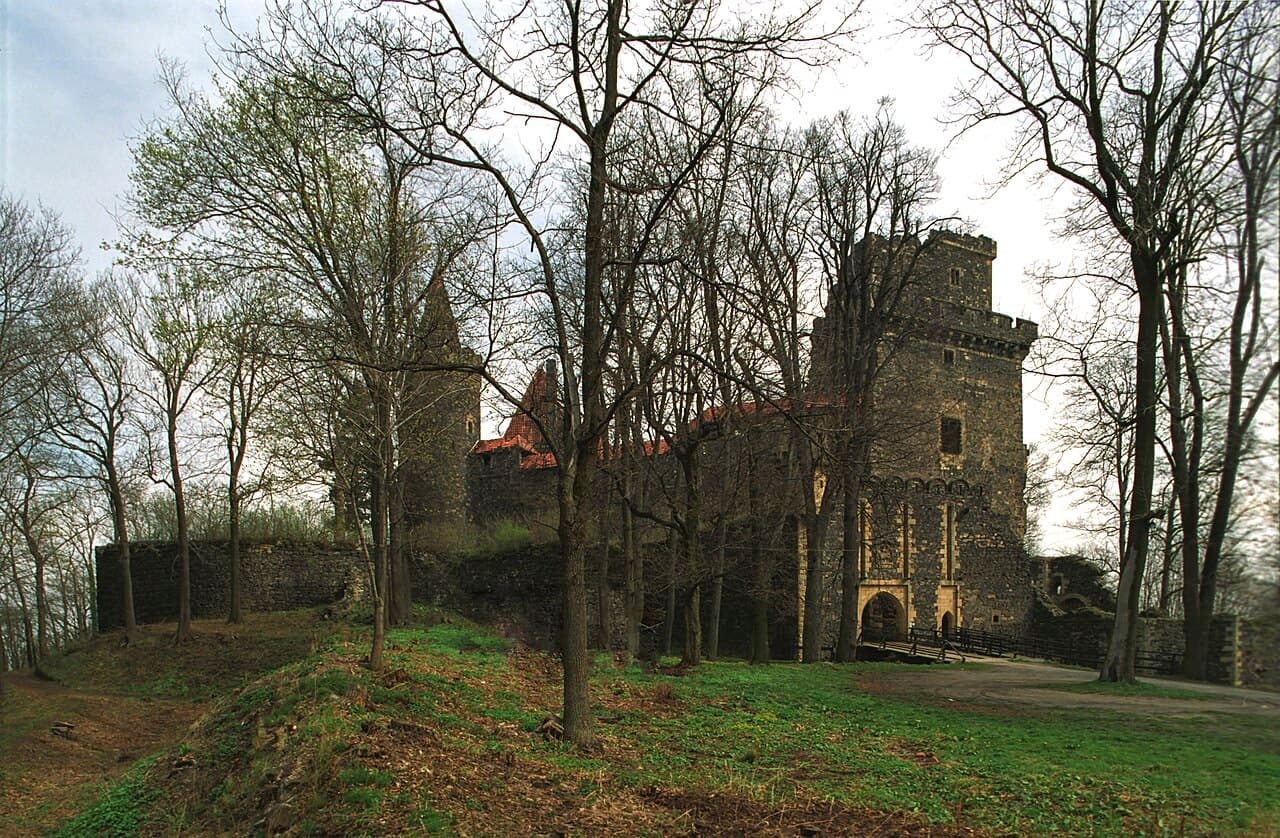
Grodziec Castle
Grodziec Castle stands as a remarkable example of a hill castle in Poland, with a rich history dating back to the 12th century. Its origins lie in a fortified settlement established by the West Slavic Bobrzan tribe in the mid-12th century, making it one of the oldest defensive sites in the region. The castle's earliest confirmed mention appears in a papal bull by Pope Adrian IV in 1155, highlighting its early significance. By 1175, it was under the control of Duke Bolesław I the Tall, who granted privileges to the Cistercians from Lubiąż, demonstrating the castle's role in regional politics and religious affairs.
The initial structure was a wooden fortress, which during the reign of Henryk I the Bearded was replaced by a brick castle, marking a significant architectural evolution. The castle church's foundation is attributed to Saint Hedwig, adding to its historical and religious importance. Throughout the 14th and 15th centuries, the castle was owned by the knightly family of Busewoy, reflecting its status among the regional nobility.
Architectural evolution and renaissance transformation
In the late 15th century, the castle experienced substantial reconstruction under the direction of Prince Friedrich I of Legnica. Master bricklayers from Wrocław and Görlitz contributed to the castle's present-day layout, characterized by a distinctive hexagonal plan with towers at each corner and a large rectangular donjon at the center. This period marked the transition of Grodziec into one of the most beautiful Gothic-Renaissance residences in Silesia.
The castle's Renaissance phase was further enhanced between 1522 and 1524 under architect Wendelin Rosskopf from Zgorzelec, who added two towers on the northern and southern sides. The construction of the palatium on the northwest side provided a new residential building, blending defensive features with comfortable living quarters. The thick walls of the palatium, up to five meters at the foundation, illustrate the dual purpose of defense and habitation.
Defensive features and layout
The castle complex covers an area of approximately 270 by 140 meters and consists of two main parts: the upper castle and the surrounding forecastle. The upper castle's irregular hexagonal shape includes the palatium, the donjon, and the northern tower. The donjon, with a square foundation of about sixteen meters per side and a height of over twenty-six meters, served as the primary defensive stronghold, containing six levels.
Additional defensive elements include protruding bastions and caponiers, which are covered galleries allowing defenders to fire upon attackers at the base of the walls. The smaller "Old Tower" features a four-sided roof with a defensive gallery equipped with crenellations and narrow shooting openings, emphasizing the castle's military architecture.
Historical significance and ownership changes
Grodziec Castle's history is marked by its involvement in regional conflicts and changing ownership. During the Hussite Wars, it was captured and plundered by Hussite forces. In 1470, it was repurchased by Prince Friedrich I of Legnica, who initiated significant rebuilding efforts. The castle suffered major damage during the Thirty Years' War when it was captured and burned by forces under Prince Albrecht von Wallenstein in 1633.
Despite partial repairs in the 17th and 18th centuries, the castle gradually declined until the late 18th and 19th centuries when owners such as Count Hans Heinrich VI von Hochberg and later Wilhelm Christian Benecke began restoration efforts. The early 20th century saw a major renovation led by architect Bodo Ebhardt, commissioned by owner Dr. Baron Wilibald von Dirksen. The castle was reopened in 1908 with the presence of Emperor Wilhelm II, marking a new chapter in its preservation.
20th century and modern use
The castle's last private owner was Herbert von Dirksen, a German diplomat and Nazi politician who used the castle during World War II to house museum collections and library archives. The castle sustained fire damage in 1945 but was later transferred to the Silesian Society of History and Antiquarianism Lovers for use as a museum, restaurant, and shelter.
Today, Grodziec Castle is a well-preserved monument that attracts tourists and history enthusiasts. Its Renaissance palatium remains one of the best-preserved princely residences in Silesia, and the castle is surrounded by an English garden, adding to its aesthetic appeal. The castle has also served as a filming location for various European productions, enhancing its cultural significance.
Interior and notable features
The castle's interior reflects its historical layers, with two main floors in the palatium. The lower level housed practical facilities such as a drinking water reservoir, cellars, a beer hall, pantry, and servants’ dining room. The ground floor contained guest rooms later adapted for an inn and kitchen. Two halls stand out: the large Great Hall and a smaller hall featuring a Gothic-style fireplace adorned with lion-like motifs.
The upper floors were reserved for living quarters, with stained glass windows originally illuminating the northern chapel and the Knight’s Hall, the castle’s most ornate chamber. This hall connects to private rooms for a princess and her attendants through Gothic doorways. The palatium’s highest level includes a defensive gallery with battlements, providing strategic vantage points.
Cultural and architectural legacy
Grodziec Castle exemplifies the evolution of medieval fortifications into Renaissance residences, combining military architecture with refined living spaces. Its robust walls, strategic layout, and integration of Gothic and Renaissance styles reflect the complex history of Silesia and the castle's role as a noble residence and military stronghold. The castle remains a testament to the region's architectural heritage and historical resilience.
Frequently asked questions (FAQ)
- What is the historical significance of Grodziec Castle?
- Grodziec Castle, dating back to the 13th century, is one of the most important medieval fortresses in Poland. It played a crucial role in the region's defense and has witnessed numerous historical events, making it a key site for understanding Polish history.
- When was Grodziec Castle built?
- Construction of Grodziec Castle began in the 13th century and was completed in the 14th century. Over the years, it has undergone various renovations and restorations, preserving its historical architecture and charm.
- What are the opening hours for Grodziec Castle?
- Grodziec Castle is typically open to visitors from April to October, with specific opening hours varying by month. It is advisable to check the official website for the most current hours before planning your visit.
- Can I access Grodziec Castle with a wheelchair?
- While Grodziec Castle strives to be accessible, some areas may present challenges for wheelchair users due to uneven terrain and stairs. It’s recommended to contact the castle’s administration in advance to inquire about accessibility options and assistance.
- What are the ticket prices for visiting Grodziec Castle?
- Ticket prices for Grodziec Castle are generally affordable, with discounts available for students and seniors. Prices may vary based on special events or guided tours, so it's best to check the official website for the latest information.
- When is the best time to visit Grodziec Castle?
- The best time to visit Grodziec Castle is during the spring and summer months when the weather is pleasant and the surrounding landscapes are lush. Additionally, many events and activities take place during this season, providing a more enriching experience.
- Are there any nearby attractions to Grodziec Castle?
- Yes, nearby attractions include the picturesque town of Złotoryja and various hiking trails in the surrounding area. Visitors can also explore local museums and cultural sites that highlight the rich heritage of the region.
- How do I get to Grodziec Castle?
- Grodziec Castle is easily accessible by car and public transport from major cities in Poland. There are also local bus services that can take you close to the castle, making it convenient for visitors traveling from various locations.
Photo gallery

Information
Website
Visit websiteSources & official resources
Verify the information above using these authoritative references.
Loading map...
Visitor reviews
No reviews yet. Been here? Write the first review and help other travelers!
Write the first reviewVisited this castle? Share your experience
Your review helps other travelers and adds first-hand knowledge to our encyclopedia.



