Gripsholm Castle
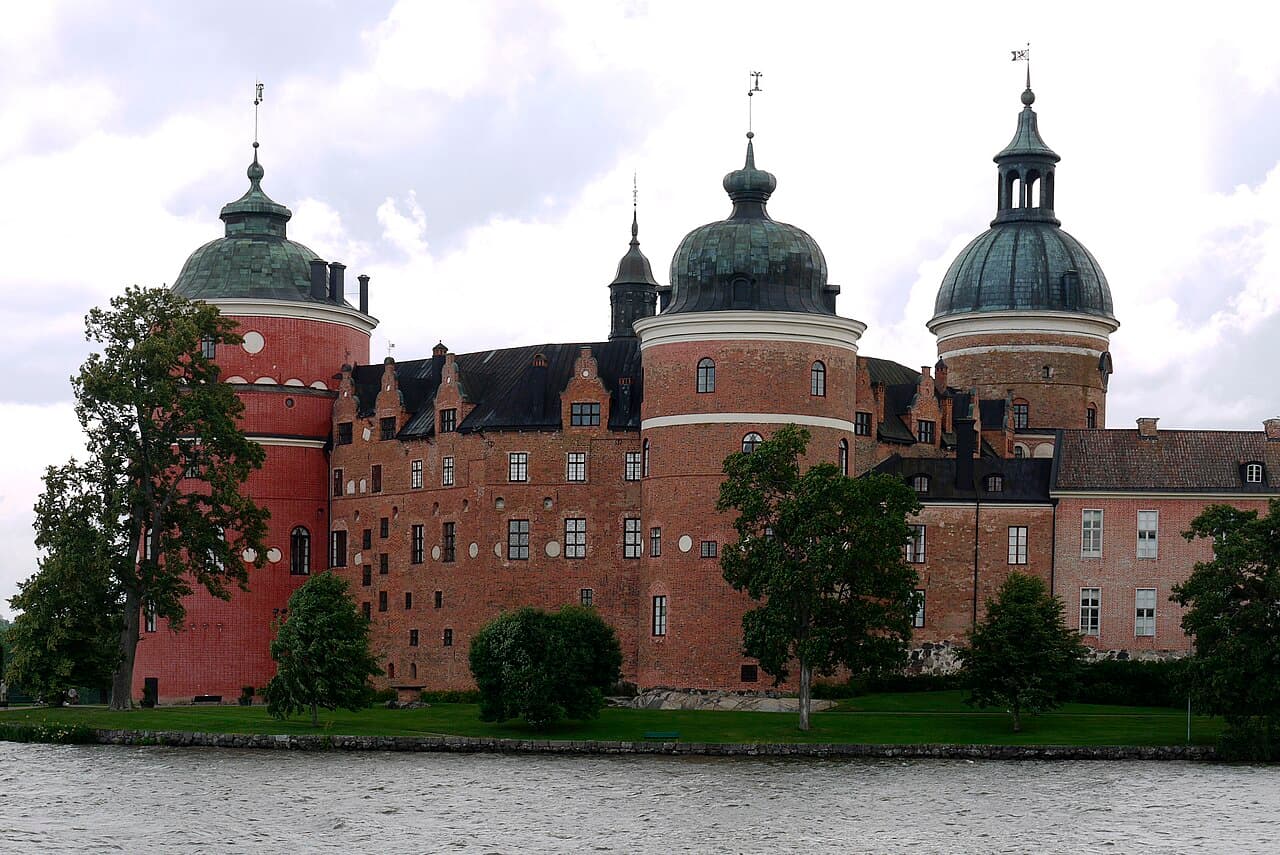
Gripsholm Castle stands as a remarkable testament to Sweden's rich Renaissance heritage and royal history, located in the picturesque town of Mariefred within the region of Sodermanlands lan. Constructed in the 16th century on the initiative of King Gustav I Vasa, the castle evolved from a medieval fortress originally built by Bo Jonsson Grip in the late 14th century. It is renowned not only for its imposing fortified layout with four distinctive round towers but also for its exceptional preservation of interiors and cultural treasures spanning several centuries.
Historical origins and royal significance
The site of Gripsholm Castle was first fortified between 1377 and 1380 by the powerful nobleman Bo Jonsson Grip, whose family emblem—a griffin's head—gave the castle its name. The fortress changed hands multiple times, including ownership by Queen Margaret and the influential statesman Sten Sture the Elder. In 1493, the castle was transferred to the Carthusian monks who established the nearby Pax Mariae monastery. However, the sweeping reforms of the Swedish Reformation led by King Gustav I in 1526 resulted in the dissolution of the monastery and the confiscation of Gripsholm, which then became a royal possession.
From 1537 onward, King Gustav I undertook the construction of a new brick castle designed as a formidable defensive stronghold, featuring circular corner towers and thick walls. The castle's strategic location on an island in Lake Mälaren provided natural protection and control over the surrounding region.
Gripsholm played a central role in Sweden's turbulent royal intrigues during the 16th century. Between 1563 and 1567, King Erik XIV imprisoned his brother John III and John's wife Catherine Jagiellon within the castle walls. Their son, Sigismund, who would later become king of both Poland and Sweden, was born here in 1566. Subsequently, John III reversed the tables by imprisoning Erik XIV at Gripsholm from 1571 to 1573, underscoring the castle's dual function as a royal residence and prison.
Architectural features and interior highlights
Fortified structure and towers
The castle's square courtyard is enclosed by four imposing round towers, each with unique historical and functional significance. Griptornet, originally a defensive bastion, also served as a prison, evidenced by 17th-century inscriptions. Vasatornet contains notable chambers such as King Gustav I's bedchamber and Gustav III's divan room, now a gallery of self-portraits. The largest tower, Teatertornet, was transformed into a theater in the late 18th century under King Gustav III, designed by architect Erik Palmstedt. This theater retains original stage machinery and plaster statues by Tobias Sergel. Above it lies Gustav III's round salon, redecorated by Jean Eric Rehn in 1779, used for royal receptions and portrait displays.
Fängelsetornet, the prison tower, is historically significant for holding high-profile prisoners during the 16th century.
Royal wings and courtyard features
The Kavaljersflygeln or Cavalier's Wing, built in 1780 by Fredrik Adolf Ulrik Cronstedt, housed court officials in modest residential quarters. The castle is surrounded by a moat, originally equipped with a drawbridge, which was filled in during King Gustav III's reign but later restored in the 1890s with a new drawbridge.
The 1890s restoration led by architect Fredrik Lilljekvist added a third floor to parts of the castle and restored Renaissance stylistic elements, though some historical alterations from the 17th and 18th centuries were removed. Decorative painting, new window designs, and a turret over the gatehouse were also introduced. An ornamental well from the 1897 Stockholm Exhibition was installed in the inner courtyard.
The outer courtyard displays two large 16th-century artillery pieces, "Galten" and "Suggan," trophies from Russia acquired in 1623. Inside, original 16th-century stained glass by Urban Glasmakare and metalwork by Peter Holländer survive, highlighting the castle's artisanal heritage. The grounds also historically featured various gardens, including a walled herb garden created by gardener Hans Friese in the mid-16th century.
Cultural treasures and collections
Gripsholm Castle is internationally celebrated for housing the Swedish National Portrait Gallery (Statens porträttsamlingar), one of the world's oldest and most extensive portrait collections. Established in 1820 and managed by the Nationalmuseum since the 1860s, the collection includes thousands of portraits of Swedish royalty, nobility, and notable figures from the Vasa era to contemporary times.
The castle also contains one of Europe's best-preserved 18th-century theaters, a cultural gem reflecting the artistic patronage of King Gustav III, known as the "theater king." The theater's original stage machinery and rich decorative elements make it a unique attraction for visitors interested in performing arts history.
Notable historical anecdotes
An intriguing story associated with Gripsholm is the taxidermy of a lion that arrived alive in Sweden in the 18th century, allegedly as a diplomatic gift from the "Bey of Algiers." The lion was placed in the Royal Game Park in Stockholm and, after its death, was poorly stuffed by a taxidermist unfamiliar with the animal, resulting in a famously imperfect specimen now displayed at the castle.
Modern significance and visitor experience
Today, Gripsholm Castle is a well-preserved historical monument open to the public as a museum. Visitors can explore the richly decorated rooms from the Vasa period, the royal theater, and the extensive portrait collection. The castle's location near the Gripsholm deer park nature reserve and the charming town of Mariefred—with its shops, cafés, and restaurants—makes it a popular excursion destination.
The castle's blend of Renaissance architecture, royal history, and cultural heritage offers a comprehensive glimpse into Sweden's past. Its preservation efforts, including the 19th-century restoration and ongoing maintenance, ensure that Gripsholm remains a vital part of Sweden's cultural landscape.
Frequently asked questions (FAQ)
- How do I get to Gripsholm Castle?
- Gripsholm Castle is located in Mariefred, Sweden, approximately 60 kilometers from Stockholm. You can reach the castle by taking a train from Stockholm to Mariefred, which is a scenic journey, and then walking to the castle, or you can drive directly to the site.
- What is the historical significance of Gripsholm Castle?
- Gripsholm Castle has a rich history dating back to the 16th century, originally built as a fortress and later transformed into a royal residence. It has served as a venue for royal occasions and is home to a vast collection of portraits of Swedish kings and queens, making it an important cultural landmark.
- When was Gripsholm Castle built?
- The construction of Gripsholm Castle began in 1537 under the orders of King Gustav Vasa. The castle has undergone several renovations and expansions over the centuries, reflecting various architectural styles, with the most notable changes occurring in the 17th century.
- Can I take guided tours of Gripsholm Castle?
- Yes, guided tours are available at Gripsholm Castle, providing visitors with in-depth insights into its history and architecture. These tours are often available in multiple languages and can enhance your understanding of the castle’s significance.
- Why is Gripsholm Castle a popular tourist attraction?
- Gripsholm Castle is popular for its stunning architecture, beautiful parkland, and rich history. Visitors are drawn to its picturesque setting by Lake Mälaren, the impressive art collection, and the chance to learn about Sweden's royal heritage.
- Is it possible to host events at Gripsholm Castle?
- Yes, Gripsholm Castle offers facilities for hosting various events, including weddings and corporate gatherings. The spectacular surroundings and historical ambiance make it a unique venue for special occasions.
- What are the opening hours for Gripsholm Castle?
- Gripsholm Castle is typically open to visitors from April to September, with varying hours depending on the season. It is advisable to check the official website for the most current opening hours before your visit.
- What are the ticket prices for Gripsholm Castle?
- Ticket prices for Gripsholm Castle vary based on age and type of tour, with discounts often available for children and seniors. For the most accurate and updated pricing information, it is recommended to visit the castle's official website.
- When is the best time to visit Gripsholm Castle?
- The best time to visit Gripsholm Castle is during the summer months, from June to August, when the weather is pleasant and the gardens are in full bloom. Additionally, special events and exhibitions are often held during this period, enhancing the visitor experience.
- Are there any nearby attractions worth visiting?
- Yes, nearby attractions include the charming town of Mariefred itself, with its quaint shops and cafes, as well as the beautiful shores of Lake Mälaren. Visitors can also explore the nearby Gripsholm Golf Club or take a boat trip on the lake for a scenic view of the castle.
Photo gallery

Information
Website
Visit websiteSources & official resources
Verify the information above using these authoritative references.
Loading map...
Visitor reviews
No reviews yet. Been here? Write the first review and help other travelers!
Write the first reviewVisited this castle? Share your experience
Your review helps other travelers and adds first-hand knowledge to our encyclopedia.