Tynnelsö Castle — Sweden castle

Tynnelsö Castle

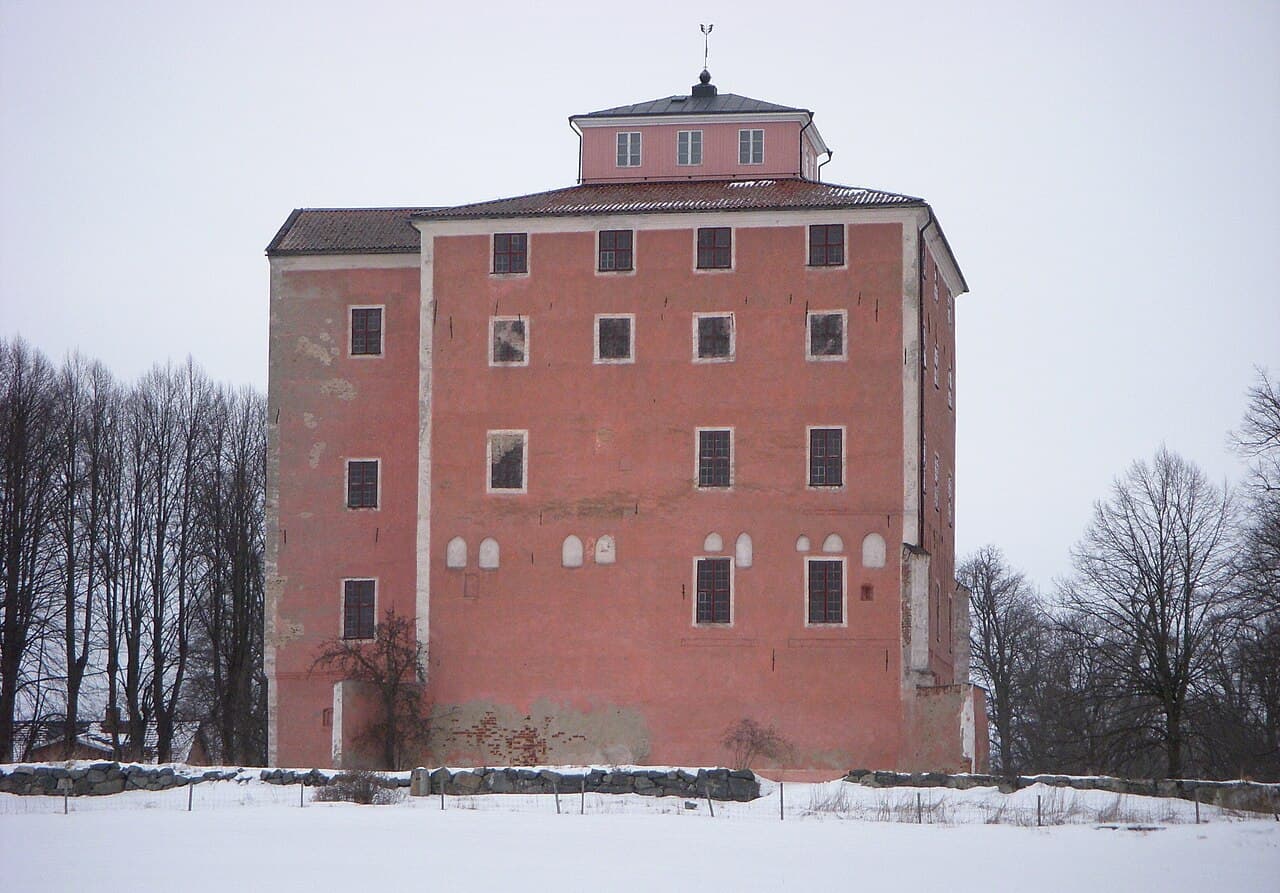
Tynnelsö Castle in Strängnäs, Sweden
Strängnäs, Sweden
High Medieval (11th–13th c.)
Partially Preserved

Tynnelsö Castle is a historic fortress located on Tynnelsö island in Lake Mälaren, near the town of Strängnäs, Sweden. This hill castle has origins dating back to the High Medieval period, with its estate first documented in 1282. The castle's strategic position on the island allowed it to serve as a significant ecclesiastical and royal stronghold for centuries.

The medieval origins and ecclesiastical ownership

The estate of Tynnelsö was initially under the control of the Diocese of Strängnäs from 1306. During the 1490s, Bishop Kort Rogge commissioned the construction of the first stone castle on the site. The original first floor of this medieval structure remains intact within the current castle, preserving a tangible link to its ecclesiastical roots. This early castle was primarily built as a fortified residence for the bishops, reflecting the common practice of the church securing its territorial and political influence through such fortifications.

Transition to royal ownership and architectural transformation

In 1522, the castle was acquired by Gustav Vasa, marking its transition from ecclesiastical to royal possession. It remained part of the royal estates until 1636, after which it was returned to the crown during the Great Reduction of 1681. The castle's current square-shaped form was established during the 1590s, reflecting the architectural trends of the late Renaissance period in Sweden. This transformation included the construction of robust walls and the reorganization of the castle's internal layout to suit both defensive needs and residential comfort.

Decline and restoration efforts

Following its period of active use, Tynnelsö Castle was abandoned in the 18th century and subsequently fell into a state of decay. Its deterioration over time mirrored the fate of many Swedish castles that lost strategic importance. A significant restoration took place between 1826 and 1827, aimed at preserving the remaining structures and preventing further ruin. Despite these efforts, the castle today remains closed to the public as it awaits future restoration work to stabilize and conserve the historic fabric.

Architectural features and surrounding landscape

The castle's architecture is characterized by its square plan and the integration of medieval stonework with later Renaissance modifications. The surviving first floor of the original stone castle provides insight into the medieval construction techniques used by the bishops. The castle is surrounded by a garden notable for its numerous lime trees and includes a villa built in 1876, which adds to the site's historical layers. The location on an island in Lake Mälaren enhances the castle's defensive position and scenic value.

Historical significance and cultural heritage

Tynnelsö Castle represents a significant example of Swedish medieval and Renaissance architecture, illustrating the evolution from ecclesiastical fortifications to royal residences. Its association with prominent historical figures such as Bishop Kort Rogge and King Gustav Vasa underscores its importance in Swedish history. The castle's enduring presence on Lake Mälaren continues to attract interest for its architectural heritage and its role in the region's medieval political landscape.

Visiting information

Currently, Tynnelsö Castle is closed to visitors due to ongoing plans for restoration. The surrounding gardens and the villa from the late 19th century can be appreciated from outside. Prospective visitors should check for updates regarding reopening and restoration progress to plan visits accordingly.

Frequently asked questions (FAQ)

What is the historical significance of Tynnelsö Castle?
Tynnelsö Castle, located in Strängnäs, Sweden, dates back to the late 16th century and has played a crucial role in Swedish history. It was originally built as a defensive structure and later became a royal residence, reflecting the architectural styles and political dynamics of the time.
When was Tynnelsö Castle built?
Tynnelsö Castle was constructed between 1590 and 1600, commissioned by King Charles IX of Sweden. It showcases the Renaissance architectural style and has undergone various renovations over the centuries, preserving its historical essence.
What are the opening hours for Tynnelsö Castle?
Tynnelsö Castle is open to visitors from May to September, typically from 10:00 AM to 5:00 PM daily. It's advisable to check the castle's official website for any seasonal changes or special events that may affect visiting hours.
Can I access Tynnelsö Castle with public transport?
Yes, Tynnelsö Castle is accessible via public transport from central Strängnäs. Buses run regularly to the area, making it easy for visitors to reach the castle without needing a car.
What is the best time to visit Tynnelsö Castle?
The best time to visit Tynnelsö Castle is during the summer months when the weather is pleasant and the gardens are in full bloom. Additionally, many guided tours and events are held during this period, enhancing the visitor experience.
Is it possible to take guided tours at Tynnelsö Castle?
Yes, guided tours of Tynnelsö Castle are available, providing visitors with in-depth knowledge about its history, architecture, and the surrounding area. These tours are typically offered during peak visiting season and can be booked in advance.
What are the ticket prices for visiting Tynnelsö Castle?
Ticket prices for Tynnelsö Castle are generally affordable, with discounts available for students and seniors. Children under a certain age may enter free, making it an accessible destination for families.
Are there any nearby attractions to visit after exploring Tynnelsö Castle?
Yes, after visiting Tynnelsö Castle, you can explore the charming town of Strängnäs, which features picturesque streets, local shops, and the beautiful Strängnäs Cathedral. Additionally, the scenic Mälaren lake offers opportunities for outdoor activities and relaxation.

Photo gallery

Tynnelsö Castle
Click to view

Photo by Holger.Ellgaard•CC BY-SA 3.0

1 photo • Click any image to view in full screen

Information

Hill Castle

Loading map...

Visitor reviews

No reviews yet. Been here? Write the first review and help other travelers!

Write the first review

Visited this castle? Share your experience

Your review helps other travelers and adds first-hand knowledge to our encyclopedia.

Write a review

(5/5)

0/2000 characters

Your review will be visible after admin approval

Nearby castles

10.6 km

Grönsö Castle

Enköping, Sweden

Grönsö Castle, located near Enköping, Sweden, is a remarkable example of a Renaissance era estate that has preserved architectural and historical elements spanning over four centuries. Constructed between 1607 and 1610 by the Privy Council member Johan Skytte, the castle was built using brick and granite in a style influenced by French Renaissance architecture. Its distinctive features include a pitched roof, ridge turrets, and four rectangular corner towers, which together create a stately and fortified appearance typical of noble residences of the period. Architectural features and construction The castle's original structure was designed to serve both as a residence and a symbol of status. The ground floor remains intact today, showcasing well-preserved interiors with painted ceilings dating back to the early 1600s. These ceilings provide valuable insight into the decorative arts of the early 17th century in Sweden. The use of durable materials like granite and brick ensured the building's longevity, while the French stylistic influences reflect the cultural exchanges prevalent among European nobility during the Renaissance. Changes through the centuries Throughout the 17th century, the castle remained under the ownership of the Skytte family until the estate was reduced to the crown. This transition marked the beginning of a series of ownership changes. In the first half of the 18th century, the castle was owned by the Falkenberg family. Significant repairs were undertaken during this period, including the loss of one of the castle's towers in 1738. These renovations simplified the castle's appearance, giving it a more stylish yet understated look that has endured into the modern era. Notable additions and landscape features In 1786, David von Schultzheim, a Stockholm-based doctor who owned part of the estate, commissioned the construction of a Chinese pavilion on the waterfront. This pavilion is one of Grönsö's most distinctive attractions. Inspired by the designs of the English architect William Chambers, the pavilion's interior is decorated with shells and minerals from East Asia, reflecting the European fascination with Asian art and culture during the 18th century. The pavilion's waterfront location enhances its picturesque quality and adds to the estate's cultural richness. Estate grounds and park The estate covers an extensive area of approximately 720 hectares, including productive apple orchards that contribute to the agricultural heritage of the property. The castle park has been carefully renovated with the expertise of landscape architects from the Swedish University of Agricultural Sciences. These efforts have preserved the historical landscaping while ensuring the grounds remain a vibrant and integral part of the estate's character. Continuity of ownership and preservation In 1820, Reinhold Fredrik von Ehrenheim, a Court Chamberlain, acquired Grönsö Castle, marking the beginning of the current family's stewardship. The von Ehrenheim family, together with the Grönsö Cultural Foundation, continues to own and operate the estate today. Notably, the castle has never undergone a complete reconstruction but has instead evolved gradually over time. This approach has allowed for the preservation of architectural traces from each historical period, offering a unique window into the castle's layered past. Current condition and cultural significance Grönsö Castle is classified as a well-preserved Renaissance castle that retains significant original features and interiors. Its combination of architectural elements, historical ownership lineage, and carefully maintained grounds make it an important cultural heritage site in Sweden. The castle's ongoing preservation efforts and public accessibility contribute to its role as a living monument to Swedish history and Renaissance architecture.

Renaissance (15th–17th c.)
Details
12.1 km

Mälsåker Castle

Strängnäs, Sweden

Mälsåker Castle, located near Strängnäs, Sweden, is a remarkable example of Swedish baroque architecture with origins dating back to the Middle Ages. Initially, the site likely hosted a simple stone house, which over centuries evolved into one of the grandest palatial residences during Sweden's era as a European great power in the 17th century. The castle's transformation into a baroque masterpiece was spearheaded by the renowned architect Nikodemus Tessin the Elder, who was commissioned by the influential Soop family in the 1660s and 1670s to expand and embellish the estate. This period saw the addition of substantial wings, a grand terrace with stairs descending to the adjacent lake, and richly decorated interiors, establishing Mälsåker as a symbol of aristocratic prestige. Architectural evolution and baroque grandeur The castle's architectural development reflects the tastes and ambitions of the Swedish nobility during the 17th century. Tessin's work introduced characteristic baroque elements such as symmetry, grand staircases, and ornate stucco work. The palace's layout included a central main building flanked by wings that created a harmonious courtyard, while the terrace offered commanding views over the lake, integrating the natural landscape with the architectural design. The interiors were lavishly decorated, with stucco ceilings and patterned wooden floors that showcased the craftsmanship of the era. Rococo influences and later modifications During the 18th century, Mälsåker's interiors were partially updated to reflect the rococo style, which introduced lighter, more playful decorative motifs and pastel colors, contrasting with the earlier baroque grandeur. These changes illustrate the castle's continuous adaptation to contemporary artistic trends while maintaining its historic character. Modernization and 20th-century challenges By the end of the 19th century, Mälsåker had been modernized with the installation of electricity, running water, and central heating, marking its transition into a more comfortable, modern residence. However, the most dramatic chapter in the castle's history occurred during the 1940s. Between 1943 and 1945, Mälsåker was owned by the State of Norway and served as a military training facility for approximately 2,000 soldiers during World War II. The palace was repurposed as offices and accommodation for officers and command staff, with temporary hutments constructed on the grounds. The catastrophic fire of 1945 On a particularly cold day in January 1945, the simultaneous use of all fireplaces in the palace caused a chimney shaft to crack, igniting a devastating fire. The blaze destroyed the roof and the richly ornamented stucco ceilings on the third floor, leaving much of the palace in ruins. The fire marked a significant loss of cultural heritage, as many original baroque features were irreparably damaged or lost. Restoration and cultural revival Starting in the 1990s, efforts to restore Mälsåker Castle began in earnest. A dedicated building workshop was established to employ traditional building techniques and materials, aiming to faithfully reconstruct the palace's historic features. Restoration work included the recreation of intricate stucco ceilings and the refurbishment of the beautiful patterned wooden floors, reviving the castle's baroque splendor. Current use and public access Since 2007, an association has managed Mälsåker Castle, opening it to visitors during the summer months. The palace offers exhibitions that highlight its diverse history, including the Norwegian military period and the turn-of-the-century lifestyle. Additionally, the castle hosts art exhibitions featuring contemporary artists in its elegant rooms. Visitors can enjoy refreshments in a newly established café and exhibition building adjacent to the castle, which provides stunning views of the lake and surrounding landscape. Historical significance and architectural legacy Mälsåker Castle stands as a testament to Sweden's baroque architectural heritage and the turbulent history of the region. Its association with prominent figures like Nikodemus Tessin and the Soop family, combined with its dramatic 20th-century history, enriches its cultural narrative. The castle's restoration exemplifies the dedication to preserving historical monuments using authentic methods, ensuring that Mälsåker remains a valuable cultural and historical landmark accessible to the public.

Post-Renaissance (17th–18th c.)
Details
18.6 km
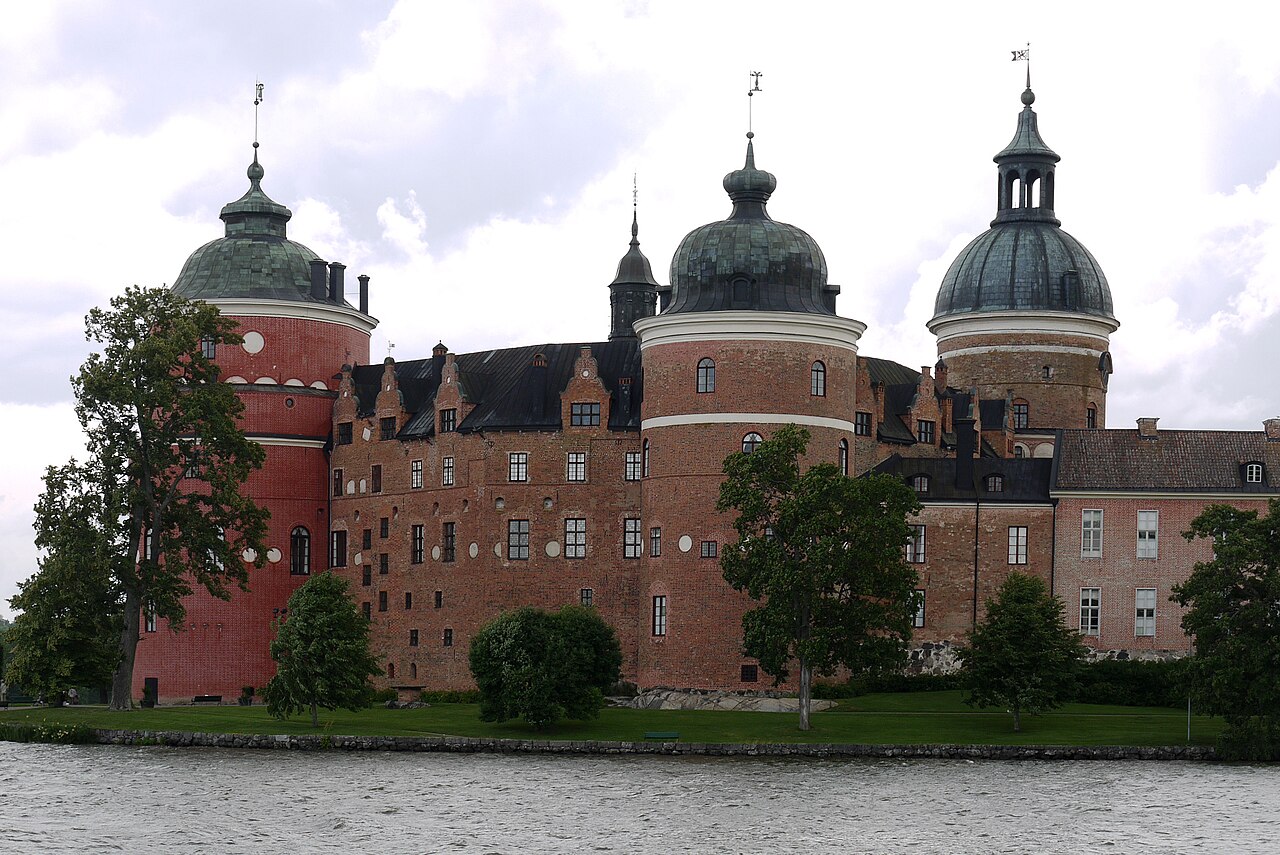
Gripsholm Castle — Sweden castle

Gripsholm Castle

Mariefred, Sweden

Gripsholm Castle stands as a remarkable testament to Sweden's rich Renaissance heritage and royal history, located in the picturesque town of Mariefred within the region of Sodermanlands lan. Constructed in the 16th century on the initiative of King Gustav I Vasa, the castle evolved from a medieval fortress originally built by Bo Jonsson Grip in the late 14th century. It is renowned not only for its imposing fortified layout with four distinctive round towers but also for its exceptional preservation of interiors and cultural treasures spanning several centuries. Historical origins and royal significance The site of Gripsholm Castle was first fortified between 1377 and 1380 by the powerful nobleman Bo Jonsson Grip, whose family emblem—a griffin's head—gave the castle its name. The fortress changed hands multiple times, including ownership by Queen Margaret and the influential statesman Sten Sture the Elder. In 1493, the castle was transferred to the Carthusian monks who established the nearby Pax Mariae monastery. However, the sweeping reforms of the Swedish Reformation led by King Gustav I in 1526 resulted in the dissolution of the monastery and the confiscation of Gripsholm, which then became a royal possession. From 1537 onward, King Gustav I undertook the construction of a new brick castle designed as a formidable defensive stronghold, featuring circular corner towers and thick walls. The castle's strategic location on an island in Lake Mälaren provided natural protection and control over the surrounding region. Gripsholm played a central role in Sweden's turbulent royal intrigues during the 16th century. Between 1563 and 1567, King Erik XIV imprisoned his brother John III and John's wife Catherine Jagiellon within the castle walls. Their son, Sigismund, who would later become king of both Poland and Sweden, was born here in 1566. Subsequently, John III reversed the tables by imprisoning Erik XIV at Gripsholm from 1571 to 1573, underscoring the castle's dual function as a royal residence and prison. Architectural features and interior highlights Fortified structure and towers The castle's square courtyard is enclosed by four imposing round towers, each with unique historical and functional significance. Griptornet, originally a defensive bastion, also served as a prison, evidenced by 17th-century inscriptions. Vasatornet contains notable chambers such as King Gustav I's bedchamber and Gustav III's divan room, now a gallery of self-portraits. The largest tower, Teatertornet, was transformed into a theater in the late 18th century under King Gustav III, designed by architect Erik Palmstedt. This theater retains original stage machinery and plaster statues by Tobias Sergel. Above it lies Gustav III's round salon, redecorated by Jean Eric Rehn in 1779, used for royal receptions and portrait displays. Fängelsetornet, the prison tower, is historically significant for holding high-profile prisoners during the 16th century. Royal wings and courtyard features The Kavaljersflygeln or Cavalier's Wing, built in 1780 by Fredrik Adolf Ulrik Cronstedt, housed court officials in modest residential quarters. The castle is surrounded by a moat, originally equipped with a drawbridge, which was filled in during King Gustav III's reign but later restored in the 1890s with a new drawbridge. The 1890s restoration led by architect Fredrik Lilljekvist added a third floor to parts of the castle and restored Renaissance stylistic elements, though some historical alterations from the 17th and 18th centuries were removed. Decorative painting, new window designs, and a turret over the gatehouse were also introduced. An ornamental well from the 1897 Stockholm Exhibition was installed in the inner courtyard. The outer courtyard displays two large 16th-century artillery pieces, "Galten" and "Suggan," trophies from Russia acquired in 1623. Inside, original 16th-century stained glass by Urban Glasmakare and metalwork by Peter Holländer survive, highlighting the castle's artisanal heritage. The grounds also historically featured various gardens, including a walled herb garden created by gardener Hans Friese in the mid-16th century. Cultural treasures and collections Gripsholm Castle is internationally celebrated for housing the Swedish National Portrait Gallery (Statens porträttsamlingar), one of the world's oldest and most extensive portrait collections. Established in 1820 and managed by the Nationalmuseum since the 1860s, the collection includes thousands of portraits of Swedish royalty, nobility, and notable figures from the Vasa era to contemporary times. The castle also contains one of Europe's best-preserved 18th-century theaters, a cultural gem reflecting the artistic patronage of King Gustav III, known as the "theater king." The theater's original stage machinery and rich decorative elements make it a unique attraction for visitors interested in performing arts history. Notable historical anecdotes An intriguing story associated with Gripsholm is the taxidermy of a lion that arrived alive in Sweden in the 18th century, allegedly as a diplomatic gift from the "Bey of Algiers." The lion was placed in the Royal Game Park in Stockholm and, after its death, was poorly stuffed by a taxidermist unfamiliar with the animal, resulting in a famously imperfect specimen now displayed at the castle. Modern significance and visitor experience Today, Gripsholm Castle is a well-preserved historical monument open to the public as a museum. Visitors can explore the richly decorated rooms from the Vasa period, the royal theater, and the extensive portrait collection. The castle's location near the Gripsholm deer park nature reserve and the charming town of Mariefred—with its shops, cafés, and restaurants—makes it a popular excursion destination. The castle's blend of Renaissance architecture, royal history, and cultural heritage offers a comprehensive glimpse into Sweden's past. Its preservation efforts, including the 19th-century restoration and ongoing maintenance, ensure that Gripsholm remains a vital part of Sweden's cultural landscape.

Renaissance (15th–17th c.)
Details