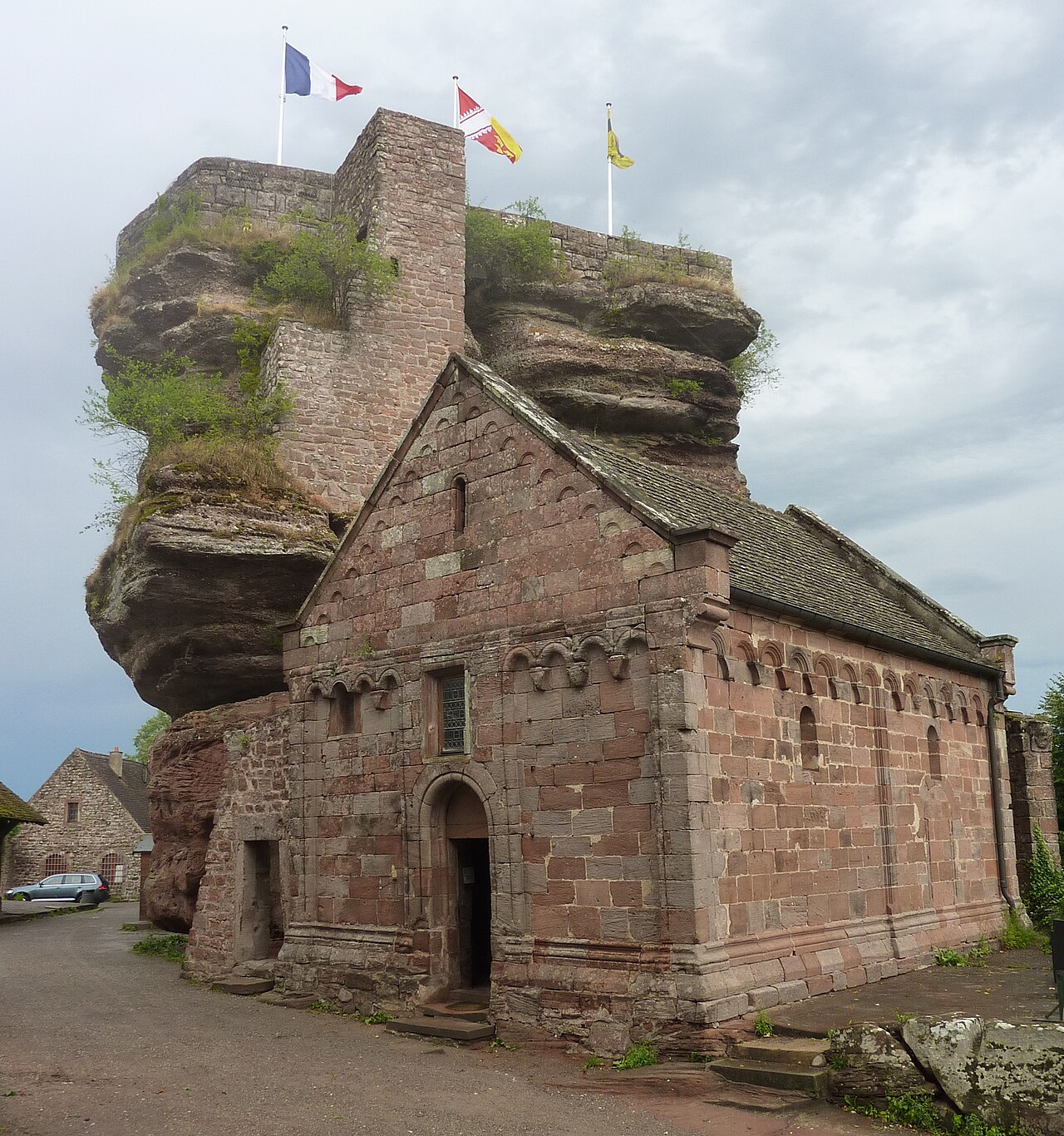
Greifenstein Castle
Greifenstein Castle, known locally as Château de Greifenstein, is a remarkable example of a high medieval castle complex situated on a wooded rocky ridge west of the town of Saverne in the Bas-Rhin department of France. Nestled in the region often referred to as Northern Alsace or the Middle Vosges, this castle group comprises two distinct castles, each with its own unique history and architectural significance, separated by a dramatic rock-cut ditch.
Historical origins and early ownership
The older and western castle, known as Grand-Greifenstein or Vorder-Greifenstein, dates back to the first half of the 12th century. It was likely constructed by the knight Meribodo de Greifenstein, a figure closely linked to the influential Lords of Ochsenstein, who owned the castle by 1217 and were probably related to Meribodo. This connection underlines the castle's importance as a feudal stronghold in the region during the high medieval period.
The second castle and defensive features
The younger castle, called Petit-Greifenstein or Hinter-Greifenstein, was built east of the original fortress, likely at the end of the 13th century or beginning of the 14th century. The two castles are separated by a significant rock-cut ditch, which was fortified with a flanking tower providing defensive coverage. This architectural arrangement illustrates the strategic military thinking of the time, emphasizing layered defense and control of access routes.
Architectural highlights
Grand-Greifenstein boasts the largest keep in Alsace, measuring approximately 13 meters on each side. This massive structure would have served as the last line of defense and a symbol of the lord's power. Between the two main castles stands a renovated tower, likely part of Grand-Greifenstein originally, which offers visitors a vantage point over the surrounding landscape.
Defensive structures and layout
The castle complex is situated on a rocky ridge, utilizing natural elevation for defense. The rock-cut ditch separating the two castles is a striking feature, enhancing the defensive capability by preventing direct assault between the two parts. The flanking tower guarding this ditch is restored and accessible, allowing visitors to appreciate the military architecture firsthand.
Later history and decline
By the early 16th century, the entire castle group came under the ownership of the Bishop of Strasbourg. The castle likely fell into ruin by the beginning of the Thirty Years' War (1618), as it was used as a quarry for building the episcopal palace in Saverne. Shortly after the war, its destruction was ordered by Henri de La Tour d'Auvergne, the Viscount of Turenne, marking the end of its military significance.
Visiting Greifenstein Castle today
Today, Greifenstein Castle is freely accessible to the public. Visitors can reach the site via a roughly 25-minute hike along a signposted path from the nearest road, making it a popular destination for hikers and history enthusiasts. The restored flanking tower is climbable, offering spectacular views of nearby castles such as Haut-Barr and Grand-Geroldseck across the Zorn valley.
Panoramic views and surrounding landmarks
From the castle terrace, visitors enjoy unimpeded views of the town of Saverne, the Château du Haut-Barr, the Château du Grand-Geroldseck, the Zorn valley, and the Saint-Vit chapel. These vistas highlight the castle's strategic location and its role in the network of medieval fortifications in the region.
Access and directions
To visit, travelers should leave Saverne via the D132 road towards Lutzelbourg, then turn right towards the Ramsthal lake. The path to the castle is maintained by the Club Vosgien and marked with a blue rectangle, ensuring easy navigation for visitors.
Architectural and cultural significance
Greifenstein Castle stands as an important example of a high medieval fortified complex in Alsace, illustrating the evolution of castle architecture from the 12th to the 14th century. The presence of two castles in close proximity, connected yet distinct, reflects the complex feudal and military history of the region. Its ruins offer valuable insights into medieval defensive strategies, construction techniques, and the lifestyle of the nobility during this period.
The castle's enduring presence amid the natural beauty of the Middle Vosges also makes it a cherished cultural landmark, attracting visitors interested in history, architecture, and scenic hiking experiences.
Frequently asked questions (FAQ)
- How do I get to Greifenstein Castle?
- Greifenstein Castle is located in Saverne, France, easily accessible by car or public transport. If you are driving, take the A4 motorway and follow the signs to Saverne. The nearest train station is also in Saverne, with local buses providing service to the castle.
- What is the historical significance of Greifenstein Castle?
- Greifenstein Castle dates back to the 12th century and has played a crucial role in the region's history, particularly during the feudal era. It served as a strategic stronghold for the Counts of Lutzelbourg and has witnessed many historical events over the centuries. Today, it stands as a testament to medieval architecture and local heritage.
- When was Greifenstein Castle built?
- Construction of Greifenstein Castle began in the 12th century, with various modifications and expansions made over the years. Its architecture reflects the changing styles and needs of the time as it evolved from a military fortress to a residence. The castle has been preserved to showcase its historical significance and architectural beauty.
- Can I visit Greifenstein Castle year-round?
- Yes, Greifenstein Castle is open for visitors throughout the year, although opening hours may vary by season. It is advisable to check the official website or contact the visitor center for the most current information before planning your visit. The castle offers guided tours that enhance the experience with insights into its history and architecture.
- Why is Greifenstein Castle a popular tourist attraction?
- Greifenstein Castle is popular for its stunning panoramic views of the Alsace region and its rich history that captivates visitors. The castle's well-preserved structures and picturesque surroundings offer a unique glimpse into medieval life. Additionally, it hosts various cultural events and exhibitions that attract tourists throughout the year.
- Is it possible to access all areas of Greifenstein Castle?
- While many areas of Greifenstein Castle are accessible to visitors, some parts may have restricted access due to preservation efforts or safety regulations. Guided tours typically cover the main sections of the castle, allowing visitors to appreciate its historical and architectural highlights. For those with mobility concerns, it is advisable to inquire about specific accessibility options.
- What are the opening hours for Greifenstein Castle?
- Greifenstein Castle generally opens its doors to visitors from 10 AM to 6 PM during the warmer months, with reduced hours in the winter. It's recommended to check the official website for any seasonal changes in hours or special events that may affect access. Planning your visit ahead will ensure you have ample time to explore the castle.
- What are the ticket prices for Greifenstein Castle?
- Ticket prices for Greifenstein Castle vary depending on age and group size, with discounts available for children and seniors. As of the latest information, adult tickets typically cost around €8, while children under 12 may enter for free. Special group rates and family packages may also be offered, so be sure to inquire when purchasing tickets.
- Are there any nearby attractions to Greifenstein Castle?
- Yes, there are several nearby attractions worth exploring, including the charming town of Saverne, known for its historical buildings and beautiful landscapes. The Vosges Mountains are also a short drive away, offering hiking trails and stunning views. Additionally, the Alsace Wine Route is nearby, providing opportunities for wine tasting and enjoying regional cuisine.
Information
Loading map...
Visitor reviews
No reviews yet. Been here? Write the first review and help other travelers!
Write the first reviewVisited this castle? Share your experience
Your review helps other travelers and adds first-hand knowledge to our encyclopedia.