Gravensteen Castle
Gravensteen Castle, prominently situated in the heart of Ghent, in the East Flanders province of Belgium, stands as a remarkable example of a restored early medieval hill castle. Known locally simply as Gravensteen, which translates to "Stone of the Counts," this fortress has witnessed over a millennium of history, reflecting the strategic and political significance of the region throughout the Middle Ages and beyond.
The origins and early fortifications
The site of Gravensteen Castle was first fortified in the mid-9th century by Baldwin I, the first Count of Flanders. At that time, the location was a naturally defensible sand dune surrounded by swampy terrain formed by the anabranches of the River Leie. This geographic advantage was critical in providing protection against frequent Viking raids that plagued the region. The initial fortification was primarily constructed of wood, serving as a stronghold for the fledgling County of Flanders.
Despite its defensive purpose, the castle was captured around 879 AD by Viking forces, who then used it as a base for their incursions. This event underscored the ongoing threat the Vikings posed and the need for more robust fortifications.
Development through the 10th and 11th centuries
In the 10th century, Count Arnulf I undertook a significant rebuilding of the fortress. The wooden structures were expanded to include a hall atop the hill, surrounded by additional wooden buildings. However, it was in the 11th century under Count Robert I that the castle saw its first major transformation into a stone fortress. The old wooden hall was replaced by a rectangular stone keep rising three stories high, signaling a shift towards more durable and defensible architecture.
This phase also included the construction of a defensive enclosure featuring a wall tower and the addition of a moat encircling the castle. Initially, auxiliary buildings remained wooden but were later reconstructed in stone. A prominent stone gate tower was added to enhance the castle's defenses and control access.
The 12th-century reconstruction and current form
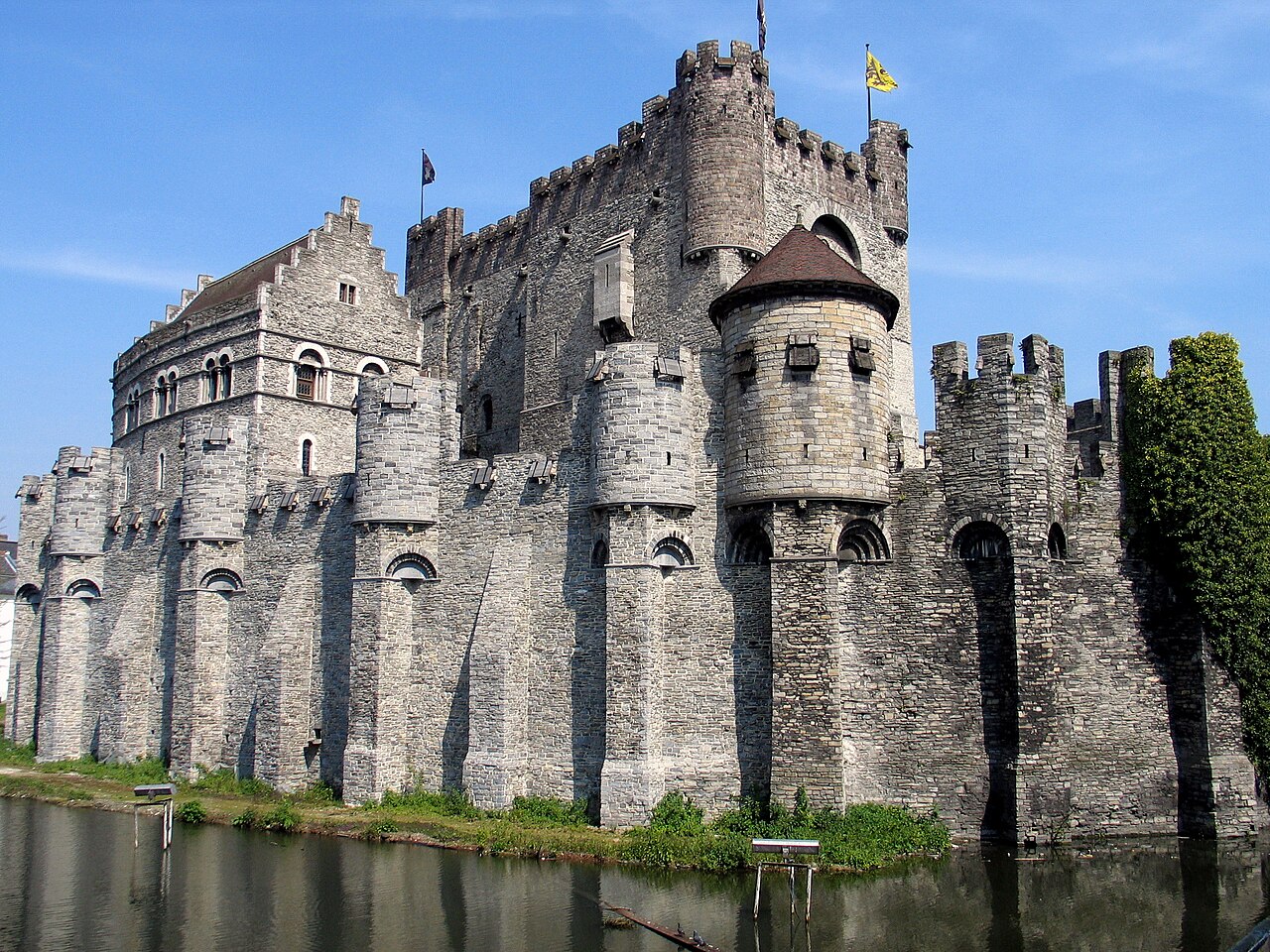
The most defining phase of Gravensteen Castle’s architecture occurred in 1180 under Count Philip I. His comprehensive rebuilding project established the core structure visible today. The centerpiece is the imposing keep, reaching nearly 30 meters in height, designed for both defense and residence. In front of the gate tower, a fortified barbican was constructed to provide an additional layer of protection against attackers.
The castle's perimeter was reinforced with a robust defensive wall featuring 24 protruding turrets, allowing defenders to cover all angles of approach. This concentric defensive design was advanced for its time, combining strong verticality with layered fortifications.
Later history and changing functions
By the 14th century, the castle's role as a noble residence diminished when Count Louis II chose to move to a more comfortable home. Despite this, Gravensteen remained the administrative center of the County of Flanders. It housed the Mint of Ghent from 1353 and later became the seat of the Council of Flanders in 1407. Portions of the castle were adapted for use as a prison during this period.
Over the centuries, the castle's moat gradually silted up, and urban development saw houses built against its outer walls. This encroachment obscured the castle from public view until the dawn of the 20th century. The Council maintained its seat there until 1778, after which the castle was sold to private owners.
In the 19th century, the castle's fortunes declined sharply. It was repurposed as a cotton mill and provided housing for workers and their families. This industrial use led to significant alterations and deterioration, leaving the castle near ruin by the century's end.
Restoration and modern significance
A major restoration effort began in 1894, aiming to return Gravensteen Castle to its medieval appearance, particularly reflecting the era of Count Philip I. This restoration was based on the best available historical and architectural knowledge of the time. Since then, the castle has become a popular tourist destination and cultural landmark in Ghent.
The castle was notably occupied briefly by protesting students in 1949, highlighting its continued role as a symbol within the community. Further restorations in recent decades have preserved its structure and enhanced visitor facilities.
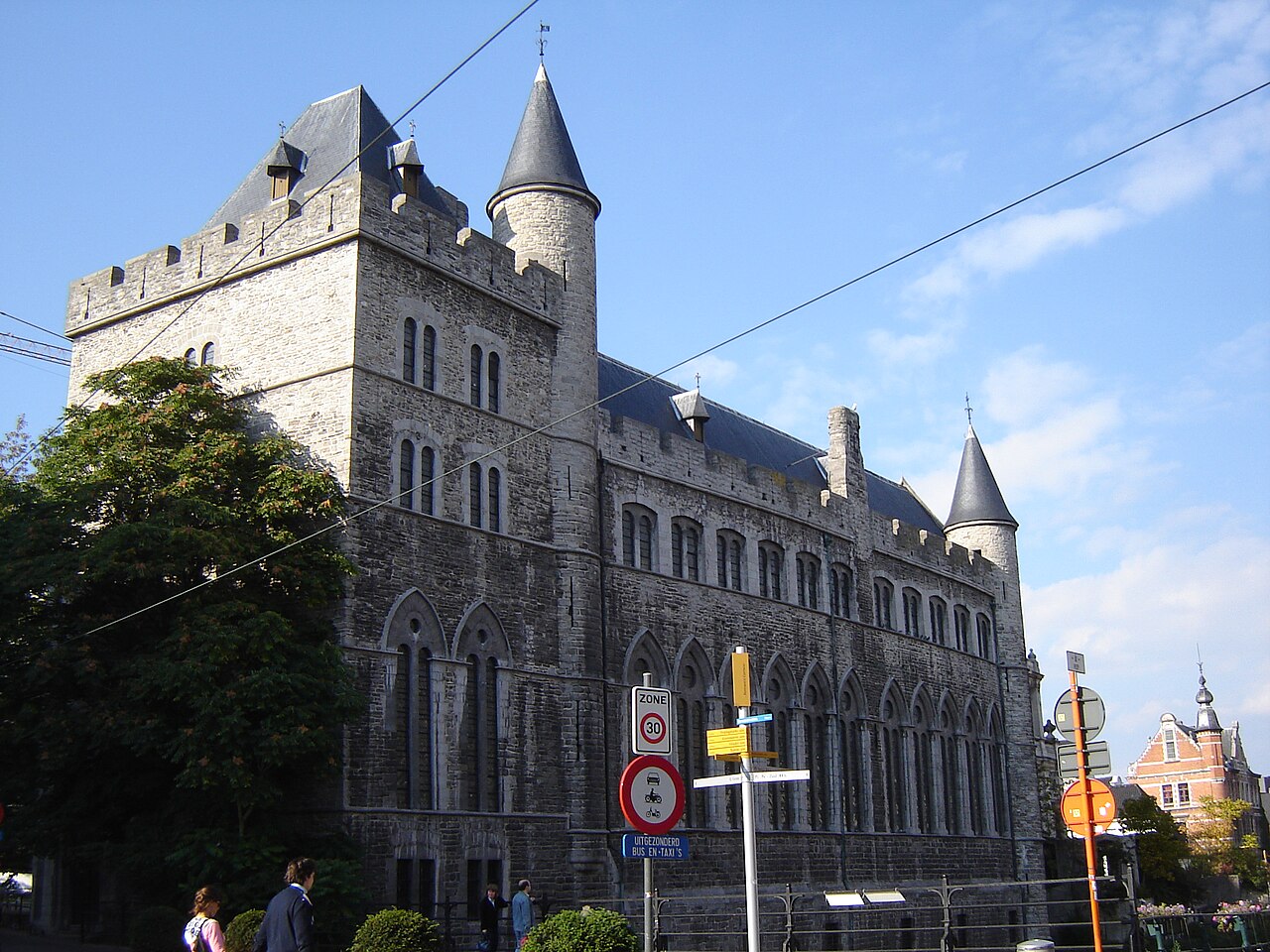
Today, Gravensteen Castle is open to the public for a fee and offers visitors a rich experience of medieval architecture, history, and heritage. Its proximity to other historic sites such as Geeraard de Duivelsteen Castle adds to the cultural landscape of Ghent.
Architectural features and layout
The keep and defensive structures
The keep of Gravensteen Castle is a formidable rectangular tower, nearly 30 meters tall, constructed of robust local stone. It served both as a last refuge during sieges and as the lord's residence. The keep’s thick walls and narrow windows exemplify medieval military architecture focused on defense.
The surrounding curtain walls are punctuated by 24 turrets, allowing defenders to cover the castle's perimeter with crossfire. The barbican guards the main entrance, creating a choke point to slow attackers and protect the gate tower.
Moat and outer defenses
Originally, the castle was encircled by a moat, fed by the nearby River Leie. This water barrier was a critical defensive feature, complicating any assault on the walls. Although much of the moat has silted up over time, its presence was integral to the castle’s defense strategy.
Interior spaces and adaptations
Inside the walls, the castle contained various functional buildings, including halls, chambers, and administrative offices. Over time, parts of the castle were adapted for use as a prison and mint, reflecting changing needs and functions.
Gravensteen in the cultural and historical context of Flanders
Gravensteen Castle is a symbol of the power and authority of the Counts of Flanders during the medieval period. Its strategic location in Ghent, a major medieval city, underscored its importance in regional politics, trade, and defense.
The castle's architectural evolution from a wooden fortification to a substantial stone fortress mirrors broader trends in medieval military architecture and the increasing centralization of power in the hands of regional rulers.
As a preserved monument, Gravensteen offers valuable insights into the feudal history of Flanders and the development of urban fortifications in medieval Europe.
Frequently asked questions (FAQ)
- What is Gravensteen Castle known for?
- Gravensteen Castle, located in Ghent, Belgium, is renowned for its impressive medieval architecture and rich history. Built in the late 12th century, it served as the residence of the counts of Flanders and played a crucial role in the region's governance.
- When was Gravensteen Castle constructed?
- Gravensteen Castle was constructed starting in 1180 and completed in the early 13th century. It has undergone various renovations over the centuries, preserving its historical significance while adapting to modern visitor needs.
- What are the opening hours for Gravensteen Castle?
- Gravensteen Castle is typically open to visitors daily from 10:00 AM to 6:00 PM, with extended hours during the summer months. It is advisable to check the official website for any seasonal changes or special holiday hours.
- Can I purchase tickets in advance for Gravensteen Castle?
- Yes, you can purchase tickets for Gravensteen Castle in advance through the official website. This is recommended, especially during peak tourist seasons, to ensure a smooth entry and avoid long queues.
- Is Gravensteen Castle accessible for visitors with disabilities?
- Gravensteen Castle strives to be accessible to all visitors, with ramps and designated pathways for those with mobility challenges. However, some areas may have limited access due to the castle's historical structure, so it’s best to inquire in advance about specific needs.
- What is the best time to visit Gravensteen Castle?
- The best time to visit Gravensteen Castle is during the spring and early fall when the weather is mild and the tourist crowds are thinner. Visiting on weekdays can also enhance your experience by allowing for a more leisurely exploration of the castle.
- Are there any nearby attractions to explore while visiting Gravensteen Castle?
- Yes, there are several nearby attractions, including the historic city center of Ghent, St. Bavo's Cathedral, and the Graslei and Korenlei waterfront. These sites complement your visit to Gravensteen Castle and provide a rich cultural experience.
- What are the ticket prices for Gravensteen Castle?
- Ticket prices for Gravensteen Castle are generally around €12 for adults, with discounts available for students and seniors. Children under the age of 12 can often enter for free, making it a great family-friendly destination.
Information
Address
Sint-Veerleplein, Ghent, Belgium
Loading map...
Visitor reviews
No reviews yet. Been here? Write the first review and help other travelers!
Write the first reviewVisited this castle? Share your experience
Your review helps other travelers and adds first-hand knowledge to our encyclopedia.