Govone Castle
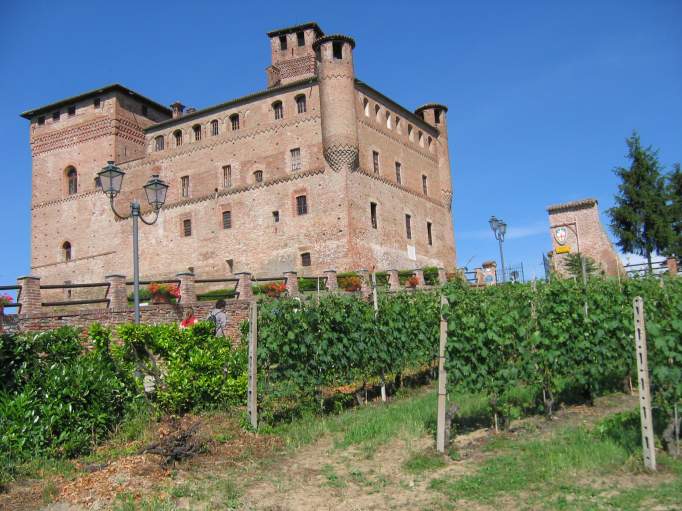
Govone Castle stands as a remarkable example of a hill castle in the Piedmont region of Italy, embodying centuries of architectural evolution and noble heritage. Its origins trace back to a medieval fortress referenced as early as 989 AD, reflecting the strategic importance of the site overlooking the Tanaro valley. Initially a defensive bastion with characteristic bastions and corner towers, the castle was constructed by the local nobility of Monferrato, a region known for its fortified structures.
Throughout the medieval period, Govone Castle was under the stewardship of the influential Solaro family, who held the titles of counts and lords from the late 13th century. The Solaros transformed the fortress from a purely military stronghold into an elegant noble residence. This transformation was most notably advanced in the late 17th century when the castle underwent a significant rebuilding phase. The renowned architect Guarino Guarini was initially commissioned to redesign the structure, though his plans were only partially realized. The project was ultimately completed by Benedetto Alfieri, whose work culminated around 1783, giving the castle its distinctive Baroque and early Neoclassical character.
Architectural evolution and design
From fortress to noble residence
The castle's original medieval features, such as the robust defensive walls and towers, were integrated into the new design, blending military architecture with the refined tastes of the aristocracy. The castle comprises primarily two main floors with an additional smaller lower level, interconnected by elegant staircases for guests and separate service stairs for staff, reflecting the social hierarchies of the time.
Facades and sculptural decoration
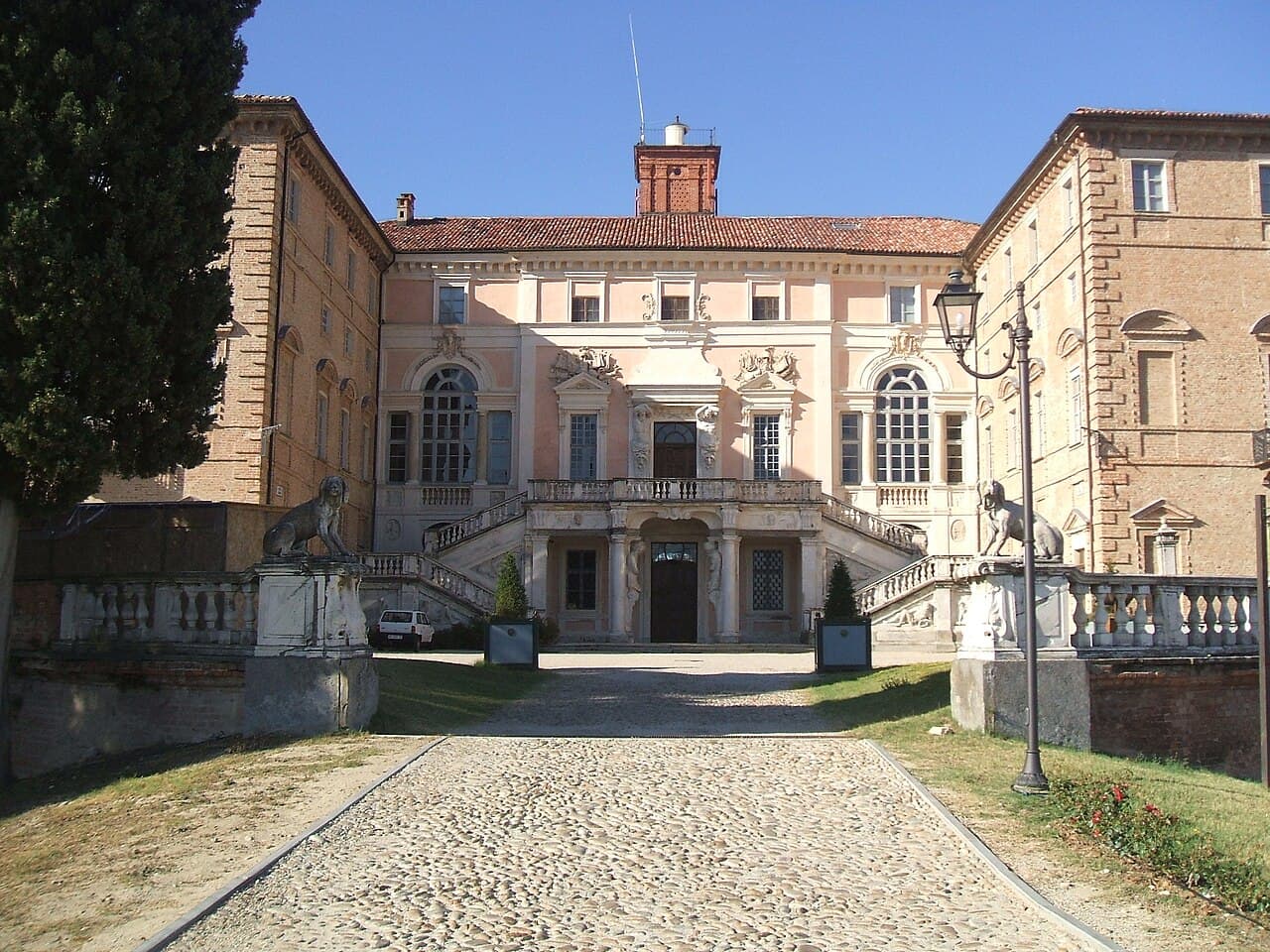
The south-facing façade is particularly notable for its rich marble sculptural elements, including imposing atlantes—sculpted figures that serve as supporting columns—and numerous bas-reliefs. Many of these decorative elements were relocated from the Royal Palace of Venaria Reale, enhancing the castle's grandeur. The grand double-ramp marble staircase leading to the main entrance epitomizes the castle's transformation into a royal residence, evoking the splendor of the Savoy dynasty.
Interior decoration and artistic heritage
The interiors of Govone Castle are richly adorned with artistic works that highlight the cultural exchanges of the 18th century. Several rooms feature rare Chinese hand-painted rice paper wallpapers, illustrating traditional scenes of porcelain, tea, rice, and silk production. This chinoiserie decoration reflects the European fascination with East Asian aesthetics during this period.
The castle's ballroom is a masterpiece of artistic expression, decorated with frescoes depicting the mythological story of Niobe. These works were created by artists Luigi Vacca and Fabrizio Sevesi, who also contributed trompe-l’oeil decorations in the central hall, blending classical motifs with royal symbolism favored by King Carlo Felice.
The hall of the priors and baroque stuccoes
In the north wing lies the Hall of the Priors, distinguished by pastel-colored Baroque stucco decorations. The walls display copies of portraits of eight grand priors from the Solaro family, who were affiliated with the Knights of Malta, underscoring the family's historical ties to this medieval chivalric order.
Historical significance and royal connections
From the solaros to the house of savoy
After the extinction of the male Solaro line in 1792, Govone Castle was incorporated into the possessions of the House of Savoy, the ruling dynasty of the Kingdom of Sardinia. It became a favored royal residence and summer retreat for monarchs, notably King Carlo Felice and Queen Maria Cristina. The castle was temporarily seized during the Napoleonic Wars but was restored to Savoy control in 1816, when Prince Carlo Felice undertook extensive restoration and modernization efforts.
Cultural and intellectual heritage
Govone Castle also holds cultural significance for hosting the philosopher Jean-Jacques Rousseau in 1730, who served Count Ottavio Solaro. This connection highlights the castle's role not only as a military and royal site but also as a center of intellectual and cultural activity.
Modern era and public use
In 1897, the municipality of Govone acquired the castle, repurposing it for civic administration and public functions. Today, the castle houses the local town hall and municipal library, with the former stables converted into a restaurant, ensuring the site's continuous use and preservation.
Gardens and surrounding landscape
The castle is surrounded by extensive gardens that showcase different landscaping styles. To the east lies a formal Italian parterre garden, characterized by symmetrical designs and meticulously clipped hedges. The north and west sides feature a sprawling English-style park designed by landscape architect Xavier Kurten, emphasizing naturalistic layouts with lawns and mature trees. A hanging garden with flower beds and fountains adds ornamental charm near the main building.
In 2001, a rose garden was established below the castle on the site of the former chapel, featuring ancient rose varieties that enhance the botanical diversity and aesthetic appeal of the estate.
Additional structures and current condition
The castle complex includes a former orangery, now adapted for contemporary events, and the church of Santo Spirito, which was once physically connected to the residence, integrating religious and noble functions. Govone Castle is well preserved and remains a prominent cultural landmark, recognized internationally as part of the UNESCO World Heritage Site of the Residences of the Royal House of Savoy since 1997. It is also a member of the Castelli Doc network, highlighting its importance among Piedmont's historic castles.
Frequently asked questions (FAQ)
- When was Govone Castle originally built?
- Govone Castle traces its origins to a medieval fortress mentioned as early as 989 AD, built by the local nobility of Monferrato.
- Who were the main architects involved in the castle's reconstruction?
- The castle's late 17th-century rebuilding involved architects Guarino Guarini and Benedetto Alfieri, with Alfieri completing the project around 1783.
- What architectural styles are prominent in Govone Castle?
- Govone Castle prominently features Baroque architectural elements, with some Neoclassical influences from the 18th-century reconstruction.
- Is Govone Castle open to the public?
- Today, Govone Castle houses the local town hall and municipal library, and its former stables have been converted into a restaurant, allowing public access to parts of the estate.
- What gardens surround Govone Castle?
- The castle is surrounded by an Italian formal parterre garden, an English-style park designed by Xavier Kurten, a hanging garden, and a rose garden established in 2001.
Photo gallery

Photo by Georgius LXXXIX. Original uploader was Georgius LXXXIX at it.wikipedia•Public domain
Information
Sources & official resources
Verify the information above using these authoritative references.
Loading map...
Visitor reviews
No reviews yet. Been here? Write the first review and help other travelers!
Write the first reviewVisited this castle? Share your experience
Your review helps other travelers and adds first-hand knowledge to our encyclopedia.