Castle of Costigliole d’Asti
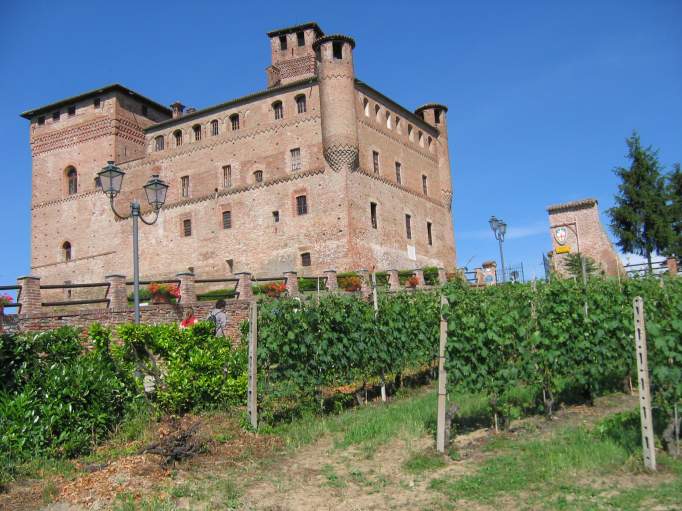
The Castle of Costigliole d’Asti is a prominent medieval hill castle located in the municipality of Costigliole d’Asti, in the Piedmont region of Italy. This imposing fortress, perched on a rocky summit, has played a significant role in the political and military history of the region since its construction in the early Middle Ages. Its strategic position and robust architecture exemplify the defensive priorities and noble ambitions of the medieval feudal lords who controlled it.
Early history and medieval significance
First documented in the year 1041, the castle was recognized by Emperor Henry III as property of the Church of Asti. This acknowledgment marked the castle as an important ecclesiastical stronghold during a time when church and secular powers often intertwined. Shortly thereafter, control passed to Bonifacio del Vasto, a nobleman who governed the territory, establishing the castle as a key feudal possession.
By the late 12th century, specifically in 1198, the city of Asti took control of the castle, integrating it within its municipal jurisdiction. The introduction of the Codice Malabaila regulations at this time formalized the castle’s administration, ensuring its governance aligned with the city’s interests. This legal framework influenced the castle’s management for many years, reflecting the complex relationship between urban centers and their surrounding fortifications.
Following 1255, the castle's military importance grew amid the turbulent conflicts between Charles I of Anjou and William VII of Montferrat. These struggles were part of the larger regional power contest between the Guelphs and Ghibellines, two factions vying for dominance in northern Italy. The castle’s fortifications were crucial in these confrontations, serving as a defensive bastion and a symbol of feudal authority.
The Asinari family and later developments
In 1315, the castle was reclaimed by the Ghibellines with the assistance of Sandrono Asinari, who was appointed castellan. The Asinari family would become synonymous with the castle, maintaining control for several centuries. Their stewardship marked a period of stability and architectural enhancement, reflecting their status and influence.
During the 17th century, significant changes occurred when Amelio Asinari named his daughter Ottavia as heir. Her marriage to Giovanni Antonio Verasis brought the Verasis family into the castle's lineage. They adopted the Asinari name and coat of arms, symbolizing the fusion of noble houses. In 1658, Ottavio III secured rights to the remaining half of the castle and initiated important renovations, blending defensive needs with residential comfort.
The castle continued to attract notable figures, including King Victor Amadeus III in 1775 and Virginia Oldoini, Countess of Castiglione, in 1854. In 1821, it was a meeting place for Marquis Carlo Asinari and liberal leaders before their exile, highlighting the castle’s role in political events beyond its military origins.
Architectural features and layout
The quadrangular layout of the castle measures approximately 60 meters on each side, with walls rising to 25 meters. Its four corner towers reach heights of up to 28 meters, making it one of the largest medieval fortifications in the Asti area. The robust design reflects the dual function of the castle as both a defensive fortress and a noble residence.
A notable feature is the commemorative plaque above a secondary entrance, marking restoration work completed in 1582 by Corrado Asinari. This highlights ongoing maintenance and the importance placed on preserving the castle’s structural integrity.
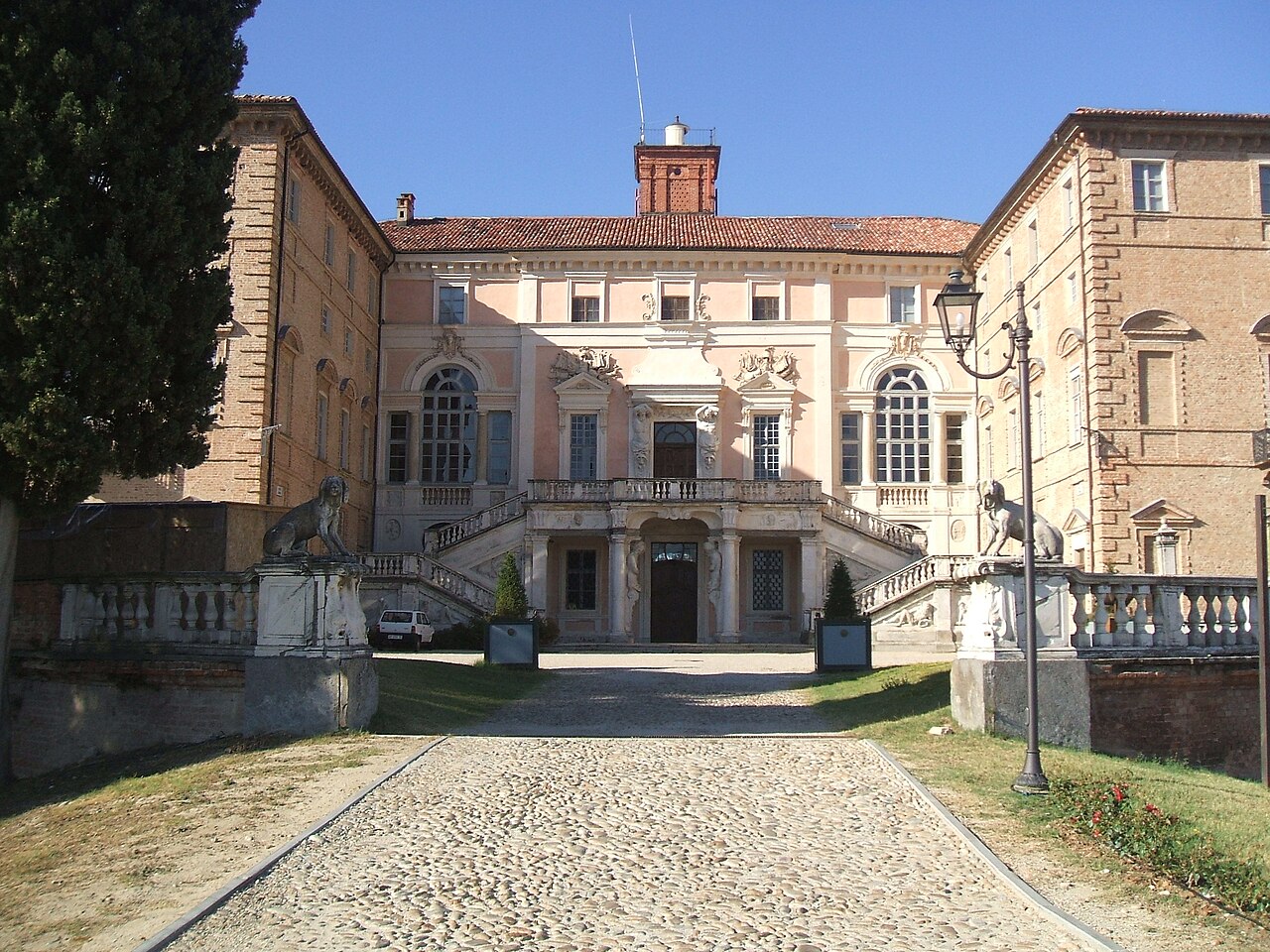
On the western façade, a large door opens to a unique staircase designed by Filippo Juvarra, a renowned architect of the Baroque period. The staircase’s layout varies depending on the floor accessed, showcasing an innovative architectural solution adapted to the castle’s multi-level structure.
The main entrance on the west side features a door leading to a double staircase flanked by parapets and protective plates. Above this entrance, the marble coat of arms of the Asinari family is prominently displayed, symbolizing their long-standing association with the castle.
The southern façade includes a hanging garden, an elevated green space that adds a distinctive residential element to the fortress. This side also features two central medieval turrets and a main drawbridge that once served as the primary defensive gateway. Two marble statues of Aurelio and Giorgio Verasis Asinari, depicted as warriors, stand between the lower-floor windows, embodying the martial heritage of the castle’s inhabitants.
The castle today and heritage significance
Today, the Castle of Costigliole d’Asti remains a significant cultural landmark. Ownership is divided between the municipality, which holds the northern wing, and a distinguished family descended from the Medici del Vascello, who retain the southern wing. This division reflects the castle’s complex history and ongoing connection to local nobility.
The castle’s preservation allows visitors to appreciate its architectural grandeur and historical importance. Its combination of medieval military features with later residential adaptations illustrates the evolution of castle design in response to changing political and social needs. The presence of family insignia and commemorative elements underscores the castle’s role as a symbol of noble lineage and regional power.
As one of the largest and best-preserved medieval fortifications in the Asti region, the castle attracts historians, architects, and tourists interested in medieval architecture and Piedmontese history. Its strategic location, architectural innovations, and rich historical narrative make it a valuable heritage site that continues to inspire and educate.
Information
Website
Visit websiteSources & official resources
Verify the information above using these authoritative references.
Loading map...
Visitor reviews
No reviews yet. Been here? Write the first review and help other travelers!
Write the first reviewVisited this castle? Share your experience
Your review helps other travelers and adds first-hand knowledge to our encyclopedia.