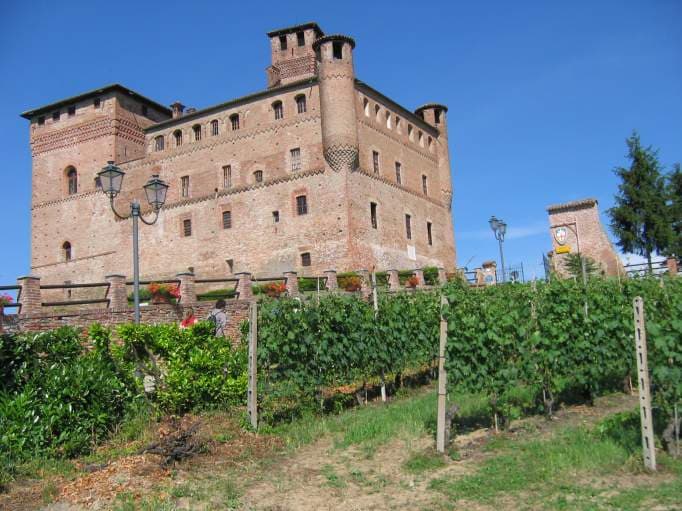
Castle of Grinzane Cavour
The Castle of Grinzane Cavour stands as a remarkable example of medieval architecture and Italian heritage in the Piemonte region of northern Italy. Nestled on a hill overlooking the picturesque Langhe vineyards, the castle is deeply entwined with the history of the Italian Risorgimento and the legacy of Camillo Benso, Count of Cavour, a leading statesman who played a pivotal role in the unification of Italy. The castle's origins date back to the 13th century, with construction phases that reflect its evolution from a fortified noble residence to a cultural hub celebrating regional wine and history.
Originally built in the early High Medieval period, the castle features a robust trapezoidal layout centered around a small courtyard. Its most ancient element is a large keep or mastio, which forms an entire wing and represents the original nucleus of the structure. Over the centuries, the castle underwent significant architectural modifications, including the addition of two distinctive 16th-century cylindrical turrets that overhang the walls, enhancing its defensive capabilities and aesthetic appeal.
Historical significance and ownership
The castle's history is closely linked to its noble owners, beginning with the Marquis of Busca family in the 15th century, whose heraldic insignia were discovered beneath plaster in several rooms, attesting to their influence. However, the castle gained its most profound historical importance during the 19th century when it became the residence of Count Camillo Benso di Cavour. Arriving in 1830 as a guest of his maternal relatives, the De Tonnerre family, Cavour managed the estate and introduced modern agricultural practices, particularly expanding vineyards and experimenting with innovative cultivation methods.
From 1832 to 1849, Cavour served as the mayor of Grinzane, overseeing infrastructural improvements such as canal construction and pioneering sugar beet cultivation. His stewardship linked the castle to the broader Risorgimento movement, the political and social process that culminated in the unification of Italy. Upon his death, the castle passed to his favored nephew Giuseppina, who married Count Carlo Alfieri di Sostegno. The last descendant of this family, Marquise Adele Alfieri, bequeathed the castle to the town of Alba, ensuring its preservation and public accessibility.
Architectural features and restorations
The castle's imposing brick structure is characterized by a trapezoidal plan with four irregularly arranged bodies surrounding the main courtyard. The southern façade is punctuated by a regular sequence of windows across three floors, while the eastern and western sides also feature numerous openings. In contrast, the northern façade is notably austere, with only two windows, reflecting defensive considerations.
One of the castle's most celebrated interior spaces is the sala delle maschere (hall of masks), which boasts a coffered ceiling with 157 painted panels. These panels commemorate the 1517 marriage of Pietrino Falletti and include heraldic coats of arms, animal figures, allegories, and portraits, highlighting the castle's role as a noble residence and a site of artistic expression.
The castle underwent extensive restorations beginning in 1961, coinciding with the centenary of the Italian state. These efforts aimed to preserve the castle's historical integrity while adapting it for modern use. A significant addition came in 2010 with a new building designed by architect Giorgio Teggi, integrated into the hillside below the castle. This modern structure houses educational and multipurpose spaces, including a 60-seat teaching room and a congress hall with over 250 seats, equipped with advanced audiovisual technology.
Cultural and enological importance
Since 1967, the castle has been home to the Piedmontese Cavour Regional Enoteca, dedicated to promoting the renowned wines of the Langhe area, such as Barbaresco and Barolo. The enoteca preserves the castle’s 19th-century atmosphere and celebrates the region's viticultural heritage through exhibitions and tastings.
The castle also hosts an ethnographic museum focusing on rural culture, featuring collections related to Cavourian memorabilia, Alba’s Roman wines, traditional food and wine artifacts, and tools from local crafts such as blacksmithing and coopering. This museum offers visitors insight into the agricultural and cultural traditions that have shaped the Alba region.
Additionally, the castle is the venue for the prestigious Grinzane Cavour Literary Prize, established in 1983 to promote literature among young people, and the annual World White Truffle Auction of Alba, a high-profile charity event attracting international attention.
In 2014, the castle and its surrounding vineyard landscape were inscribed on the UNESCO World Heritage list as part of the "Vineyard Landscape of Piedmont: Langhe-Roero and Monferrato," recognizing their outstanding cultural and agricultural significance.
Visitor experience and facilities
Visitors to the castle can explore the historic rooms, including the Sala delle Maschere and the preserved 19th-century living quarters of Count Cavour. The site features a wine cellar offering tastings and sales of local wines, alongside a café and the Michelin-starred restaurant Marc Lanteri Al Castello, which highlights the region's culinary excellence.
Since 2021, a didactic path dedicated to the history of wine and vine cultivation has been available, allowing guests to engage with the agricultural heritage of the Langhe region through an educational outdoor experience.
The castle's modern conference facilities support a variety of cultural, educational, and social events, making it a vibrant center for both heritage and contemporary activities.
Frequently asked questions (FAQ)
- What is the historical significance of the Castle of Grinzane Cavour?
- The Castle of Grinzane Cavour is a UNESCO World Heritage Site and an important symbol of the Barolo wine region in Italy. Built in the 13th century, it served as a fortress and later became the residence of Count Camillo Benso di Cavour, a pivotal figure in the unification of Italy.
- When was the Castle of Grinzane Cavour built?
- The construction of the Castle of Grinzane Cavour began in the early 13th century, around 1250. Over the centuries, it has undergone various renovations and expansions, reflecting the architectural styles of different eras.
- Can I visit the Castle of Grinzane Cavour?
- Yes, visitors are welcome to explore the Castle of Grinzane Cavour. The castle features guided tours that provide insights into its rich history and stunning architecture, making it a must-visit destination for history enthusiasts.
- What are the opening hours of the Castle of Grinzane Cavour?
- The Castle of Grinzane Cavour is typically open from Tuesday to Sunday, with varying hours depending on the season. It’s advisable to check the official website for the most current opening times before planning your visit.
- Is it possible to purchase tickets in advance for the castle?
- Yes, visitors can purchase tickets online in advance to avoid long lines and ensure entry at their preferred time. This is particularly recommended during peak tourist seasons when the castle can be quite busy.
- What is the best time to visit the Castle of Grinzane Cavour?
- The best time to visit the Castle of Grinzane Cavour is during the spring and early autumn months when the weather is pleasant, and the surrounding vineyards are in full bloom. Additionally, visiting during the wine harvest season offers a unique cultural experience.
- Are there any nearby attractions to the Castle of Grinzane Cavour?
- Yes, nearby attractions include the charming villages of Barolo and La Morra, famous for their exquisite wines. Additionally, the scenic Langhe region offers beautiful landscapes and numerous wine tours that visitors can enjoy.
- Is the Castle of Grinzane Cavour accessible for people with disabilities?
- The Castle of Grinzane Cavour strives to be accessible to all visitors, including those with disabilities. However, due to its historic architecture, some areas may have limited accessibility, so it’s advisable to contact the castle in advance for specific accommodations.
- What are the ticket prices for visiting the castle?
- Ticket prices for the Castle of Grinzane Cavour are generally affordable, with discounts available for children, students, and seniors. It’s best to check the official website for the most up-to-date pricing and any special offers that may be available during your visit.
Photo gallery

Information
Website
Visit websiteSources & official resources
Verify the information above using these authoritative references.
Loading map...
Visitor reviews
No reviews yet. Been here? Write the first review and help other travelers!
Write the first reviewVisited this castle? Share your experience
Your review helps other travelers and adds first-hand knowledge to our encyclopedia.


