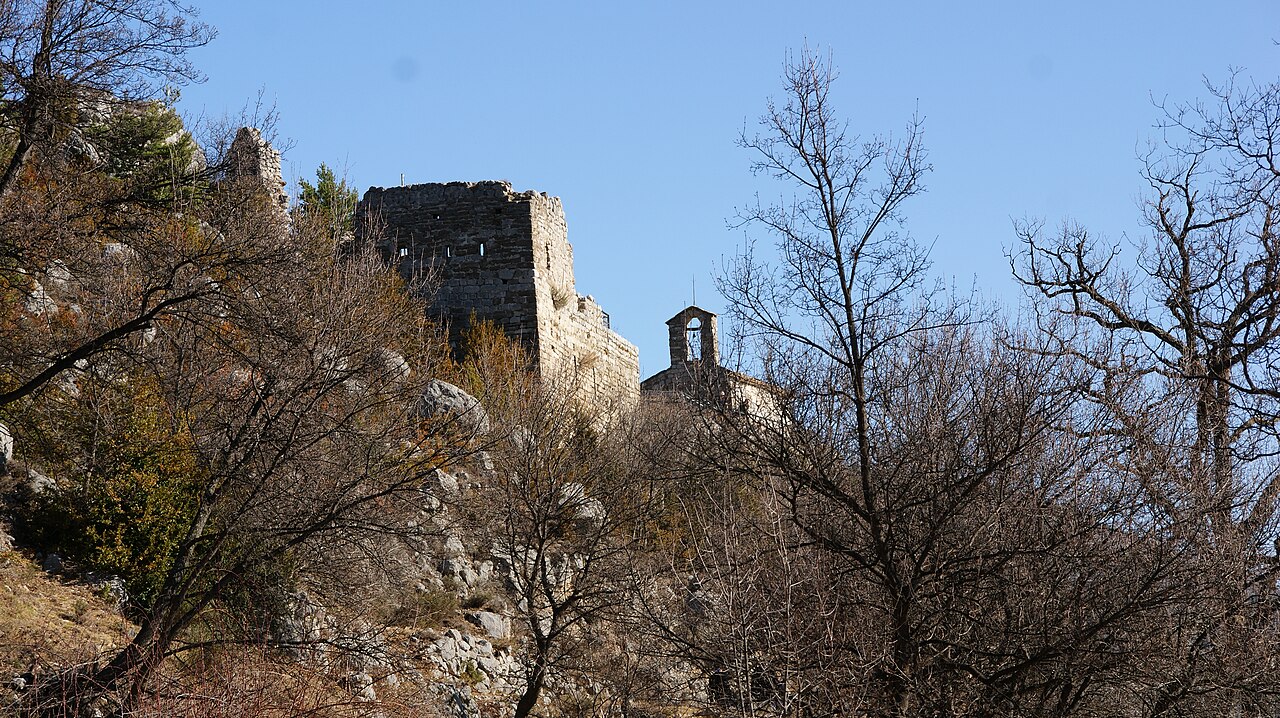
Gósol Castle
Gósol Castle stands as a significant medieval hill fortress located in the municipality of Gósol, within the Catalonia region of Spain. Its origins trace back to the 11th century, marking it as a notable example of early medieval fortification in the Pyrenean foothills. Constructed under the authority of the Counts of Cerdanya, the castle played a vital role in the regional power dynamics of the time, as confirmed by documentary evidence from 1068 to 1095.
The strategic placement of Gósol Castle atop a prominent hill provided commanding views over the surrounding landscape, serving both defensive and administrative purposes. Over the centuries, control of the castle transitioned through several noble houses, including the Counts of Barcelona and later the Crown of Aragon. The Galceran de Pinós family emerged as key vassals responsible for the castle's upkeep and defense, maintaining their allegiance through formal acts of homage from the late 11th century into the 13th century. By the 13th century, Gósol had become part of the Barony of Pinós, reflecting its integration into broader feudal structures.
Medieval history and political significance
The castle's history is closely intertwined with the feudal politics of medieval Catalonia. A pivotal moment occurred in 1273 when Galceran de Pinós and his wife Esclamunda issued a charter granting privileges to encourage local settlement growth. This charter notably exempted inhabitants from arbitrary taxation and compulsory labor related to castle maintenance, fostering a more stable and prosperous community around the fortress.
The early 14th century brought turbulence. In 1312, a violent incident involving the death of a royal official near the castle led to a royal military inspection, highlighting the tensions between local nobility and royal authority. During this period, the Pinós family asserted their status as freeholders, claiming autonomous control over the castle independent of direct royal oversight. This assertion illustrates the complex feudal relationships and power struggles characteristic of medieval Catalonia.
Later centuries saw demographic and economic challenges. Between 1365 and 1381, records indicate a decline in the number of households, suggesting hardship possibly due to warfare, plague, or economic decline. By 1414, the castle was used as collateral for a debt involving the Pinós family, signaling shifts in their fortunes. During the Catalan civil war, the castle was commanded by Pere Companyó, and revenues generated were redirected toward its defense and maintenance rather than benefiting the lords, reflecting the castle's continued military importance.
Architectural features and remains
The castle occupies a hill overlooking the village of Gósol, with its remains forming a roughly rectangular fortress. The eastern section, adjacent to the church of Santa Maria, measures approximately 18 meters wide by 21 meters long. This area also contains traces of an earlier settlement known as Vila Vella, which was eventually abandoned in favor of the newer village at the hill's base.
The masonry primarily consists of small, roughly shaped stone blocks laid in horizontal courses bound with mortar. Among the surviving architectural elements are several openings topped by partially collapsed semicircular arches, a common medieval structural feature used to distribute weight efficiently. Surrounding the enclosure, parts of the defensive wall remain intact; the most substantial section is a northern curtain wall constructed from broken limestone cut blocks, or ashlar, likely dating from the 12th century or later.
The northern tower
One of the castle's most prominent surviving structures is an irregularly shaped tower on the northern side. It has a truncated pyramidal form, measuring roughly 4.12 by 4.05 meters internally, with walls nearly one meter thick. The northern and northwestern faces still retain plaster up to midway along their height, offering valuable insight into the original surface treatments of the fortress.
This tower likely dates from the 11th or 12th century, predating the nearby church. It includes at least three doorways: a ground-level entrance, a second-floor door facing south toward the church, and a third-floor door on the north side. These entrances were sealed with horseshoe arches, characterized by their curved shape narrowing toward the bottom, a style often associated with medieval military architecture in the region.
Inside the tower, remnants of wooden beams known as trespols remain, which once supported the various floor levels. Although the castle's roofs have not survived, structural elements such as arches and remaining wall plaster provide valuable information about its original construction techniques and appearance.
Historical context and cultural significance
Gósol Castle exemplifies the typical medieval hill castle of Catalonia, reflecting the feudal organization and defensive strategies prevalent during the High and Late Middle Ages. Its location in the Pyrenean foothills made it a strategic point for controlling regional routes and asserting noble authority over the surrounding territory.
The castle's association with notable noble families such as the Counts of Cerdanya, Counts of Barcelona, and the Barony of Pinós underscores its importance within the broader political landscape of medieval Catalonia. The issuance of charters and privileges by its lords illustrates efforts to stimulate local economic development and population growth, a common practice among feudal lords seeking to strengthen their domains.
Despite its decline in later centuries, the castle remains a valuable archaeological and historical site, providing insights into medieval fortification techniques and feudal society. Its surviving structures, including the well-preserved northern tower and curtain walls, offer tangible connections to the region's medieval past.
Visiting gósol castle today
Today, the remains of Gósol Castle are accessible to visitors interested in medieval history and architecture. The site offers panoramic views of the surrounding landscape and the village below. While the castle is in a state of ruins, its preserved walls and tower provide a vivid impression of its former defensive role.
Visitors can explore the footprint of the fortress and observe the architectural details such as the horseshoe arches and masonry techniques. The proximity to the village of Gósol and the church of Santa Maria makes it an attractive destination for those interested in Catalan heritage and medieval fortifications.
Preservation efforts focus on maintaining the existing structures and preventing further deterioration, ensuring that this emblematic hill castle remains a key cultural landmark in the region.
Frequently asked questions (FAQ)
- How do I get to Gósol Castle?
- Gósol Castle is located in the picturesque village of Gósol, Spain. Visitors can reach the castle by car or public transport, with nearby parking available. The castle is also accessible via scenic walking trails that enhance the experience of the surrounding natural beauty.
- What is the historical significance of Gósol Castle?
- Gósol Castle dates back to the 12th century and played a crucial role in the defense against invasions in the region. It is an excellent example of medieval architecture and reflects the historical importance of the area during the Middle Ages. The castle's ruins tell the story of its strategic significance and the communities that thrived around it.
- When was Gósol Castle built?
- Gósol Castle was constructed in the 12th century, during a time when many fortifications were established across Spain to protect against various threats. Its construction reflects the architectural styles of the period, blending Romanesque elements with later Gothic influences. The castle has undergone various changes over the centuries, but its origins remain a testament to its historical legacy.
- Can I visit Gósol Castle year-round?
- Yes, Gósol Castle is open to visitors throughout the year, although the most pleasant time to visit is during spring and early autumn when the weather is mild. However, some facilities may be limited during the winter months. It is advisable to check local guidelines or contact the local tourism office for any seasonal changes in accessibility.
- Why is Gósol Castle a popular destination for tourists?
- Gósol Castle attracts visitors due to its rich history, stunning architecture, and breathtaking views of the surrounding landscape. It offers a unique opportunity to explore medieval structures and learn about the region's past. Additionally, the picturesque village of Gósol adds to the charm, making it an ideal destination for history enthusiasts and nature lovers alike.
- Is it possible to take guided tours of Gósol Castle?
- Yes, guided tours are available for those interested in a more in-depth exploration of Gósol Castle and its history. Knowledgeable guides provide valuable insights into the castle's architectural features and historical significance. Visitors can check the local tourism website for scheduled tours and any associated fees.
- What are the opening hours for Gósol Castle?
- Gósol Castle typically opens to the public from 10 AM to 6 PM, but hours may vary seasonally. It is best to verify current opening times before your visit to ensure you don't miss out. Special hours may also apply during holidays, so checking ahead is recommended.
- Are there any ticket prices for visiting Gósol Castle?
- Entry to Gósol Castle is generally free, making it an accessible attraction for all visitors. However, if you choose to participate in a guided tour, there may be a nominal fee. Always check for any updates or changes in ticketing policies on the local tourism website before your visit.
- What nearby attractions should I visit while in Gósol?
- While in Gósol, tourists can explore the charming village itself, which features traditional stone houses and local artisan shops. Additionally, the stunning natural landscapes of the Cadí-Moixeró Natural Park offer numerous hiking trails and outdoor activities. Other nearby attractions include the historic town of La Seu d'Urgell and the breathtaking views from the surrounding mountains.
Information
Website
Visit websiteSources & official resources
Verify the information above using these authoritative references.
Loading map...
Visitor reviews
No reviews yet. Been here? Write the first review and help other travelers!
Write the first reviewVisited this castle? Share your experience
Your review helps other travelers and adds first-hand knowledge to our encyclopedia.