Castell de Guardiola
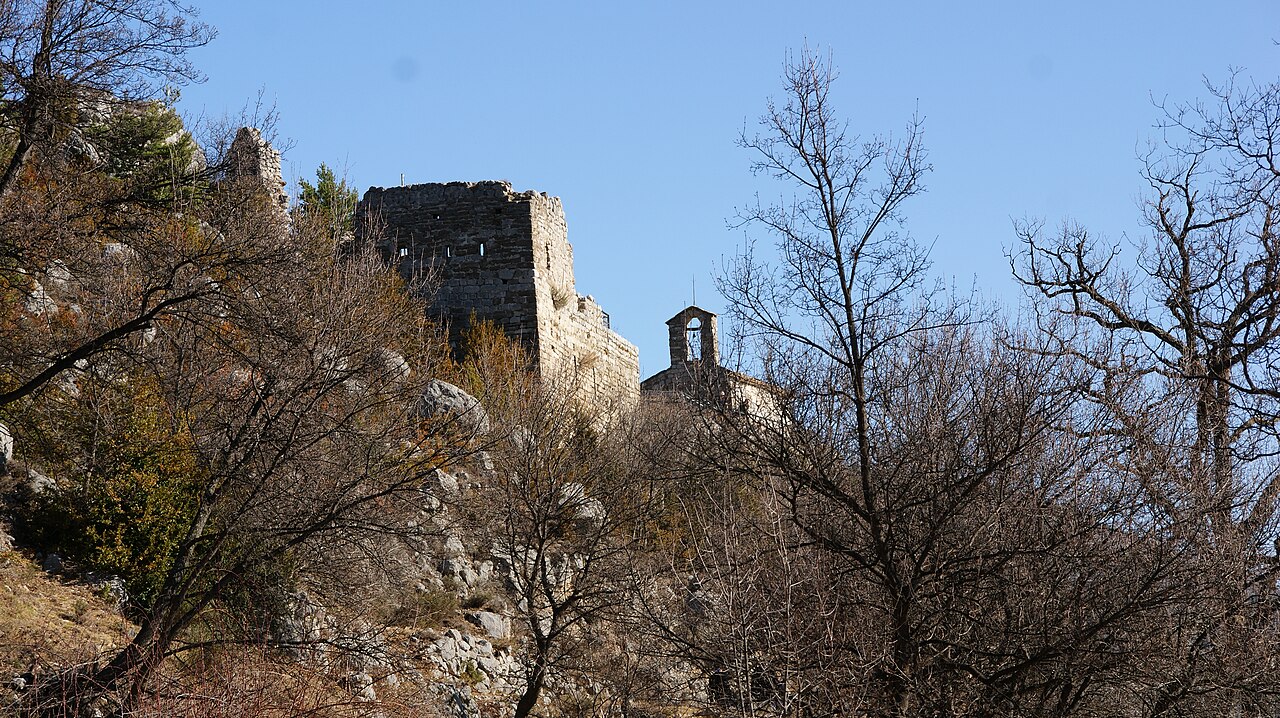
Castell de Guardiola is a notable medieval hill castle located in the municipality of Guardiola de Berguedà in Catalonia, Spain. Its origins date back to the early Middle Ages, with the first recorded mention in 939 describing a "rocha de Guardiola," likely referring to a rocky outcrop that hosted an initial watchtower. This early fortification was constructed between the 9th and 10th centuries as part of a defensive network overseeing access to the upper Llobregat basin and surrounding valleys, marking the border between the medieval counties of Cerdanya and Berga.
Early medieval origins and strategic location
The castle's beginnings are closely tied to the medieval Catalan civilization. The initial structure was probably a simple watchtower designed to monitor and control the important passageways in the region. By 962, the tower came under the ownership of the monastery of Sant Llorenç prop Bagà through a land grant by Count Sunifred of Cerdanya-Besalú. This religious institution played a significant role in the castle's early history, holding at least part of its territory and estate.
Medieval political conflicts and ownership disputes
Throughout the later medieval period, Castell de Guardiola became a focal point of regional political tension. It was contested by the monastery, local noble families such as the barons of Pinós, and competing rulers from the crowns of Mallorca and Aragon. In 1327, King Alfonso IV of Aragon purchased half of the castle's ownership from the monastery, igniting violent clashes with local nobles. The castle witnessed military engagements during the conflicts between supporters of King James III of Mallorca and Peter IV of Aragon. By 1346, after the expulsion of Mallorcan troops, the castle was incorporated into the Crown of Aragon.
Ownership continued to shift in the following decades. In 1364, the castle was sold to the University of Berga, and the monastery auctioned its remaining half to the baron of Pinós in 1365, fueling ongoing disputes. During the Reapers’ War in the mid-17th century, the fortress served the Spanish monarch Philip IV, underscoring its continued strategic relevance.
In 1469, the castle was granted to Galceran de Pinós as compensation for lands lost during conflicts with King John II of Aragon. Though briefly changing hands under military pressure, it was restored to its owners by 1482.
Architectural features and ruins
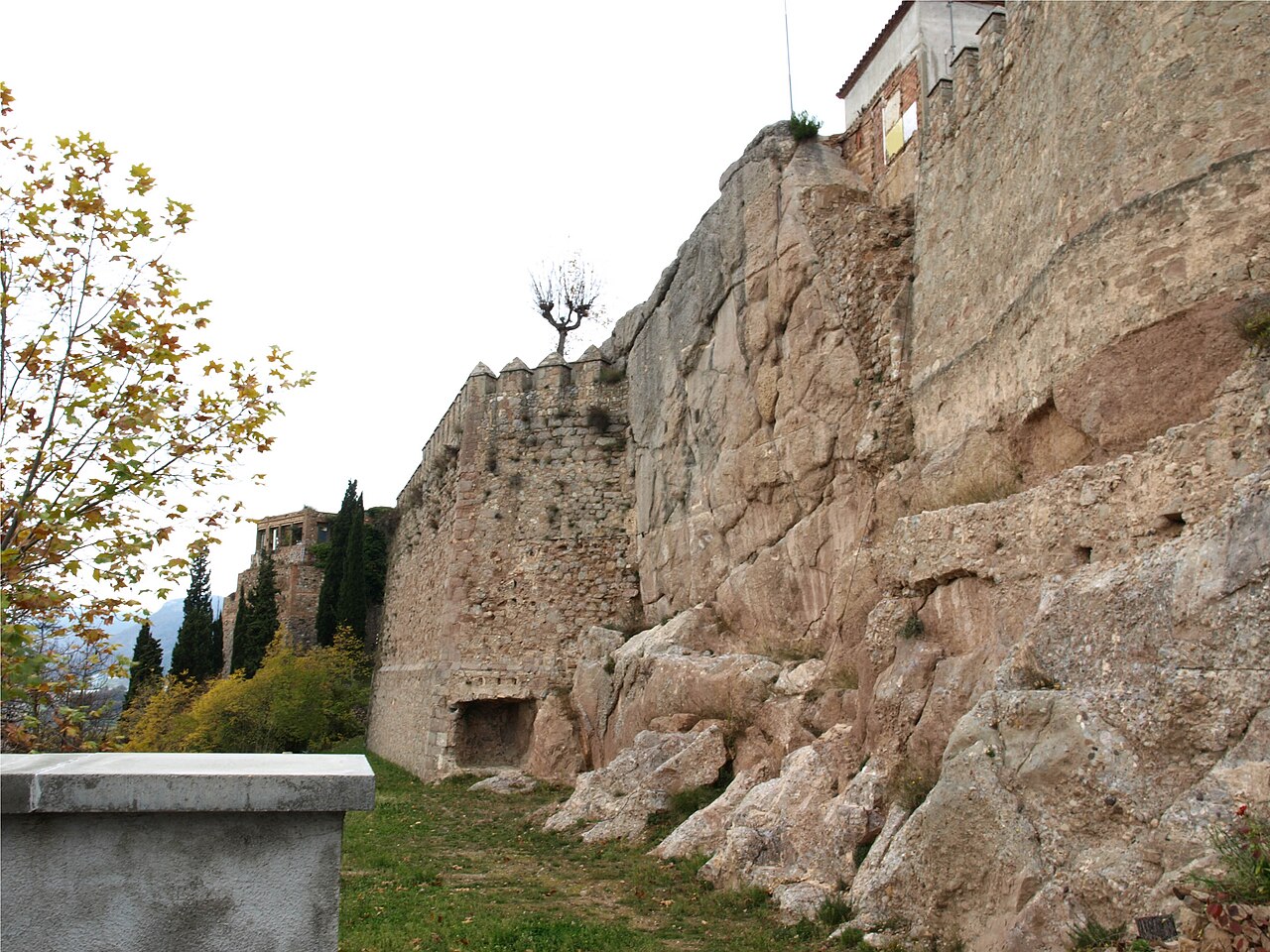
The castle ruins sit atop a hillock near the confluence of the Bastareny and Llobregat rivers. The site reflects a defensive stronghold adapted to its terrain, featuring multiple walls and towers enclosing the area. The surviving stonework is composed of medium-sized ashlar blocks laid in courses, demonstrating the craftsmanship of medieval builders.
At the core are the remains of the main tower, dating from the late 12th or early 13th century. This tower incorporates stones reused from an earlier structure built near the turn of the first millennium. The eastern wall of the main tower still rises about six meters high with a thickness exceeding one meter, indicating the original solidity and height of the building.
Nearby are foundations of two circular defensive towers and evidence of two concentric layers of fortification walls. These walls fortified the summit and mid-hill areas, especially where the eastern slope is less steep. The mid-hill enclosure once contained several houses, with medieval records confirming nine households in the early 12th century and again in the late 13th and early 14th centuries.
The southern circular tower is notably better preserved. The main summit structure follows a trapezoidal floor plan approximately six meters long and three to four meters wide. Architectural features of this building align with the Romanesque style, consistent with its historical period.
Vegetation now obscures much of the castle footprint, but archaeological investigations have clarified the boundaries and layout. The defensive walls and towers form a complex system designed to control approaches from the gentler eastern side and protect the summit stronghold.
The old bridge of guardiola and its role
Close to the castle lies the Old Bridge of Guardiola, spanning the Llobregat River just below the hill. This medieval stone bridge consists of two main semicircular arches measuring approximately nine and five and a half meters, along with two smaller arches that reduce weight and mitigate flood impact. The bridge is about 31 meters long and just over three meters wide, constructed from roughly hewn ashlars with thin, roughly worked stones forming the arch rings.
The bridge dates from the late 11th to early 12th century, with its upper parapets reconstructed in the 13th century, reflecting ongoing maintenance. Together with the castle, the bridge formed an integrated defensive and transportation system, emphasizing the strategic importance of this site in controlling access to the valleys of medieval Catalonia.
Frequently asked questions (FAQ)
- How do I get to Castell de Guardiola?
- Castell de Guardiola is located in Guardiola de Berguedà, Catalonia, Spain. Visitors can reach it by car or local transport from nearby towns. The castle sits on a hill, so be prepared for a moderate uphill walk to the ruins.
- What is the historical significance of Castell de Guardiola?
- Castell de Guardiola played a key role in medieval Catalonia as a strategic hill castle controlling access to the upper Llobregat basin. It was involved in territorial disputes between noble families and crowns of Mallorca and Aragon in the Middle Ages.
- Can I visit the ruins of Castell de Guardiola?
- Yes, the ruins of Castell de Guardiola are accessible to the public. Visitors can explore the remains of the main tower, defensive walls, and nearby Old Bridge of Guardiola. The site is outdoors and partially covered by vegetation, so wear appropriate footwear.
- When was Castell de Guardiola built?
- The original fortification likely dates to the 9th or 10th century, with significant construction phases in the late 12th and early 13th centuries, reflecting Romanesque architectural features.
- Is there an entrance fee to visit Castell de Guardiola?
- There is no entrance fee to visit the ruins of Castell de Guardiola. It is an open site accessible year-round, though visiting hours may depend on daylight and weather conditions.
Information
Website
Visit websiteSources & official resources
Verify the information above using these authoritative references.
Loading map...
Visitor reviews
No reviews yet. Been here? Write the first review and help other travelers!
Write the first reviewVisited this castle? Share your experience
Your review helps other travelers and adds first-hand knowledge to our encyclopedia.