Gongsanseong
Gongsanseong (Korean: 공산성; Hanja: 公山城) is a historic bastioned fortress situated in the city of Gongju, within South Chungcheong Province, South Korea. This fortress is a significant cultural landmark that reflects the military architecture and strategic defense systems of the Baekje Kingdom, one of the Three Kingdoms of Korea, dating back to the early medieval period.
Historical background and significance
The fortress was originally constructed during the Baekje period, which lasted from 18 BCE to 660 CE. Gongsanseong served as a crucial defensive stronghold and royal palace site during the later years of Baekje, particularly in the 5th and 6th centuries. It played a vital role in protecting the kingdom's capital and served as a military base against invasions from neighboring kingdoms.
After the fall of Baekje in 660 CE to the allied forces of Silla and Tang China, the fortress continued to be used and maintained through successive Korean dynasties, including the Goryeo and Joseon periods. Its strategic location on a mountain ridge provided commanding views of the surrounding plains and river valleys, enhancing its defensive capabilities.
Architectural features and layout
Gongsanseong fortress is classified as a bastioned fortress due to its construction style, which includes walls reinforced with bastions—projecting parts of the fortification designed to allow defensive fire in multiple directions. The fortress walls extend approximately 2.7 kilometers, enclosing an area of about 20 hectares on Gongsan Mountain.
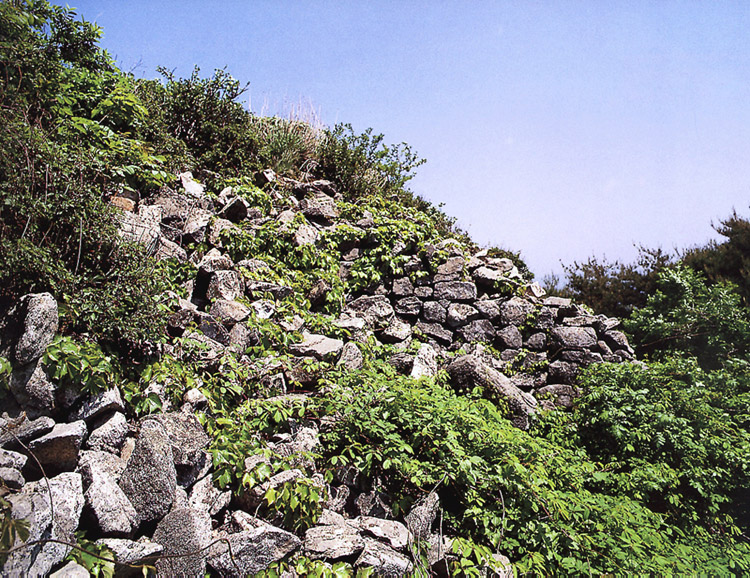
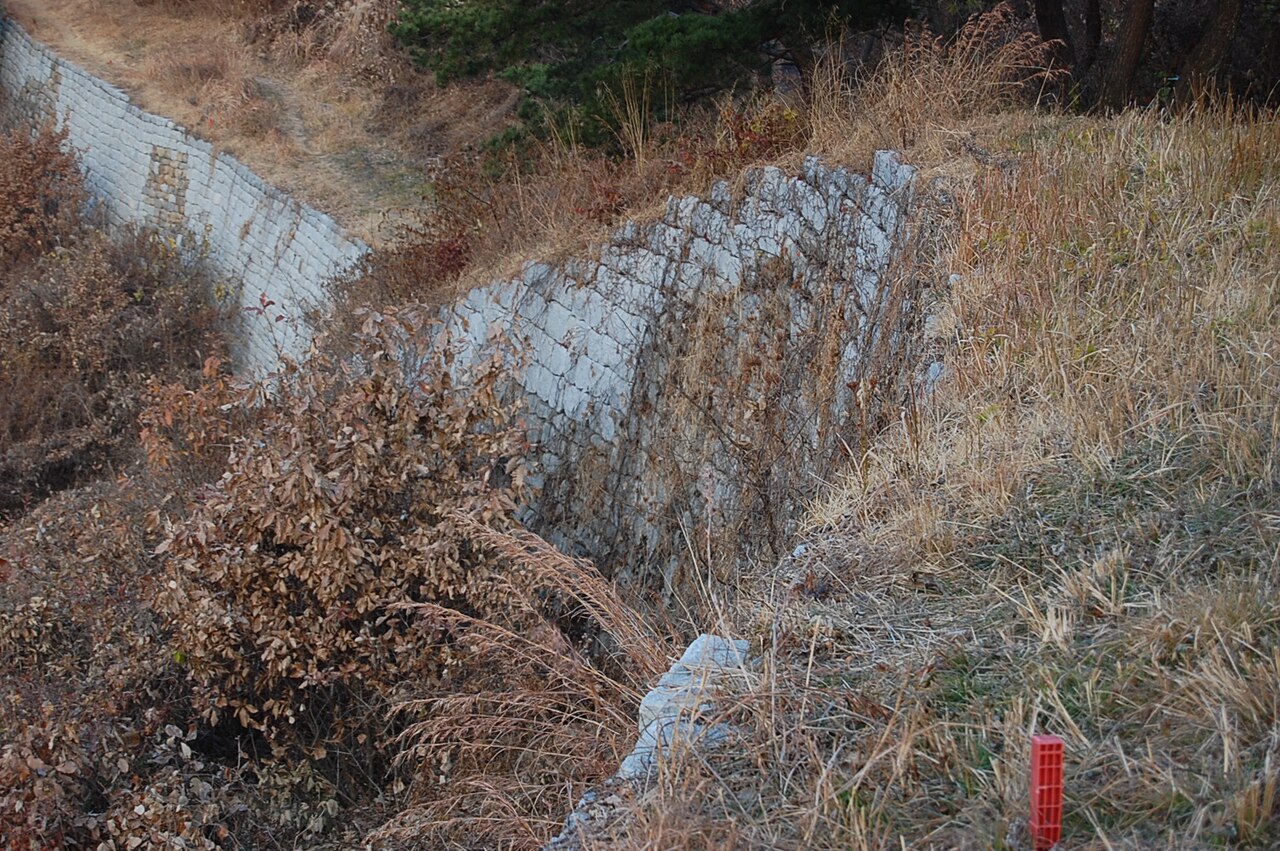
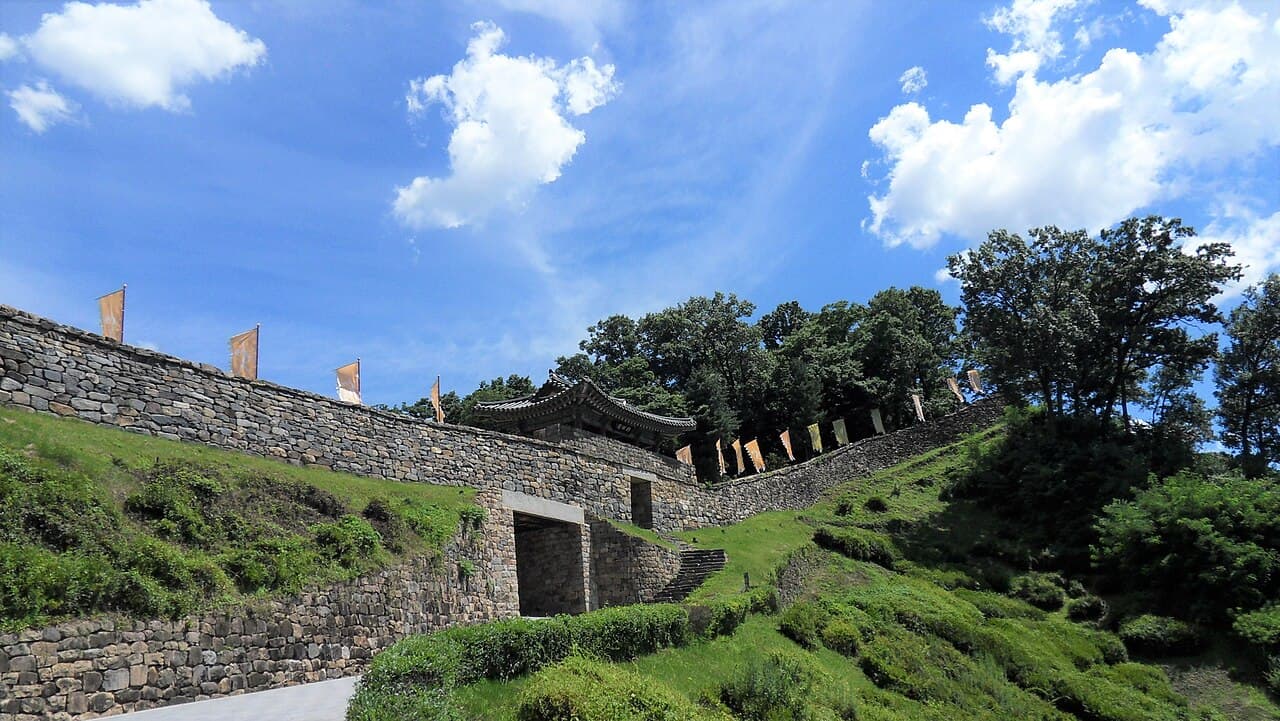
The fortress walls are primarily constructed from stone and earth, a typical method in Korean fortress building, combining natural terrain with man-made fortifications. The walls vary in height and thickness, reaching up to 5 meters high in some sections. The fortress features several gates, including the main south gate, which is the most prominent and well-preserved.
Within the fortress, remnants of royal palaces, administrative buildings, and military facilities have been identified through archaeological excavations. The site also includes water reservoirs and storage facilities, indicating a self-sustaining design suitable for prolonged sieges.
Defensive structures
The fortress incorporates multiple defensive elements such as bastions, watchtowers, and stone walls adapted to the mountainous terrain. The bastions allowed defenders to cover blind spots along the walls, creating overlapping fields of fire. The walls follow the natural contours of the mountain, maximizing the defensive advantage.
Preservation and current status
Today, Gongsanseong is recognized as a well-preserved historical site, though some sections remain in ruins or partially restored. It is protected as a national historic site by the South Korean government and is open to the public as a cultural heritage attraction.
Visitors can explore the fortress walls, gates, and archaeological remains while enjoying panoramic views of Gongju city and the surrounding landscape. The site often hosts cultural events and educational programs that highlight its historical and architectural importance.
Visiting information and cultural importance
Gongsanseong is a popular destination for tourists interested in Korean history and ancient military architecture. Its location on Gongsan Mountain provides not only historical insights but also scenic hiking opportunities.
The fortress's significance extends beyond its military function; it represents the cultural and political heritage of the Baekje Kingdom and serves as a symbol of Korea's rich historical tapestry.

Information
Loading map...
Visitor reviews
No reviews yet. Been here? Write the first review and help other travelers!
Write the first reviewVisited this castle? Share your experience
Your review helps other travelers and adds first-hand knowledge to our encyclopedia.