Ch'ŏngmasansŏng
Ch'ŏngmasansŏng (Korean: 청마산성; Hanja: 靑馬山城) is a significant hill castle fortress from the late Baekje period, located in present-day Buyeo County, South Chungcheong Province, South Korea. This fortress was strategically built on Wolmyeongsan mountain to serve as a defensive stronghold for the Baekje capital, Sabi. It represents one of the largest and most important military constructions of the Baekje kingdom, a key player in the Three Kingdoms period of Korean history.
Historical context and significance
The Baekje kingdom, one of the Three Kingdoms of Korea, flourished from the 1st century BCE until its fall in 660 CE. During its later years, Baekje focused on fortifying its territories to defend against incursions from rival kingdoms, particularly Silla and Goguryeo. Ch'ŏngmasansŏng was constructed in this context as a major military installation to protect the capital region.
Designated as Historic Site No. 34 by the South Korean government on January 21, 1963, the fortress is recognized for its cultural and historical value, providing insight into Baekje's military architecture and defensive strategies.
Architectural features and layout
Ch'ŏngmasansŏng is notable for its impressive scale, with a total circumference of approximately 9,277 meters (30,436 feet). The fortress walls were constructed primarily from stone, following the traditional hill fortress style common in Korean fortifications of the period.
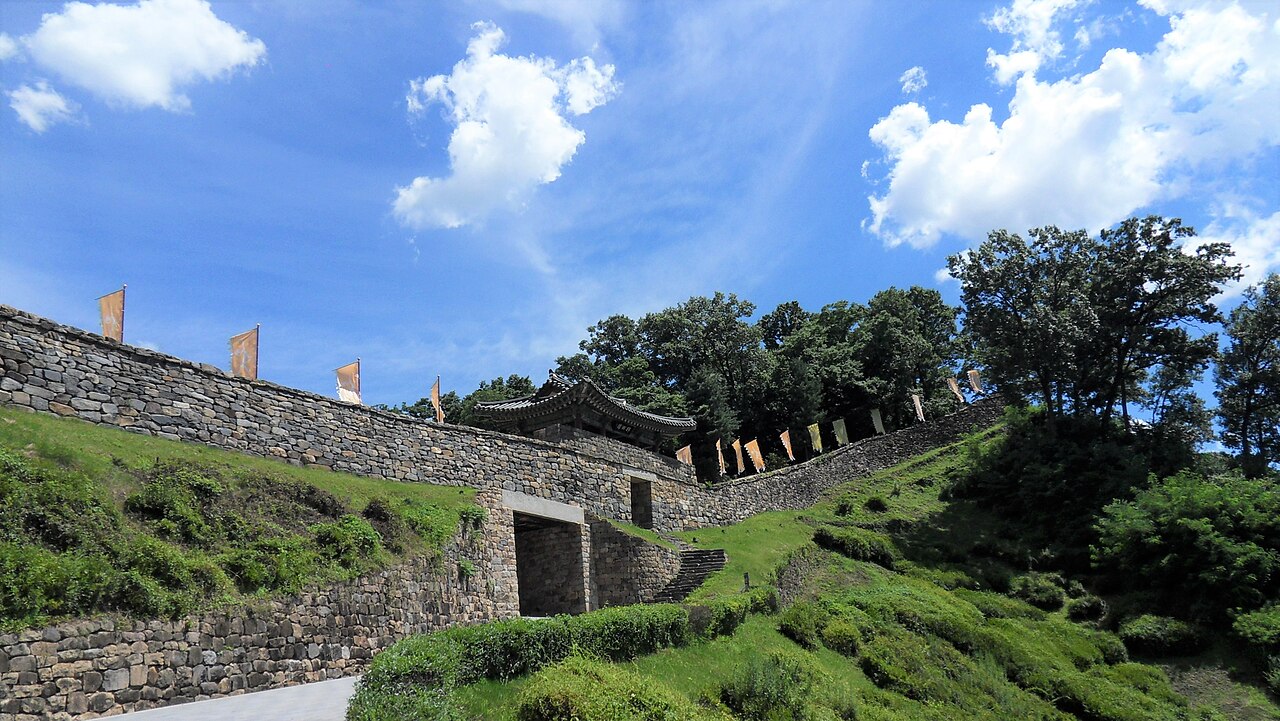
The fortress complex included a variety of defensive and support structures. Archaeological evidence has identified the remains of 10 gates that controlled access to the fortress, 36 guard posts positioned to provide surveillance and defense along the walls, and 17 wells that ensured a reliable water supply during sieges or extended military presence.
Additionally, 14 tombs have been discovered within the fortress area, suggesting the presence of burial sites for important figures or soldiers associated with the fortress.
Fortress walls and gates
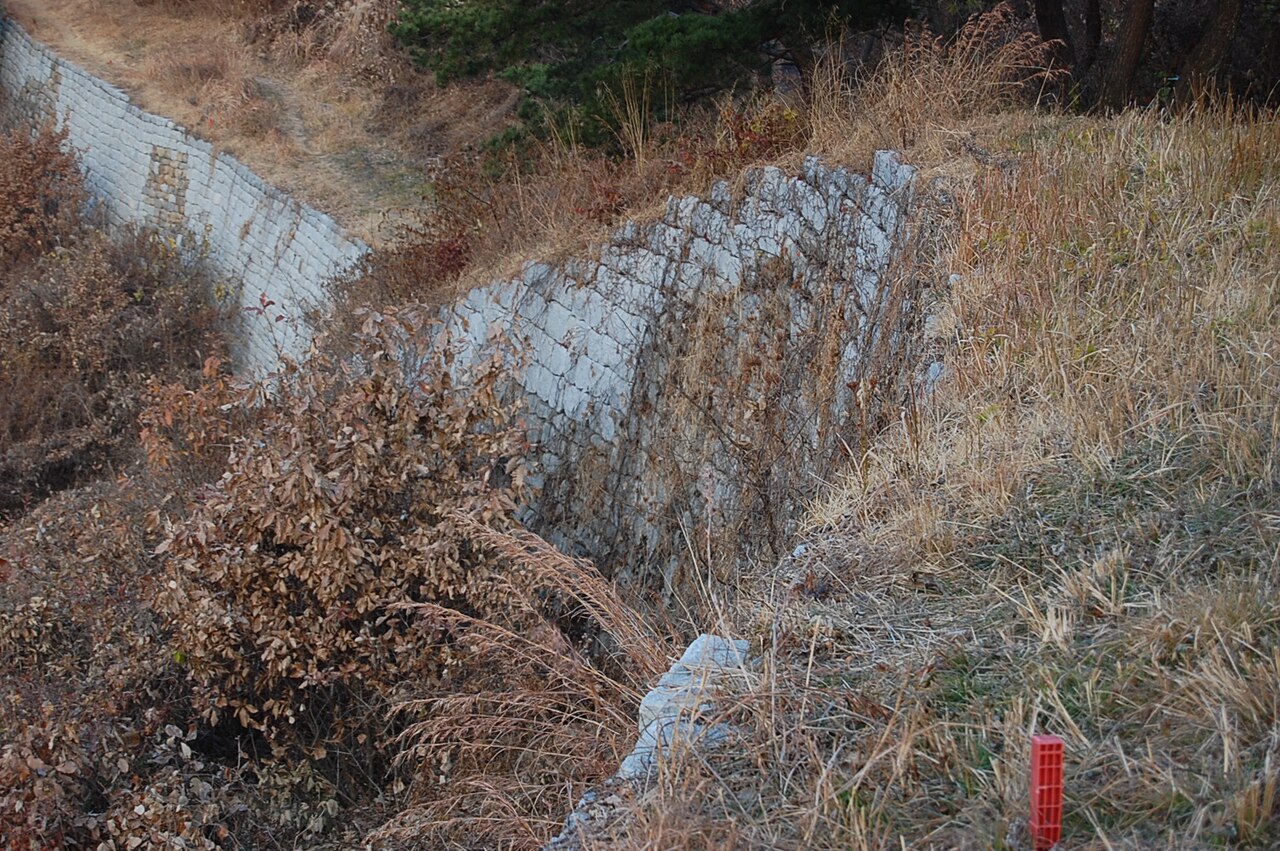
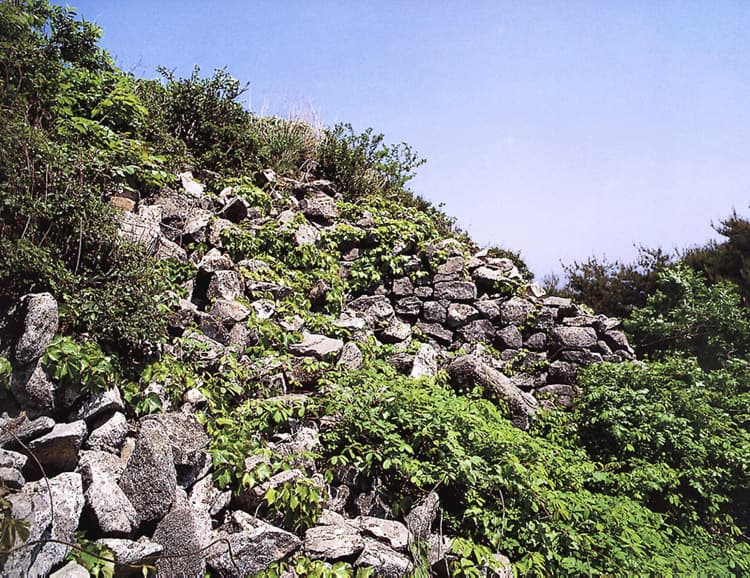
The walls of Ch'ŏngmasansŏng were carefully constructed to adapt to the mountainous terrain of Wolmyeongsan. The stonework demonstrates advanced techniques for the period, with well-fitted stones and defensive features such as battlements and parapets designed to repel attackers.
The 10 gates served as critical points of entry and exit, likely fortified with wooden gates and defensive towers. These gates controlled movement and were strategically placed to cover vulnerable approaches to the fortress.
Guard posts and defensive strategy
The 36 guard posts were positioned along the walls to provide overlapping fields of observation and fire. These posts allowed soldiers to monitor enemy movements and coordinate defense effectively. Their distribution reflects a comprehensive approach to fortress defense typical of Baekje military planning.
Location and strategic importance
Situated on Wolmyeongsan mountain, the fortress overlooks the surrounding landscape, offering commanding views essential for early warning and defense. Its elevated position made direct assaults difficult and allowed defenders to utilize the natural terrain to their advantage.
The location near the Baekje capital of Sabi (modern-day Buyeo) underscores its role as a protective barrier for the political and cultural center of the kingdom.
Archaeological research and preservation
Extensive archaeological studies have been conducted at Ch'ŏngmasansŏng, revealing details of its construction techniques, layout, and usage. These investigations have helped historians understand the military architecture of Baekje and the broader context of Korean fortress design during the Three Kingdoms period.
Today, the site is preserved as a historic site and is accessible to visitors interested in Korea's ancient history and military heritage. Conservation efforts focus on maintaining the remaining stone walls and protecting the archaeological remains from natural and human damage.
Visitor information and cultural legacy
While not as widely known internationally as some other Korean fortresses, Ch'ŏngmasansŏng holds significant cultural importance within South Korea. It provides a tangible connection to the Baekje kingdom's military and political history.
Visitors to the site can explore the extensive remains of the fortress walls, gates, and other structures, gaining insight into the scale and complexity of Baekje fortifications. The surrounding landscape also offers opportunities for hiking and appreciating the natural beauty that contributed to the fortress's defensive advantages.
Frequently asked questions (FAQ)
- What is Ch'ŏngmasansŏng and where is it located?
- Ch'ŏngmasansŏng is a historic Korean fortress from the Baekje kingdom, located on Wolmyeongsan mountain in Buyeo County, South Chungcheong Province, South Korea.
- When was Ch'ŏngmasansŏng built and for what purpose?
- It was constructed during the late Baekje period to defend the Baekje capital, Sabi, serving as a major military stronghold.
- What are some key architectural features of Ch'ŏngmasansŏng?
- The fortress features stone walls with a circumference of about 9,277 meters, 10 gates, 36 guard posts, 17 wells, and 14 tombs within its complex.
- Is Ch'ŏngmasansŏng open to visitors?
- Yes, the site is preserved as a historic site and is accessible to visitors interested in Korean history and ancient fortifications.
- Why is Ch'ŏngmasansŏng significant in Korean history?
- It represents one of the largest and finest fortresses of the Baekje kingdom, providing insight into military architecture and defense strategies of the Three Kingdoms period.
Photo gallery

Information
Loading map...
Visitor reviews
No reviews yet. Been here? Write the first review and help other travelers!
Write the first reviewVisited this castle? Share your experience
Your review helps other travelers and adds first-hand knowledge to our encyclopedia.