Gmünd Castle
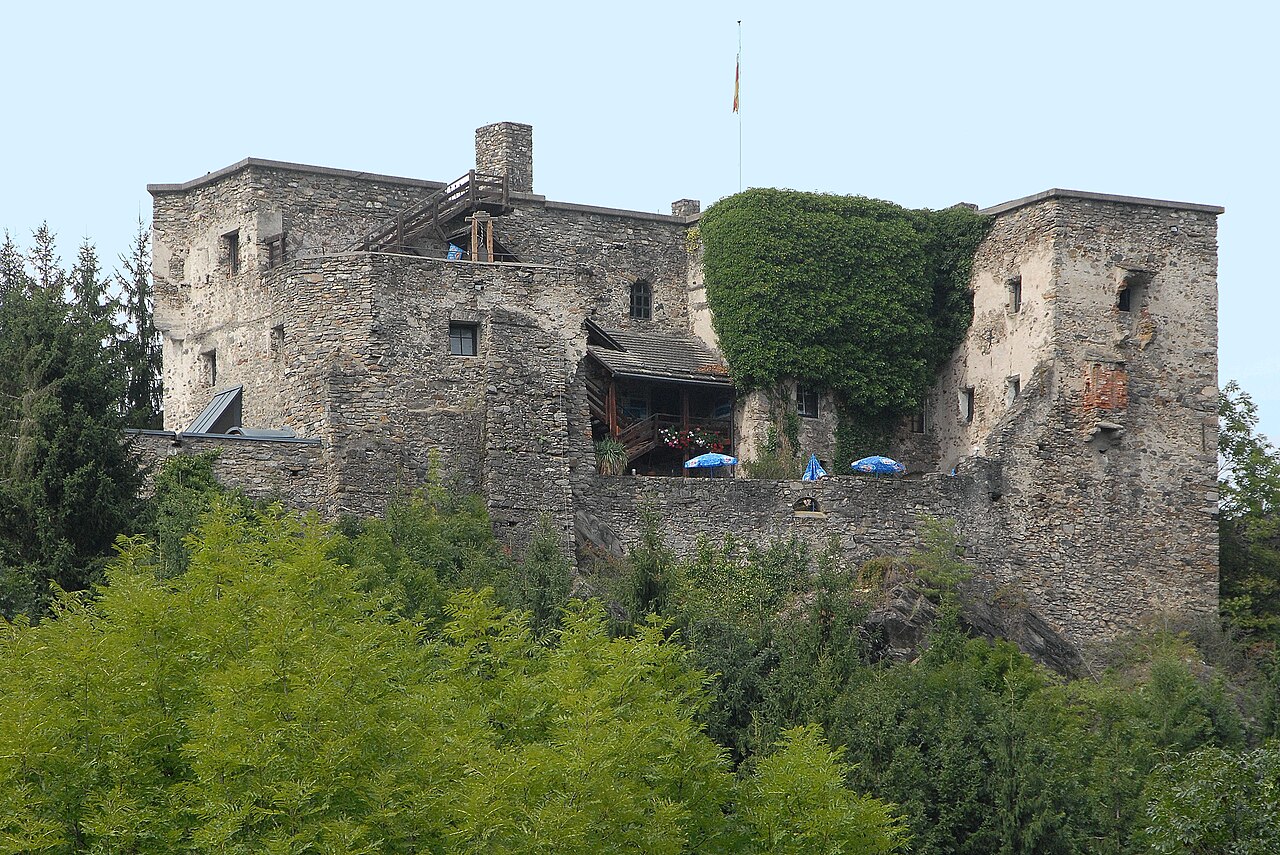
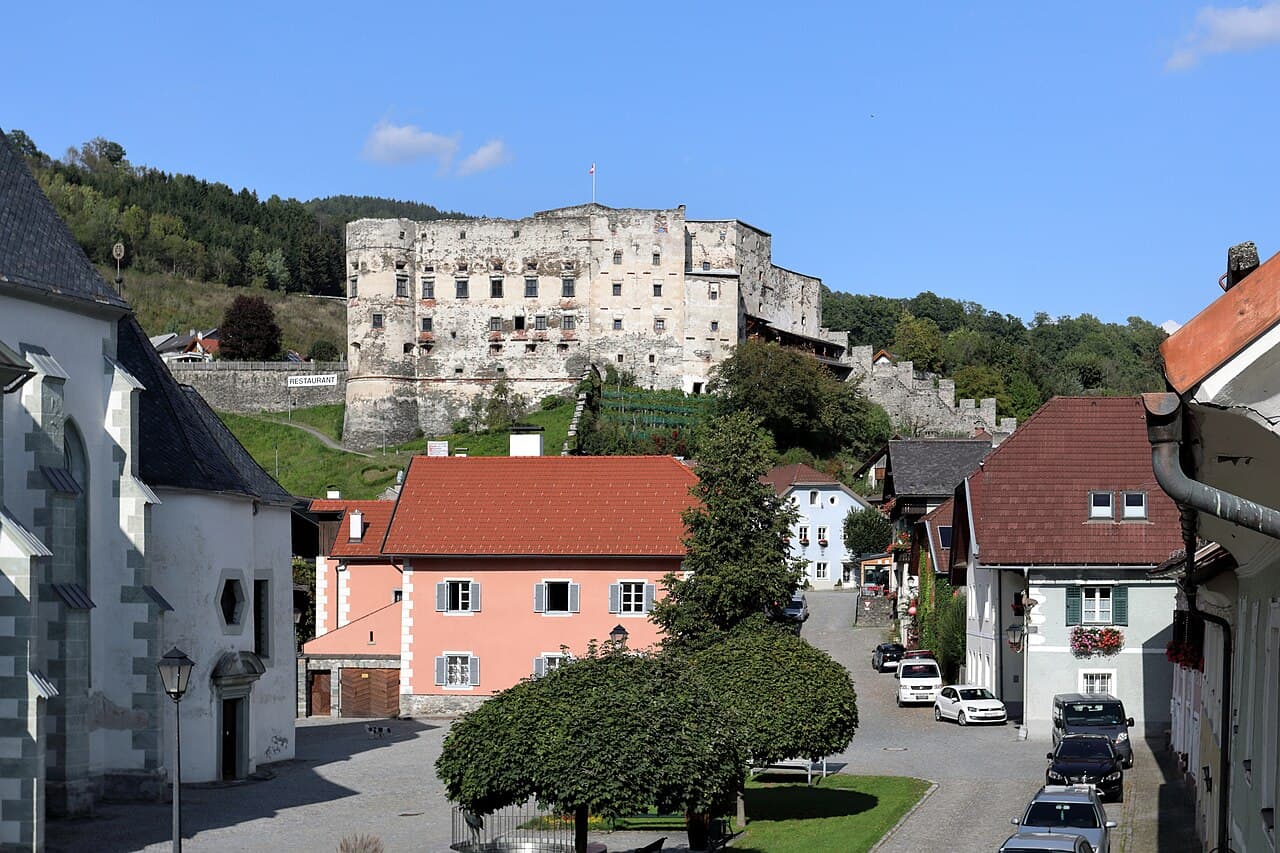
Gmünd Castle, located in the town of Gmünd in Carinthia, Austria, is a remarkable example of a medieval hill castle that evolved significantly over several centuries. Founded in the early 13th century by Hadmar II von Kuenring, the castle originally served as a fortified residence strategically positioned on a steep, south-facing spur overlooking the Liesertal valley. Its commanding location allowed control over the surrounding region and the town below, which grew in importance during the Middle Ages.
The castle's earliest structures date from roughly 1320 to 1360, coinciding with the expansion of Gmünd and its elevation to city status in 1346. During this period, a five-story residential tower and a bergfried—a tall defensive tower—were constructed, forming the core of the fortress. The residential tower was later extended toward the northeast and raised by an additional floor between 1350 and 1400, reflecting the castle's growing role as a noble residence.
Medieval origins and architectural development
Originally built as a hill castle, Gmünd Castle was integrated into the town's medieval fortifications. The castle's layout was complex, incorporating two main towers and surrounded by thick stone walls made from local materials. Access was controlled via multiple paths and an unpaved road, emphasizing its defensive purpose.
Between approximately 1470 and 1500, a zwinger—an enclosed outer courtyard designed for defense—was constructed in front of the castle and the city walls. This addition enhanced the castle’s fortifications, providing an extra layer of protection against attackers. A two-story gate tower was added north of the zwinger during major restoration work in the early 16th century.
Sieges and conflicts in the late medieval period
Gmünd Castle experienced significant military action during the turbulent late medieval period. In 1480, Hungarian troops occupied the town and castle amidst conflicts involving Archbishop Bernhard von Rohr and Emperor Frederick III. The castle was used as a base for raids until 1487, when Carinthian estates besieged and bombarded it, forcing the Hungarian forces to withdraw. This siege caused considerable damage to the structure.
Renaissance rebuilding and expansions
Following its destruction in the late 15th century, the castle was sold by Emperor Maximilian I to Archbishop Leonhard von Keutschach in 1502. Between 1504 and 1511, the archbishop undertook extensive restoration and expansion efforts. These renovations included the addition of vaulted ceilings on the lower floors, decorative portals and window surrounds, and two new wings extending southward and northeast. The gate tower north of the zwinger was also constructed during this phase.
During the German Peasants' War in 1525, the castle withstood a siege by rebels, demonstrating its continued military value. Around this time, a vaulted annex with two residential floors was added to the residential tower, and the southwestern oriel (a projecting bay window) was raised by an additional floor to improve living quarters.
In 1555, Emperor Ferdinand I granted the castle to Christoph Pflügl von Goldenstein, who introduced a strong Renaissance architectural character. He added a five-story western wing with a rounded tower adjoining the original residential tower. This wing incorporated the earlier zwinger gate tower beneath it and further raised the southwestern oriel, blending older medieval elements with Renaissance style.
Later history, decline, and restoration
By the early 17th century, the castle's political importance waned after Count Rudolf von Raitenau commissioned the construction of the Stadtschloss, a new city palace designed by master builder Daniel Deutta, which became the new residence of the city lord. Gmünd Castle was consequently less central to regional governance.
The castle suffered structural damage from an earthquake in 1690 and was devastated by a major fire in 1886. Following this, the site was abandoned and gradually fell into ruins.
In 1950, the municipality acquired the ruins and surrounding land, initiating restoration efforts that began in the 1970s. These efforts focused on stabilizing the remaining structures, including the five-story towers. The castle was reopened to the public in 1987 and has since been adapted for cultural uses such as theatrical performances, concerts, and lectures.
Architectural features and cultural significance today
Today, visitors to Gmünd Castle can explore its ruins and enjoy panoramic views from the restored five-story tower, which functions as a lookout. The castle grounds include a surrounding English garden, adding to the site's aesthetic appeal.
A unique feature of the castle is the presence of stone spheres embedded in the walls near the outer gate. These spheres are arranged in patterns resembling dice fields and are linked to a local legend involving three mercenaries and their lost treasure, adding a layer of folklore to the historical site.
Gmünd Castle exemplifies the architectural evolution from a medieval fortress to a Renaissance residence. Its layered history reflects the changing political, military, and cultural landscape of Carinthia over several centuries. The castle remains an important heritage site, offering insights into medieval defensive architecture, Renaissance modifications, and the historical events that shaped the region.
Frequently asked questions (FAQ)
- How do I get to Gmünd Castle?
- Gmünd Castle is located on a hill overlooking the town of Gmünd in Carinthia, Austria. Visitors can reach the castle via walking paths from the town center or by a private road leading to the north side of the castle.
- What is the historical significance of Gmünd Castle?
- Gmünd Castle has a rich history dating back to the 13th century. It played key roles in regional conflicts, including sieges during the Austrian-Hungarian War and the German Peasants' War, and showcases architectural developments from medieval fortifications to Renaissance residence.
- Can I visit the castle year-round?
- The castle is generally open to visitors throughout the year, but opening hours may vary seasonally. It is recommended to check locally for any special events or maintenance closures before planning a visit.
- Are there guided tours available at Gmünd Castle?
- Guided tours are sometimes offered, especially during cultural events and festivals. Visitors can inquire locally or at the municipal office for tour availability and schedules.
- Is Gmünd Castle accessible for people with mobility issues?
- Due to its hilltop location and the nature of the ruins, accessibility may be limited for visitors with mobility challenges. Some paths are uneven and steep, so appropriate footwear and caution are advised.
Photo gallery

Information
Sources & official resources
Verify the information above using these authoritative references.
Loading map...
Visitor reviews
No reviews yet. Been here? Write the first review and help other travelers!
Write the first reviewVisited this castle? Share your experience
Your review helps other travelers and adds first-hand knowledge to our encyclopedia.