Gloucester Castle
Gloucester Castle was a significant Norman-era royal castle located in the historic city of Gloucester, within the county of Gloucestershire, England. Established shortly after the Norman Conquest of 1066, it served as a strategic military stronghold and administrative center for the region. The castle's origins trace back to the late 11th century, reflecting the typical Norman practice of building fortifications to consolidate control over newly acquired territories.
Historical background and strategic importance
The castle was initially constructed as a motte-and-bailey structure, a common Norman design featuring a raised earthwork (motte) topped by a wooden or stone keep, with an enclosed courtyard (bailey) protected by palisades and ditches. Its location in Gloucester was chosen for its proximity to the River Severn and important Roman roads, making it a key defensive site and administrative hub.
Throughout the High Medieval period, Gloucester Castle played a vital role in regional governance and military campaigns. It was a royal residence at times and housed a prison in later centuries. The castle witnessed several historical events, including involvement in the Anarchy during the 12th century, a civil war between supporters of King Stephen and Empress Matilda.
Architectural features and evolution
Initial construction and layout
The original Norman castle featured a motte with a timber keep, surrounded by a bailey enclosed by defensive earthworks and wooden palisades. Over time, the wooden structures were replaced by stone to improve durability and defense. The castle's stone curtain walls and towers were typical of Norman military architecture, designed to withstand sieges and attacks.
Later modifications and uses
By the 13th century, Gloucester Castle had been expanded and fortified with stone walls, gatehouses, and towers. The castle's prison function became more prominent in the late medieval period, with the addition of prison buildings within the castle grounds. These adaptations reflected changes in the castle's role from purely military to administrative and penal purposes.
Demolition and legacy
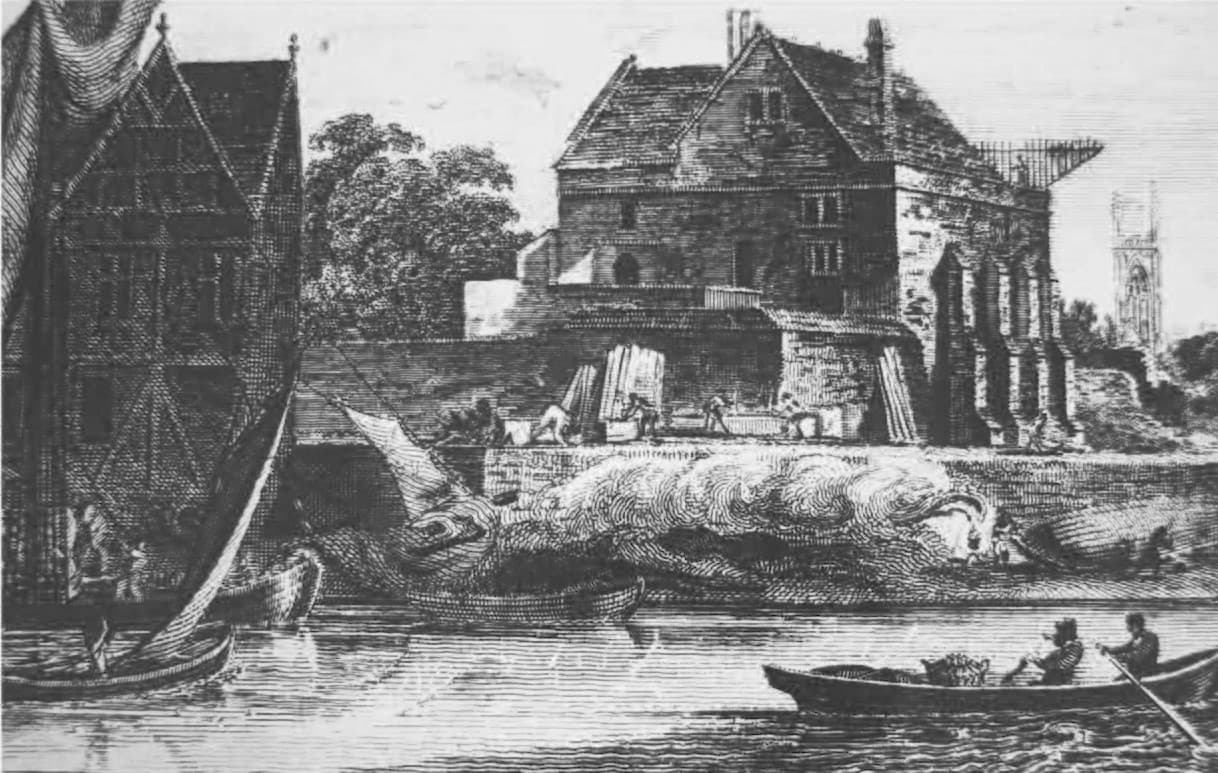
Despite its historical significance, Gloucester Castle was largely demolished in 1787. The site was cleared to make way for the construction of Gloucester Prison, which incorporated some of the castle's stone materials. Today, little remains of the original castle structure, and its location is marked primarily by historical records and archaeological findings.
The castle's legacy endures through its influence on the city's development and its role in English medieval history. Archaeological excavations have revealed foundations and artifacts that contribute to understanding Norman military architecture and medieval life in Gloucester.
Gloucester Castle in the context of English castles
As a Norman motte-and-bailey castle, Gloucester Castle exemplifies the rapid fortification efforts undertaken by the Normans to secure their rule. Its transition from a wooden fortification to a stone castle mirrors broader architectural trends in medieval England. The castle's later adaptation as a prison highlights the evolving functions of such structures beyond warfare.
While the castle no longer stands, its historical footprint offers valuable insights into the feudal system, royal authority, and urban development during the medieval period in England.
Frequently asked questions (FAQ)
- How do I get to Gloucester Castle?
- Gloucester Castle is conveniently located in the heart of Gloucester, making it accessible via various modes of transport. You can reach the castle by train, with the nearest station just a short walk away, or by car, where parking facilities are available nearby.
- What is the historical significance of Gloucester Castle?
- Gloucester Castle has a rich history dating back to the 11th century and has played a crucial role in English history. It served as a royal residence, a fortress, and a center of administration, reflecting the turbulent times of medieval England.
- When was Gloucester Castle built?
- Construction of Gloucester Castle began in 1070 under the orders of the Normans after the conquest of England. Over the centuries, it underwent numerous renovations and expansions, showcasing various architectural styles from different historical periods.
- Can I explore the interior of Gloucester Castle?
- Currently, the interior of Gloucester Castle is not fully open to the public, as much of it remains private property. However, visitors can enjoy guided tours of the grounds and learn about its history and architecture from knowledgeable staff.
- Why is Gloucester Castle a popular tourist attraction?
- Gloucester Castle attracts visitors due to its historical significance, stunning architecture, and picturesque surroundings. The castle's impressive ruins and gardens provide a unique glimpse into England's medieval past while offering a serene setting for exploration.
- Is it possible to host events at Gloucester Castle?
- Yes, Gloucester Castle offers facilities for hosting various events, including weddings, corporate functions, and private gatherings. The picturesque backdrop of the castle adds a unique charm to any occasion, making it a sought-after venue.
- What are the opening hours for Gloucester Castle?
- Gloucester Castle typically opens to visitors from 10 AM to 5 PM during the peak season, with varying hours in the off-peak months. It’s advisable to check the official website for the most current hours and any special exceptions.
- What are the ticket prices for visiting Gloucester Castle?
- Ticket prices for Gloucester Castle vary depending on the time of year and the type of tour you choose. Generally, adult tickets are reasonably priced, with discounts available for children and seniors, making it accessible for families and groups.
- What is the best time to visit Gloucester Castle?
- The best time to visit Gloucester Castle is during the spring and summer months when the weather is pleasant and the gardens are in full bloom. Additionally, many events and reenactments take place during this time, enhancing the visitor experience.
- Are there any nearby attractions to visit along with Gloucester Castle?
- Yes, there are several attractions near Gloucester Castle, including the Gloucester Cathedral, which is famous for its stunning architecture and history. Other nearby sites include the Soldiers of Gloucestershire Museum and the Gloucester Docks, offering a full day of exploration.
Photo gallery

Photo by William Andrew (1848-1908)•Public domain
Information
Loading map...
Visitor reviews
No reviews yet. Been here? Write the first review and help other travelers!
Write the first reviewVisited this castle? Share your experience
Your review helps other travelers and adds first-hand knowledge to our encyclopedia.