Berkeley Castle
Berkeley Castle stands as a remarkable example of a high medieval hill castle in the historic county of Gloucestershire, England. Its origins trace back to the 11th century, shortly after the Norman Conquest, making it one of the oldest castles in England. The castle's long-standing association with the Berkeley family since the 12th century, except for a brief period of Tudor royal ownership, underscores its unique status as the oldest castle continuously owned and inhabited by the same family in the country.
The castle was initially established as a motte-and-bailey fortification around 1067 by William FitzOsbern, a close ally of William the Conqueror. This early wooden castle featured a keep atop an artificial mound (motte) and was surrounded by a protective courtyard (bailey). Between 1153 and 1156, Robert Fitzharding, a wealthy merchant and loyal supporter of the Plantagenet kings, rebuilt the castle in stone, replacing the wooden structures with a distinctive circular stone shell keep. This transformation marked the beginning of the castle's enduring architectural legacy.
Historical significance and ownership
The castle's history is deeply intertwined with key events in English medieval history. It was the site of the imprisonment and alleged murder of King Edward II in 1327, a dark episode that has become part of the castle's enduring legend. Edward was held captive in a cell within the castle under the supervision of Thomas de Berkeley and John Maltravers. The circumstances of his death remain a subject of historical intrigue, with accounts describing a secretive murder involving a red-hot iron instrument.
Berkeley Castle also played a role in regional conflicts, including the Battle of Nibley Green, a dispute over ownership, and endured a siege during the English Civil War in 1645. Parliamentarian forces captured the castle, but the Berkeley family retained ownership afterward. As a condition of surrender, the damaged keep and outer bailey walls were left unrepaired, a legal restriction that persists to this day, preserving the castle's war-scarred appearance.
The castle hosted notable monarchs such as Henry VIII and Elizabeth I, who used the grounds, including a bowling green, for leisure. The founding of Katharine Lady Berkeley’s School in 1384 further highlights the family's influence in the region. The Great Hall of the castle witnessed the death of England’s last court jester, Dickie Pearce, adding to the rich tapestry of stories associated with Berkeley.
Architectural features and layout
Berkeley Castle's core architectural feature is its circular stone shell keep, constructed in the mid-12th century on the site of the original wooden motte. Surrounding the keep are curtain walls built between approximately 1160 and 1190, enclosing the inner bailey and forming a defensive courtyard. These walls, along with the keep, showcase medieval stone construction techniques and defensive design.
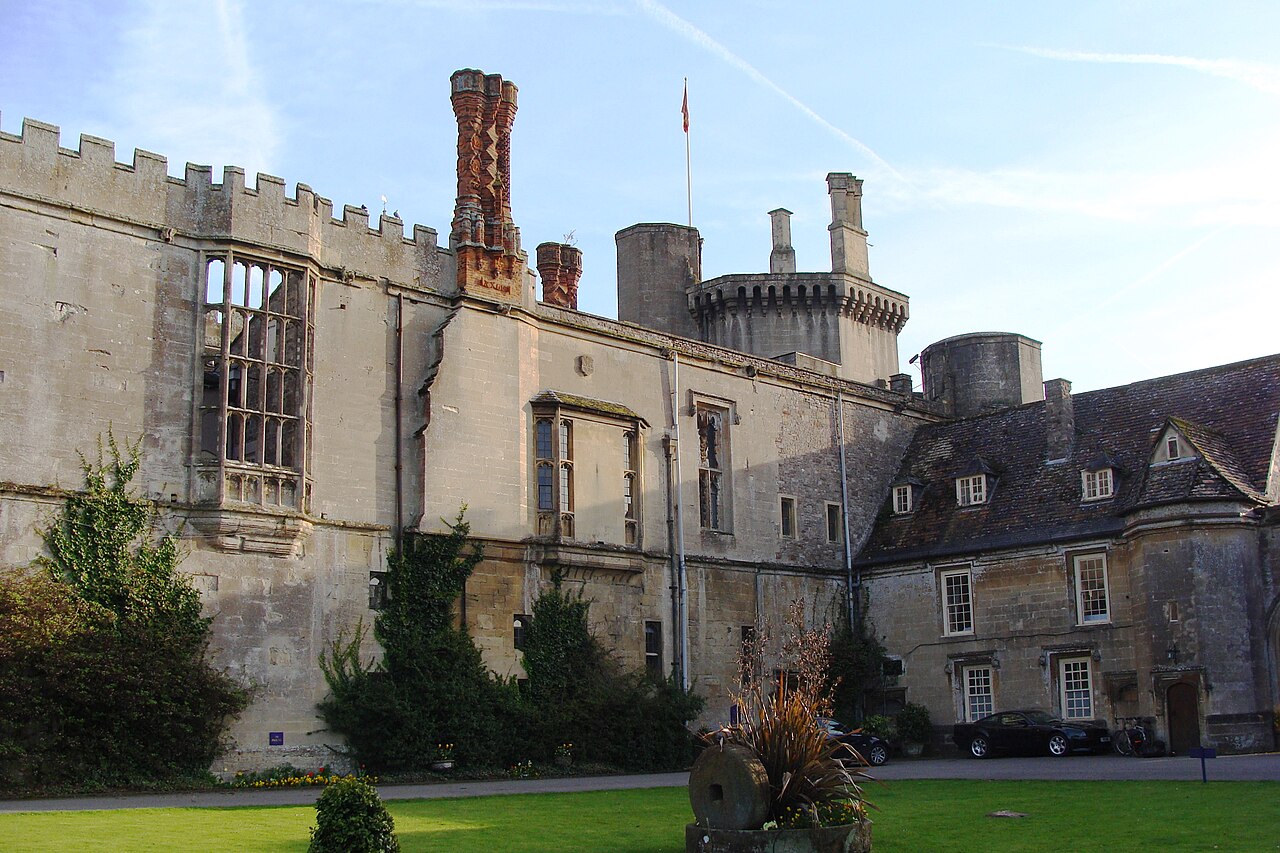
Several 14th-century additions enhance the castle's structure, including Thorpe’s Tower to the north of the keep and the inner gatehouse to the southwest. These were commissioned by Thomas de Berkeley, 3rd Baron Berkeley, and include various buildings within the inner bailey. The castle chapel, originally dedicated to St Mary and now known as the Morning Room, features beautifully painted wooden vaulted ceilings and a biblical inscription in Norman French, reflecting the religious and artistic sensibilities of the period.
The Great Hall, adjoining the chapel, was re-roofed in the 14th century and remains a significant interior space. Within the castle is the cell where King Edward II was imprisoned and allegedly murdered. This cell is still visible and lies adjacent to a deep dungeon approximately 11 meters (36 feet) deep. Local tradition holds that eerie sounds emanate from this dungeon annually on the anniversary of Edward’s death, adding a layer of folklore to the castle's history.
Grounds and preservation
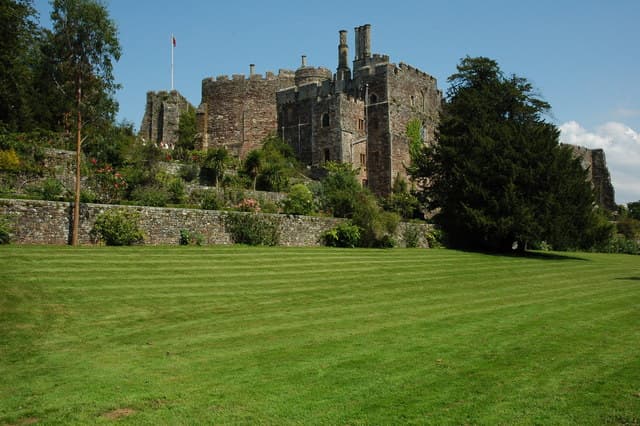
The castle grounds include terraced gardens and a bowling green once used by Queen Elizabeth I. A notable feature is a pine tree planted in the early 18th century, reputedly grown from a cutting linked to the Battle of Culloden. The damage sustained during the 1645 siege remains visible, with the breached keep and outer bailey walls partially filled with a modern garden wall to prevent falls from the original motte's 28-foot height. Legal restrictions have prevented full restoration, preserving the castle's historical scars.
Inside the castle is an antique four-poster bed, recognized as the longest continuously used piece of furniture by one family in Great Britain. Early 20th-century restoration efforts included Gothic-style remodeling and the addition of a porch by the 8th Earl of Berkeley, blending historical preservation with architectural enhancement.
Today, Berkeley Castle is managed by the Berkeley Castle Charitable Trust, which has undertaken recent renovations such as work on the Education Room, ensuring the castle remains accessible and informative for visitors while preserving its rich heritage.
Visiting information and cultural significance
Berkeley Castle is a Grade I listed building, reflecting its exceptional architectural and historical importance. Visitors can explore the castle's medieval structures, including the keep, curtain walls, chapel, and Great Hall, as well as the grounds with their historic gardens and features. The castle's continuous occupation by the Berkeley family offers a unique glimpse into English aristocratic life across centuries.
The castle's association with significant historical events, particularly the imprisonment of King Edward II, makes it a site of national interest. Its well-preserved medieval architecture and the blend of historical and folkloric elements provide a rich experience for history enthusiasts, architecture lovers, and tourists alike.
Frequently asked questions (FAQ)
- How do I get to Berkeley Castle?
- Berkeley Castle is located in the town of Berkeley in Gloucestershire, United Kingdom. You can reach the castle by car, with parking available nearby, or via public transport with regular bus services from major cities. The nearest train station is in Cam, which is approximately 3 miles away.
- What is the historical significance of Berkeley Castle?
- Berkeley Castle is one of the oldest inhabited castles in England, dating back to the 11th century. It has played a pivotal role in English history, including serving as a prison for King Edward II. The castle's rich history and well-preserved architecture make it a fascinating site for visitors interested in English heritage.
- When was Berkeley Castle built?
- Construction of Berkeley Castle began in 1071, under the orders of William the Conqueror. Over the centuries, the castle has undergone several modifications and expansions, reflecting various architectural styles. Today, it stands as a testament to nearly a millennium of history.
- Can I visit Berkeley Castle year-round?
- Yes, Berkeley Castle is open to visitors throughout the year, though opening hours may vary by season. Typically, the castle is open daily from 10:00 AM to 5:00 PM, with extended hours during the summer months. It's advisable to check the official website for any seasonal changes or special events.
- Why is Berkeley Castle known for its architecture?
- Berkeley Castle is renowned for its stunning medieval architecture, featuring a mix of defensive and residential elements. The castle boasts impressive battlements, a great hall, and beautifully landscaped gardens. Its architectural significance illustrates the evolution of castle design over centuries.
- Is it possible to access all areas of Berkeley Castle?
- While many areas of Berkeley Castle are accessible to visitors, some parts may have limited access due to historical preservation efforts. The main attractions, including the great hall and gardens, are designed to be visitor-friendly. If you have specific accessibility needs, it's best to contact the castle prior to your visit for detailed information.
- What is the best time to visit Berkeley Castle?
- The best time to visit Berkeley Castle is during the spring and summer months, when the gardens are in full bloom and the weather is generally pleasant. Additionally, the castle hosts various events and activities during these seasons, enhancing the visitor experience. Autumn also offers beautiful foliage, making it a lovely time for a visit.
- What are the ticket prices for Berkeley Castle?
- Ticket prices for Berkeley Castle vary depending on the age and type of visitor. As of 2023, adult tickets are approximately £10, while concessions and children’s tickets are available at reduced rates. Family tickets are also offered for a more economical option when visiting with kids.
- Are there any nearby attractions to Berkeley Castle?
- Yes, there are several nearby attractions worth exploring, including the stunning Berkeley Church and the beautiful Cotswold countryside. The town of Berkeley itself offers charming shops and cafes. Additionally, the historic town of Gloucester and the scenic Wye Valley are within a short drive, providing more options for visitors.
Photo gallery

Information
Website
Visit websiteSources & official resources
Verify the information above using these authoritative references.
Loading map...
Visitor reviews
No reviews yet. Been here? Write the first review and help other travelers!
Write the first reviewVisited this castle? Share your experience
Your review helps other travelers and adds first-hand knowledge to our encyclopedia.