Głogów — Poland castle

Głogów

Głogów castle: medieval bastioned fortress in Poland
Głogów, Poland
High Medieval (11th–13th c.)
Restored

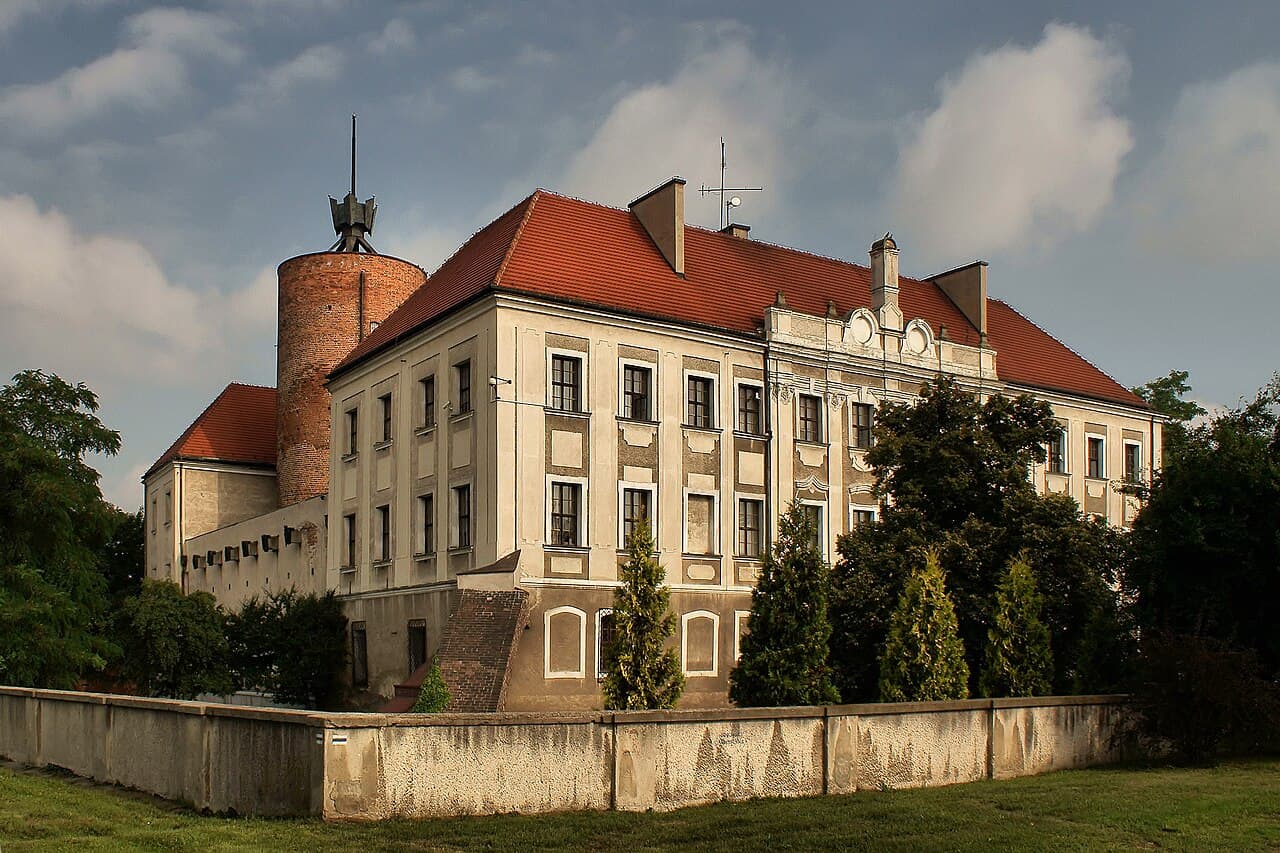
Głogów castle stands as a remarkable bastioned fortress in the town of Głogów, Poland, embodying centuries of medieval and early modern history. Established originally in the mid-13th century, this fortified complex has witnessed pivotal events, architectural transformations, and shifting political powers that shaped the Silesian region. Its evolution from a wooden stronghold to a stone bastioned fortress reflects broader trends in castle construction and defense across Central Europe.

Early history and foundation

The site of the current Głogów castle is distinct from the original early medieval settlement, which was located on Ostrów Tumski. This earlier stronghold, significant in the piast dynasty's realm, guarded the crucial crossing over the Oder River and served as a seat of the local castellany. While the exact nature of the early fortifications remains uncertain, they likely included wooden structures and earthworks, typical of early medieval defensive sites.

The foundation of the present castle dates to 1251, coinciding with the establishment of the duchy of Głogów by Duke Konrad I. He founded the town of Głogów and constructed a new castle in its northwest corner, integrating it into the town's fortification system. This initial castle featured a freestanding stone tower—a classic keep or donjon—surrounded by wooden buildings and protected by an earthen rampart and moat. The tower served as a final refuge, with a prison in its lower levels and defensive chambers above, accessed by an elevated entrance on the second floor.

Medieval reconstruction and political significance

After a devastating fire in 1291, the castle was rebuilt under Duke Henryk III. The reconstruction replaced the earthen rampart with a solid stone curtain wall approximately 2.4 meters thick, connecting the castle to the newly built town walls. Within this enclosure, three one-story stone buildings were constructed along the walls, while the central tower remained freestanding. This phase transformed the castle into a more formidable bastioned fortress, reflecting advances in military architecture.

The castle played a role in regional power struggles, including the notable episode where Henryk III imprisoned his rival Henryk Gruby in a cramped chest within the castle, coercing territorial concessions and a substantial silver ransom. The duchy's fragmentation after Henryk III's death led to Głogów's division between the Bohemian crown and the Piast dukes of Żagań, each controlling parts of the city and its fortifications. The Bohemian-controlled western part was known as the "Cieszyn" half, with the old castle serving as the royal seat.

In 1406, the Piast dukes constructed a second castle in the eastern part of Głogów, although it was less grand and eventually dismantled after political reunification under Jan II Żagański in the late 15th century. The end of Piast rule came in 1488 when Jan II ceded the duchy to King Matthias Corvinus of Hungary after a failed conflict, marking a significant shift in regional control.

Renaissance to baroque transformations

Following the Jagiellonian dynasty's rule in the early 16th century and subsequent Habsburg succession in 1526, the castle served as the seat of royal administrators. By the mid-16th century, structural deterioration was evident, exacerbated by partial collapses and fires, including a major fire in 1615. Restoration efforts began under Rudolf von Zedlitz in 1612 but were interrupted by the Thirty Years' War, which inflicted further damage.

Between 1652 and 1657, the castle underwent extensive Baroque remodeling under the direction of Johann Bernhard von Herberstein. The fortress was transformed into a more palatial residence, featuring a regular courtyard surrounded by four wings that incorporated the formerly freestanding tower. A new moat was constructed, and a bastion was added to the castle's defenses. The southern wing was redesigned to appear defensive externally but housed a large exhibition hall internally, reflecting a shift from pure military function to residential and administrative use.

Prussian era and modern history

After the Prussian annexation of Silesia in 1742, the castle became the headquarters for the Głogów War and Domain Chamber. During the Napoleonic Wars, the fortress was occupied by French forces from 1806 to 1814. In the late 19th century, the castle was adapted to house the District Court and divisional command, with modifications including the conversion of the interior layout to a corridor system and the addition of a cloister along the northern courtyard wall.

Despite these changes, the castle avoided major architectural alterations in the 19th and 20th centuries, preserving much of its Baroque character. However, it suffered severe damage during the fighting between German and Soviet forces in 1945. Restoration and conservation efforts commenced in 1961, aiming to preserve the castle's 17th-century appearance. The southern wing was rebuilt with the addition of the Marble Hall, which exposed parts of the original tower.

Architectural features and layout

The castle's layout, established after the late 13th-century reconstruction, is a rectangular plan enclosed by a moat and integrated with the town's defensive walls. Three stone buildings line the shorter sides of the enclosure, with the main entrance traditionally oriented to the east.

The most iconic feature is the Hunger Tower, a cylindrical brick tower approximately 24 meters tall and 8.9 meters in diameter. Built in the Gothic style using the regional Wendish bond brickwork, the tower's base walls are nearly 2.75 meters thick. Originally, the entrance was elevated for defense, with the current ground-level door added in the 19th century. Inside, barrel-vaulted rooms on the ground floor and basement contain remnants of Gothic architecture. The tower's name derives from its historical use as a prison, where captives endured harsh conditions.

The 15th-century addition of a Gothic building on the northern side expanded the castle's residential and defensive capabilities. The 17th-century Baroque renovations introduced elegant arcades, ornamental staircases, and a southern wing designed for representational functions rather than defense.

Later modifications in the 18th and 19th centuries included plastering and heightening the tower, facade updates, and the addition of a staircase and symbolic Piast crown installation during the Polish People's Republic era.

Cultural significance and present use

Today, Głogów castle houses the Archaeological-Historical Museum, preserving and showcasing the rich heritage of the region. The castle's grounds include a castle amphitheater and the Monument to the Głogów Children, commemorating the city's legendary 1109 defense against Emperor Henry V. Nearby, the Pink Bridge of Tolerance adds a modern cultural landmark, enhancing the historic ambiance.

The castle remains a vital symbol of Silesian history and architecture, attracting visitors interested in medieval fortifications, Baroque palatial design, and Central European history. Its restoration and adaptive reuse demonstrate the enduring value of heritage preservation.

Frequently asked questions (FAQ)

What is the historical significance of Głogów Castle?
Głogów Castle is a historic fortress that dates back to the 13th century and played a crucial role in the defense of the region during various conflicts. It has witnessed numerous sieges and battles, making it an important site for understanding Polish medieval history.
When was Głogów Castle built?
The construction of Głogów Castle began around the year 1241, with significant expansions and renovations occurring over the centuries. It was a central stronghold for the Piast dynasty and has undergone various transformations throughout its history.
Can I visit Głogów Castle?
Yes, Głogów Castle is open to visitors, offering a glimpse into its rich history and architecture. Guided tours are available, providing insights into the castle's past and its role in the region.
What are the opening hours of Głogów Castle?
Głogów Castle is typically open to visitors from 10 AM to 5 PM, but it is advisable to check the official website or local listings for any seasonal changes or special events. It’s a good idea to arrive early to make the most of your visit.
Is it possible to access Głogów Castle with limited mobility?
Głogów Castle has made efforts to improve accessibility for visitors with limited mobility, including designated pathways and ramps. However, some areas may still present challenges, so it is recommended to contact the castle staff ahead of your visit for detailed accessibility information.
What are the ticket prices for Głogów Castle?
Ticket prices for Głogów Castle are generally affordable, with discounts for students and seniors. Entrance fees typically range from around 10 to 15 PLN, but it’s best to verify the latest prices on the official website before your visit.
When is the best time to visit Głogów Castle?
The best time to visit Głogów Castle is during the spring and early autumn months when the weather is mild and pleasant. These seasons also offer fewer crowds, allowing for a more enjoyable exploration of the castle and its surroundings.
What nearby attractions should I explore while visiting Głogów Castle?
While visiting Głogów Castle, you can also explore the charming Old Town of Głogów, which features beautiful architecture and local shops. Additionally, the nearby Church of St. Nicholas and the beautiful parks along the Odra River offer perfect spots for relaxation and sightseeing.

Photo gallery

Głogów
Click to view

Photo by Zetem•CC BY-SA 3.0 pl

1 photo • Click any image to view in full screen

Information

Bastioned Fortress

Sources & official resources

Verify the information above using these authoritative references.

Loading map...

Visitor reviews

No reviews yet. Been here? Write the first review and help other travelers!

Write the first review

Visited this castle? Share your experience

Your review helps other travelers and adds first-hand knowledge to our encyclopedia.

Write a review

(5/5)

0/2000 characters

Your review will be visible after admin approval

Nearby castles

19.2 km

Bytom Odrzański

Bytom Odrzański, Poland

Bytom Odrzański Castle stands as a significant historical monument in the town of Bytom Odrzański, Poland. This hill castle has a rich history dating back to the early 12th century, with its first recorded mention in 1109 during the German invasion led by Emperor Henry V. Despite the siege, the stronghold resisted capture, marking its importance as a fortified site in the region. Bytom Odrzański's strategic location on a hill overlooking the Oder River made it a valuable defensive position throughout the High Medieval period.From 1208, the site became a castellany, serving as the administrative center for the surrounding lands. In 1298, Duke Konrad II of Głogów constructed a new stone castle known as "Novum Castrum" on the site, replacing earlier wooden fortifications. This stone castle symbolized the growing importance of permanent masonry fortifications in medieval Poland. However, this castle did not last long as historical records from 1370 indicate that the site was then home to a hunting lodge belonging to Emperor Charles IV of Luxembourg, reflecting a shift in the castle's function and ownership.Architectural evolution and fortificationsThe castle underwent significant changes in the early 17th century when the local village owners built a new fortress between 1612 and 1614. This structure was characterized by stone walls reinforced with corner bastions and surrounded by earthen ramparts, illustrating the influence of Renaissance military architecture designed to withstand artillery attacks. The bastioned fortifications were typical of the period's adaptations to gunpowder warfare, marking a transition from medieval to early modern defensive designs.Destruction during the Thirty Years' WarUnfortunately, the castle suffered extensive damage during the Thirty Years' War (1618–1648), a devastating conflict that affected much of Central Europe. The fortress was partially destroyed in the fighting, which diminished its military significance. Despite attempts at rebuilding, the castle never fully recovered its former strength.Later history and declineIn the early 18th century, the castle was rebuilt, but this restoration was short-lived. The fortress faced total destruction during the military operations of 1945 in World War II. Today, only the foundations of the castle remain visible, with the above-ground structures lost to war and time. Local residents often find it difficult to identify the remnants of the castle, underscoring the extent of its ruin.Visitors interested in exploring similar historical fortifications are often advised to cross the Oder River to the nearby ruins in Siedlisko, which offer more visible remains and a better sense of the region's medieval defensive architecture.Historical significance and cultural heritageBytom Odrzański Castle reflects the complex history of Silesia and the shifting political landscape of medieval and early modern Poland. Its various phases—from a wooden stronghold resisting imperial sieges, to a stone castle under ducal rule, to a Renaissance bastioned fortress—illustrate the evolution of military architecture over several centuries. The castle's ruins today serve as a poignant reminder of the area's turbulent past and the impact of European conflicts on local communities.Preservation and archaeological interestAlthough the castle is now classified as ruins, archaeological efforts could potentially reveal more about its layout and historical phases. The site's location on a hill provides an excellent vantage point over the Oder River valley, emphasizing its original strategic purpose. Preservation of the remaining foundations is important for understanding the region's medieval fortifications and for cultural tourism in Bytom Odrzański.

High Medieval (11th–13th c.)
Details
21.2 km
Gawrony Castle — Poland castle

Gawrony Castle

, Poland

Gawrony Castle, historically known as Gaffron Castle, is a significant hill castle located in the Lower Silesian Voivodeship of Poland. This castle was part of a notable medieval Silesian knightly holding, which included three estates: Groß Gaffron (Gawrony), Klein Gaffron (Gawronki), and Beitkau (Bytków). Together, these estates encompassed approximately 4000 hectares, divided into 2000 hectares of arable land, 1400 hectares of forest, and 600 hectares of water bodies and other land. This extensive property highlights the importance of the castle within the regional feudal structure. Historical ownership and development The castle and its estates originally belonged to the German Silesian knightly families. Over time, ownership passed through several noble houses. The von Niebeischitz and von Schweinichen families were responsible for constructing the current castle structure, marking a significant phase in its architectural development. From 1780 to 1834, the castle was under the possession of Count von Gaffron Schönaich-Carolatb. Subsequently, it was jointly owned by the Medicine Council Ebers and Captain (Hauptmann) von Loeper, reflecting a transition from purely noble ownership to more diverse proprietors. In 1867, the castle came into the hands of Conrad Freiherr von der Reck, indicating continued noble stewardship into the late 19th century. This lineage of ownership underscores the castle's enduring role as a noble residence and estate center through changing political and social landscapes. Architectural features and style While detailed architectural records are limited, the castle's designation as a hill castle suggests a strategic location on elevated terrain, typical of medieval fortifications designed for defense and oversight of surrounding lands. The construction by the von Niebeischitz and von Schweinichen families likely incorporated the prevalent architectural styles of their era, potentially exhibiting late medieval or early modern elements consistent with Silesian noble residences. The castle complex would have included typical features such as fortified walls, residential quarters, and possibly defensive towers. Given the extensive estate, ancillary buildings for agricultural management and forestry operations were also probable components of the castle grounds. 20th-century history and destruction From 1937 until the end of World War II, the castle and its entire estate were owned by Josef Veltjens and his wife Leni. During the final stages of the war, the castle suffered damage amid the fighting in 1945. Following the war, local accounts indicate that the castle was deliberately demolished to provide building materials for the reconstruction of Breslau (now Wroclaw). This destruction resulted in the loss of much of the castle's physical structure, leaving it in ruins or completely removed. Legacy and current status Today, Gawrony Castle stands as a historical site reflecting the complex feudal and noble history of Lower Silesia. Although the original castle no longer exists as a complete structure, its history is preserved through records of its ownership, estate management, and role in regional defense and administration. The former castle lands continue to be recognized for their historical significance in the context of Silesian heritage.

Details
21.9 km

Wschowa Castle

Wschowa, Poland

Wschowa Castle is a significant medieval fortress located at 7 Zamkowy Square in Wschowa, Poland. Constructed during the first half of the 14th century under the reign of King Casimir III the Great, the castle stands as a testament to the Polish Kingdom's efforts to consolidate royal authority and fortify its borders. The castle was built to replace an earlier fortress destroyed in 1343, marking a strategic rebuilding phase in the region's defense network. The castle's position as a hill castle on a raised site allowed it to dominate the surrounding landscape, providing both military and administrative advantages. Throughout the High Medieval period, it served as a royal stronghold and the seat of royal starosts, who governed the area on behalf of the monarchy. This dual role as a defensive bastion and administrative center made Wschowa Castle a focal point of regional power. Architectural design and defensive features The castle was built on an almost rectangular plan measuring approximately 38.75 by 43.75 meters. Its massive defensive walls, up to 2.5 meters thick and about 3.5 meters high, were founded deeply—around 5 meters below the current ground level—to ensure stability and resilience. The walls were constructed primarily from erratic stones (kamienie eratyczne), large glacially deposited stones that provided a distinctive texture and robust structural integrity. The main entrance was located on the castle's western side, controlling access to the interior courtyard. Inside, a prominent tower measuring 10 by 15 meters stood in the southeast corner, serving as a key defensive lookout and possibly as a last refuge during sieges. On the northwest side, the castle house, measuring 8.5 by 11.5 meters, likely accommodated residential and administrative functions. Construction techniques and materials The use of kamienie eratyczne in the masonry is a notable characteristic of the castle's construction, reflecting the adaptation of local natural resources. The deep foundations and thick walls demonstrate advanced medieval engineering aimed at withstanding both military assault and the test of time. The castle's layout prioritized defense while allowing for functional spaces within the courtyard. Historical significance and transformations Wschowa Castle's history is intertwined with the political and military developments of the Polish Kingdom. As a royal property, it was integral to the kingdom's efforts to maintain control over its western territories. The castle's role as the seat of starosts highlights its importance in local governance and law enforcement. Following the partitions of Poland in the late 18th century, the castle suffered significant damage amid the region's upheavals. By the early 19th century, the medieval fortress had lost much of its original form. Its surviving foundations were repurposed into a prison facility, marking a dramatic shift from royal residence to penal institution. In the 20th century, particularly after World War II, the castle's remains were adapted for industrial use, housing a clothing factory until 1999. This period reflects the broader trend of historical buildings being repurposed for modern economic functions, often at the cost of preserving original architectural features. Archaeological research and preservation efforts Extensive archaeological investigations conducted in the early 2000s and again in 2011, led by Elżbieta Wyrwińska and Marek Wróbel, have been crucial in uncovering the castle's layout, construction methods, and historical phases. These studies have helped preserve the foundational remains and some wall fragments, providing valuable insights into medieval fortification techniques and the castle's evolution. Today, the site has been transformed into a hotel and restaurant complex named "Zamek Królewski," integrating the castle's rich heritage into a contemporary hospitality setting. Visitors can explore the preserved ruins and appreciate the castle's historical significance within the urban fabric of Wschowa. The castle's role in the urban and cultural landscape Wschowa Castle's location within the town center at Zamkowy Square emphasizes its historical role as a nucleus of power and administration. The castle influenced the town's development, shaping its spatial organization and serving as a symbol of royal authority. As a cultural landmark, the castle attracts visitors interested in medieval history, architecture, and archaeology. Its adaptive reuse as a hotel and restaurant allows for a unique experience where guests can immerse themselves in the atmosphere of a medieval fortress while enjoying modern amenities. Visitor experience and educational value The preserved ruins and archaeological displays at the site offer educational opportunities for visitors and scholars alike. Interpretive signage and guided tours provide context about the castle's construction, historical roles, and transformations over the centuries. Events and exhibitions held at the castle complex further enhance public engagement, promoting awareness of Poland's medieval heritage and the importance of preserving historic sites.

High Medieval (11th–13th c.)
Details