Wschowa Castle
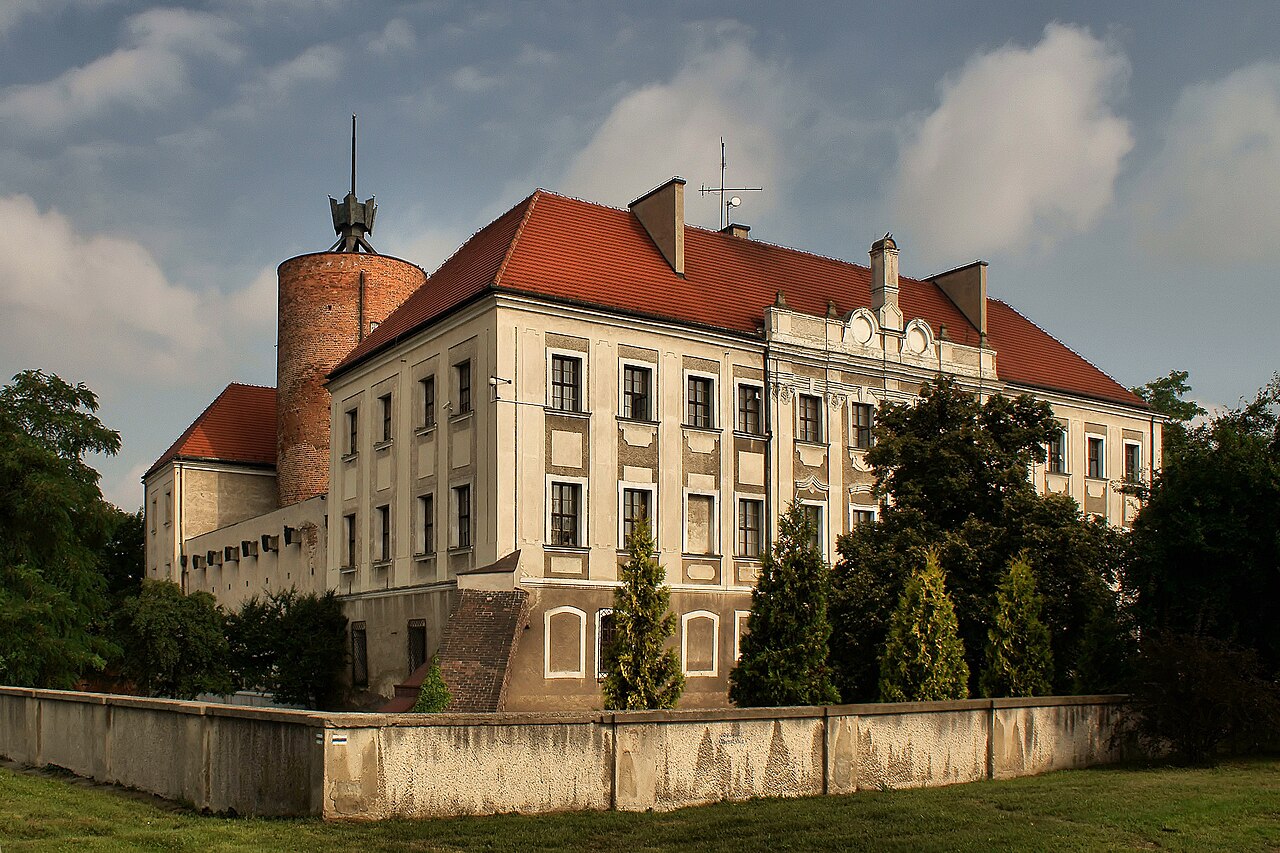
Wschowa Castle is a significant medieval fortress located at 7 Zamkowy Square in Wschowa, Poland. Constructed during the first half of the 14th century under the reign of King Casimir III the Great, the castle stands as a testament to the Polish Kingdom's efforts to consolidate royal authority and fortify its borders. The castle was built to replace an earlier fortress destroyed in 1343, marking a strategic rebuilding phase in the region's defense network.
The castle's position as a hill castle on a raised site allowed it to dominate the surrounding landscape, providing both military and administrative advantages. Throughout the High Medieval period, it served as a royal stronghold and the seat of royal starosts, who governed the area on behalf of the monarchy. This dual role as a defensive bastion and administrative center made Wschowa Castle a focal point of regional power.
Architectural design and defensive features
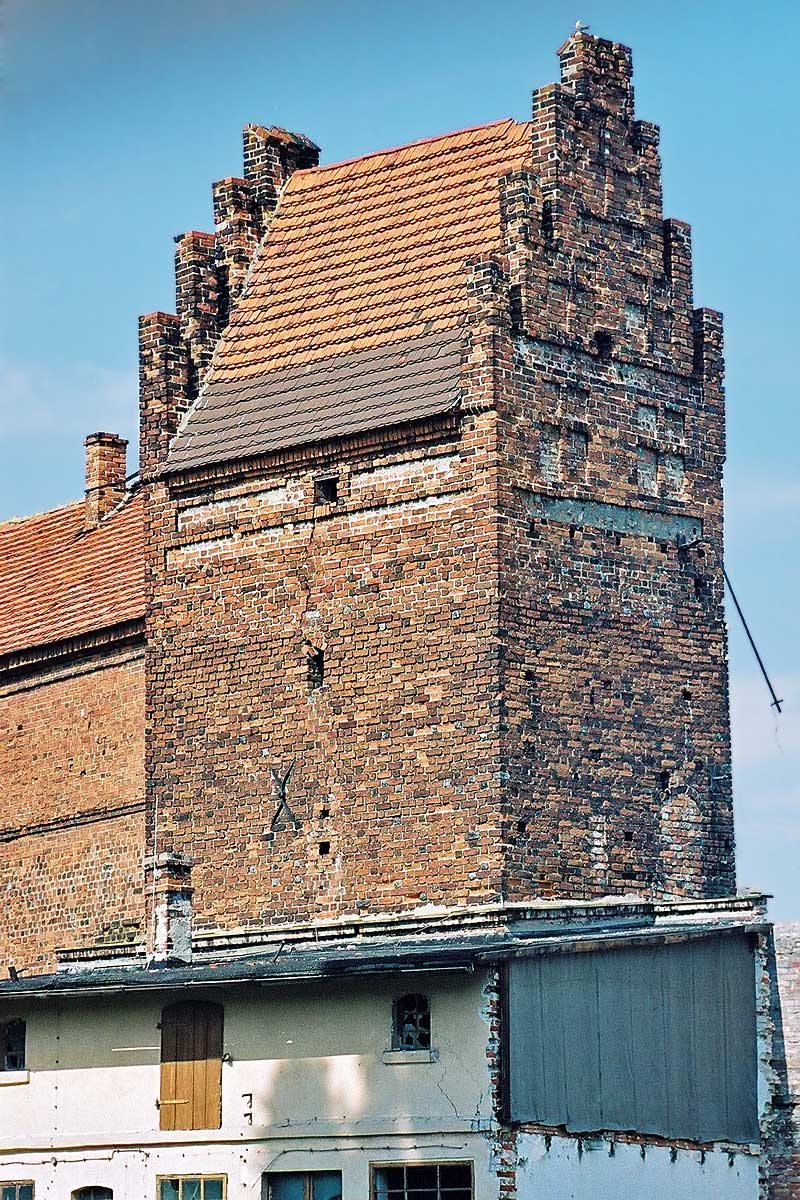
The castle was built on an almost rectangular plan measuring approximately 38.75 by 43.75 meters. Its massive defensive walls, up to 2.5 meters thick and about 3.5 meters high, were founded deeply—around 5 meters below the current ground level—to ensure stability and resilience. The walls were constructed primarily from erratic stones (kamienie eratyczne), large glacially deposited stones that provided a distinctive texture and robust structural integrity.
The main entrance was located on the castle's western side, controlling access to the interior courtyard. Inside, a prominent tower measuring 10 by 15 meters stood in the southeast corner, serving as a key defensive lookout and possibly as a last refuge during sieges. On the northwest side, the castle house, measuring 8.5 by 11.5 meters, likely accommodated residential and administrative functions.
Construction techniques and materials
The use of kamienie eratyczne in the masonry is a notable characteristic of the castle's construction, reflecting the adaptation of local natural resources. The deep foundations and thick walls demonstrate advanced medieval engineering aimed at withstanding both military assault and the test of time. The castle's layout prioritized defense while allowing for functional spaces within the courtyard.
Historical significance and transformations
Wschowa Castle's history is intertwined with the political and military developments of the Polish Kingdom. As a royal property, it was integral to the kingdom's efforts to maintain control over its western territories. The castle's role as the seat of starosts highlights its importance in local governance and law enforcement.
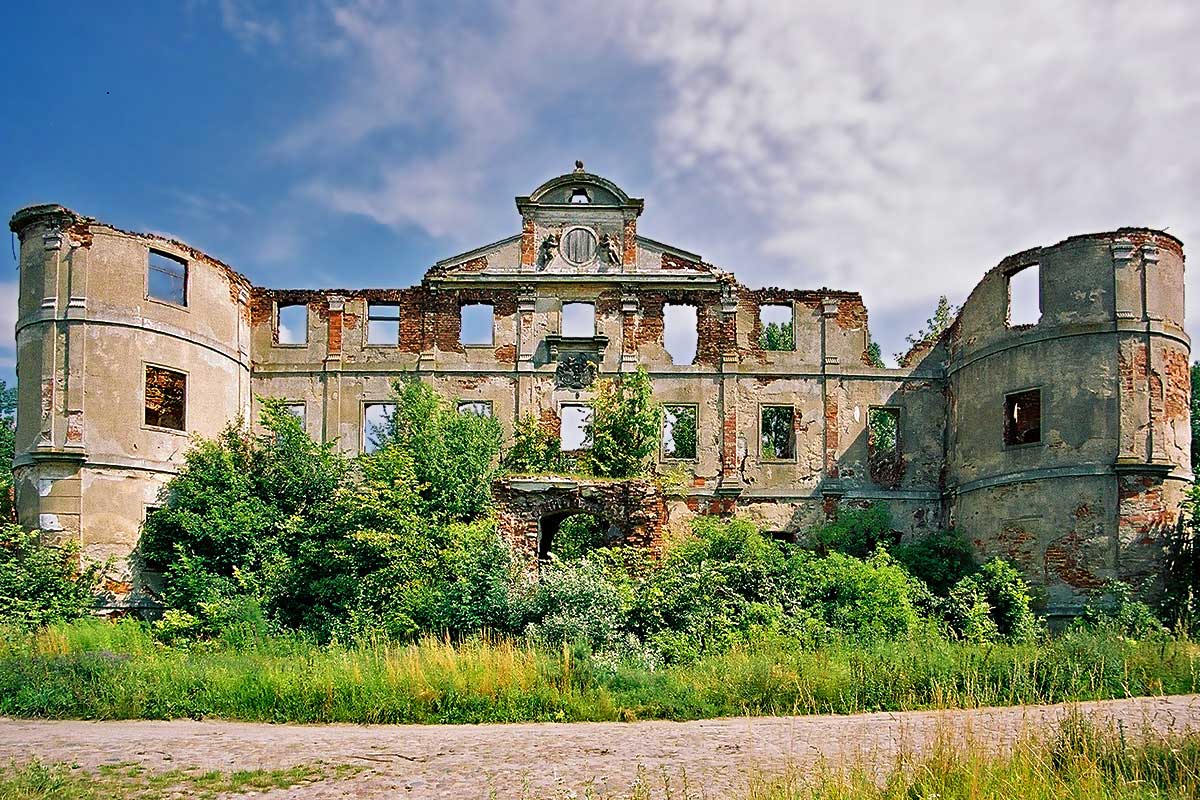
Following the partitions of Poland in the late 18th century, the castle suffered significant damage amid the region's upheavals. By the early 19th century, the medieval fortress had lost much of its original form. Its surviving foundations were repurposed into a prison facility, marking a dramatic shift from royal residence to penal institution.
In the 20th century, particularly after World War II, the castle's remains were adapted for industrial use, housing a clothing factory until 1999. This period reflects the broader trend of historical buildings being repurposed for modern economic functions, often at the cost of preserving original architectural features.
Archaeological research and preservation efforts
Extensive archaeological investigations conducted in the early 2000s and again in 2011, led by Elżbieta Wyrwińska and Marek Wróbel, have been crucial in uncovering the castle's layout, construction methods, and historical phases. These studies have helped preserve the foundational remains and some wall fragments, providing valuable insights into medieval fortification techniques and the castle's evolution.
Today, the site has been transformed into a hotel and restaurant complex named "Zamek Królewski," integrating the castle's rich heritage into a contemporary hospitality setting. Visitors can explore the preserved ruins and appreciate the castle's historical significance within the urban fabric of Wschowa.
The castle's role in the urban and cultural landscape
Wschowa Castle's location within the town center at Zamkowy Square emphasizes its historical role as a nucleus of power and administration. The castle influenced the town's development, shaping its spatial organization and serving as a symbol of royal authority.
As a cultural landmark, the castle attracts visitors interested in medieval history, architecture, and archaeology. Its adaptive reuse as a hotel and restaurant allows for a unique experience where guests can immerse themselves in the atmosphere of a medieval fortress while enjoying modern amenities.
Visitor experience and educational value
The preserved ruins and archaeological displays at the site offer educational opportunities for visitors and scholars alike. Interpretive signage and guided tours provide context about the castle's construction, historical roles, and transformations over the centuries.
Events and exhibitions held at the castle complex further enhance public engagement, promoting awareness of Poland's medieval heritage and the importance of preserving historic sites.
Frequently asked questions (FAQ)
- When was Wschowa Castle built?
- Wschowa Castle was constructed in the first half of the 14th century during the reign of King Casimir III the Great.
- What architectural features define Wschowa Castle?
- The castle features thick defensive walls made from erratic stones, a large southeast tower, and a castle house within an almost rectangular layout.
- How has the castle's function changed over time?
- Originally a royal fortress and administrative center, it later served as a prison, then housed a clothing factory, and now operates as a hotel and restaurant.
- Can visitors explore the castle ruins?
- Yes, the foundational remains and some wall fragments are preserved and accessible as part of the hotel complex, offering insights into medieval architecture.
- What archaeological work has been done at the site?
- Archaeological excavations in the early 2000s and 2011 uncovered the castle's layout and construction techniques, enhancing understanding of its historical significance.
Information
Sources & official resources
Verify the information above using these authoritative references.
Loading map...
Visitor reviews
No reviews yet. Been here? Write the first review and help other travelers!
Write the first reviewVisited this castle? Share your experience
Your review helps other travelers and adds first-hand knowledge to our encyclopedia.