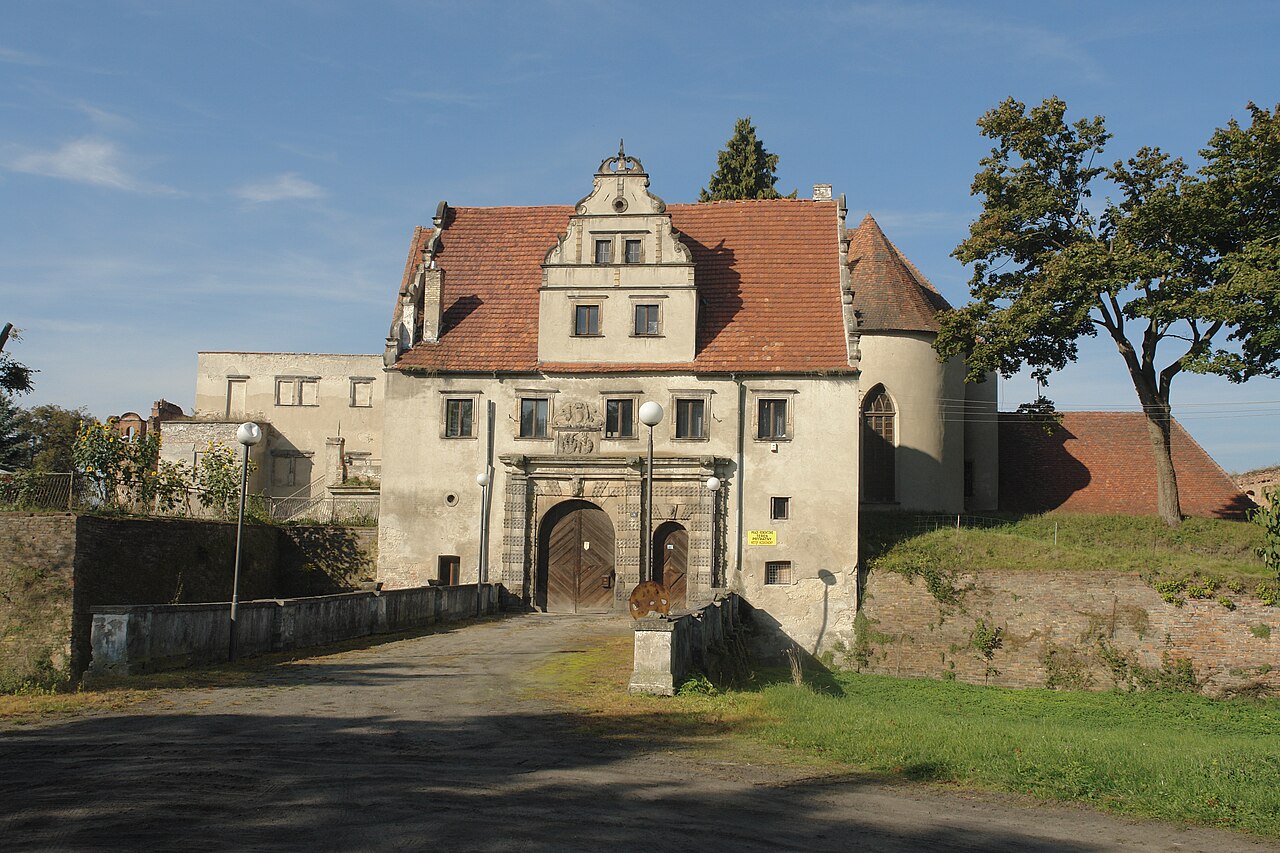
Bytom Odrzański
Bytom Odrzański Castle stands as a significant historical monument in the town of Bytom Odrzański, Poland. This hill castle has a rich history dating back to the early 12th century, with its first recorded mention in 1109 during the German invasion led by Emperor Henry V. Despite the siege, the stronghold resisted capture, marking its importance as a fortified site in the region. Bytom Odrzański's strategic location on a hill overlooking the Oder River made it a valuable defensive position throughout the High Medieval period.
From 1208, the site became a castellany, serving as the administrative center for the surrounding lands. In 1298, Duke Konrad II of Głogów constructed a new stone castle known as "Novum Castrum" on the site, replacing earlier wooden fortifications. This stone castle symbolized the growing importance of permanent masonry fortifications in medieval Poland. However, this castle did not last long as historical records from 1370 indicate that the site was then home to a hunting lodge belonging to Emperor Charles IV of Luxembourg, reflecting a shift in the castle's function and ownership.
Architectural evolution and fortifications
The castle underwent significant changes in the early 17th century when the local village owners built a new fortress between 1612 and 1614. This structure was characterized by stone walls reinforced with corner bastions and surrounded by earthen ramparts, illustrating the influence of Renaissance military architecture designed to withstand artillery attacks. The bastioned fortifications were typical of the period's adaptations to gunpowder warfare, marking a transition from medieval to early modern defensive designs.
Destruction during the Thirty Years' War
Unfortunately, the castle suffered extensive damage during the Thirty Years' War (1618–1648), a devastating conflict that affected much of Central Europe. The fortress was partially destroyed in the fighting, which diminished its military significance. Despite attempts at rebuilding, the castle never fully recovered its former strength.
Later history and decline
In the early 18th century, the castle was rebuilt, but this restoration was short-lived. The fortress faced total destruction during the military operations of 1945 in World War II. Today, only the foundations of the castle remain visible, with the above-ground structures lost to war and time. Local residents often find it difficult to identify the remnants of the castle, underscoring the extent of its ruin.
Visitors interested in exploring similar historical fortifications are often advised to cross the Oder River to the nearby ruins in Siedlisko, which offer more visible remains and a better sense of the region's medieval defensive architecture.
Historical significance and cultural heritage
Bytom Odrzański Castle reflects the complex history of Silesia and the shifting political landscape of medieval and early modern Poland. Its various phases—from a wooden stronghold resisting imperial sieges, to a stone castle under ducal rule, to a Renaissance bastioned fortress—illustrate the evolution of military architecture over several centuries. The castle's ruins today serve as a poignant reminder of the area's turbulent past and the impact of European conflicts on local communities.
Preservation and archaeological interest
Although the castle is now classified as ruins, archaeological efforts could potentially reveal more about its layout and historical phases. The site's location on a hill provides an excellent vantage point over the Oder River valley, emphasizing its original strategic purpose. Preservation of the remaining foundations is important for understanding the region's medieval fortifications and for cultural tourism in Bytom Odrzański.
Frequently asked questions (FAQ)
- When was Bytom Odrzański Castle originally built?
- Bytom Odrzański Castle was first mentioned in historical records in 1109, marking its origins in the early 12th century.
- What architectural styles are evident in Bytom Odrzański Castle?
- The castle evolved from early medieval wooden fortifications to a stone castle in the late 13th century and later Renaissance bastioned fortifications in the early 17th century.
- What happened to Bytom Odrzański Castle during the Thirty Years' War?
- The castle suffered significant damage during the Thirty Years' War, leading to partial destruction and loss of military significance.
- Can visitors see the castle ruins today?
- Today, only the foundations of Bytom Odrzański Castle remain visible, with above-ground structures lost. Visitors may find it challenging to identify the ruins on site.
- Are there other nearby castles worth visiting?
- Visitors interested in medieval fortifications are often recommended to visit the nearby ruins in Siedlisko, across the Oder River, which have more visible remains.
Information
Loading map...
Visitor reviews
No reviews yet. Been here? Write the first review and help other travelers!
Write the first reviewVisited this castle? Share your experience
Your review helps other travelers and adds first-hand knowledge to our encyclopedia.