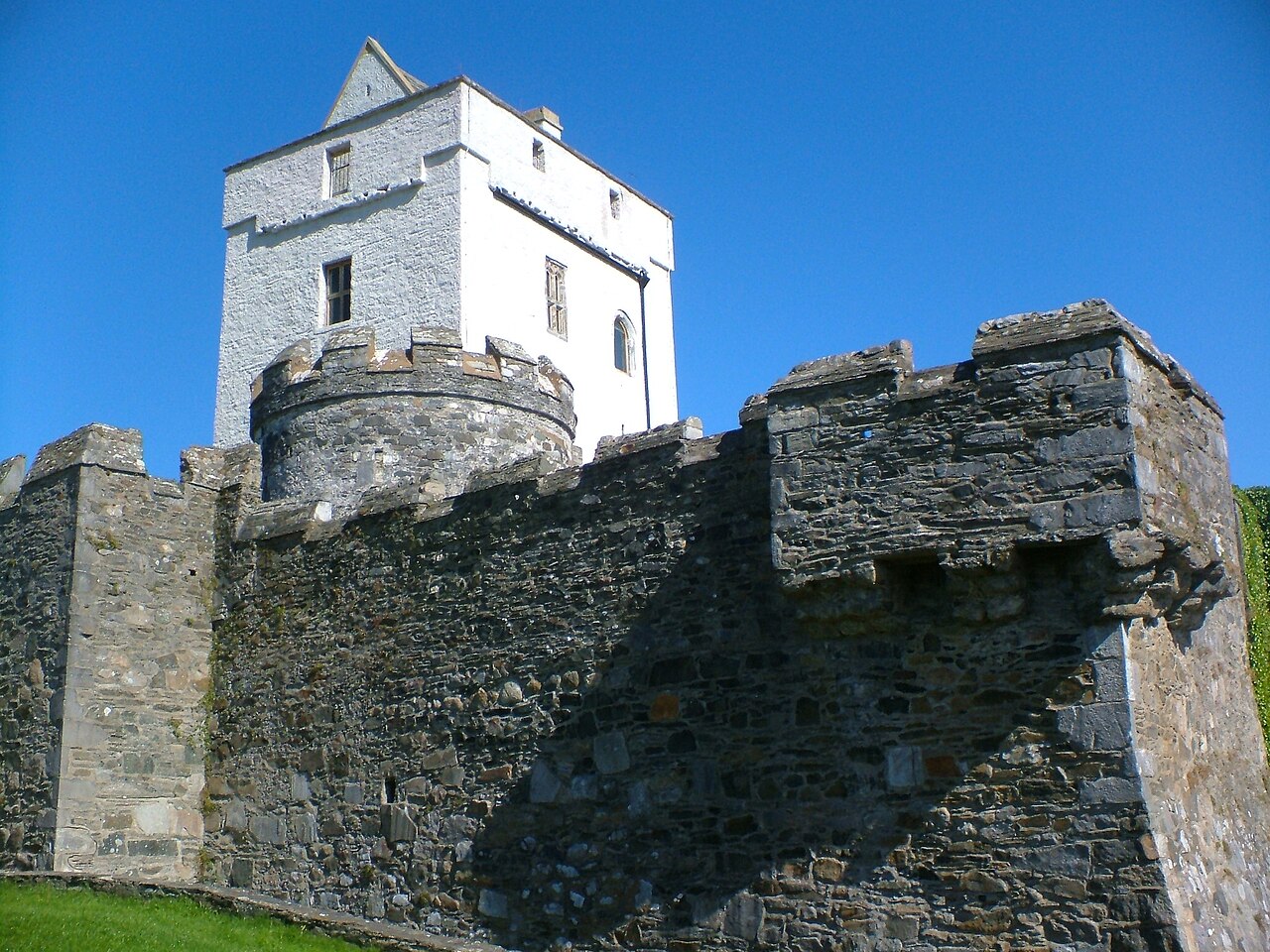
Glenveagh Castle
Glenveagh Castle is a prominent castellated mansion situated within the vast and scenic Glenveagh National Park in County Donegal, Ireland. Constructed between 1867 and 1873 by Captain John George Adair, the castle exemplifies the Scottish baronial architectural style, notable for its imposing four-story rectangular keep and battlemented features that evoke medieval fortifications.
Architectural features and design
The castle’s design reflects the romantic revival of Scottish baronial architecture popular in the 19th century, characterized by its turrets, battlements, and steeply pitched roofs. The four-story rectangular keep forms the core of the structure, surrounded by extensive gardens that complement the natural landscape. The castle's stone construction and crenellated parapets provide a fortress-like appearance, blending aesthetic grandeur with defensive motifs.
Surrounding the castle is a carefully designed garden, which enhances the estate’s picturesque setting. The gardens include formal layouts, walking paths, and a variety of plant species that thrive in the cool, moist climate of northwest Ireland. The estate also features a backdrop of approximately 165.4 km2 of rugged mountains, lakes, glens, and woods, creating a dramatic natural environment that frames the castle.
Historical context and ownership
Captain John George Adair, a wealthy Anglo-Irish landowner and businessman, commissioned Glenveagh Castle as a hunting lodge and country residence. The castle's location in Glenveagh, meaning 'Glen of the Birch Trees' in Irish (Gleann Bheatha), was chosen for its remote beauty and suitability for deer stalking. Adair’s development of the estate included the introduction of a herd of red deer, which remains a notable feature of the park today.
Following Adair’s death, the estate underwent various ownership changes and eventually became part of the Irish state’s conservation efforts. Today, Glenveagh Castle and its surrounding lands are managed as part of Glenveagh National Park, preserving both the architectural heritage and the natural environment for public enjoyment.
Glenveagh National Park and visitor experience
Glenveagh National Park is one of Ireland’s largest national parks, encompassing diverse habitats and wildlife. The park offers visitors the chance to explore mountainous terrain, lakes, and woodlands alongside the castle. The castle itself is accessible to visitors and includes a visitor centre with informative displays about the park’s ecology and history.
The visitor centre features an audio-visual show that provides insights into the park’s formation, flora, fauna, and the cultural history of the estate. Accessibility is a priority, with facilities designed to accommodate patrons with disabilities, ensuring that a wide range of visitors can experience the castle and park.
Architectural significance and legacy
Glenveagh Castle stands as a significant example of 19th-century romantic revival architecture in Ireland, showcasing the influence of Scottish baronial style outside Scotland. Its construction during the modern period of castle building reflects a shift from purely defensive structures to residences emphasizing aesthetic and recreational purposes.
The castle’s preservation within a national park setting highlights the integration of architectural heritage with environmental conservation. Glenveagh Castle continues to attract historians, architects, and tourists interested in the interplay between landscape, architecture, and history.
Frequently asked questions (FAQ)
- What is the historical significance of Glenveagh Castle?
- Glenveagh Castle is a significant example of the Victorian era's romantic architecture, built in the late 19th century. It served as a private residence for the wealthy and is now part of Glenveagh National Park, showcasing the heritage and natural beauty of the area.
- When was Glenveagh Castle built?
- Construction of Glenveagh Castle began in 1870 and was completed in 1873. It was designed by the architect Henry D. H. Moore for the wealthy landowner John George Adair.
- What are the opening hours for Glenveagh Castle?
- Glenveagh Castle is typically open to visitors from April to October, with varying hours throughout the season. During peak months, you can expect extended hours, but it's best to check the official website for the most up-to-date information before your visit.
- Can I access Glenveagh Castle with mobility issues?
- Yes, Glenveagh Castle is accessible to visitors with mobility issues, with paved paths leading to the castle and some wheelchair-accessible facilities available. However, it's advisable to contact the staff in advance to ensure you have the best experience during your visit.
- What is the best time to visit Glenveagh Castle?
- The best time to visit Glenveagh Castle is during the spring and summer months when the gardens are in full bloom and the weather is milder. Additionally, visiting during weekdays can help you avoid larger crowds.
- Is there an admission fee to enter Glenveagh Castle?
- Yes, there is an admission fee to enter Glenveagh Castle, which helps support its maintenance and preservation. Ticket prices vary, so it’s recommended to check the official website for the latest pricing and any available discounts.
- Are there nearby attractions to explore while visiting Glenveagh Castle?
- Yes, there are several nearby attractions, including the stunning landscapes of Glenveagh National Park, which offers hiking trails and beautiful scenery. Additionally, you can explore the nearby village of Dunlewy and the scenic Lough Veagh.
- How do I get to Glenveagh Castle?
- Glenveagh Castle is located approximately 14 miles from Letterkenny, and it can be accessed by car or public transport. There are also shuttle services available from nearby towns, making it convenient for visitors to reach the castle.
Information
Loading map...
Visitor reviews
No reviews yet. Been here? Write the first review and help other travelers!
Write the first reviewVisited this castle? Share your experience
Your review helps other travelers and adds first-hand knowledge to our encyclopedia.