Gleninagh Castle
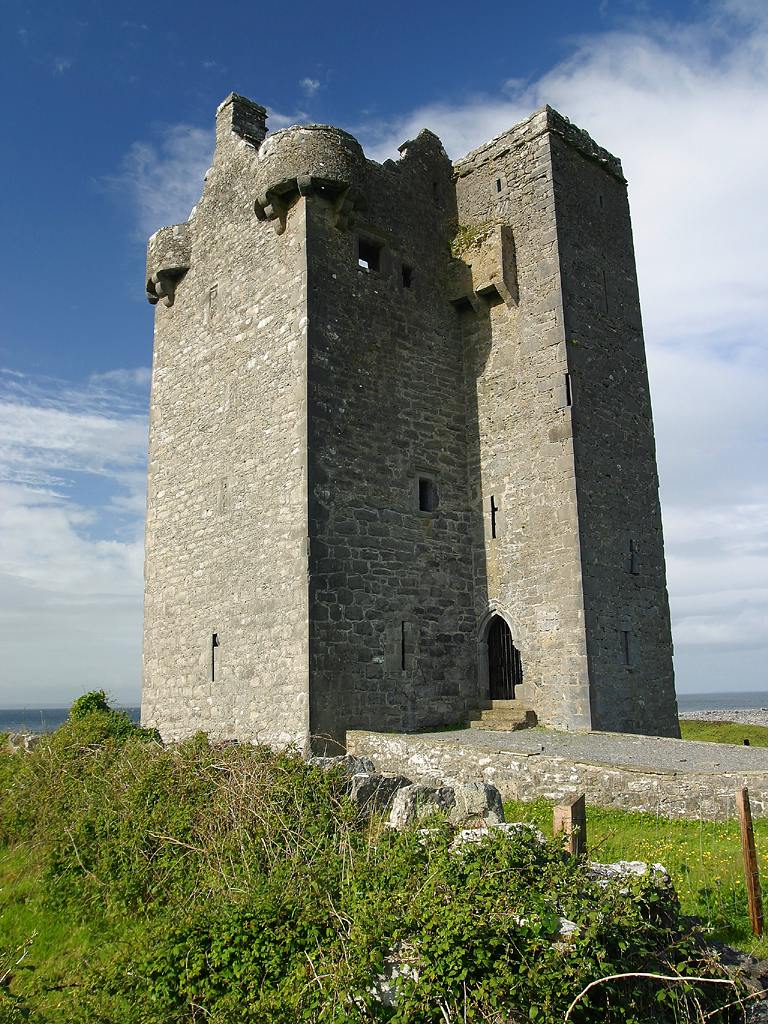
Gleninagh Castle is a striking example of a 16th-century Irish tower house, located near Galway Bay in the area known as Gleninagh North, County Clare, Ireland. Erected by the Gaelic O’Loughlin clan, this L-shaped four-storey tower house stands prominently on a rocky cliff, commanding views over the bay and surrounding landscape. The castle's architecture and surrounding archaeological features provide a vivid insight into the medieval and early modern history of the region, reflecting both Gaelic traditions and later colonial influences.
Historical background and ownership
The castle was constructed in the 16th century by the O’Loughlin family, a Gaelic clan deeply rooted in the local culture and politics. This period in Ireland was marked by frequent conflicts between native Irish clans and expanding English rule. In 1544, King Henry VIII granted the lands and castle to Richard Harding, signaling an attempt to assert English control over the territory. However, the castle remained a contested stronghold, with notable events such as the 1570 capture by James Lynch, a prominent Galway figure, illustrating the turbulent power struggles of the era.
By the early 17th century, ownership had shifted to the diocese of Kilfenora in 1629, indicating a transition toward ecclesiastical control. The castle continued as a family residence well into the 19th century, with records from 1839 describing it as in good condition. Yet by 1843, it had been abandoned as a dwelling. Subsequently, the local landlord, Lord Blood, repurposed the upper floors as a dovecote and the ground floor as a cattle barn, reflecting changing utilitarian uses of the structure.
Architectural features of Gleninagh Castle
Design and defensive elements
The castle's L-shaped plan measures approximately 32 by 28 feet, with substantial stone walls that have endured centuries. It features a spiral staircase within, a common defensive and space-efficient design element in tower houses. The main entrance is protected by a machicolation, a projecting stone opening above the doorway used historically to defend against attackers by dropping objects or pouring boiling liquids.
Three corners of the tower are equipped with round bartizans, small turret-like structures that served as defensive positions with gun loops for firing. The walls contain narrow windows and arrow slits, allowing defenders to engage assailants while remaining protected. In the 17th century, many of these openings were sealed, possibly to accommodate open fireplaces and improve domestic comfort, signaling a shift from purely military to residential use.
Interior and roofing
Inside, several fireplaces are built into various floors, attesting to adaptations for heating and habitation. Interestingly, in the 19th century, the castle was covered with a thatched roof, a departure from the more typical stone or slate roofing of Irish castles, indicating local building practices or economic considerations at the time.
Surrounding historical and archaeological features
Medieval church ruins
Adjacent to the castle lie the ruins of a medieval church believed to date back to 1302. The church was built on the site of a former monastic settlement, with surviving walls up to eight feet high and about two and a half feet thick. The southern wall retains a pointed structure and a finely crafted stone doorway approximately five feet tall. Two windows, one rectangular and one round, survive on the south face, providing insight into the church's original design. Although overgrown with ivy and rubble, the church remains a significant marker of the area's religious heritage.
19th-century landlord's house and holy well
Within the castle grounds are the remains of a 19th-century landlord's house and its former garden, reflecting later phases of occupation and land management. A nearby well, traditionally regarded as holy, underscores the continuing spiritual significance of the site through time.
Ancient ritual sites and landscape heritage
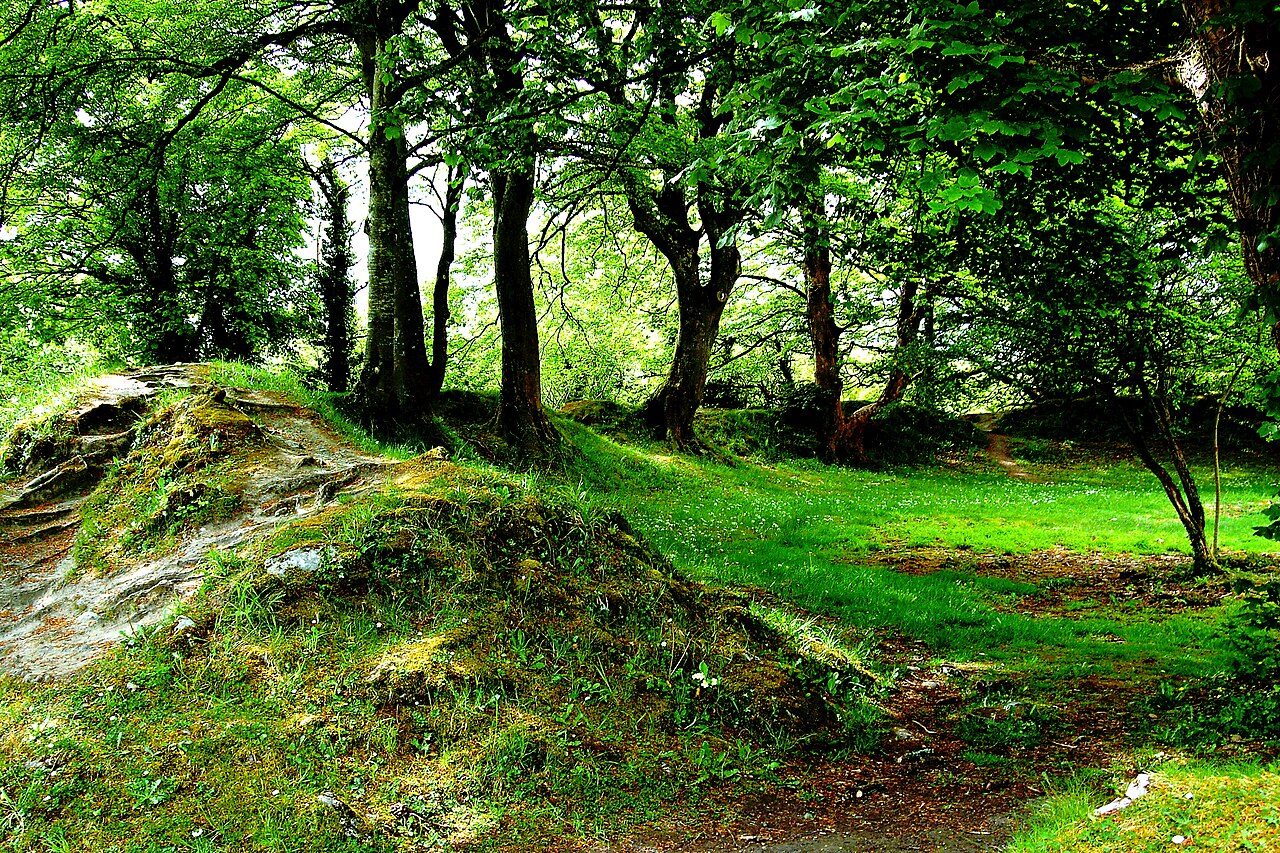
The landscape around Gleninagh Castle is rich with ancient sacred and ritual sites. Notably, Tobar na Croiche Naoimhe ("Place of the Holy Cross") features Gothic stonework and is linked to early pilgrimage practices. Excavations in 1840 uncovered human skulls and evidence suggestive of ancient sacrificial rites, highlighting the site's deep spiritual roots.
Nearby, Tobar Cornain is another pilgrimage well surrounded by a 19th-century Gothic revival structure. The area also contains the ancient earthwork Dough Branneen, an old burial mound, and the sacred stone known as Keger. The nearby Iron Age Celtic fort Dun Fergus is notable for its circular design and natural caves beneath, reflecting early defensive strategies and settlement patterns in the region.
Together, these features illustrate a landscape of continuous human occupation from prehistoric times through the medieval period, underscoring Gleninagh Castle's place within a broader historical and cultural context.
Preservation and current condition
Today, Gleninagh Castle stands as a partially preserved monument to Ireland's turbulent history and architectural heritage. While the tower house remains structurally sound with many original features intact, the surrounding ruins and landscape elements require ongoing conservation efforts. The castle's dramatic setting on a rocky promontory overlooking Galway Bay enhances its appeal to visitors and historians alike.
Frequently asked questions (FAQ)
- What is the historical significance of Gleninagh Castle?
- Gleninagh Castle is a remarkable example of a 16th-century tower house, showcasing the architectural style of its time. It served as a stronghold for the local Gaelic lords, reflecting the feudal system and social hierarchy of the era. The castle's history is intertwined with the rich cultural heritage of Ireland, making it a significant landmark.
- When was Gleninagh Castle built?
- Gleninagh Castle was constructed in the late 16th century, specifically around 1560. This period marked a time of political turbulence and territorial disputes in Ireland, and the castle played a pivotal role in the defense of its occupants. Its historical context adds depth to the experience of visiting the site.
- Can I visit Gleninagh Castle?
- Yes, Gleninagh Castle is open to the public for visits, allowing guests to explore its historic grounds and appreciate its architecture. However, it's important to check the visiting hours in advance, as they may vary throughout the year. Guided tours may also be available to enhance your experience.
- What are the opening hours for Gleninagh Castle?
- Gleninagh Castle typically opens to visitors from 10 AM to 5 PM, with extended hours during the summer months. It is advisable to check the official website or local tourism information for any seasonal changes or special events that may affect visiting times. Planning your visit accordingly will ensure you have ample time to explore the castle.
- Is Gleninagh Castle accessible for visitors with disabilities?
- Gleninagh Castle has made efforts to improve accessibility for all visitors, though some historical features may present challenges. It is recommended to contact the castle administration in advance for specific information regarding accessibility options. They can provide details on available accommodations to ensure an enjoyable visit.
- What is the best time to visit Gleninagh Castle?
- The best time to visit Gleninagh Castle is during the spring and early autumn when the weather is mild, and the surrounding landscape is particularly beautiful. Additionally, visiting during these seasons allows for a more comfortable experience with fewer crowds. Always consider checking local events that may coincide with your visit for added enjoyment.
- Are there nearby attractions to explore after visiting Gleninagh Castle?
- Yes, there are several attractions near Gleninagh Castle, including scenic walking trails, historic villages, and local markets. The stunning landscapes of the surrounding area provide opportunities for outdoor activities such as hiking and photography. Exploring these nearby sites can enhance your overall experience in the region.
- What are the ticket prices for Gleninagh Castle?
- Ticket prices for Gleninagh Castle are generally affordable, with discounts available for children, seniors, and students. Prices may vary depending on special events or guided tours, so it’s wise to check in advance. Purchasing tickets online can also save time and ensure your entry on busy days.
Information
Loading map...
Visitor reviews
No reviews yet. Been here? Write the first review and help other travelers!
Write the first reviewVisited this castle? Share your experience
Your review helps other travelers and adds first-hand knowledge to our encyclopedia.