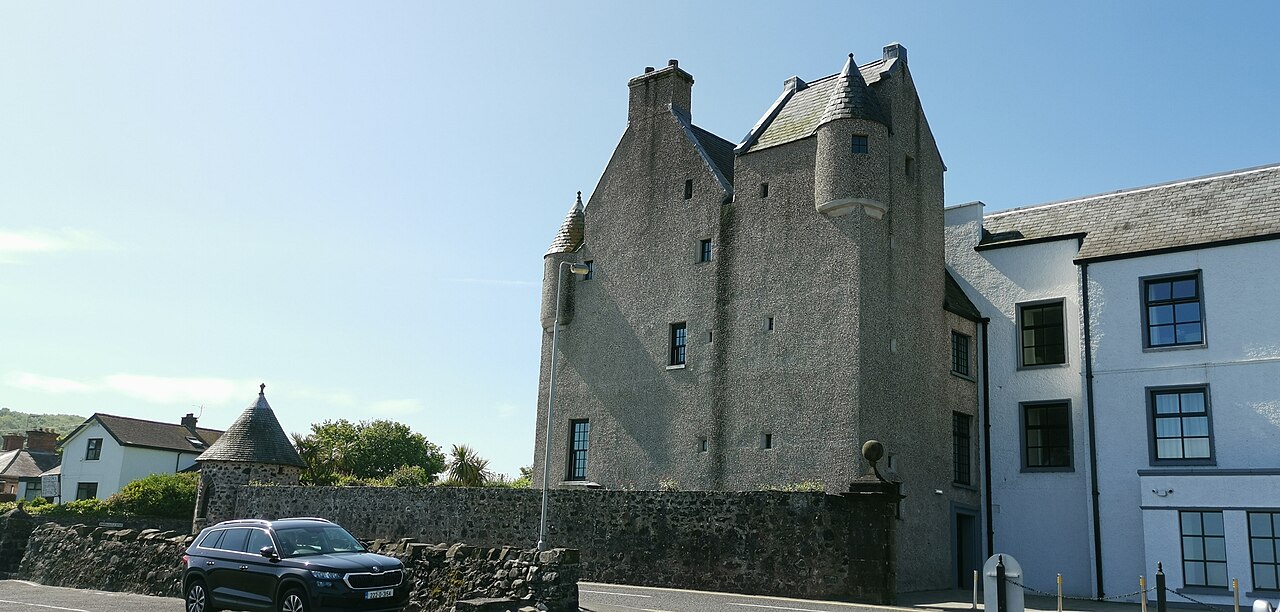
Glenarm Castle
Glenarm Castle stands as a remarkable testament to centuries of history in Northern Ireland, embodying a rich blend of medieval origins and Renaissance architectural evolution. Located in the village of Glenarm, this estate has been a continuous seat of power and residence for the MacDonnell family for nearly four centuries, with their presence in the region spanning almost 600 years. The castle's layered history reflects the complex socio-political landscape of Ulster, marked by clan conflicts, strategic marriages, and restoration efforts that have shaped its current form.
The castle's origins trace back to the 13th century when the site was first fortified by the Bisset family, granted lands by Hugh de Lacy, the Earl of Ulster. By 1260, John Bisset had established a fortress anchoring his control over the Glens of Antrim. However, the Bisset tenure was challenged by neighboring Gaelic clans, culminating in the decline of their influence by the early 16th century. The estate then passed to the MacDonnells, a Scottish family who entered the region through the marriage of John Mor MacDonnell to Marjory Bisset, the heiress of the Glens.
Construction and architectural evolution
The 1636 renaissance castle
The present Glenarm Castle was constructed in 1636 by Sir Randal MacDonnell, 1st Earl of Antrim. This building replaced the earlier medieval stronghold and was designed to serve as a grand residence rather than a purely defensive fortress. The castle's design reflects the Renaissance architectural style prevalent in the British Isles during the early 17th century, characterized by symmetry, proportion, and classical elements.
18th-century restoration and palladian influence
After suffering significant damage in 1642 during the conflicts involving the Scottish Covenanters, the castle lay in ruins for nearly a century. Restoration began in 1756 under the guidance of the fifth Earl of Antrim and engineer Christopher Myers. This reconstruction introduced strong Palladian architectural features, emphasizing classical symmetry, columns, and balanced proportions. The main residence is distinguished by its series of classical columns and pavilions, with towers and domes accentuating the structure's stately appearance.
Historical significance and family legacy
The bisset era and medieval fortifications
The original castle site was a medieval stronghold established by the Bisset family, who controlled the lands between Larne and Ballycastle. Their fortress included essential economic and domestic components such as a kitchen garden, orchard, mill, woodland, and meadows. Remnants of the medieval Bisset castle survive embedded in the village courthouse walls, providing tangible links to the site's early history. Archaeological excavations in the 1970s uncovered a skeleton immured within the structure, underscoring the site's layered past.
Macdonnell stewardship and regional influence
The MacDonnells, arriving from Scotland in the 14th century, consolidated their power through strategic marriage and territorial control. Their stewardship of Glenarm Castle and the surrounding estate has lasted for centuries, with the family maintaining ownership and residence through turbulent periods including the Irish Confederate Wars and subsequent restoration phases. The estate has remained a symbol of their enduring legacy in Northern Ireland.
Castle grounds and notable features
Walled garden and landscape design
The walled garden at Glenarm Castle, dating from around 1820, is a significant feature of the estate. Originally designed to supply fresh produce to the household, the garden's layout has been carefully preserved. It remains open to the public seasonally, hosting various events that celebrate the estate's horticultural heritage.
Approach and formal elements
A linden tree-lined avenue provides a formal approach to the castle, enhancing its grandeur and emphasizing its status as a stately home. The inclusion of towers, domes, and pavilions contributes to the architectural complexity and visual appeal of the estate, blending functional and decorative elements harmoniously.
Cultural impact and modern relevance
In recent decades, Glenarm Castle has gained cultural prominence as a filming location for notable productions such as the film Five Minutes of Heaven and the HBO series Game of Thrones. These appearances have introduced the castle's historic ambiance to a global audience, linking its architectural and historical significance with contemporary media.
Today, Glenarm Castle remains under the ownership of the MacDonnell family, currently held by Randal, Viscount Dunluce. The estate continues to serve as a private residence while also welcoming public visitors to its gardens and events, preserving its heritage as one of Northern Ireland's oldest and most significant estates.
Glenarm Castle exemplifies the evolution of a medieval fortress into a Renaissance and Palladian stately home, reflecting broader historical trends in architecture and aristocratic life. Its enduring presence and continuous occupation make it a vital link to the region's past and a cherished landmark for future generations.
Frequently asked questions (FAQ)
- When was Glenarm Castle originally built?
- The current Glenarm Castle was built in 1636 by Sir Randal MacDonnell, 1st Earl of Antrim, replacing an earlier medieval fortress on the site.
- What architectural styles are featured at Glenarm Castle?
- Glenarm Castle primarily features Renaissance architecture from its 17th-century construction and Palladian elements introduced during 18th-century restoration.
- Can visitors explore the gardens at Glenarm Castle?
- Yes, the castle's walled garden is open to the public between May and September and hosts various events during this period.
- Who owns Glenarm Castle today?
- Glenarm Castle is currently owned by Randal, Viscount Dunluce, continuing the MacDonnell family's nearly 400-year stewardship of the estate.
- What historical families have been associated with Glenarm Castle?
- The Bisset family originally established the medieval fortress, and the MacDonnell family took ownership through marriage in the 14th century and have maintained it since.
Information
Sources & official resources
Verify the information above using these authoritative references.
Loading map...
Visitor reviews
No reviews yet. Been here? Write the first review and help other travelers!
Write the first reviewVisited this castle? Share your experience
Your review helps other travelers and adds first-hand knowledge to our encyclopedia.