Ballygally Castle
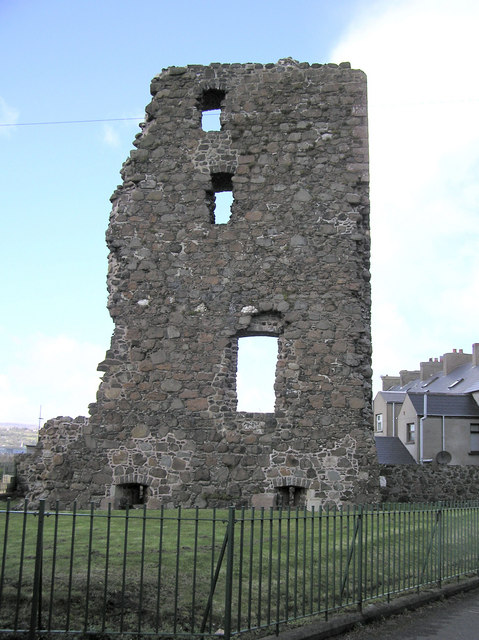
Ballygally Castle stands prominently in the village of Ballygally, County Antrim, Northern Ireland, overlooking the scenic Ballygally Bay. Built in 1625 by James Shaw, a Scottish settler from Greenock, the castle exemplifies the Scottish baronial architectural style transplanted to Ulster during the early 17th century. Shaw, who arrived in Ireland in 1606, constructed the castle on land leased from the Earl of Antrim, symbolizing the complex social and political relationships during the period of English and Scottish colonization in Ireland.
Architectural features and design
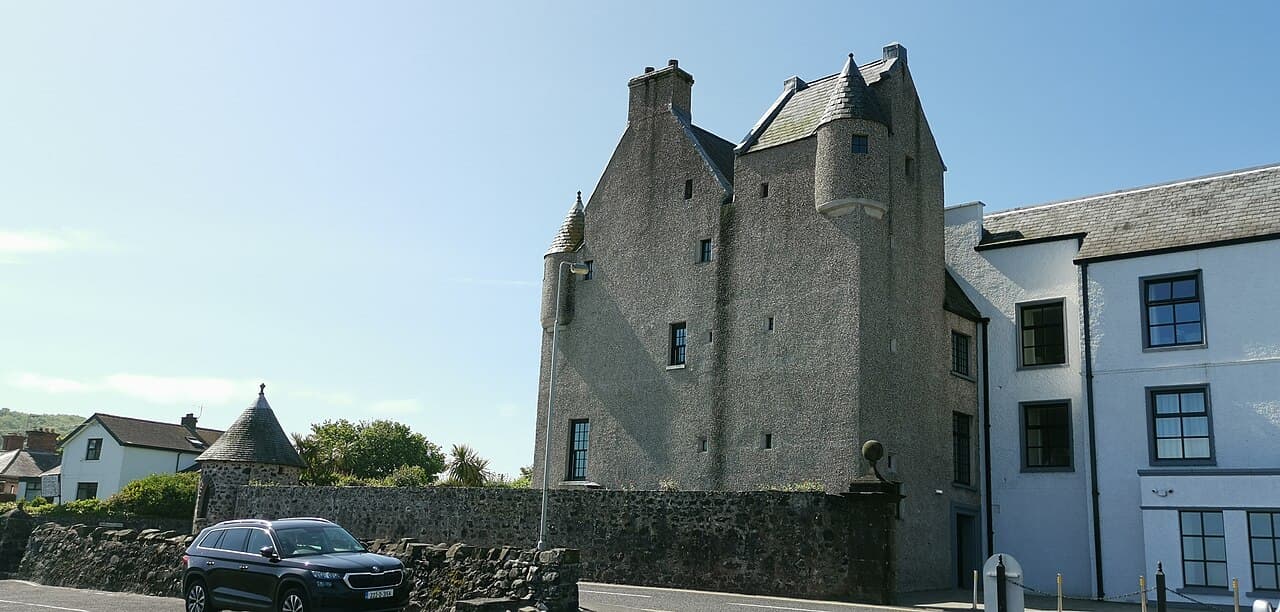
The castle is a rectangular, four-storey structure with walls approximately 1.5 meters thick, designed for both residence and defense. It features four corner turrets capped with conical roofs, a hallmark of the Scottish baronial style. A distinctive cylindrical flanking tower on the northeast side houses the main entrance and a stone spiral staircase that connects all floors, facilitating internal movement within the stronghold.
Defensive elements include narrow gun loops integrated into the walls for musket fire, and an open water channel running through the outer hall, ensuring a supply of water during sieges. Originally, the castle was surrounded by a bawn—a defensive courtyard with four corner turrets. However, the side facing the sea was removed in the 1840s to make way for the construction of the coast road, altering the original fortifications but leaving much of the bawn intact.
Above the main entrance door is an inscription in Middle Scots: "Godis Providens is my Inheritans," meaning "God's Providence is my Inheritance," reflecting the religious faith and Scottish heritage of the original builder.
Historical significance and events
Ballygally Castle played a significant defensive role during the turbulent 17th century. It served as a refuge for Protestants during the Irish Rebellion of 1641. The castle withstood multiple assaults by the Irish garrison stationed at Glenarm, successfully resisting capture. This resilience highlights its strategic importance and robust construction during a period marked by religious and political conflict.
The castle remained in the possession of the Shaw family for nearly two centuries, passing through generations until financial difficulties forced the sale of the estate in 1799 to the Agnew family. The Shaw family's decline in wealth reflects broader social changes in Ireland during the late 18th century.
In the 18th century, around 1760, significant additions were made to accommodate the extended family of Henry Shaw, who married into the Hamilton family. Later, the castle was repurposed as a coastguard station before returning to private residential use.
Modern history and preservation
In the early 1950s, the castle was purchased by Cyril Lord, a textile millionaire who undertook extensive refurbishment and converted the building into a hotel. Today, Ballygally Castle operates as a hotel under the management of the Hastings Hotels Group, maintaining its status as the only 17th-century building still used as a residence in Northern Ireland.
The castle is recognized as a Scheduled Historic Monument, ensuring the preservation of its architectural integrity and historical significance. Despite alterations over centuries, the castle retains much of its original character and defensive features, making it a rare and valuable example of Scottish baronial architecture in Northern Ireland.
Cultural significance and folklore
Ballygally Castle holds a special place in regional folklore and is reputed to be one of the most haunted locations in Ulster. Numerous accounts of ghostly apparitions and supernatural phenomena have been reported, contributing to its allure as a historic and mysterious site. The castle's reputation for hauntings adds a cultural and touristic dimension that complements its architectural and historical importance.
This blend of rich history, distinctive architecture, and folklore makes Ballygally Castle a unique destination for visitors interested in heritage, architecture, and the paranormal. Its coastal setting further enhances its appeal, offering picturesque views and a tangible connection to Northern Ireland's complex past.
Architectural details and layout
The castle's layout includes a main rectangular block with four corner turrets and the prominent northeast flanking tower. The thick stone walls provided formidable defense against attacks, while the interior was designed for comfortable living. The spiral staircase in the tower allowed efficient vertical circulation, a common feature in Scottish tower houses and baronial castles.
The original bawn courtyard, though partially removed, still survives in part, enclosing a walled garden that adds to the site's historic charm. The castle's position overlooking the sea at Ballygally Bay not only offered strategic advantages but also aesthetic benefits, integrating the natural landscape into the castle's setting.
Frequently asked questions (FAQ)
- How do I get to Ballygally Castle?
- Ballygally Castle is located on the Coast Road in Northern Ireland, making it easily accessible by car or public transport. If you're driving, it's approximately 30 minutes from Belfast, and there is parking available on-site. Public buses also service the area, providing a convenient option for visitors.
- What is the historical significance of Ballygally Castle?
- Ballygally Castle dates back to 1625 and is one of the oldest continuously inhabited castles in Northern Ireland. Originally built as a fortified residence, it has a rich history, including tales of intrigue and ghostly legends, particularly associated with Lady Isobel Shaw. The castle's historical significance makes it a fascinating destination for history enthusiasts.
- When was Ballygally Castle built?
- Ballygally Castle was constructed in 1625 by the Hamilton family and was designed as a defensive fortress. Over the centuries, it has undergone various restorations while maintaining its original architectural features. Visitors can explore its storied past through guided tours and exhibits.
- Can I stay overnight at Ballygally Castle?
- Yes, Ballygally Castle offers luxurious accommodations, allowing visitors to experience the charm of staying in a historic castle. Guests can choose from a variety of beautifully decorated rooms, many with stunning views of the surrounding coastline. Staying overnight provides a unique opportunity to immerse yourself in the castle's rich history.
- Why is Ballygally Castle a popular tourist attraction?
- Ballygally Castle attracts visitors due to its stunning coastal location, fascinating history, and beautiful architecture. The castle offers guided tours that highlight its historical significance and ghostly tales, appealing to both history buffs and those seeking a bit of adventure. Additionally, the on-site restaurant and lovely gardens enhance the overall visitor experience.
- Is it possible to host events at Ballygally Castle?
- Yes, Ballygally Castle is an ideal venue for hosting weddings, corporate events, and private functions. The castle offers a range of event spaces that can accommodate various group sizes, all set within a unique and picturesque environment. Event planning services are available to ensure a memorable occasion.
- What are the opening hours for Ballygally Castle?
- Ballygally Castle is typically open to visitors from 9:00 AM to 5:00 PM, with extended hours during the summer months. It is advisable to check the official website or contact the castle directly for any seasonal variations or special events that may affect opening times. Planning your visit during these hours will ensure you have ample time to explore and enjoy the castle.
- What are the ticket prices for visiting Ballygally Castle?
- Admission to Ballygally Castle is generally affordable, with different pricing options available for adults, children, and families. Special rates may apply for groups and educational tours, making it accessible for a wide range of visitors. It's recommended to check the official website for the most current pricing information before your visit.
- What are some nearby attractions to visit while at Ballygally Castle?
- While visiting Ballygally Castle, you can explore nearby attractions such as the stunning Larne Harbour and the scenic Antrim Coast. The famous Giant's Causeway and Carrick-a-Rede rope bridge are also within driving distance, making for a perfect day of exploring Northern Ireland's natural beauty. These nearby sites enhance the overall experience of your visit to Ballygally Castle.
Photo gallery

Information
Website
Visit websiteSources & official resources
Verify the information above using these authoritative references.
Loading map...
Visitor reviews
No reviews yet. Been here? Write the first review and help other travelers!
Write the first reviewVisited this castle? Share your experience
Your review helps other travelers and adds first-hand knowledge to our encyclopedia.