Glanegg Castle
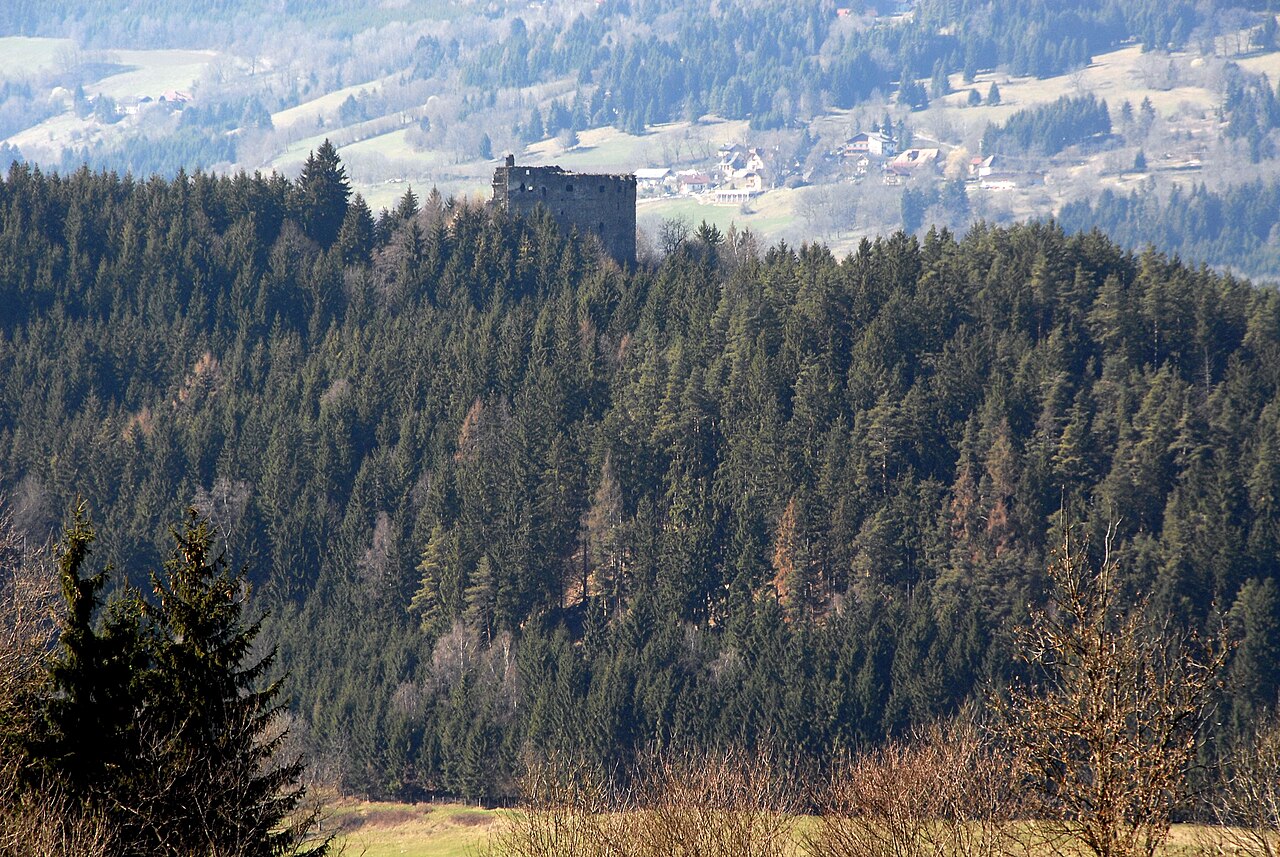
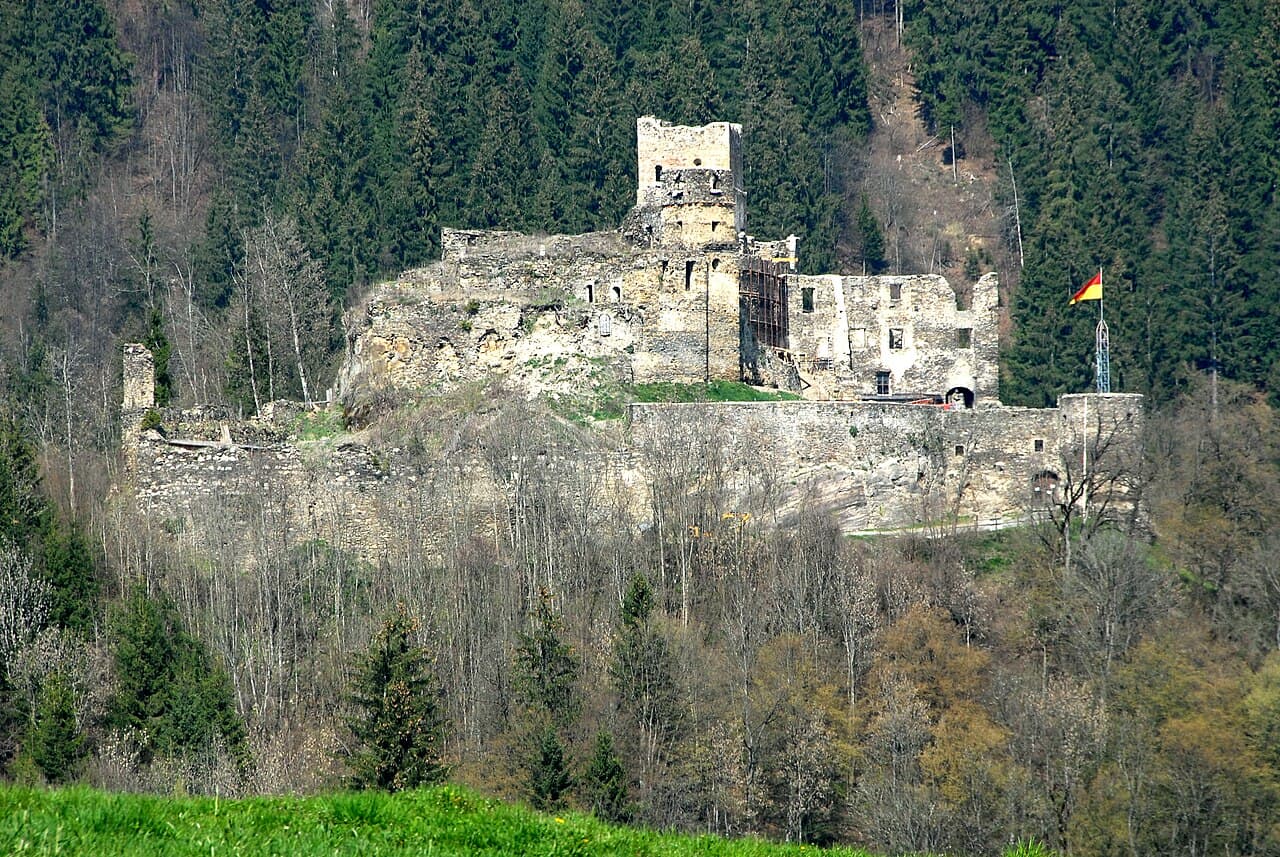
Glanegg Castle stands as a significant hill castle in the Austrian province of Carinthia, notable for its extensive military and architectural history spanning nearly a millennium. First documented in 1121, it ranks as the third largest fortress complex in Carinthia after Hochosterwitz and Fortress Landskron. Perched strategically above the Glan river valley, the castle historically controlled vital passage routes, underscoring its importance in regional defense and administration.
Early history and medieval ownership
The castle's earliest recorded owner was Duke Henry III of Carinthia, a member of the Eppenstein noble family, who held it until his death in 1122. Subsequently, ownership passed to his nephew, Count Bernhard von Spanheim, and later to Margrave Ottokar III of Styria. After Ottokar III's death, his son, Duke Ottokar IV, transferred Glanegg to Duke Leopold V in 1192, reflecting the complex inheritance and political alliances characteristic of the High Medieval period in this region.
Military significance and turkish sieges
Between 1473 and 1478, during the era of Ottoman incursions into Europe, Glanegg Castle faced repeated threats from Turkish forces. Despite these pressures, the fortress was never captured, demonstrating its formidable defensive capabilities. This period highlights the castle's strategic military role in protecting Carinthia from external invasions.
Renaissance transformations and ownership changes
In 1534, ownership transferred to King Ferdinand I, who, facing financial difficulties, sold the castle to Ulrich von Ernau. Under the Ernau family, Glanegg underwent significant reconstruction and expansion, incorporating Renaissance architectural elements that enhanced its fortifications and residential comforts. The Ernau lineage maintained control well into the late 16th century, solidifying the castle's status as a noble residence and military stronghold.
18th and 19th-century developments
In the early 18th century, the castle passed to Count Stampfer, who contributed to regional infrastructure by initiating the first road through the Glan valley. During the 1813 Sixth Coalition War, Glanegg was fortified in anticipation of conflict, although it did not see active combat. Later in the 19th century, ownership changed hands multiple times, including to Hofrichter Hirzegger of Ossiach and subsequently to the family of Klinze Glanegg through marriage.
By 1860, the castle was owned by Anton Kinz, mayor of Bregenz and a wine merchant. During this period, the castle's condition began to deteriorate notably due to the removal of roofs and wooden structures. This dismantling was influenced by the roof tax imposed by Emperor Joseph II, which incentivized owners to remove roofs to reduce tax liabilities. Despite this decline, parts of the castle remained habitable into the late 19th century.
Architectural features and layout
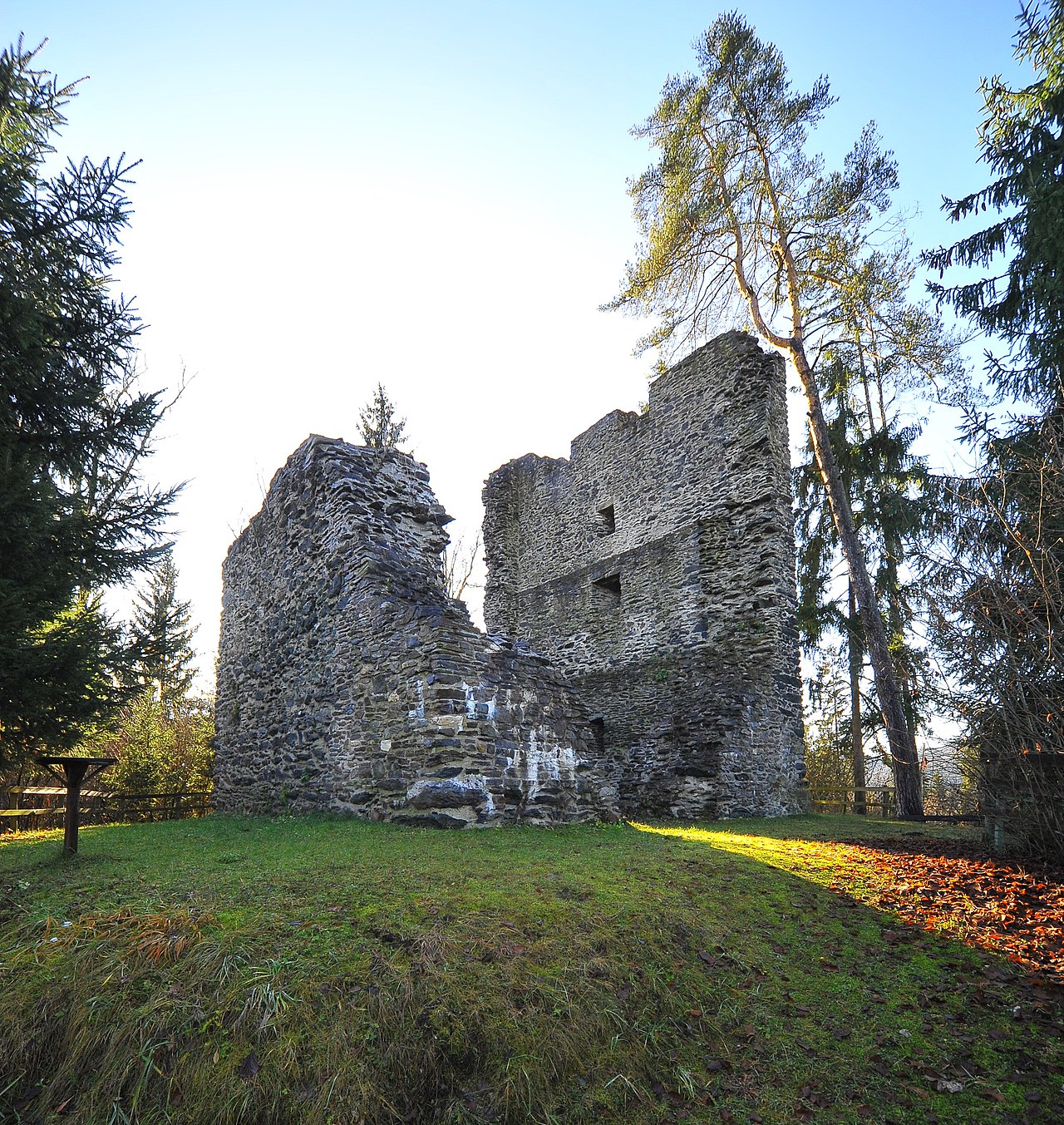
Glanegg Castle exhibits a complex architectural evolution, combining elements from the Romanesque period through the Renaissance. The fortress is anchored by a prominent Romanesque bergfried, a tall fortified tower that served as the main keep. This tower includes a distinctive signal window, used historically for communication and surveillance across the surrounding landscape.
One of the castle's most striking features is its large round tower guarding the entrance, exemplifying medieval defensive design. The castle's construction materials vary, reflecting the continuous building campaigns and adaptations made over centuries to meet evolving military and residential needs.
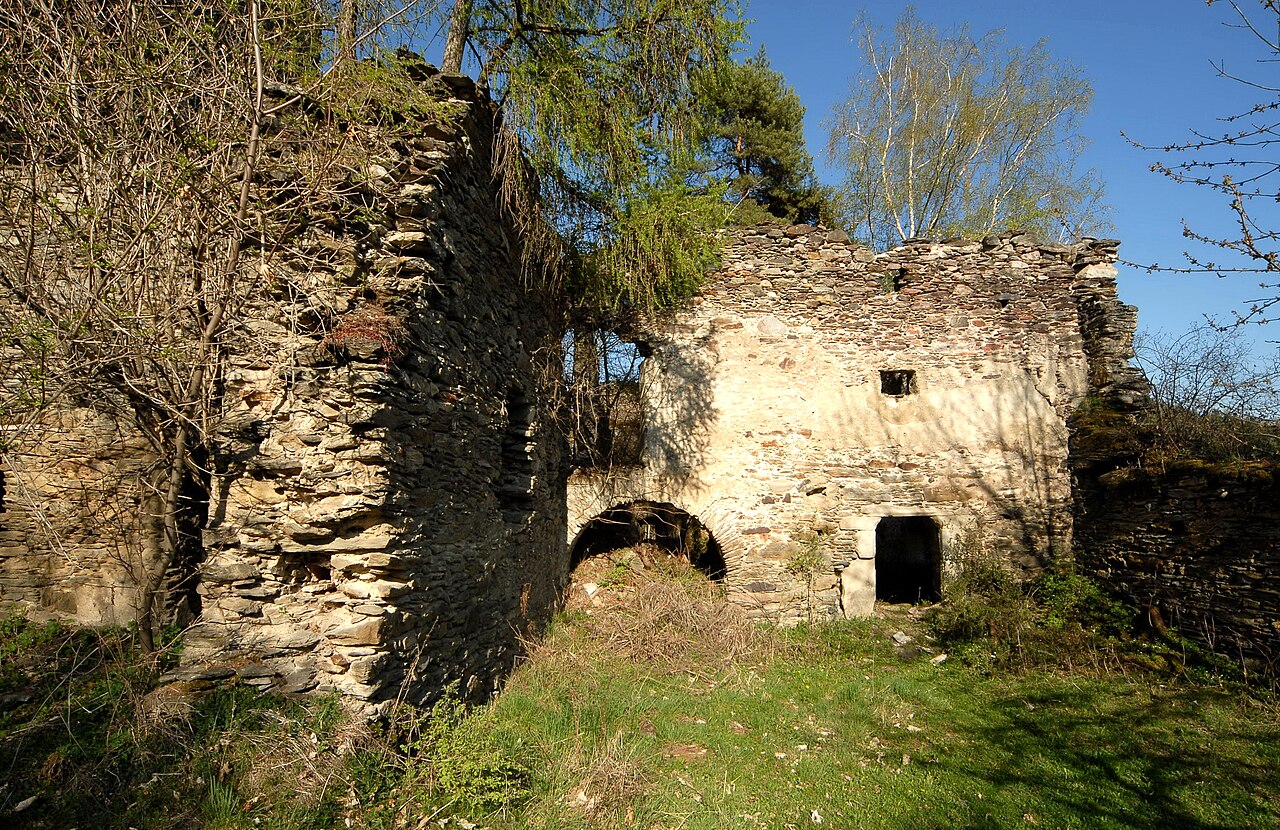
Despite the mid-19th-century removal of roofs and wooden components, the remaining stone structures convey the castle's original scale and defensive sophistication. The layout includes multiple defensive walls, battlements, and courtyards that illustrate its role as a fortified residence controlling a key valley route.
Modern preservation and cultural significance
Today, Glanegg Castle remains under private ownership by the Zwilling family. Since 1996, the municipality of Glanegg has leased the site to the Burgverein Glanegg society, which oversees ongoing renovation and preservation efforts. These initiatives aim to stabilize the ruins, prevent further decay, and celebrate the castle's rich cultural heritage.
The castle's historical importance as a military stronghold, noble residence, and regional landmark is recognized within Carinthia and beyond. Its architectural features provide valuable insights into medieval and Renaissance fortress design, while its storied past reflects the dynamic political and military history of southern Austria.
Visitor experience and accessibility
While the castle is primarily a ruin, visitors can explore the extensive remains that illustrate its historical grandeur. The site offers panoramic views of the Glan valley and surrounding landscapes, enhancing its appeal as a cultural and historical destination. Preservation efforts continue to improve safety and accessibility for visitors interested in medieval architecture and Austrian heritage.
Frequently asked questions (FAQ)
- When was Glanegg Castle first documented?
- Glanegg Castle was first documented in 1121, during the High Medieval period, marking its long-standing historical significance.
- What architectural styles are present at Glanegg Castle?
- The castle features a mix of architectural styles, including Romanesque elements in the bergfried and Renaissance influences from later renovations.
- Is Glanegg Castle open to visitors?
- Yes, visitors can explore the ruins of Glanegg Castle, which offers panoramic views and insight into medieval fortress architecture.
- Who currently owns Glanegg Castle?
- The castle is currently privately owned by the Zwilling family, with preservation efforts managed by the Burgverein Glanegg society under a lease from the municipality.
- What is the historical significance of Glanegg Castle?
- Glanegg Castle played a crucial role in regional defense, serving as a military stronghold and noble residence controlling the Glan valley since the 12th century.
Photo gallery

Information
Website
Visit websiteSources & official resources
Verify the information above using these authoritative references.
Loading map...
Visitor reviews
No reviews yet. Been here? Write the first review and help other travelers!
Write the first reviewVisited this castle? Share your experience
Your review helps other travelers and adds first-hand knowledge to our encyclopedia.