Burgruine Gradenegg — Austria castle

Burgruine Gradenegg

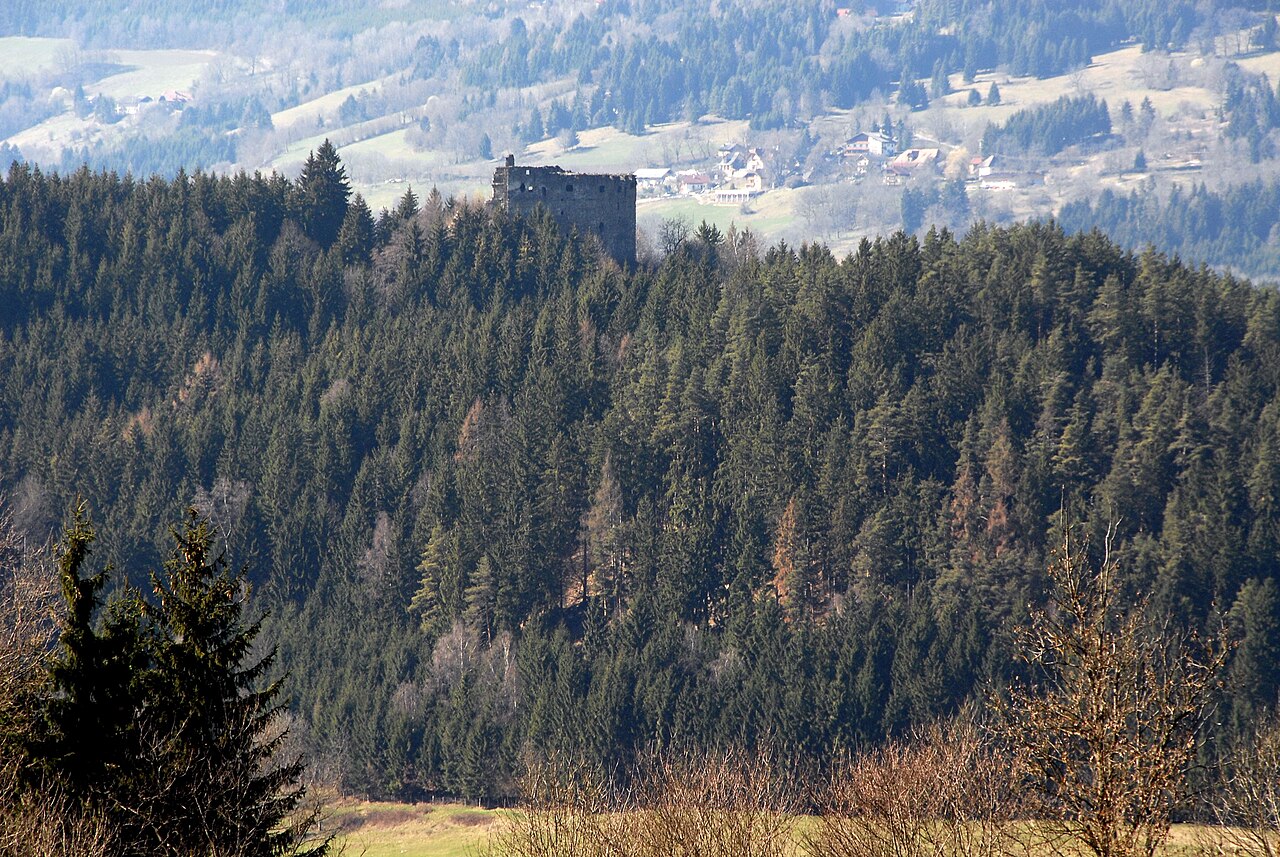
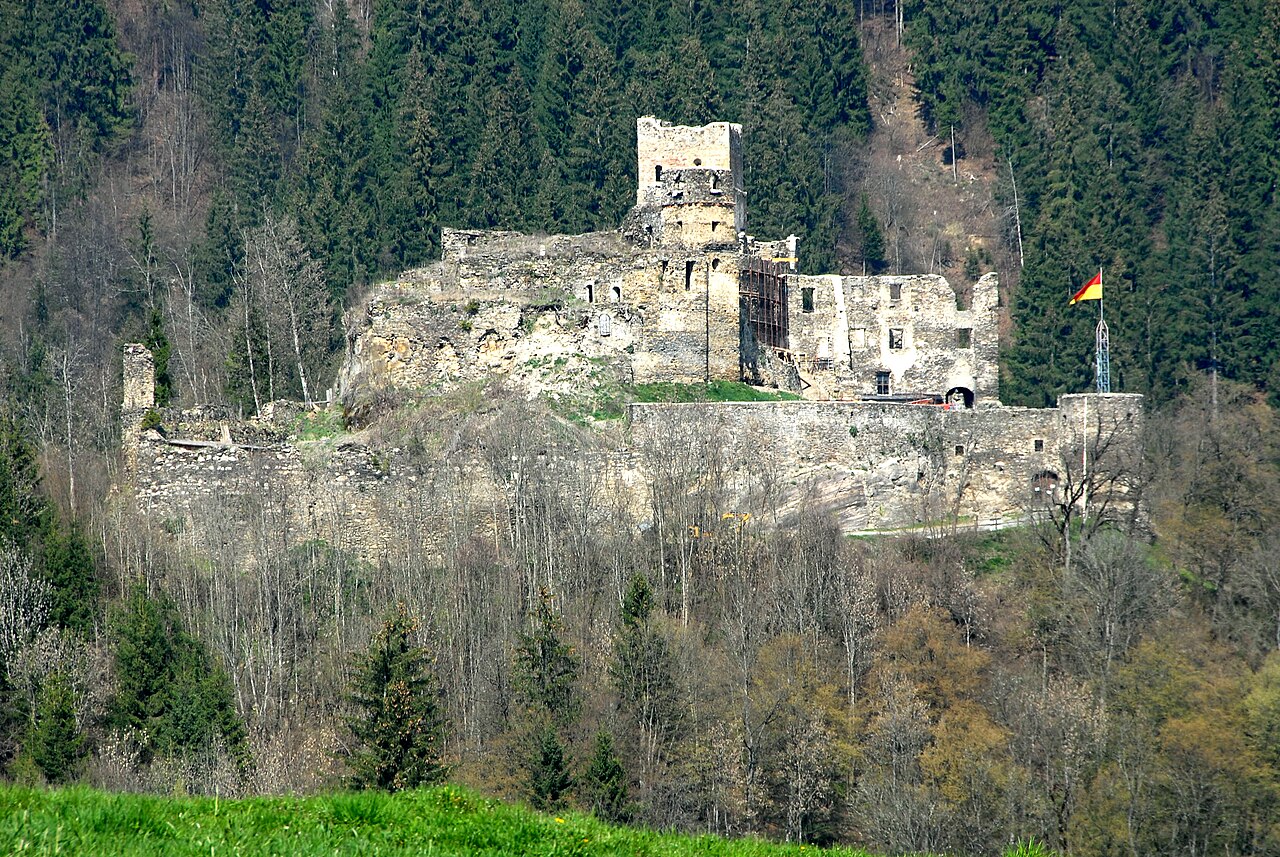
Burgruine Gradenegg castle ruins in Carinthia, Austria
High Medieval (11th–13th c.)
Ruins

Burgruine Gradenegg is a ruined high medieval castle located in the municipality of Liebenfels within the Austrian state of Carinthia. This castle dates back to the 12th century and is situated approximately 300 meters above the Glantalboden valley on a low, rocky hilltop, which provided a strategic vantage point over the surrounding landscape.

Historical background and significance

The origins of Burgruine Gradenegg can be traced to the High Middle Ages, a period marked by the construction of numerous fortifications across Europe to secure territories and assert noble power. The castle was likely established by a local noble family to control the nearby trade routes and oversee the fertile valley below. Although detailed records about the castle's founders and specific historical events are scarce, its location and architectural remnants suggest it played a role in regional defense and administration during the medieval period.

Architectural features and layout

The castle complex is relatively small and compact, reflecting its function as a fortified residence rather than a large military fortress. The remains indicate a typical hill castle design, with defensive walls adapted to the uneven rocky terrain. The core of the castle likely included a keep or donjon, serving as the last line of defense and the lord's residence. Surrounding this central structure, there would have been curtain walls and possibly a gatehouse to control access.

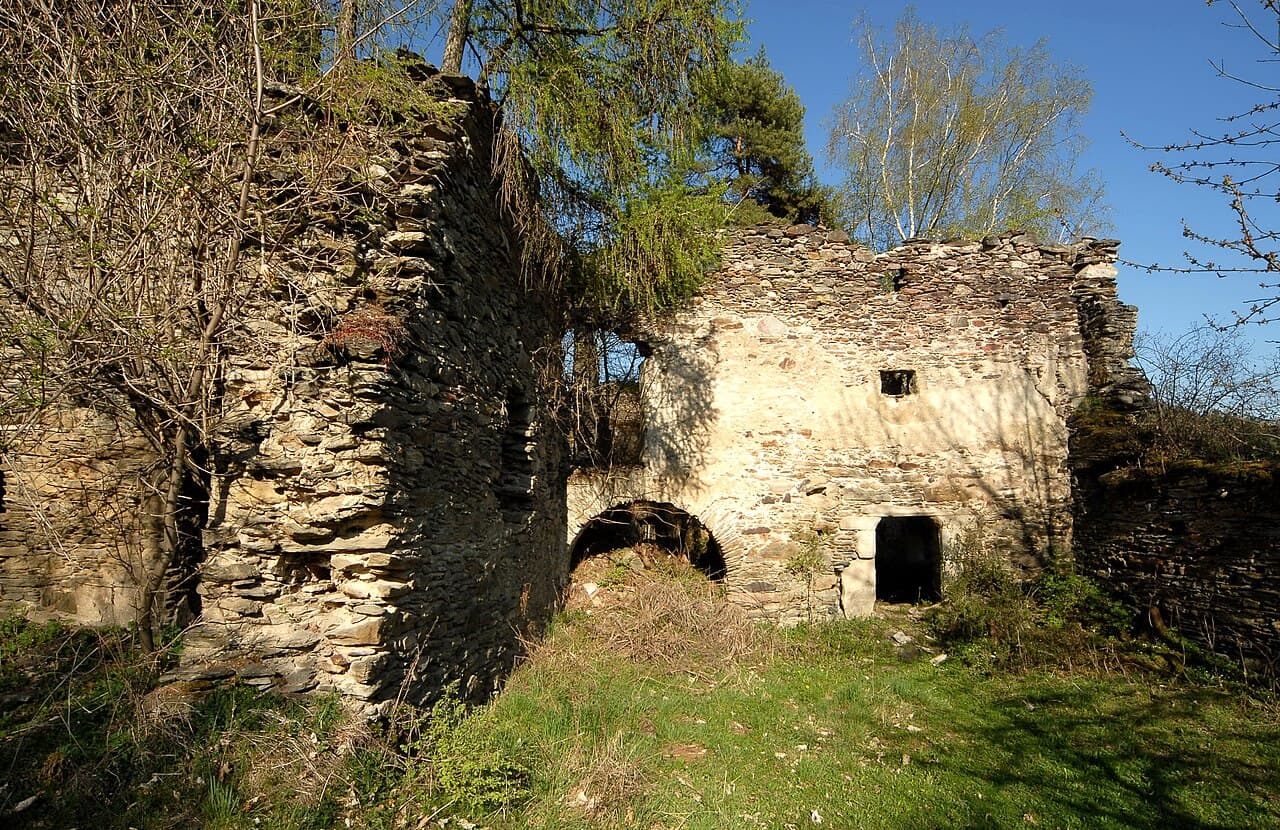
Due to the castle's ruinous state, much of the original masonry has collapsed or been reclaimed by nature, but some sections of the walls and foundations remain visible, providing insight into the medieval construction techniques used in Carinthia during the 12th century. The small size and location on a rocky outcrop classify it as a hill castle rather than a lowland or water castle.

Current condition and preservation

Today, Burgruine Gradenegg stands as an archaeological ruin, with only partial remnants of its original structures surviving. The castle is in a state of decay, with overgrown vegetation covering much of the site. Its ruinous condition limits extensive visitor access, but the location still attracts history enthusiasts and hikers interested in medieval architecture and Carinthian heritage.

Efforts to preserve what remains of the castle have been minimal, focusing mainly on preventing further deterioration rather than restoration. The site offers a valuable glimpse into the region's medieval past and architectural style.

Access and visitor information

The castle ruins are accessible by hiking trails from the nearby village of Liebenfels. Visitors should be prepared for uneven terrain and limited facilities. There are no formal guided tours or visitor centers at the site, so those interested in exploring should plan accordingly and respect the fragile condition of the ruins.

Burgruine Gradenegg in the context of Carinthian castles

While not as grand or well-preserved as some other castles in Carinthia, Burgruine Gradenegg represents the numerous smaller fortifications that dotted the region during the medieval period. These castles were integral to local governance, defense, and control of trade routes. Their remains contribute to understanding the feudal landscape of Carinthia and the architectural evolution of hill castles in Austria.

Frequently asked questions (FAQ)

How do I get to Burgruine Gradenegg?
Burgruine Gradenegg is located near the town of Gradenegg in Austria. The easiest way to reach the castle is by car; ample parking is available nearby. Public transportation options may also be available, but it's advisable to check local schedules for the best routes.
What is the historical significance of Burgruine Gradenegg?
Burgruine Gradenegg dates back to the 12th century and played a crucial role in the region's medieval history. It served as a noble residence and a strategic military site during various conflicts. Today, it stands as a testament to the architectural and cultural heritage of the area.
When was Burgruine Gradenegg built?
Construction of Burgruine Gradenegg began in the late 12th century, with significant expansions and renovations occurring throughout the following centuries. The castle has witnessed numerous historical events, making it a significant monument in Austria's history. Its ruins today reflect the architectural styles of the time.
Can I visit Burgruine Gradenegg year-round?
Yes, Burgruine Gradenegg is generally open to visitors year-round, although access may be restricted during winter months due to weather conditions. It's recommended to check ahead for any seasonal changes in visiting hours or maintenance closures. Always plan your visit accordingly to ensure a complete experience.
Why is Burgruine Gradenegg popular among tourists?
Burgruine Gradenegg is popular for its stunning panoramic views of the surrounding landscape and its rich history. Visitors are drawn to its picturesque ruins, which offer a glimpse into medieval life. Additionally, the castle's tranquil setting makes it a perfect destination for hiking and photography enthusiasts.
Is it possible to enter the castle grounds?
Yes, visitors are allowed to explore the castle grounds, which provide an immersive experience of the historical site. However, certain areas may have restricted access for safety reasons. It is advisable to follow any posted guidelines while exploring the ruins.
What are the opening hours for Burgruine Gradenegg?
The opening hours for Burgruine Gradenegg can vary by season. Typically, the castle is open from morning until late afternoon, but it’s best to verify the specific hours before your visit. Keep in mind that hours may change during holidays or special events.
Are there any nearby attractions to visit?
Yes, there are several attractions near Burgruine Gradenegg, including charming villages and hiking trails. The scenic landscapes of the region offer numerous outdoor activities, from hiking to cycling. Additionally, local museums and cultural sites provide further insights into the area's history.
What are the ticket prices for visiting Burgruine Gradenegg?
Admission to Burgruine Gradenegg is typically free, which makes it an accessible destination for all visitors. However, there may be fees for guided tours or special events. It’s wise to check the official site or local information for any updates on pricing.

Photo gallery

Burgruine Gradenegg
Click to view

Photo by Johann Jaritz•CC BY-SA 3.0 at

1 photo • Click any image to view in full screen

Information

Archaeological Site / Ruins

Loading map...

Visitor reviews

No reviews yet. Been here? Write the first review and help other travelers!

Write the first review

Visited this castle? Share your experience

Your review helps other travelers and adds first-hand knowledge to our encyclopedia.
Write a review

(5/5)

0/2000 characters

Your review will be visible after admin approval

Nearby castles

3.1 km
Burgruine Liebenfels — Austria castle

Burgruine Liebenfels

Liebenfels, Austria

Burgruine Liebenfels stands as a significant example of medieval fortification architecture nestled in the municipality of Liebenfels, Austria. This hill castle prominently reflects the defensive and residential needs of medieval European nobility from the early 14th century onwards. First documented in 1312 as "Liewenvelse," the castle's origins align with a period of regional consolidation and feudal power assertion. Its strategic location atop a rocky hill provided commanding views and natural defense, essential for protection and control in the turbulent medieval landscape. Historical ownership and significance The castle's ownership history reveals the shifting dynamics of noble families in Carinthia and the broader Austrian region. From 1333, the Liebenberški family held the castle for nearly a century, until the male line ended in 1428. Subsequent transfers of ownership through inheritance and sales brought the castle under the control of notable families such as the Ostroviški, Lochner, Attems, Wildensteinski, and Seenuss. Each family contributed to the castle's maintenance and adaptation, reflecting the evolving political and social landscape from the late medieval period to early modern times. Military conflicts and architectural adaptations The late 15th century was marked by significant military upheaval for Burgruine Liebenfels. Between 1484 and 1490, Hungarian forces occupied the fortress amid conflicts involving Emperor Frederick III and the Archbishop of Salzburg. The castle served as a strategic base for raids, compelling local labor to enhance its defenses. The occupiers constructed two bastions, a fortified gate, and an annex, bolstering the castle's military capabilities. Despite these reinforcements, the fortress suffered partial destruction during this turbulent period, underscoring the harsh realities of regional warfare and siege tactics. The bastion and late medieval fortifications Approximately 200 meters north of the main fortress lie the remains of one of the bastions added during the Hungarian occupation. This late 15th-century bastion exemplifies the adaptation of medieval castles to the evolving demands of artillery and siege warfare. Its remnants provide tangible evidence of the castle's strategic importance and the efforts made to fortify it against increasingly sophisticated military threats. Architectural features and layout Burgruine Liebenfels is characterized by its twin bergfriede, or defensive towers, which dominate the complex. These massive towers, dating from the early 14th century, rise prominently within the circular curtain wall that encloses the fortress. The curtain wall itself, thick and robust, retains sections of battlements, highlighting the castle's primary function as a defensive stronghold. One of the bergfriede reaches six stories high and features a distinctive group of windows on its fifth floor, indicating a heated room designed for comfort within the austere military environment. The palas and residential quarters The former palas within the main fortress served as the residential heart of the castle. Its upper-floor hall is notable for three narrow bifora windows, twin-arched openings that balanced aesthetic appeal with defensive utility by admitting light while maintaining structural strength. Adjacent to this hall is another heated chamber, distinguished by a rare grouping of five windows facing north. Such architectural details suggest a degree of residential luxury uncommon in purely military constructions, reflecting the dual role of the castle as both fortress and noble residence. The chapel and religious elements Attached to the northern side of the complex are the remains of a two-story castle chapel dedicated to Saint Nicholas, first recorded in 1419. This early Gothic chapel is integrated with a residential building featuring stepped gables and windows stylistically consistent with those found in the bergfried and palas. The presence of a heated room within this residential section further emphasizes the importance placed on comfort and status. The chapel remained active until at least 1666, serving as a spiritual center for the castle's inhabitants amid its gradual decline. Decline and preservation By the late 17th century, Burgruine Liebenfels had largely fallen into disuse. The topographer Valvasor described the castle around 1690 as nearly deserted, though some newer buildings on the site continued to be occupied. The gradual abandonment reflects broader trends in military technology and noble residence preferences, which rendered many medieval fortresses obsolete. Today, the castle exists as a ruin, with preserved and renovated sections that maintain its historical appearance and architectural significance. Material culture and museum connections Among the castle's surviving artifacts is an altar originally from its chapel, now preserved at the Carinthian State Museum in Klagenfurt. This connection extends the castle's cultural heritage beyond its physical remains, linking it to regional history and art. The diverse construction materials and decorative elements found throughout the site span several architectural styles, including Romanesque, Gothic, and Renaissance, illustrating the castle's long history of occupation and adaptation. Architectural significance in a regional context Burgruine Liebenfels offers valuable insights into the evolution of castle architecture in Carinthia and the broader Alpine region. Its combination of early Gothic military architecture with later Renaissance modifications exemplifies the layered history typical of European castles. The twin bergfriede and circular curtain wall are particularly notable features, demonstrating medieval defensive strategies. The presence of heated rooms within defensive towers and residential buildings highlights the gradual integration of comfort into fortress design, reflecting changing noble lifestyles. The castle's role in local heritage and tourism Today, Burgruine Liebenfels attracts visitors interested in medieval history, architecture, and the dramatic landscape of Carinthia. Its ruins provide a tangible connection to the region's feudal past and the complex interplay of military, residential, and religious functions within a single site. Preservation efforts have ensured that key architectural elements remain accessible, allowing for educational and cultural engagement. The castle's scenic hilltop location also offers panoramic views, enhancing its appeal as a heritage destination.

High Medieval (11th–13th c.)
Details
5.2 km
Burgruine Hardegg — Austria castle

Burgruine Hardegg

, Austria

Burgruine Hardegg is a notable example of a Romanesque twin castle complex dating back to the 12th century, situated on a wooded hill north of the town of Zweikirchen in the Austrian region of Carinthia. This castle complex is part of a historically significant network of fortifications that once protected the ducal capital of St. Veit. Alongside the nearby ruins of Liebenfels, Gradenegg, and Liemberg, Burgruine Hardegg formed a critical component of the medieval castle ring that secured the region. Historical context and significance The construction of Burgruine Hardegg in the High Medieval period reflects the strategic importance of fortifications in Carinthia during the 12th century. The castle's location on a wooded hill provided a natural vantage point for surveillance and defense. The complex's twin castle design is relatively rare and indicates a sophisticated approach to medieval military architecture, likely serving both residential and defensive purposes. Burgruine Hardegg, along with its neighboring castles, played a vital role in protecting the ducal seat at St. Veit, which was a key political and administrative center in the Duchy of Carinthia. These castles formed a defensive ring, controlling important routes and securing the surrounding territory against potential invaders or rival factions. Architectural features and layout The twin castle design of Burgruine Hardegg consists of two adjacent fortified structures, each with its own defensive walls and towers. This layout allowed for mutual support during attacks and provided separate living quarters or administrative spaces within the complex. The castle's Romanesque architectural style is characterized by robust stone walls, rounded arches, and simple yet effective defensive elements. Although the castle is now in a state of ruins, archaeological studies have revealed the foundations of its main towers, curtain walls, and gatehouses. The use of local stone materials and the castle's integration into the natural landscape demonstrate typical medieval construction techniques aimed at maximizing defense and durability. Current condition and preservation Today, Burgruine Hardegg stands as an archaeological site in a state of ruins. The site is privately owned by a local farmer, and access to the ruins is strictly prohibited due to the acute danger of collapse and the instability of the remaining structures. The constant loosening of stones poses a significant safety risk, making preservation efforts challenging. Despite its fragile condition, the castle remains an important cultural heritage site, offering valuable insights into the medieval history and architecture of Carinthia. Its inclusion in the castle ring around St. Veit highlights its historical role in regional defense and governance. Nearby castles and regional castle ring Burgruine Hardegg is part of a cluster of medieval castles that once encircled the ducal capital of St. Veit. The nearby ruins of Liebenfels, Gradenegg, and Liemberg share similar historical and architectural characteristics, collectively illustrating the defensive strategies employed in the region during the High Medieval period. These castles were interconnected through a network of roads and communication lines, enabling coordinated defense and administration. Their strategic placement on hills and elevated terrain provided commanding views of the surrounding landscape, essential for early warning against attacks. Access and visitor information Due to the private ownership of the land and the unstable condition of the ruins, public access to Burgruine Hardegg is prohibited. Visitors interested in medieval castles in Carinthia can explore other nearby sites such as Liebenfels and Gradenegg, which may offer safer access and more developed visitor facilities. Researchers and historians continue to study Burgruine Hardegg through archaeological surveys and remote sensing techniques to better understand its construction, usage, and role within the medieval castle ring.

High Medieval (11th–13th c.)
Details
6.2 km
Glanegg Castle — Austria castle

Glanegg Castle

Mautbrücken, Austria

Glanegg Castle stands as a significant hill castle in the Austrian province of Carinthia, notable for its extensive military and architectural history spanning nearly a millennium. First documented in 1121, it ranks as the third largest fortress complex in Carinthia after Hochosterwitz and Fortress Landskron. Perched strategically above the Glan river valley, the castle historically controlled vital passage routes, underscoring its importance in regional defense and administration. Early history and medieval ownership The castle's earliest recorded owner was Duke Henry III of Carinthia, a member of the Eppenstein noble family, who held it until his death in 1122. Subsequently, ownership passed to his nephew, Count Bernhard von Spanheim, and later to Margrave Ottokar III of Styria. After Ottokar III's death, his son, Duke Ottokar IV, transferred Glanegg to Duke Leopold V in 1192, reflecting the complex inheritance and political alliances characteristic of the High Medieval period in this region. Military significance and turkish sieges Between 1473 and 1478, during the era of Ottoman incursions into Europe, Glanegg Castle faced repeated threats from Turkish forces. Despite these pressures, the fortress was never captured, demonstrating its formidable defensive capabilities. This period highlights the castle's strategic military role in protecting Carinthia from external invasions. Renaissance transformations and ownership changes In 1534, ownership transferred to King Ferdinand I, who, facing financial difficulties, sold the castle to Ulrich von Ernau. Under the Ernau family, Glanegg underwent significant reconstruction and expansion, incorporating Renaissance architectural elements that enhanced its fortifications and residential comforts. The Ernau lineage maintained control well into the late 16th century, solidifying the castle's status as a noble residence and military stronghold. 18th and 19th-century developments In the early 18th century, the castle passed to Count Stampfer, who contributed to regional infrastructure by initiating the first road through the Glan valley. During the 1813 Sixth Coalition War, Glanegg was fortified in anticipation of conflict, although it did not see active combat. Later in the 19th century, ownership changed hands multiple times, including to Hofrichter Hirzegger of Ossiach and subsequently to the family of Klinze Glanegg through marriage. By 1860, the castle was owned by Anton Kinz, mayor of Bregenz and a wine merchant. During this period, the castle's condition began to deteriorate notably due to the removal of roofs and wooden structures. This dismantling was influenced by the roof tax imposed by Emperor Joseph II, which incentivized owners to remove roofs to reduce tax liabilities. Despite this decline, parts of the castle remained habitable into the late 19th century. Architectural features and layout Glanegg Castle exhibits a complex architectural evolution, combining elements from the Romanesque period through the Renaissance. The fortress is anchored by a prominent Romanesque bergfried, a tall fortified tower that served as the main keep. This tower includes a distinctive signal window, used historically for communication and surveillance across the surrounding landscape. One of the castle's most striking features is its large round tower guarding the entrance, exemplifying medieval defensive design. The castle's construction materials vary, reflecting the continuous building campaigns and adaptations made over centuries to meet evolving military and residential needs. Despite the mid-19th-century removal of roofs and wooden components, the remaining stone structures convey the castle's original scale and defensive sophistication. The layout includes multiple defensive walls, battlements, and courtyards that illustrate its role as a fortified residence controlling a key valley route. Modern preservation and cultural significance Today, Glanegg Castle remains under private ownership by the Zwilling family. Since 1996, the municipality of Glanegg has leased the site to the Burgverein Glanegg society, which oversees ongoing renovation and preservation efforts. These initiatives aim to stabilize the ruins, prevent further decay, and celebrate the castle's rich cultural heritage. The castle's historical importance as a military stronghold, noble residence, and regional landmark is recognized within Carinthia and beyond. Its architectural features provide valuable insights into medieval and Renaissance fortress design, while its storied past reflects the dynamic political and military history of southern Austria. Visitor experience and accessibility While the castle is primarily a ruin, visitors can explore the extensive remains that illustrate its historical grandeur. The site offers panoramic views of the Glan valley and surrounding landscapes, enhancing its appeal as a cultural and historical destination. Preservation efforts continue to improve safety and accessibility for visitors interested in medieval architecture and Austrian heritage.

High Medieval (11th–13th c.)
Details