Burgruine Hardegg
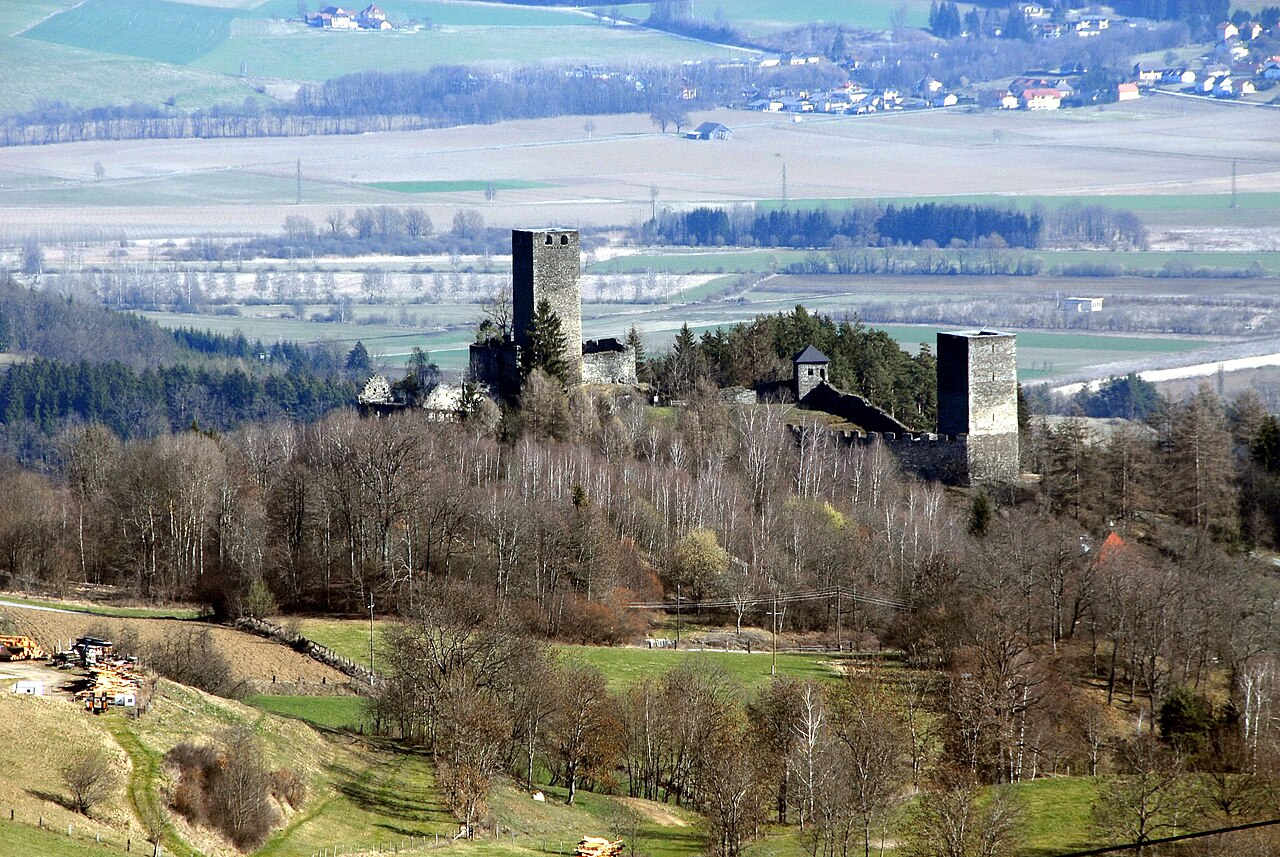
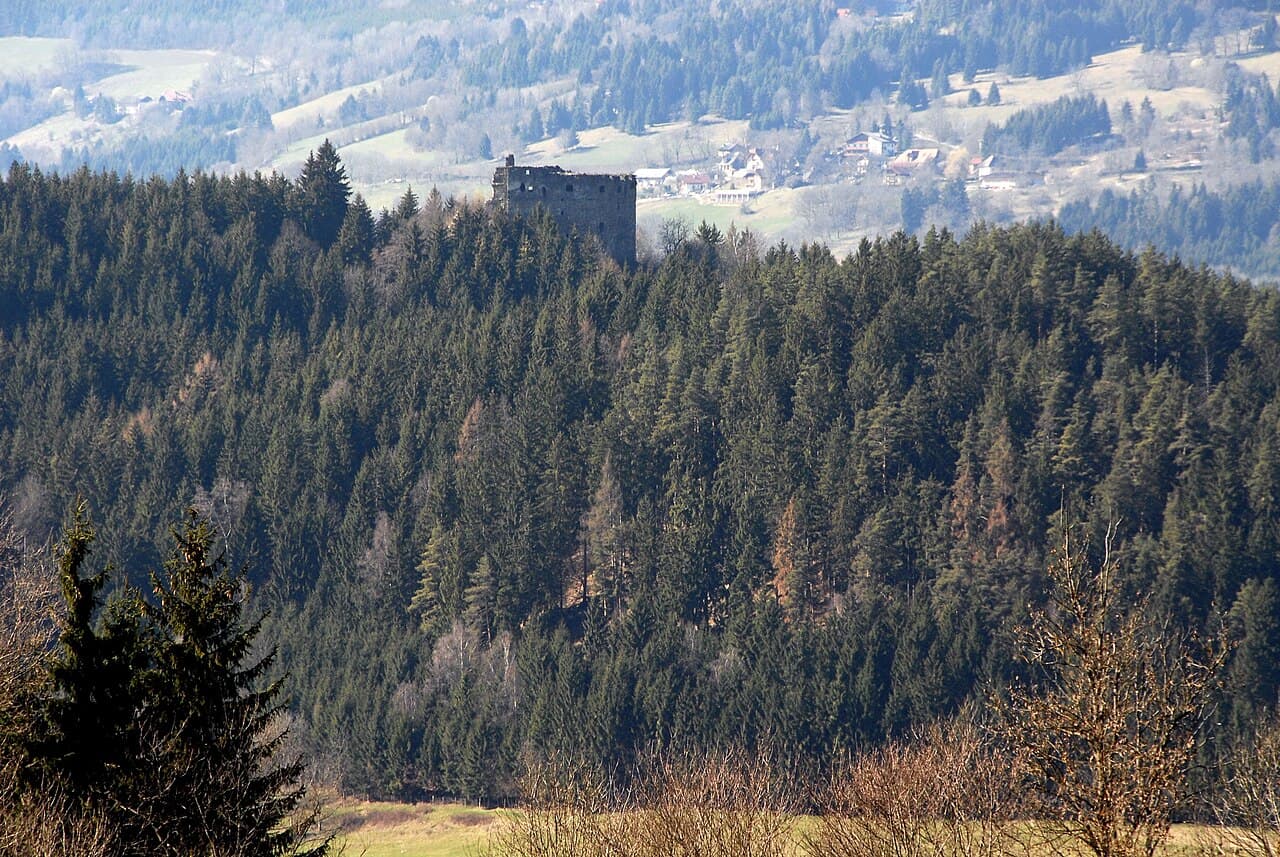
Burgruine Hardegg is a notable example of a Romanesque twin castle complex dating back to the 12th century, situated on a wooded hill north of the town of Zweikirchen in the Austrian region of Carinthia. This castle complex is part of a historically significant network of fortifications that once protected the ducal capital of St. Veit. Alongside the nearby ruins of Liebenfels, Gradenegg, and Liemberg, Burgruine Hardegg formed a critical component of the medieval castle ring that secured the region.
Historical context and significance
The construction of Burgruine Hardegg in the High Medieval period reflects the strategic importance of fortifications in Carinthia during the 12th century. The castle's location on a wooded hill provided a natural vantage point for surveillance and defense. The complex's twin castle design is relatively rare and indicates a sophisticated approach to medieval military architecture, likely serving both residential and defensive purposes.
Burgruine Hardegg, along with its neighboring castles, played a vital role in protecting the ducal seat at St. Veit, which was a key political and administrative center in the Duchy of Carinthia. These castles formed a defensive ring, controlling important routes and securing the surrounding territory against potential invaders or rival factions.
Architectural features and layout
The twin castle design of Burgruine Hardegg consists of two adjacent fortified structures, each with its own defensive walls and towers. This layout allowed for mutual support during attacks and provided separate living quarters or administrative spaces within the complex. The castle's Romanesque architectural style is characterized by robust stone walls, rounded arches, and simple yet effective defensive elements.
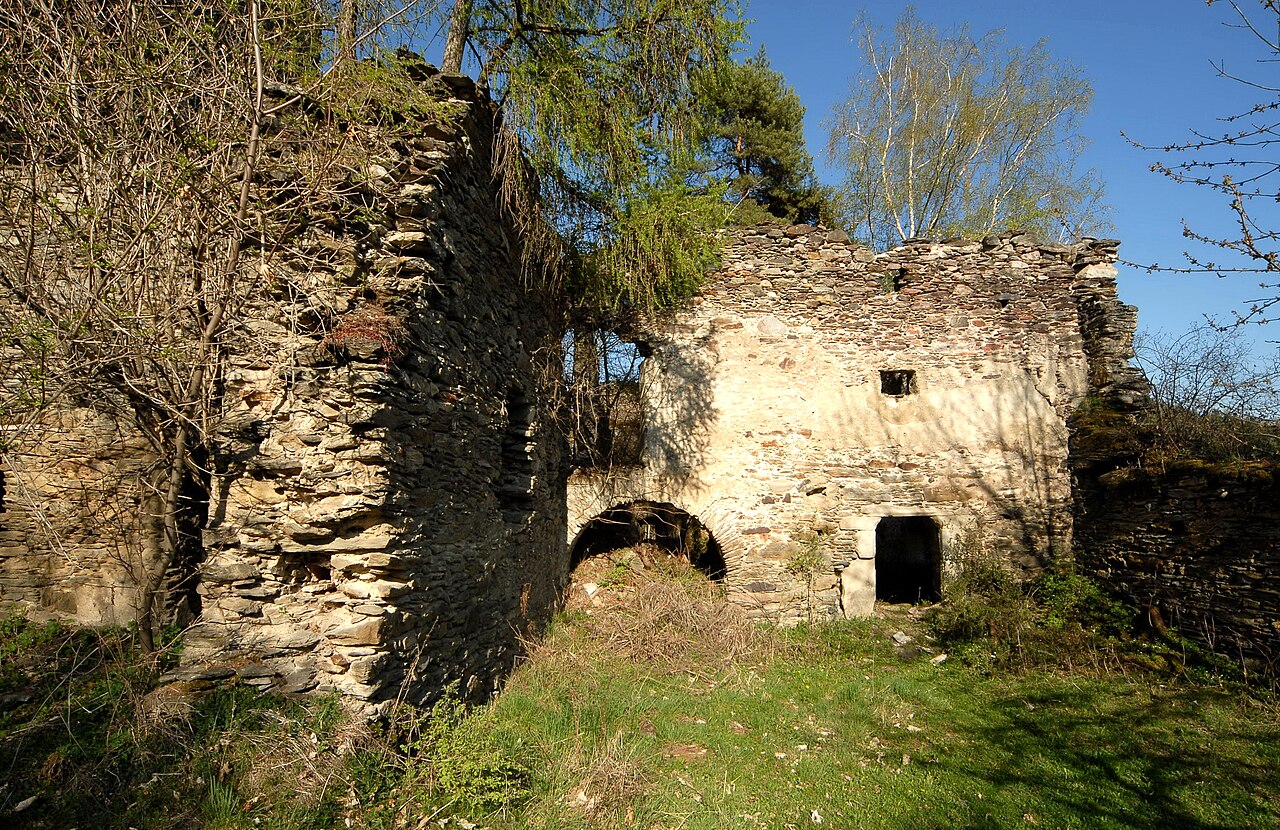
Although the castle is now in a state of ruins, archaeological studies have revealed the foundations of its main towers, curtain walls, and gatehouses. The use of local stone materials and the castle's integration into the natural landscape demonstrate typical medieval construction techniques aimed at maximizing defense and durability.
Current condition and preservation
Today, Burgruine Hardegg stands as an archaeological site in a state of ruins. The site is privately owned by a local farmer, and access to the ruins is strictly prohibited due to the acute danger of collapse and the instability of the remaining structures. The constant loosening of stones poses a significant safety risk, making preservation efforts challenging.
Despite its fragile condition, the castle remains an important cultural heritage site, offering valuable insights into the medieval history and architecture of Carinthia. Its inclusion in the castle ring around St. Veit highlights its historical role in regional defense and governance.
Nearby castles and regional castle ring
Burgruine Hardegg is part of a cluster of medieval castles that once encircled the ducal capital of St. Veit. The nearby ruins of Liebenfels, Gradenegg, and Liemberg share similar historical and architectural characteristics, collectively illustrating the defensive strategies employed in the region during the High Medieval period.
These castles were interconnected through a network of roads and communication lines, enabling coordinated defense and administration. Their strategic placement on hills and elevated terrain provided commanding views of the surrounding landscape, essential for early warning against attacks.
Access and visitor information
Due to the private ownership of the land and the unstable condition of the ruins, public access to Burgruine Hardegg is prohibited. Visitors interested in medieval castles in Carinthia can explore other nearby sites such as Liebenfels and Gradenegg, which may offer safer access and more developed visitor facilities.
Researchers and historians continue to study Burgruine Hardegg through archaeological surveys and remote sensing techniques to better understand its construction, usage, and role within the medieval castle ring.
Frequently asked questions (FAQ)
- What is the historical significance of Burgruine Hardegg?
- Burgruine Hardegg is one of the oldest castles in Austria, dating back to the 12th century. It played a crucial role in the region's defense and has witnessed numerous historical events, making it a significant landmark in Austrian history.
- When was Burgruine Hardegg built?
- The construction of Burgruine Hardegg began in the early 1100s, with various expansions and renovations occurring over the centuries. The castle's architecture reflects the medieval styles prevalent during its time of prominence.
- Can I visit Burgruine Hardegg year-round?
- Yes, Burgruine Hardegg is open to visitors year-round, although certain areas may be restricted during the winter months due to weather conditions. It's advisable to check for any seasonal closures or specific visiting hours before planning your trip.
- What are the opening hours for Burgruine Hardegg?
- Burgruine Hardegg typically opens daily from 9 AM to 6 PM during the summer months and may have reduced hours in winter. It's best to verify the current hours on their official website before your visit.
- Is it possible to access Burgruine Hardegg with public transportation?
- Yes, Burgruine Hardegg can be reached by public transportation, with bus services available from nearby towns. However, visitors may need to walk a short distance from the bus stop to reach the castle.
- What is the ticket price for visiting Burgruine Hardegg?
- Entry to Burgruine Hardegg is generally free, allowing visitors to explore the ruins and enjoy the stunning views without an admission fee. However, there may be costs associated with guided tours or special events.
- When is the best time to visit Burgruine Hardegg?
- The best time to visit Burgruine Hardegg is during the late spring and early fall when the weather is mild and the surrounding landscapes are vibrant. Visiting during these seasons allows for a more enjoyable experience with fewer crowds.
- Are there any nearby attractions to visit alongside Burgruine Hardegg?
- Yes, nearby attractions include the picturesque town of Hardegg and the scenic Thaya Valley National Park. These locations offer a rich combination of natural beauty and cultural experiences, making them perfect complements to your visit to the castle.
Photo gallery

Information
Loading map...
Visitor reviews
No reviews yet. Been here? Write the first review and help other travelers!
Write the first reviewVisited this castle? Share your experience
Your review helps other travelers and adds first-hand knowledge to our encyclopedia.