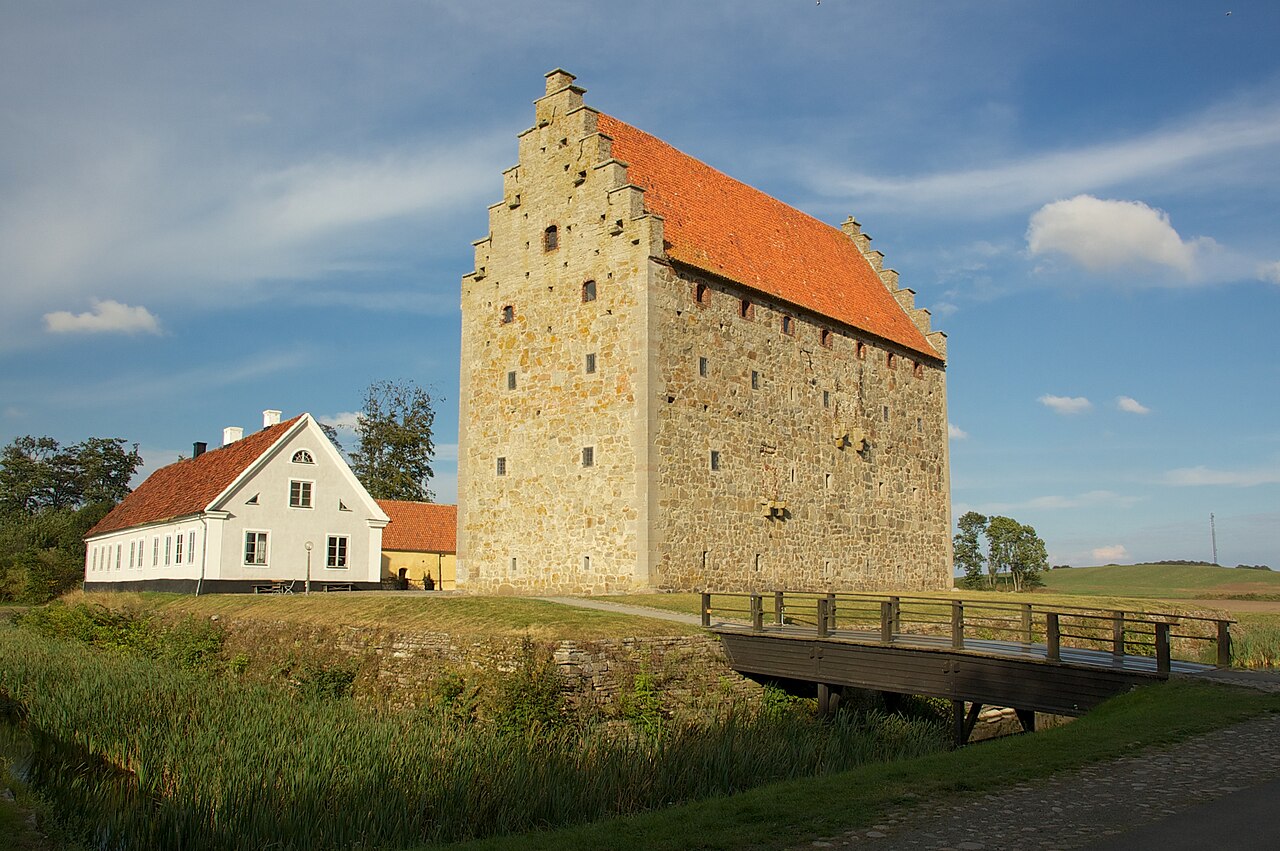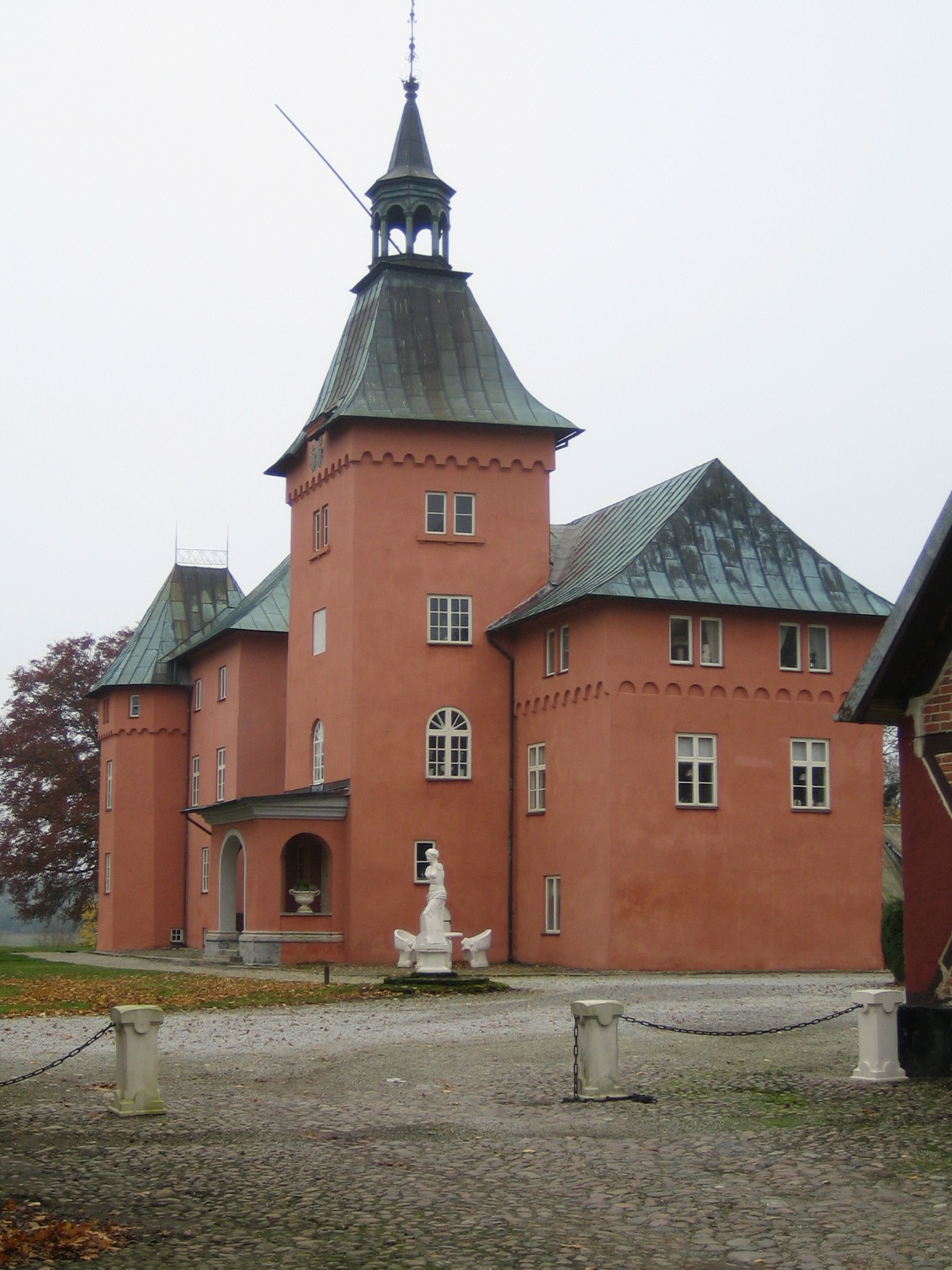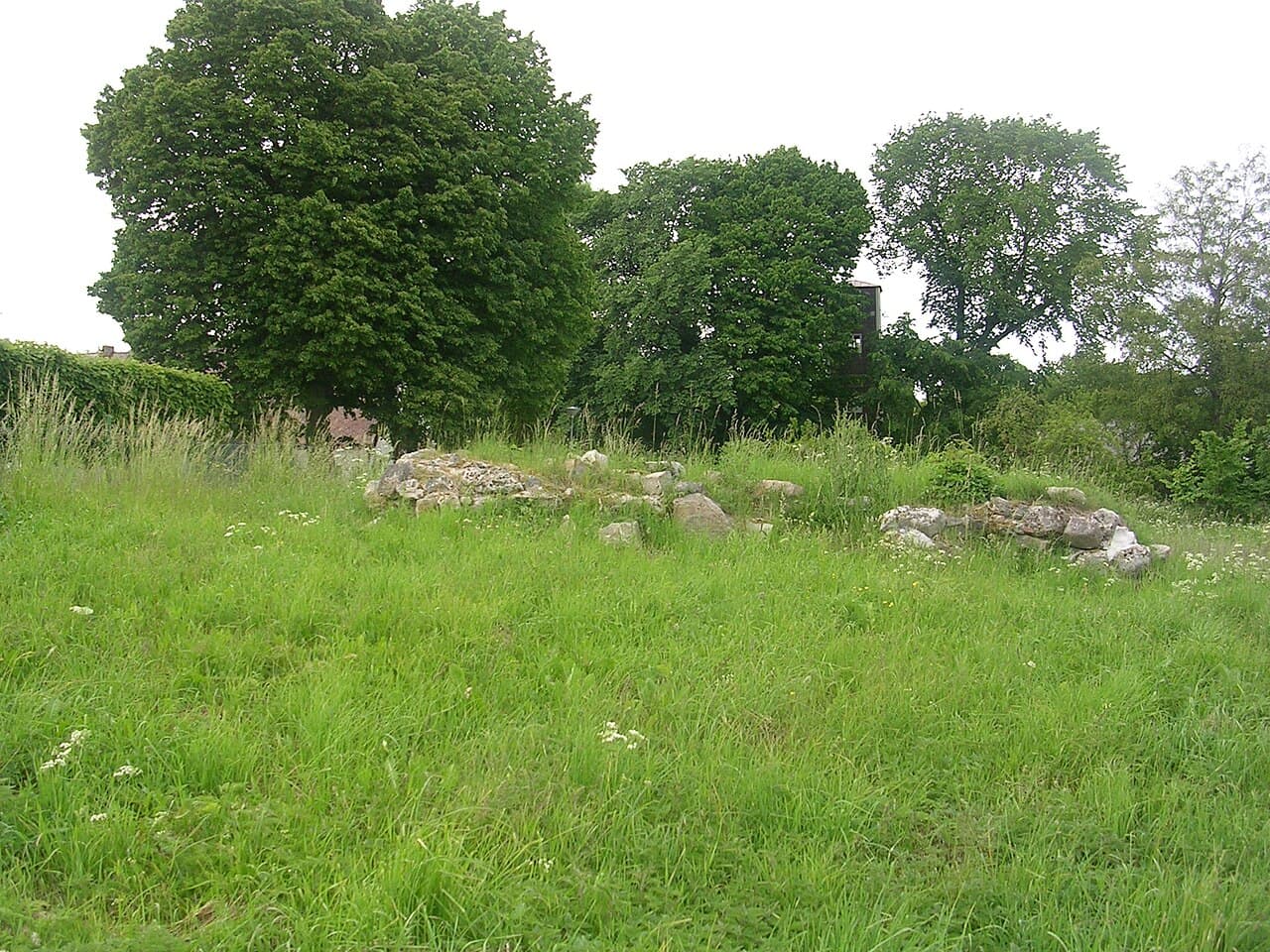
Gladsaxehus, also known historically as Glathsax or Glatzsax, is a medieval castle ruin situated in the Gladsax parish within the Simrishamn Municipality of Skåne, in south-eastern Sweden. This site lies immediately to the east of the local church and cemetery, marking it as an important landmark in the area. The castle's remains today offer valuable insight into the region's medieval fortifications and noble residences.
Historical background and significance
Gladsaxehus was constructed during the Late Medieval period, a time when fortified manors and castles played a crucial role in regional defense and administration in Scandinavia. The castle served as a noble residence and a local power center in Skåne, which was then part of the Danish realm before becoming Swedish territory in the 17th century.
The castle's strategic location near the parish church suggests it was an integral part of the local community and governance. Throughout its history, Gladsaxehus witnessed the political and military shifts characteristic of the medieval period in southern Sweden, including conflicts between Danish and Swedish forces.
Architectural features and layout
Though now in ruins, archaeological investigations have revealed that Gladsaxehus was originally a fortified manor house, typical of medieval Scandinavian noble residences. The structure likely included a stone curtain wall enclosing a courtyard, with residential buildings and defensive towers positioned within.
Its construction utilized local stone materials, and the castle's design reflects the Late Medieval architectural style common in the region, emphasizing both defense and domestic comfort. The proximity to the church and cemetery also indicates a planned settlement pattern linking religious and feudal authority.
Defensive elements
The castle's defenses would have included thick stone walls and possibly a moat or earthworks, typical of the period's fortifications. Towers or keeps provided vantage points for surveillance and protection against attackers.
Archaeological investigations and preservation
Today, Gladsaxehus is classified as archaeological ruins, with only foundational remains and partial wall sections visible. Excavations have uncovered artifacts and structural remnants that help reconstruct the castle's original layout and usage.
Preservation efforts focus on stabilizing the ruins and making the site accessible for visitors interested in medieval history and archaeology. Interpretive signage and guided tours may be available to enhance public understanding of the castle's historical context.
Visiting Gladsaxehus
Visitors to Gladsaxehus can explore the ruins located near the Gladsax church, offering a glimpse into medieval life in Skåne. The site provides a peaceful setting for those interested in history, archaeology, and the scenic landscapes of south-eastern Sweden.
As an open archaeological site, access is generally free, but visitors should check local tourism information for any specific opening hours or guided tour availability.
Gladsaxehus in the context of Scandinavian medieval castles
Gladsaxehus represents a typical example of a Late Medieval fortified manor in Scandinavia, illustrating the blend of residential comfort and military defense characteristic of the era. Its ruins contribute to the understanding of regional power structures and architectural trends in medieval Skåne.
Though less grand than some contemporary castles, Gladsaxehus holds archaeological and historical value for its role in the local feudal system and its connection to the broader history of Danish and Swedish territorial changes.
Frequently asked questions (FAQ)
- Where is Gladsaxehus located?
- Gladsaxehus is located in Gladsax parish within the Simrishamn Municipality of Skåne in south-eastern Sweden, near the local church and cemetery.
- What is the historical significance of Gladsaxehus?
- Gladsaxehus was a medieval fortified manor that served as a noble residence and local power center during the Late Medieval period, reflecting the region's history under Danish and later Swedish rule.
- What remains can be seen at Gladsaxehus today?
- Today, visitors can see the archaeological ruins including foundational remains and partial stone walls, which reveal the castle's original layout and defensive features.
- Is there an entrance fee to visit Gladsaxehus?
- Access to Gladsaxehus is generally free as it is an open archaeological site, but visitors should check local tourism resources for any updates on guided tours or special events.
- Can visitors learn about the castle's history on site?
- Information panels and occasional guided tours provide historical context and archaeological insights to visitors interested in the medieval heritage of Gladsaxehus.

Information
Loading map...
Visitor reviews
No reviews yet. Been here? Write the first review and help other travelers!
Write the first reviewVisited this castle? Share your experience
Your review helps other travelers and adds first-hand knowledge to our encyclopedia.