Glimmingehus
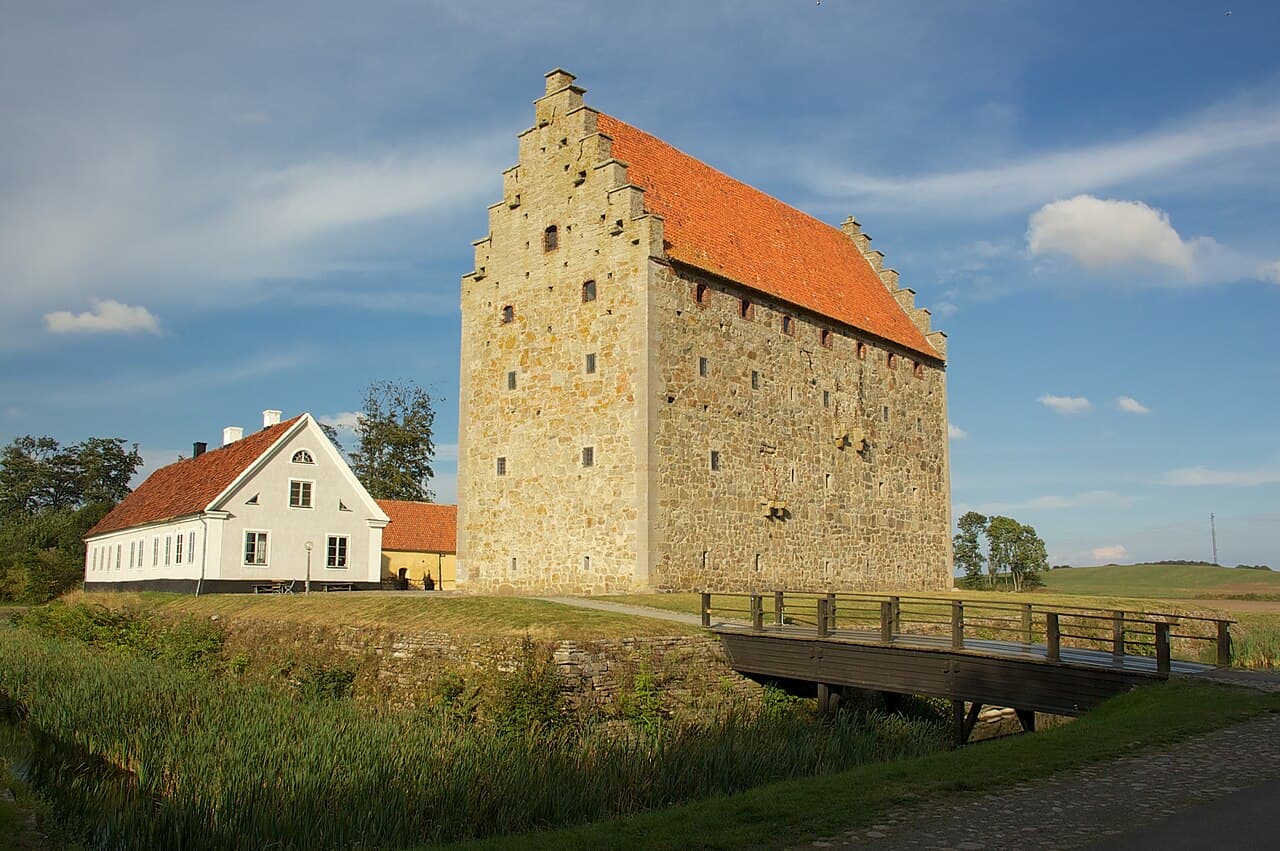
Glimmingehus stands as a remarkable example of a medieval water castle located in the municipality of Simrishamn in present-day Sweden. Constructed at the turn of the 16th century, it reflects the turbulent history of the region when it was under Danish control. The castle's origins trace back to 1499, commissioned by Jens Holgersen Ulfstand, a prominent Danish nobleman and royal council member under King John of Denmark. Ulfstand's ambition was to establish a fortified residence that would symbolize his status and provide security during a period marked by political unrest and frequent conflicts.
The construction of Glimmingehus was overseen by Adam van Düren, a master builder of North German and Dutch descent, who brought his expertise from notable projects such as Lund Cathedral. The castle's design showcases the blend of practical defense and residential comfort, embodying the architectural innovations of the late High medieval period. Shortly after completion, the estate passed to the Rosencrantz family through marriage, linking two influential noble houses.
Architectural features and defensive design
Glimmingehus is a compact, rectangular water castle situated on a small island, measuring approximately 30 meters in length and 12 meters in width, with a height reaching nearly 26 meters at its roof peak. Its robust stone walls, about 2.4 meters thick at the base tapering to 1.8 meters above, rest on deep foundations extending 2.5 meters underground. The walls primarily consist of locally sourced sandstone and quartzite from the nearby Simrishamn coast, chosen for their durability and availability.
Key structural elements such as cornerstones, door and window frames, and staircases are crafted from high-quality limestone imported from Gotland, prized for its strength and fine finish. This combination of materials highlights the careful selection of resources to ensure both resilience and aesthetic appeal.
The castle's defensive features are sophisticated and well-planned. Narrow embrasures or arrow slits allow defenders to fire upon attackers while remaining protected. The layout includes false doors and blind corridors designed to confuse and delay intruders. Special openings in the walls permitted defenders to pour boiling tar or water onto enemies attempting to scale the walls. Above the main entrance, a projecting bay known as a machicolation enabled defenders to drop stones or hot liquids directly downward, enhancing the castle's protection against assault.
Originally, Glimmingehus was surrounded by a stone curtain wall and water-filled moats, complemented by earthworks and hidden traps. Access was controlled by a drawbridge, which could be raised to prevent unauthorized entry, underscoring the castle's role as a fortress designed to withstand sieges.
Interior layout and residential comforts
The ground floor of Glimmingehus was dedicated to essential domestic and functional spaces. It housed rooms for brewing, baking, cooking, and storage of food and wine, along with a well providing fresh water. A large fireplace connected to an innovative hypocaust-like heating system circulated warm air through ducts embedded in the walls, a rare feature in medieval Scandinavian castles, ensuring comfort during harsh winters.
The upper floors contained the living quarters for the lord and his family, including a reception room for guests. The highest floor featured a grand knight’s hall with its own limestone fireplace, serving as a space for gatherings and ceremonies. Decorative elements included a display of weapons and several limestone reliefs carved by Adam van Düren, depicting heraldic symbols and religious scenes, such as the coats of arms of Jens Holgersen Ulfstand and his wife Holmgerd Axeldatter Brahe, as well as biblical narratives of the birth and death of Jesus Christ.
Servants’ quarters were located on the uppermost level, reflecting the hierarchical organization typical of noble residences. The castle's interior balanced defensive needs with the comforts and status symbols befitting a noble family of the period.
Historical context and later use
Following Jens Ulfstand’s death in 1523, Glimmingehus ceased to serve as a permanent noble residence amid ongoing conflicts between Denmark and Sweden. Over time, its role shifted primarily to practical functions, notably as a large storage facility for grain. This change reflected the evolving political landscape and the reduced military importance of such private fortifications.
During the Scanian War in 1676, Swedish King Charles XI ordered the demolition of Glimmingehus to prevent its use by Danish forces. However, the castle survived these attempts due to changing military strategies and the resistance of local inhabitants, preserving its structure for future generations.
Throughout the 18th and 19th centuries, the castle continued its role as a grain storehouse, maintaining a low profile in the region. In 1924, the Swedish National Heritage Board acquired the property with the aim of preserving this significant historic site. Restoration and archaeological work carried out between 1935 and 1938 under architect Sture Larsson included rehabilitating the moats and earthworks. Notably, some restoration efforts involved conscientious objectors fulfilling alternative service, adding a unique social dimension to the castle's preservation history.
Preservation and cultural significance today
Today, Glimmingehus remains one of the best-preserved medieval noble residences in Scandinavia, offering invaluable insights into late medieval defensive architecture and noble life. Its well-maintained stone walls, defensive features, and interior spaces provide a tangible connection to the region's complex history under Danish and Swedish rule.
The castle is an important cultural heritage site, attracting visitors interested in medieval history, architecture, and Scandinavian heritage. Its survival through centuries of conflict, changing ownership, and varied uses underscores its resilience and historical importance.
Visitors can explore the castle's distinctive architectural elements, including its moats, drawbridge, arrow slits, and the richly decorated interiors. Glimmingehus stands as a testament to the ingenuity and craftsmanship of its builders and the turbulent history of the region it once dominated.
Frequently asked questions (FAQ)
- What is Glimmingehus?
- Glimmingehus is a well-preserved medieval castle located in Simrishamn, Sweden, dating back to the late 15th century. It is known for its impressive architecture and rich history, reflecting the power and lifestyle of the nobility during the Renaissance period.
- When was Glimmingehus built?
- Glimmingehus was constructed between 1490 and 1500, making it one of the oldest surviving buildings in Sweden. Its construction marked a significant period in Swedish history as it represented the emerging power of the nobility in the region.
- What are the opening hours for Glimmingehus?
- Glimmingehus is typically open to visitors from May to September, with varying hours throughout the week. It is advisable to check the official website for the most current opening hours, especially during holidays or events.
- Can I visit Glimmingehus year-round?
- While Glimmingehus has a primary visiting season from May to September, the grounds may be accessible year-round. However, guided tours and exhibitions are usually only available during the peak season, so plan your visit accordingly.
- Is Glimmingehus accessible for visitors with disabilities?
- Yes, Glimmingehus strives to be accessible for all visitors. There are pathways and facilities designed to accommodate those with mobility challenges, although some areas of the castle may have limited access due to the historical architecture.
- What are the ticket prices for Glimmingehus?
- Ticket prices for Glimmingehus vary depending on age and group size, with discounts available for children, students, and seniors. It is advisable to check the official website for current pricing and any special offers that may be available during your visit.
- When is the best time to visit Glimmingehus?
- The best time to visit Glimmingehus is during the summer months when the weather is pleasant, and the castle hosts various events and activities. Visiting during this time allows you to fully experience the castle's history and enjoy the surrounding gardens and landscapes.
- What nearby attractions can I explore while visiting Glimmingehus?
- While visiting Glimmingehus, you can explore the beautiful coastal town of Simrishamn, known for its charming streets and waterfront. Additionally, nearby attractions include the picturesque Ale Stenar stone ship and the scenic beaches of Österlen, perfect for a full day of exploration.

Information
Website
Visit websiteSources & official resources
Verify the information above using these authoritative references.
Loading map...
Visitor reviews
No reviews yet. Been here? Write the first review and help other travelers!
Write the first reviewVisited this castle? Share your experience
Your review helps other travelers and adds first-hand knowledge to our encyclopedia.