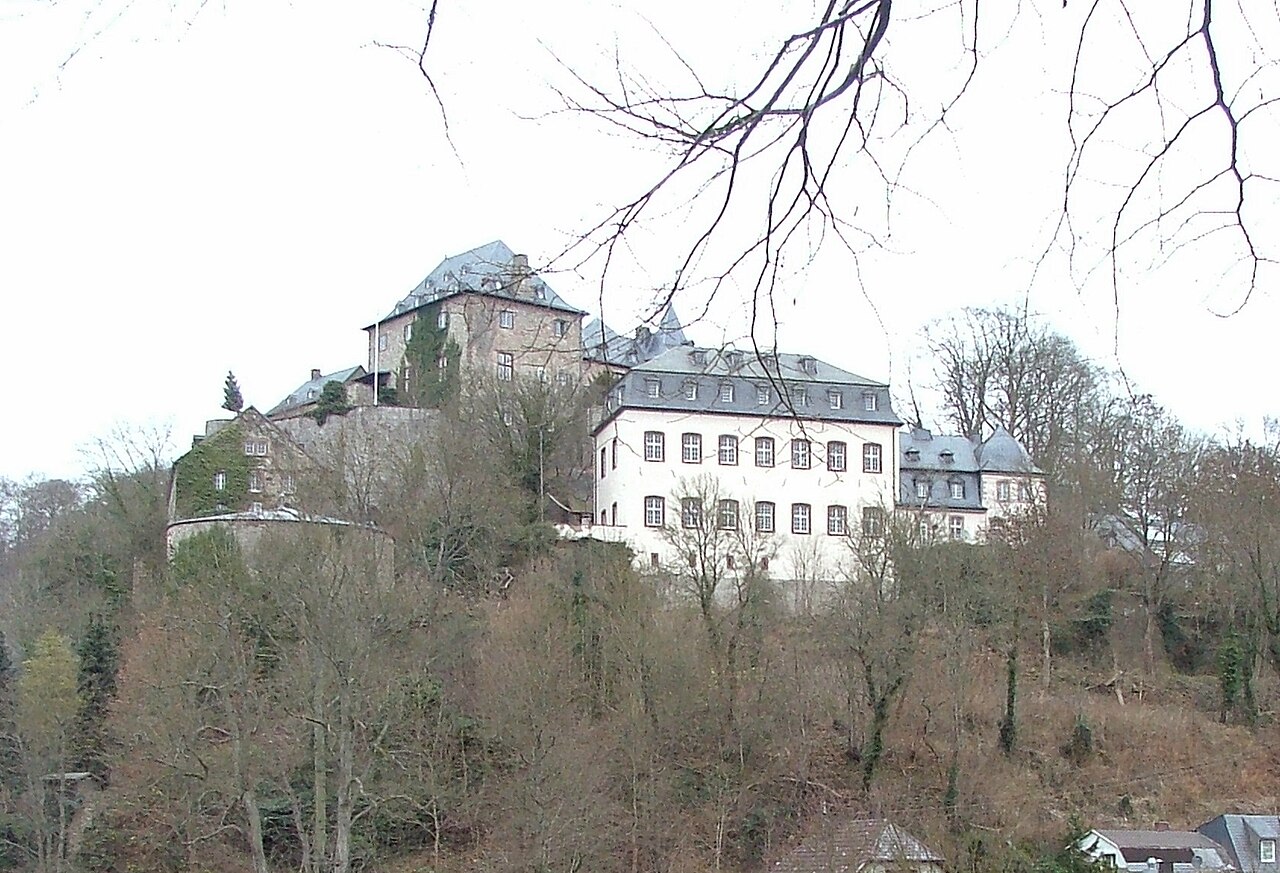
Glaadt Castle, also known locally as Burgruine Glaadt or Schloss Jünkerath, is a historic castle ruin situated in the village of Jünkerath, within the Rhineland-Palatinate region of Germany. This castle stands as a significant example of a 17th-century Renaissance moated residential castle, reflecting architectural transitions from medieval fortifications to more comfortable noble residences.
Early history and construction
The site of Glaadt Castle originally hosted a medieval predecessor, now lost, which was located at a different spot. The current castle was constructed in the early 17th century by Arnold, Count of Jünkerath. Unlike typical hilltop fortresses, Glaadt Castle was built in the lowest part of the valley, almost adjacent to the river Kyll. This location allowed it to function as a moated castle, utilizing the natural watercourse for defensive and aesthetic purposes.
The castle was designed primarily as a residential complex rather than a military fortress. It contained numerous rooms, many of which were rented out to notable individuals, indicating its role as a noble residence and a center of local social life. The layout included a moat, living quarters, and service buildings, reflecting Renaissance ideals of comfort combined with security.
Architectural features and style
Glaadt Castle exemplifies Renaissance architectural style with its emphasis on symmetry, proportion, and the integration of water features. The castle's moated design is characteristic of the period's shift from purely defensive structures to more elegant and livable noble estates. The buildings were likely constructed with local stone and timber, featuring Renaissance elements such as rectangular windows and decorative stonework.
The castle's position in the valley and proximity to the river Kyll also influenced its design, with water management playing a crucial role. The moat not only served defensive purposes but also enhanced the castle's aesthetic appeal, creating a picturesque setting.
Rebuilding and decline
Between 1726 and 1735, Glaadt Castle underwent significant rebuilding under the direction of Count Franz Georg. This reconstruction aimed to update and possibly expand the castle's facilities. However, the process was marked by strained relations between the owner and the builders, culminating in a court case that the builders lost. This conflict hints at the complexities of managing large construction projects in the early 18th century.
Tragedy struck in 1737 when the castle caught fire. The exact cause remains uncertain, with possibilities including lightning, improper use of a fireplace, or deliberate arson. The fire devastated the castle, leaving it in ruins. After this event, Glaadt Castle was never rebuilt or restored to its former condition, marking the end of its active use as a noble residence.
Modern preservation and current state
By the mid-20th century, the ruins of Glaadt Castle faced the threat of demolition. In 1967, plans were made to tear down the remnants, but a citizens' initiative successfully prevented this destruction. Thanks to local efforts, the ruins were consolidated in the 1980s to stabilize the structure and preserve what remained.
Today, the ruins of Glaadt Castle are freely accessible to the public. Visitors can explore the remains of the moated castle, though the site is relatively sparse in surviving architectural details. The castle's setting by the river and its historical significance as a Renaissance noble residence continue to attract interest from history enthusiasts and tourists.
Location and cultural significance
Located in the village of Jünkerath, Glaadt Castle occupies a unique place in the cultural landscape of the Rhineland-Palatinate. Its history reflects broader regional developments in castle architecture, transitioning from medieval fortifications to Renaissance residential estates. The castle's ruinous state offers insight into the challenges of preservation and the importance of community involvement in heritage conservation.
The castle's proximity to the river Kyll and its valley setting provide a distinctive environment that influenced its design and function. As a moated castle, it illustrates the adaptation of defensive architecture to the natural landscape and changing social needs during the Renaissance period.
Visitor information
Visitors to Glaadt Castle can enjoy a quiet exploration of the ruins without entrance fees, as the site is open and accessible. While the castle does not offer extensive facilities or guided tours, its historical ambiance and scenic location make it a worthwhile stop for those interested in Renaissance architecture and regional history.
Frequently asked questions (FAQ)
- What is the historical significance of Glaadt Castle?
- Glaadt Castle, located in Jünkerath, Germany, dates back to the 13th century and played a key role in the region's medieval history. It served as a strategic stronghold during various conflicts and has been a witness to the evolution of architectural styles over the centuries.
- When was Glaadt Castle built?
- Glaadt Castle was originally constructed in the early 1200s, with various renovations and expansions occurring over the years. Its architecture reflects the transition from Romanesque to Gothic styles, showcasing its rich historical heritage.
- Can I visit Glaadt Castle?
- Yes, visitors are welcome at Glaadt Castle. Guided tours are available, allowing you to explore its fascinating history and architectural features while learning from knowledgeable guides.
- What are the opening hours for Glaadt Castle?
- Glaadt Castle is open to visitors from Tuesday to Sunday, with varying hours depending on the season. It is advisable to check the official website or contact the castle for the most up-to-date opening times before your visit.
- Is it possible to access Glaadt Castle with mobility aids?
- Glaadt Castle strives to be accessible to all visitors, but some areas may present challenges due to the castle's historic nature. It is recommended to contact the castle in advance to inquire about specific accessibility options available for those using mobility aids.
- What is the best time to visit Glaadt Castle?
- The best time to visit Glaadt Castle is during the spring and early fall when the weather is pleasant, and the surrounding landscapes are vibrant. Additionally, visiting during these seasons often means fewer crowds, allowing for a more enjoyable experience.
- Are there any nearby attractions to Glaadt Castle?
- Yes, the region around Glaadt Castle offers several attractions, including beautiful hiking trails and charming local villages. Visitors can also explore other historical sites and natural parks that showcase the stunning landscapes of the Eifel region.
- What are the ticket prices for Glaadt Castle?
- Ticket prices for Glaadt Castle are generally affordable, with discounts available for students and seniors. Family packages may also be offered, making it an accessible destination for visitors of all ages.
Loading map...
Visitor reviews
No reviews yet. Been here? Write the first review and help other travelers!
Write the first reviewVisited this castle? Share your experience
Your review helps other travelers and adds first-hand knowledge to our encyclopedia.